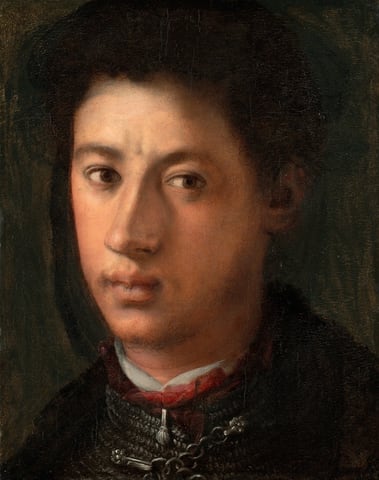
Portrait of a Young Manc. 1530
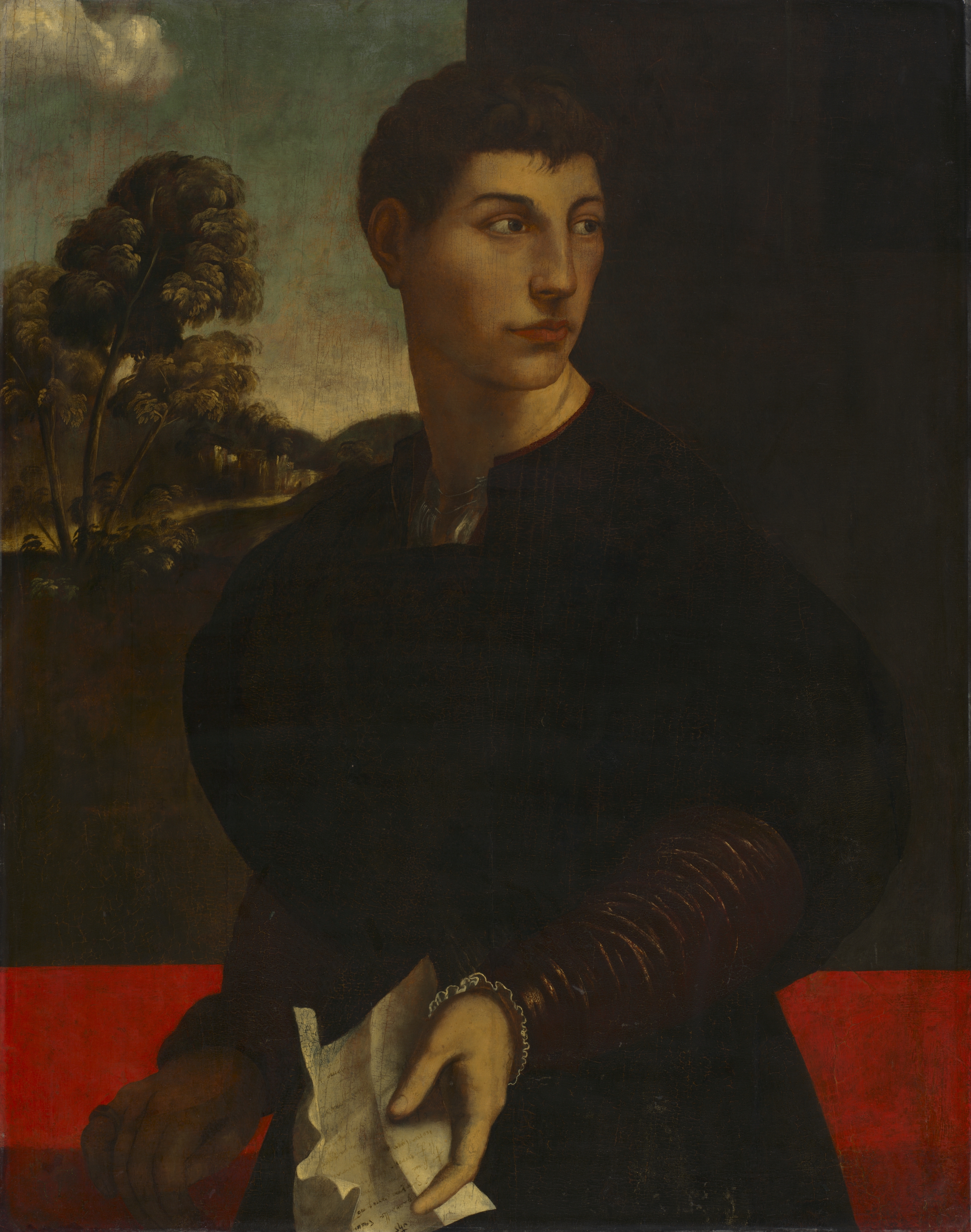
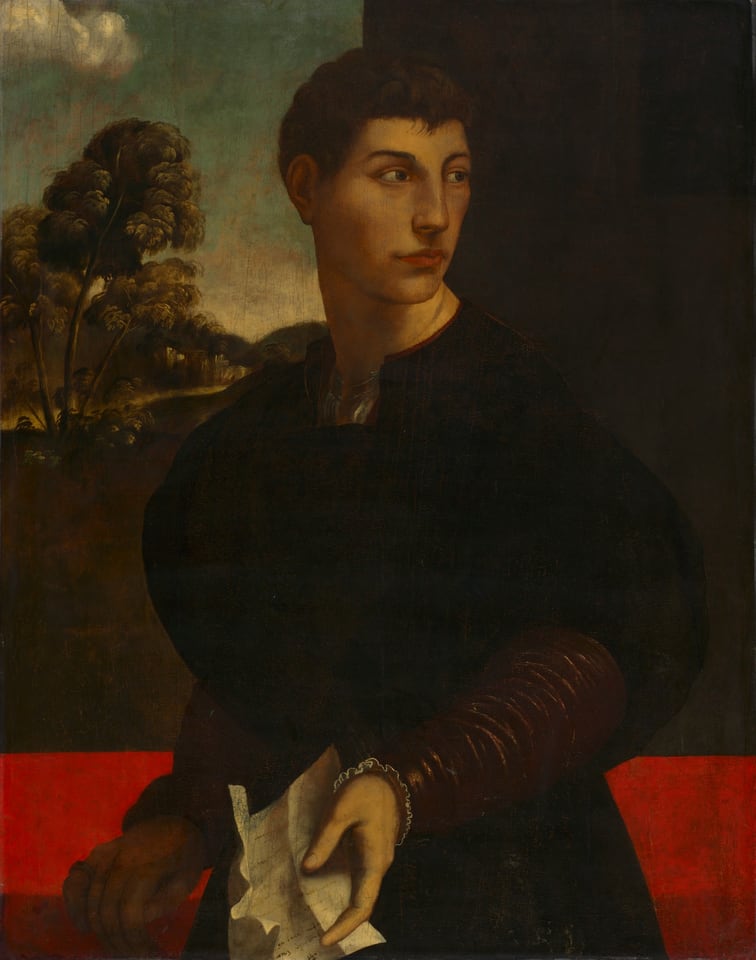
Like other paintings from the Dossi workshop, this work conveys the sitter's social status and self-confidence. He holds a crumpled letter written in Italian. More about this work
About this work
Like other paintings from the Dossi workshop, this work conveys the sitter's social status and self-confidence. He holds a crumpled letter written in Italian. The words Asto , meaning "ship mast," and mare , meaning "sea," suggest that trade was a topic of this letter. References to anatomy and the word bella imply a discussion of the magnificence of human anatomy, an interest that spread rapidly during the Renaissance. The letter likewise communicates the young man's considerable education. This work was formerly called Portrait of Giuliano de Medici ; however, the sitter's lack of resemblance to Giuliano caused art historians to discount this argument. Portrait of a Young Man was earlier attributed to Dosso's brother, Battista, before recently being considered a work by Dosso or a member of his workshop. As first suggested by Roberto Longhi, Portrait of a Young Man is now considered likely to be a work of an unidentified follower of Dossi from Friuli, Italy. The Friulian follower worked from 1510 until after 1530 and had connections to Dossi's hometown of Ferrara, accounting for this work's resemblance to Dossi's style. The dark outlines and large forms of the work are of a later style than Dossi's, suggesting that the artist was a follower rather than Dossi himself.
Text from the Cleveland Museum of Art.
How it was made
- Oil paint
- Pigment ground in a drying oil, usually linseed. It dries slowly, so painters could blend on the canvas, build up thin translucent glazes, and rework a picture over weeks. Canvas replaced wooden panels in the 1500s because it is lighter and can be rolled.
Dosso Dossi
Italian, c. 1490–after 1541
Renaissance
European art from about 1400 to 1600, when painters rediscovered perspective and the classical past.
Rights and the museum’s record
Public domain. The Cleveland Museum of Art has dedicated this image to the public domain under CC0, so anyone may copy, adapt and use it, for any purpose, without asking. Our prints and files are reproductions made from the museum’s image; the museum doesn’t endorse them.
- Object number
- 1916.803
- Credit
- Courtesy of the Cleveland Museum of Art
- Type
- Painting
- Department
- European Painting and Sculpture
- Licence
- CC0 1.0 Universal
- Museum record
- See it on the museum’s site