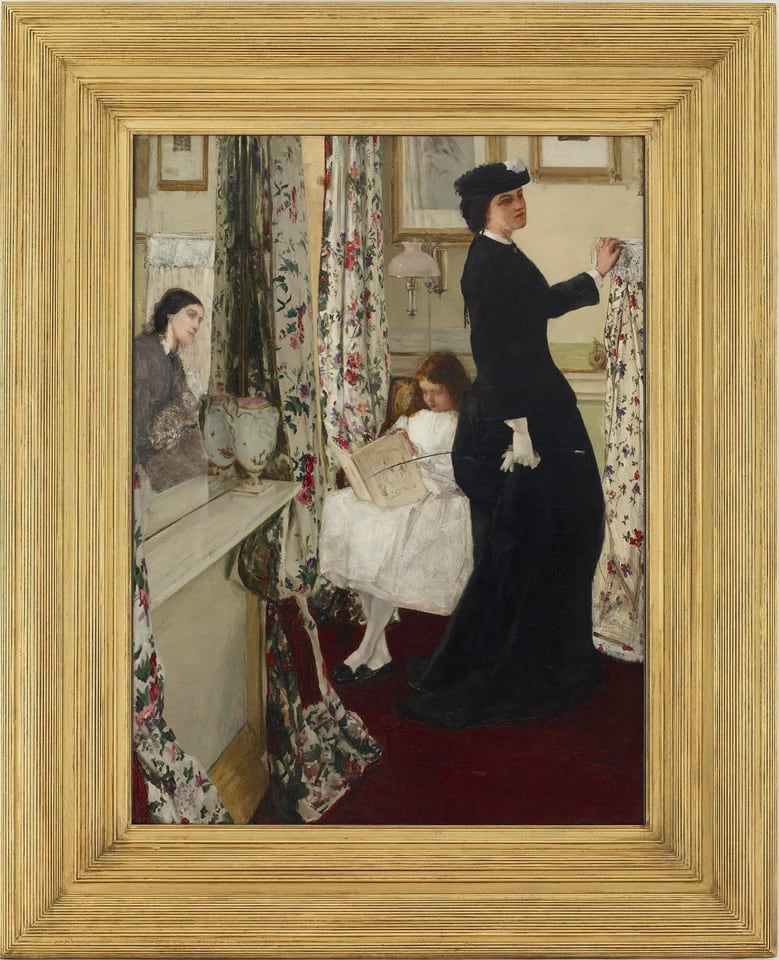
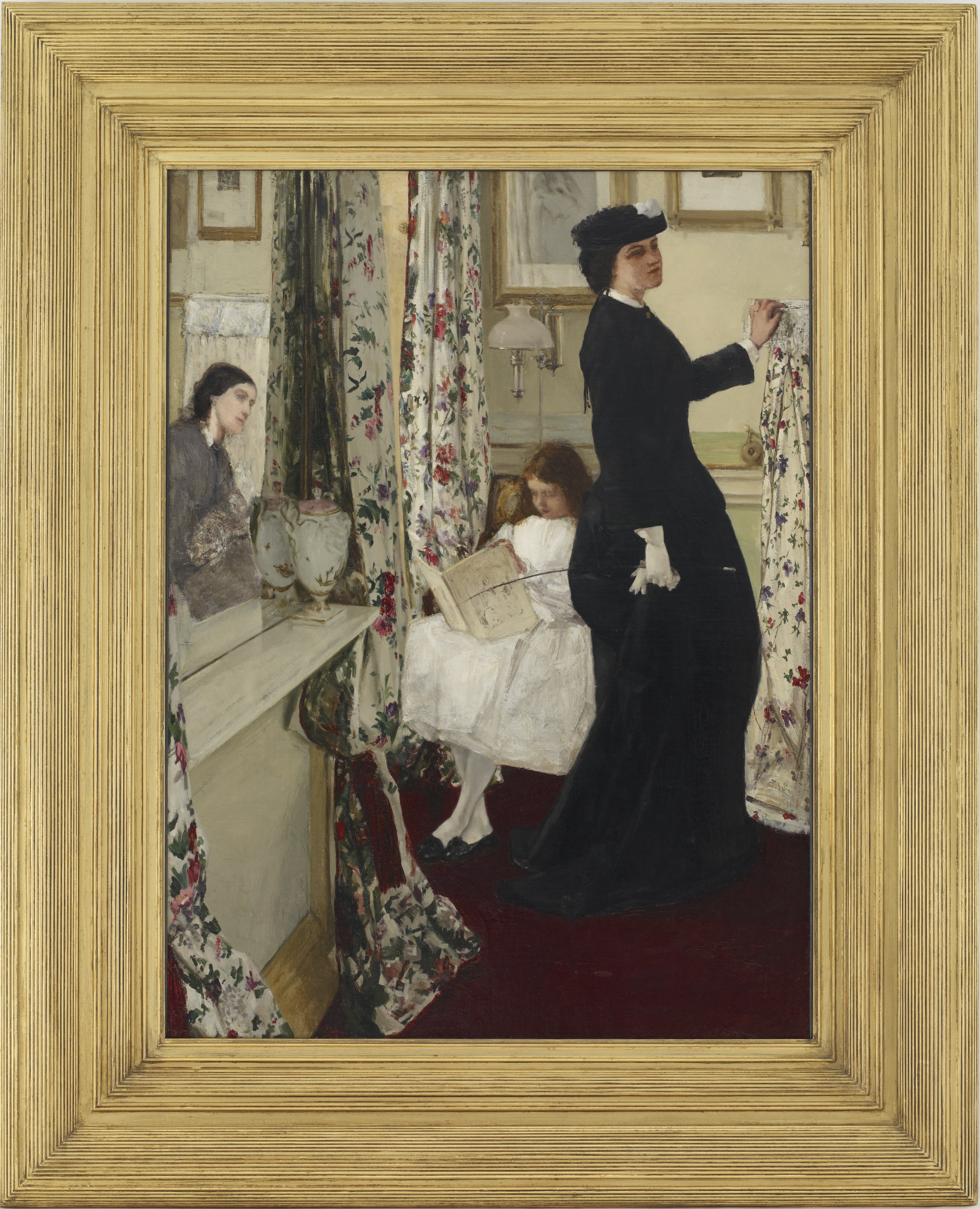
Harmony in Green and Rose: The Music Room1860-1861
Set in the London home of Whistler's brother-in-law Seymour Haden, this painting was originally titled The Morning Call. More about this work
About this work
Set in the London home of Whistler's brother-in-law Seymour Haden, this painting was originally titled The Morning Call. The woman reflected in the mirror at the left is Whistler's half sister Deborah Haden. The seated girl is his niece, Annie Haden. The standing woman, Miss Isabella Boott, was connected to the Haden family by marriage. Instead of trying to create a convincing illusion of three-dimensional space, Whistler adopted a color scheme and sharply angled perspective that emphasize the flatness of the picture plane.
Text from the National Museum of Asian Art.
How it was made
- Oil paint
- Pigment ground in a drying oil, usually linseed. It dries slowly, so painters could blend on the canvas, build up thin translucent glazes, and rework a picture over weeks. Canvas replaced wooden panels in the 1500s because it is lighter and can be rolled.
James McNeill Whistler
American, 1834–1903 · Born in Lowell, Massachusetts; died in London.
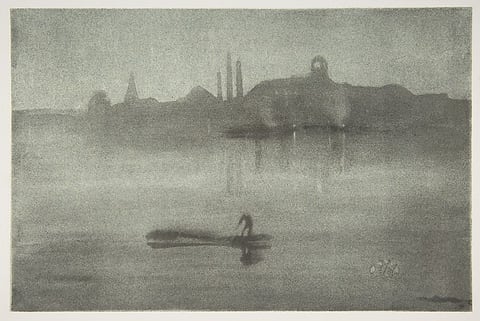
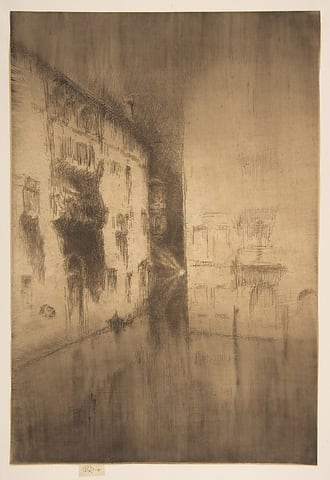
Whistler spent part of his boyhood in Russia, left West Point without graduating and trained as a painter in Paris before settling in London in 1859. He held that a picture was an arrangement of colour and form, and named his works symphonies, harmonies and nocturnes; a hostile review of one nocturne led to his 1878 libel suit against John Ruskin. He was equally committed to etching, and in his Venice plates of 1879–80 he left films of ink on the copper to suggest water and dusk.
Written by Ochre Editions.
Rights and the museum’s record
Public domain. The National Museum of Asian Art has dedicated this image to the public domain under CC0, so anyone may copy, adapt and use it, for any purpose, without asking. Our prints and files are reproductions made from the museum’s image; the museum doesn’t endorse them.
- Object number
- F1917.234a-b
- Credit
- Courtesy of the National Museum of Asian Art, Smithsonian Institution
- Type
- Painting
- Department
- National Museum of Asian Art
- Licence
- CC0 1.0 Universal
- Museum record
- See it on the museum’s site
Report this work
More by James McNeill Whistler
All their works
Close in colour