The Floating World
Japanese woodblock prints of the floating world: actors, courtesans, landscapes and the sea.
Section 1, north wall
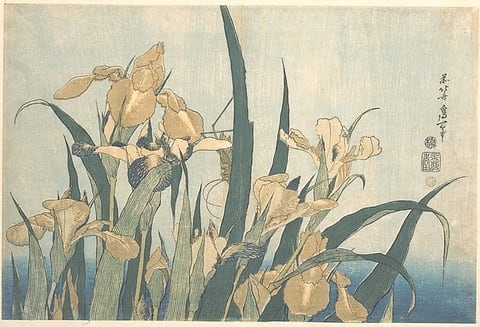
Grasshopper and IrisKatsushika Hokusai, late 1820sCourtesy of The Metropolitan Museum of Art 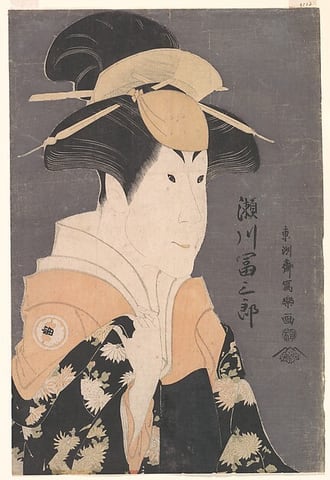
Segawa Tomisaburō II as Yadorigi in the Play "Hana Ayame Bunroku Soga"Tōshūsai Sharaku, 1794Courtesy of The Metropolitan Museum of Art 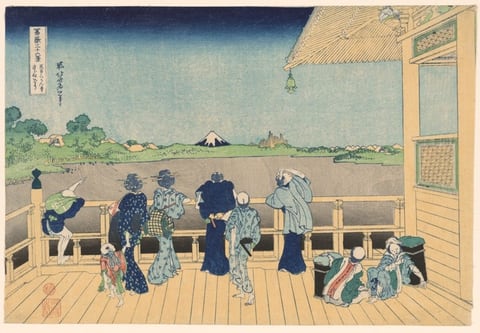
Sazai Hall at the Temple of the Five Hundred Arhats (Gohyakurakanji Sazaido), from the series "Thirty-six Views of Mount Fuji (Fugaku sanjurokkei)"Katsushika Hokusai, c. 1830/33Courtesy of the Art Institute of Chicago
Section 1, south wall
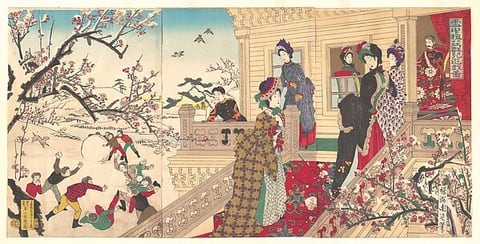
Children Playing in the Snow under Plum Trees in Bloom (Secchū baisō gunji yūgi zu)Yōshū (Hashimoto) Chikanobu, November 1887Courtesy of The Metropolitan Museum of Art 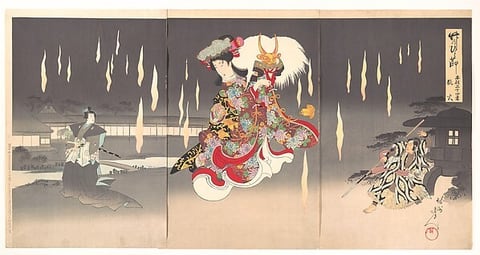
Scene of Foxfire (Kitsunebi) from the Play Honchō nijūshikōYōshū (Hashimoto) Chikanobu, 1898Courtesy of The Metropolitan Museum of Art
Section 2, south wall
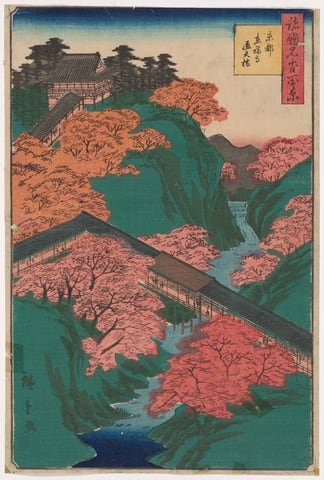
Tsuten-kyo Bridge, Tofuku Temple, Kyoto (Kyoto Tofukuji Tsutenkyo bashi) from the series “One Hundred Famous Views in the Various Provinces (Shokoku meisho hyakkei)”Utagawa Hiroshige II, 1859Courtesy of the Art Institute of Chicago 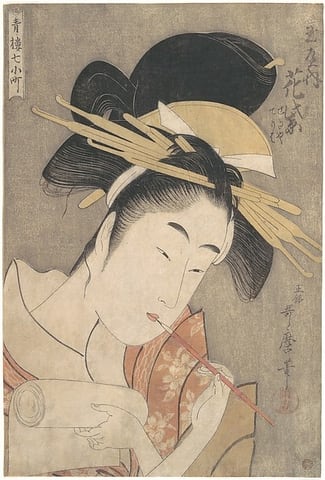
“Hanamurasaki of the Tamaya,” from the series Seven Komachi of the Pleasure Quarters (Seirō Nana Komachi)Kitagawa Utamaro, ca. 1790Courtesy of The Metropolitan Museum of Art 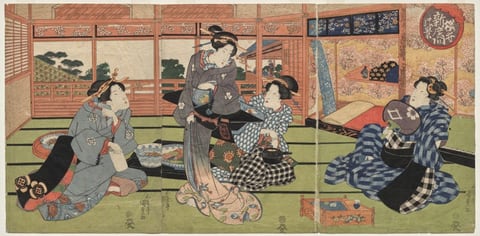
A View of the Large New Room at SakuraiUtagawa Kunisada, early or mid 1830sCourtesy of the Cleveland Museum of Art
Section 2, north wall
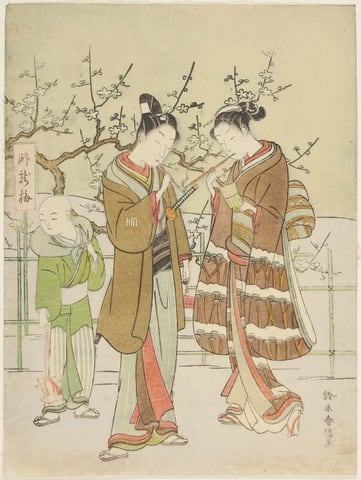
Giving a Light by the Garyubai Plum TreeSuzuki Harunobu, c. 1767/68Courtesy of the Art Institute of Chicago 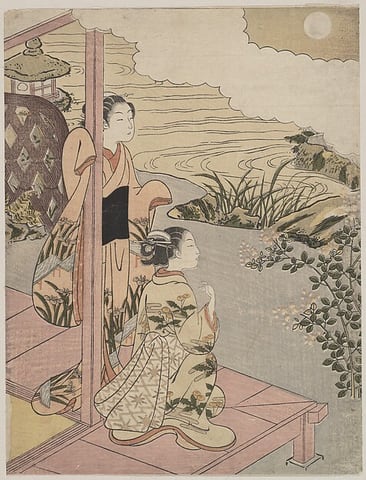
Two Girls on a Veranda beside a Stream with the MoonSuzuki HarunobuCourtesy of The Metropolitan Museum of Art 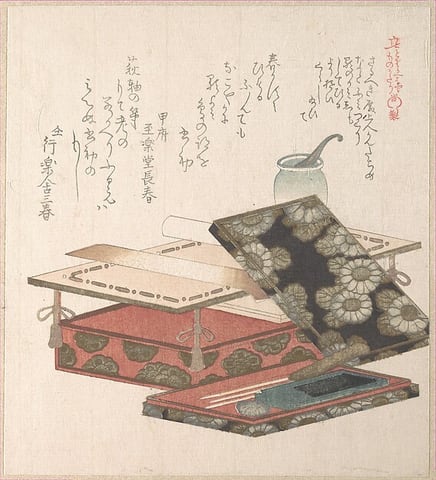
Table and Writing SetKubo Shunman, 19th centuryCourtesy of The Metropolitan Museum of Art
Section 3, north wall
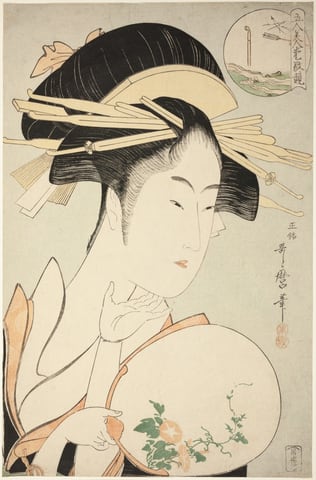
Kisegawa of the Matsubaya, from the series "Comparing the Charms of Five Beauties (Gonin bijin aikyo kurabe)"Kitagawa Utamaro, c. 1795/96Courtesy of the Art Institute of Chicago 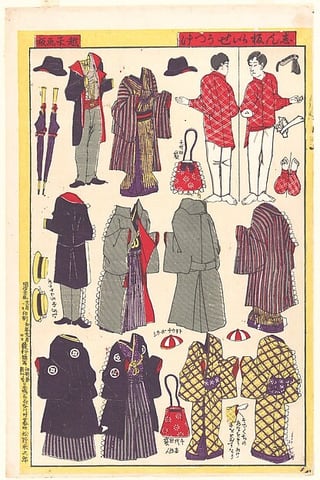
Paper Doll ClothingUnrecorded Japanese maker, 1897–98Courtesy of The Metropolitan Museum of Art 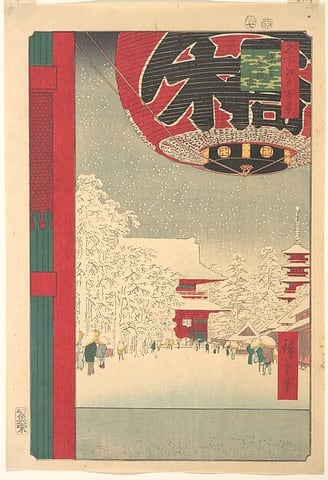
Kinryūsan Temple at Asakusa, from the series "One Hundred Famous Views of Edo"Utagawa Hiroshige, 1856Courtesy of The Metropolitan Museum of Art
Section 3, south wall
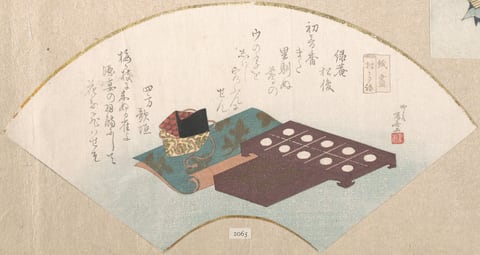
Outfit for the Game of IncenseRyūryūkyo Shinsai, 19th centuryCourtesy of The Metropolitan Museum of Art 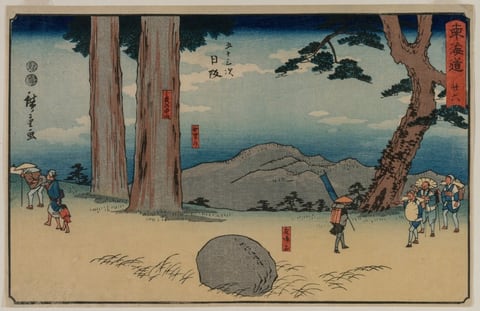
Nissaka: The Night-Weeping Stone at Sayo no Nakayama, from the series The Fifty-Three Stations of the TōkaidōUtagawa Hiroshige, c. 1848–50Courtesy of the Cleveland Museum of Art