Skip to content
Ochre Editions
ArtArtistsCollectionsGalleriesDrops
SearchSign inCart (0)
The galleries · Style galleries

Prints of the 17th century

Prints made in the 17th century, from every museum.

55 works · hang 5037 ·

Share Prints of the 17th century, in the galleries

The rooms are imagined; every work on their walls is real.

Walk this roomRehang this room

Section 1, north wall

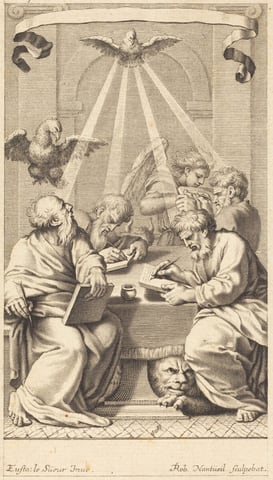
  1. The image shows four elderly men around a table. They have long hair and beards, and appear focused as they write or take notes on tablets. They wear classical robes and sit in different postures, engaged in writing or possibly calculating. Two hold writing implements and tablets, while a third holds a scroll. Above them, a seated figure with wings is present. Light rays emanate from a dove at the top, highlighting a celestial influence. An eagle is perched nearby. Architectural elements like columns and arches are in the background. A lion's head is under the table.
    The Four EvangelistsRobert NanteuilCourtesy National Gallery of Art, Washington
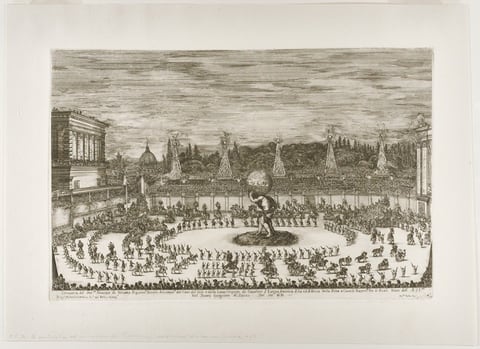
  2. A work made of etching on ivory laid paper.
    Equestrian Ballet in the Amphitheater of the Boboli GardensStefano della Bella, 1661Courtesy of the Art Institute of Chicago
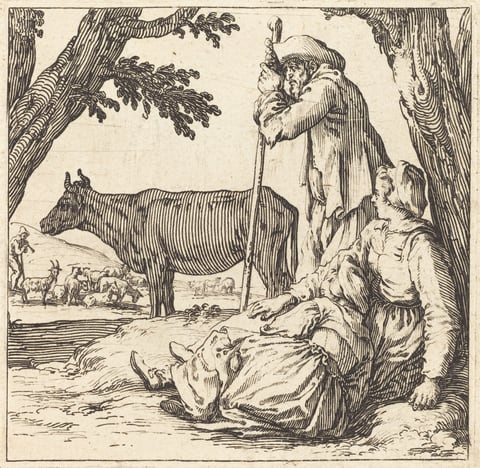
  3. The image has an elevated perspective showing two figures with animals in the scene. One person is leaning against a tree with a stick, while the other is seated on the ground. A cow is between them and other livestock in the middle distance. A person in the distance is tending to the animals. The horizon is low in the image, hidden by rolling hills. The artwork is in monochrome with fine linework, creating texture through hatching and cross-hatching, emphasizing depth and dimensionality.
    Peasant Couple with CowJacques Callot, c. 1621Courtesy National Gallery of Art, Washington

Section 1, south wall
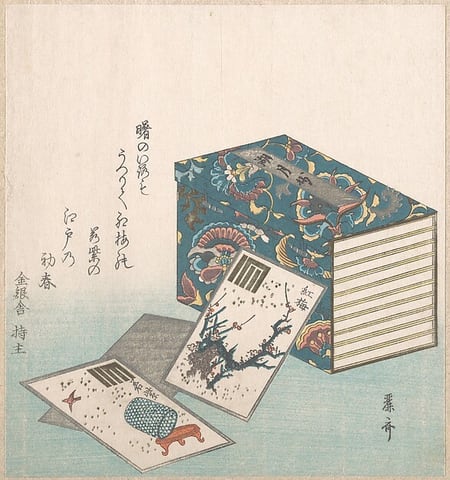
  1. Books and Cards, by Reisai, 18th–19th century
    Books and CardsReisai, 18th–19th centuryCourtesy of The Metropolitan Museum of Art
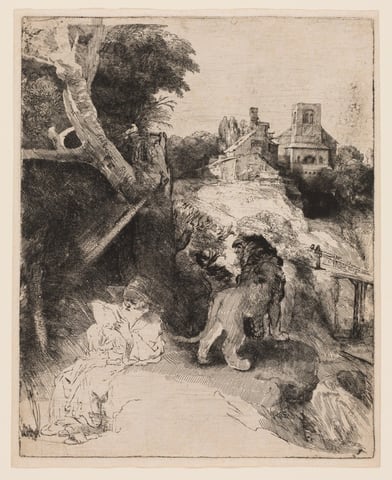
  2. A work made of etching, burin, and drypoint on ivory laid paper.
    Saint Jerome Reading in an Italian LandscapeRembrandt van Rijn, c. 1653Courtesy of the Art Institute of Chicago
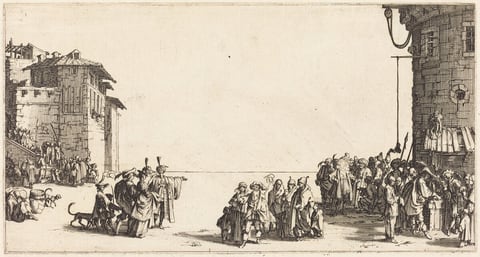
  3. This is a drawing of a busy street scene with architectural structures and various figures. It depicts a large open area bordered by a grand building to the left and a rounded tower or structure to the right. The left side of the scene is lined with stairs leading up to an elevated walkway or platform, where people are gathered. In the middle and to the right, a crowd has formed, encompassing the space in front of the tower. Various individuals, some wearing distinctive headgear, are seen mingling and gesturing. The architectural details in the background, such as the windows and brickwork of the tower, frame the scene below. A hand-operated apparatus extends from the tower, possibly for lifting goods or supplies. The drawing captures a dynamic urban moment.
    The Slave MarketJacques Callot, 1620Courtesy National Gallery of Art, Washington

Section 2, south wall
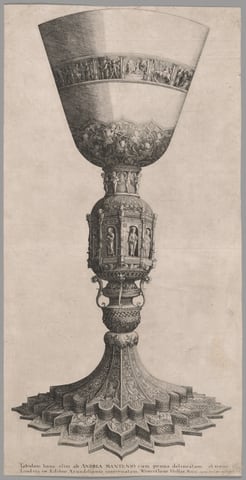
  1. A work made of etching on ivory laid paper.
    A ChaliceWenceslaus Hollar, 1640Courtesy of the Art Institute of Chicago
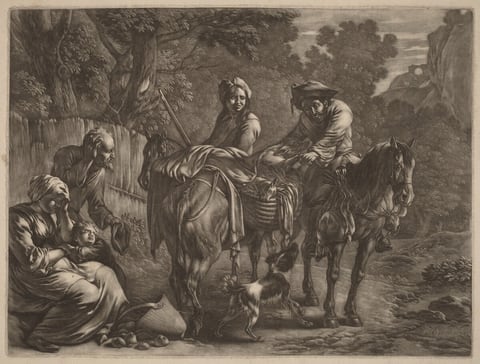
  2. This is a drawing of a rural scene with horses and figures. The image shows an interaction between several figures and two horses within a pastoral setting. In the foreground, two individuals are seated on the ground, accompanied by a small child. Nearby, a figure atop a horse reaches towards another figure who leads a laden horse. A dog is present, standing alert at the horse's hooves. The backdrop showcases lush trees and distant hills, suggesting a serene countryside environment. The attention to detail and shading creates a realistic depiction of this rustic scene.
    Robbers on HorsebackJan van Huchtenburgh, late 17th/early 18th centuryCourtesy National Gallery of Art, Washington

Section 2, north wall
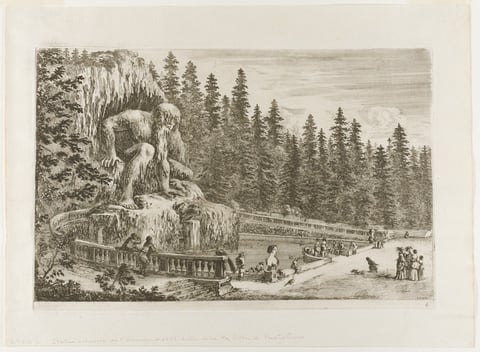
  1. A work made of etching in black on ivory laid paper.
    The Colossal Statue of the Apennines, from Views of Villa di PratolinoStefano della Bella, c. 1653Courtesy of the Art Institute of Chicago
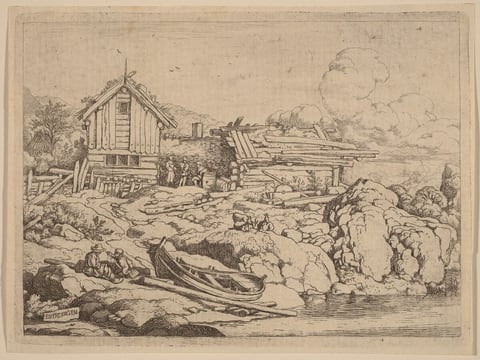
  2. The image shows a landscape with figures near a body of water. There are buildings made of logs, people gathered near a structure, and trees in the background. The style is detailed with precise linework, shading, and hatching. The color palette is monochrome, emphasizing light and shadow.
    Boat at a River Bank with Three GoatsAllart van Everdingen, probably c. 1645/1656Courtesy National Gallery of Art, Washington

Section 3, north wall
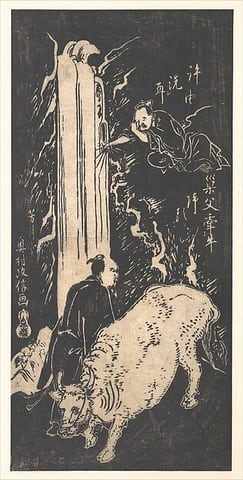
  1. Xu You and Chao Fu, by Okumura Masanobu, 18th century
    Xu You and Chao FuOkumura Masanobu, 18th centuryCourtesy of The Metropolitan Museum of Art
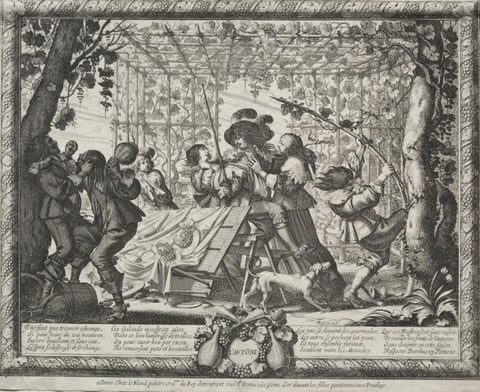
  2. The Four Seasons: Autumn, by Abraham Bosse, 1635
    The Four Seasons: AutumnAbraham Bosse, 1635Courtesy of the Cleveland Museum of Art
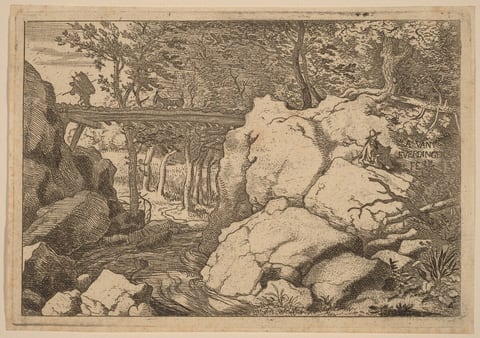
  3. The image shows a landscape with rocky terrain, trees, and a stream. In the foreground, there is a bridge with a traveler and a dog crossing over the stream. The scene features detailed linework and cross-hatching to depict texture. The color palette is monochrome brown, resembling an etching or drawing style.
    Goat on a small BridgeAllart van Everdingen, probably c. 1645/1656Courtesy National Gallery of Art, Washington

Section 3, south wall
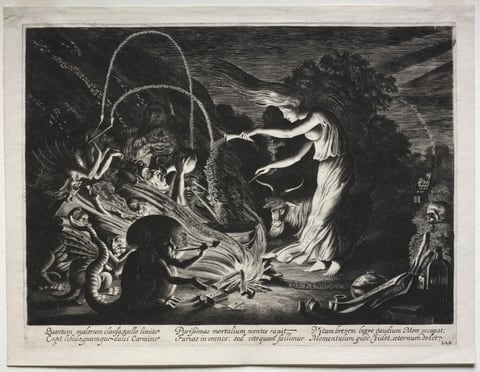
  1. The Witch (Night Piece), by Jan van de Velde II, 1626
    The Witch (Night Piece)Jan van de Velde II, 1626Courtesy of the Cleveland Museum of Art
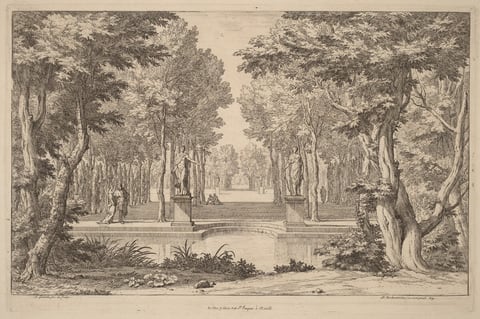
  2. The image shows a formal garden or park with a symmetrical view. It is taken from a slightly elevated position, revealing the vast space beyond a foreground of foliage and low-growing plants. The horizon line is positioned near the midpoint, where a tree-lined pathway extends into the distance. Flanking the pathway are two statues on pedestals under leafy trees. The scene is detailed with intricate line work emphasizing textures and forms. The color palette is monochromatic in various shades of brown, creating a classic appearance. Paved steps and a bridge over a small body of water add to the ordered elegance of the garden.
    The Two StatuesAbraham Genoels IICourtesy National Gallery of Art, Washington
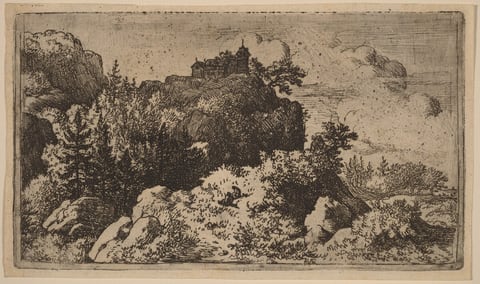
  3. The image shows a slightly elevated perspective of a rugged landscape with dense vegetation and rock formations. The horizon is high in the upper third of the image, with a distant building or castle on a hill. The structure is silhouetted against the sky and partially obscured by foliage. Intricate line work and hatching create detailed textures and shading, especially in the trees and clouds. The color palette is monochromatic, using varying shades of brown and sepia to give the artwork an antiquated and rustic appearance.
    Firs in the DefileAllart van Everdingen, probably c. 1645/1656Courtesy National Gallery of Art, Washington

Walk on

  • Prints of the 17th century, room 2
  • More by Allart van Everdingen 3 works
  • 17th-century Netherlands 91 works
Ochre Editions

The world's museums, on your wall. Every work here is a reproduction of a public-domain original, credited to the museum that holds it.

Shop

All artCollectionsLimited dropsPrints and framing

Help

Find an orderShippingReturnsVerify a certificate

About

About Ochre EditionsMuseum creditsFor agentsDevelopers

Legal

Terms of UseTerms of SaleLimited Editions and CertificatesPrivacy PolicyCookie PolicyAcceptable Use PolicyAgent & API TermsCopyright and DMCA PolicyPrinting Your Own PhotoVulnerability Disclosure PolicyAccessibility StatementOpen-Access Credits
© 2026 Ochre EditionsPrices in US dollars. Prints ship within the United States.