Neoclassicism
Europe turns back to Greece and Rome: clear line, calm figures and civic virtue.
First room, north wall
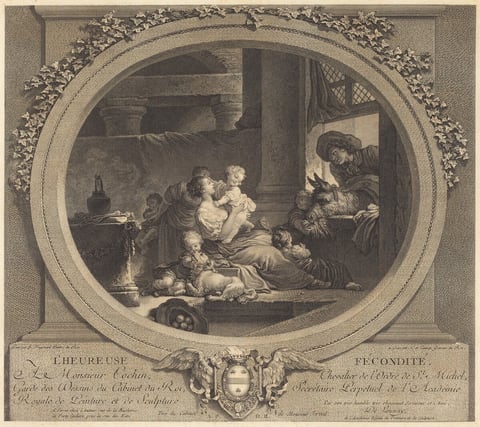
L'heureuse féconditéNicolas Delaunay, 1777Courtesy National Gallery of Art, Washington 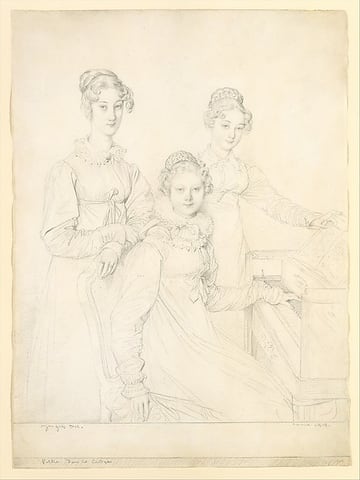
The Kaunitz Sisters (Leopoldine, Caroline, and Ferdinandine)Jean Auguste Dominique Ingres, 1818Courtesy of The Metropolitan Museum of Art 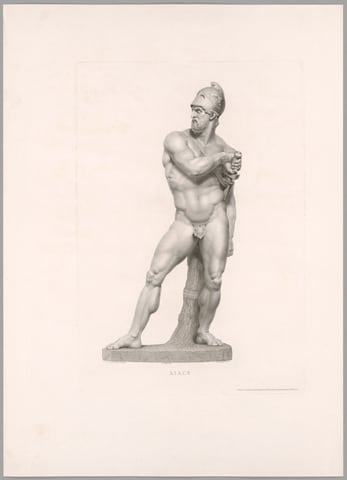
Ajax, Front View, from Oeuvre de CanovaAntonio Canova, 1817Courtesy of the Art Institute of Chicago 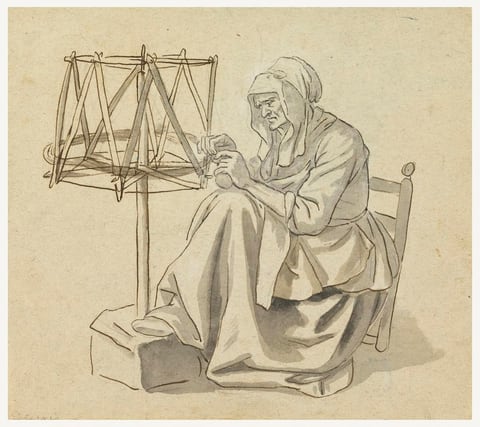
An Old Woman SpinningClaude-Louis Desrais, 1810–30Courtesy of Cooper Hewitt, Smithsonian Design Museum
First room, south wall
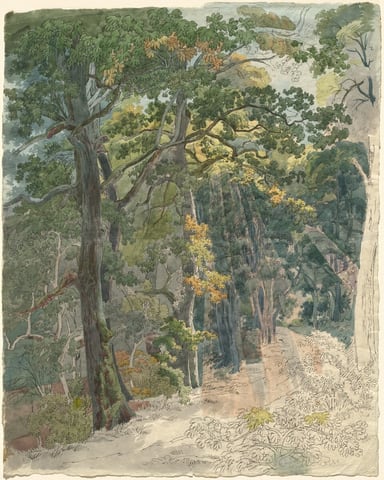
Rays of Sunlight Striking a Woodland PathFriedrich Salathé, c. 1815Courtesy National Gallery of Art, Washington 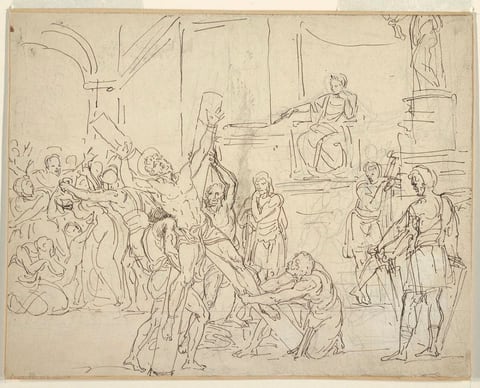
Martyrdom of St. AndrewFrancesco Coghetti, 1825–50Courtesy of Cooper Hewitt, Smithsonian Design Museum 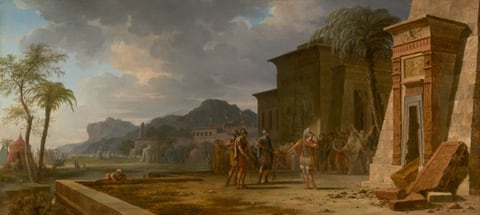
Alexander at the Tomb of Cyrus the GreatPierre Henri de Valenciennes, 1796Courtesy of the Art Institute of Chicago 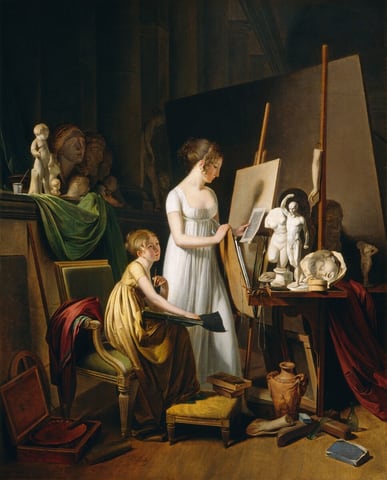
A Painter's StudioLouis-Léopold Boilly, c. 1800Courtesy National Gallery of Art, Washington
Second room, south wall
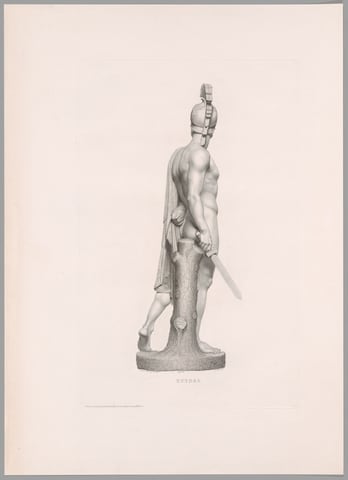
Ettore, Side View, from Oeuvre de CanovaAntonio Canova, 1817Courtesy of the Art Institute of Chicago 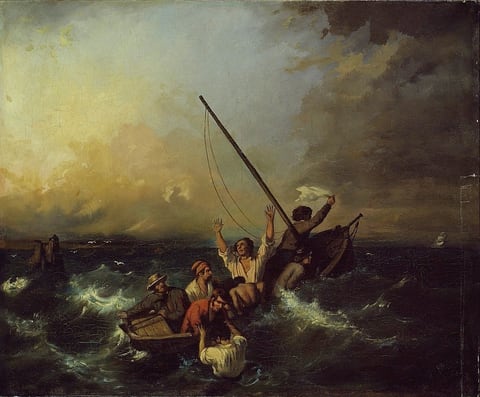
ShipwreckAfter Eugène Isabey, 19th centuryCourtesy of the Art Institute of Chicago 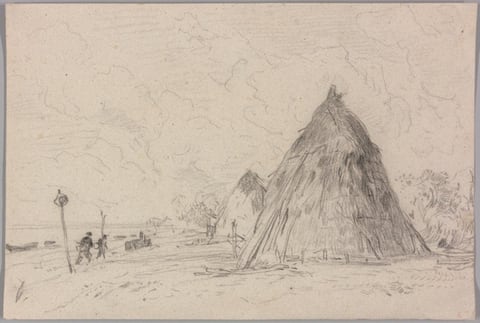
Landscape with HaystacksConstant Troyon, n.d.Courtesy of the Art Institute of Chicago 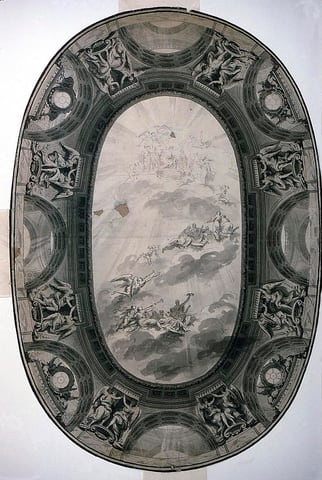
Project for the Painted Decoration of the Ceiling of a Hall (Painted Oval Ceiling)Jean Baptiste Marie Pierre, 1761Courtesy of Cooper Hewitt, Smithsonian Design Museum
Second room, north wall
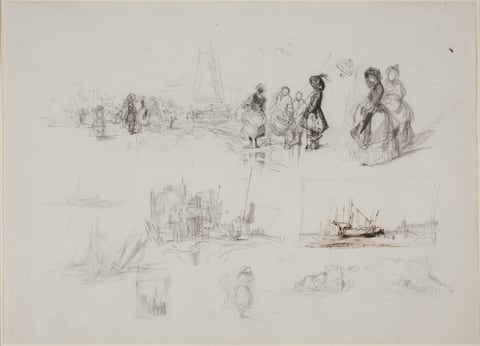
Seaside StudiesEugène Isabey, 1830sCourtesy National Gallery of Art, Washington 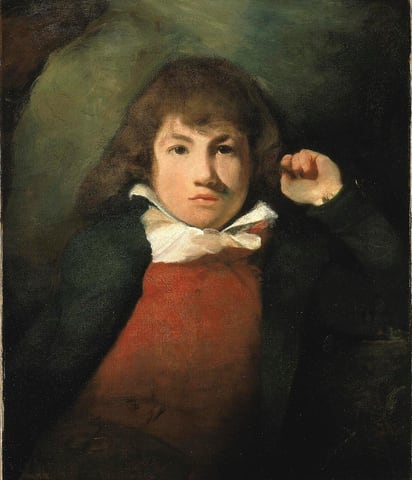
Portrait of a BoyUnrecorded Italian maker, ca. 1800Courtesy of the Smithsonian American Art Museum
Third room, north wall
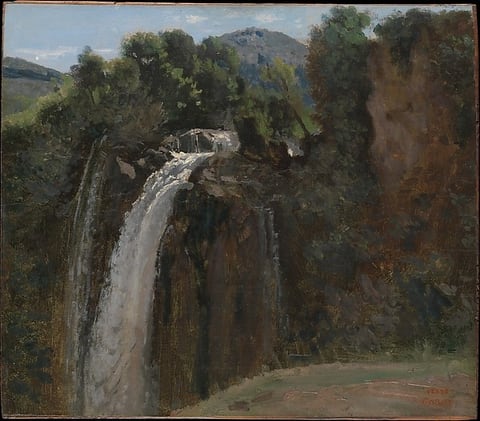
Waterfall at TerniJean Baptiste Camille Corot, 1826Courtesy of The Metropolitan Museum of Art 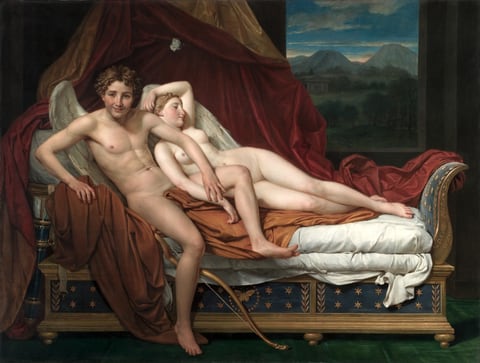
Cupid and PsycheJacques-Louis David, 1817Courtesy of the Cleveland Museum of Art