Skip to content
Ochre Editions
ArtArtistsCollectionsGalleriesDrops
SearchSign inCart (0)
The galleries · Style galleries

French classicism

Order, clarity and the ideal landscape in seventeenth-century France.

29 works · hang 9866 ·

Share French classicism, in the galleries

The rooms are imagined; every work on their walls is real.

Walk this roomRehang this room

First room, north wall

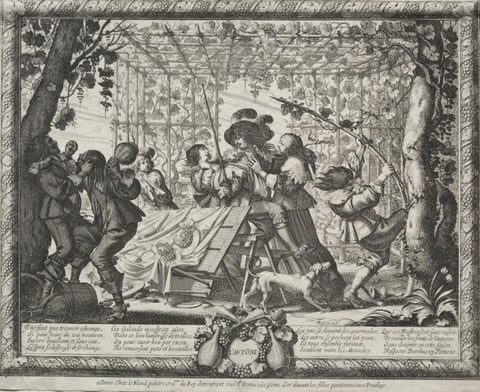
  1. The Four Seasons: Autumn, by Abraham Bosse, 1635
    The Four Seasons: AutumnAbraham Bosse, 1635Courtesy of the Cleveland Museum of Art
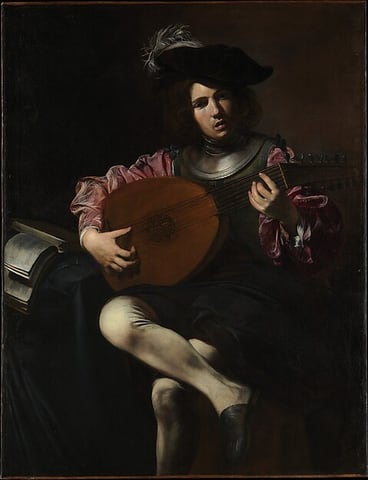
  2. Lute Player, by Valentin de Boulogne, ca. 1625–26
    Lute PlayerValentin de Boulogne, ca. 1625–26Courtesy of The Metropolitan Museum of Art
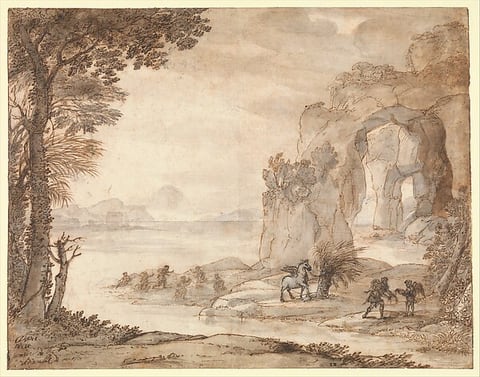
  3. Perseus and the Origin of Coral, by Claude Lorrain (Claude Gellée), ca. 1671
    Perseus and the Origin of CoralClaude Lorrain (Claude Gellée), ca. 1671Courtesy of The Metropolitan Museum of Art
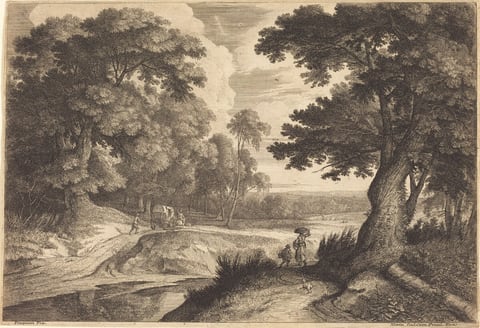
  4. The image shows an etching of a rural landscape with trees obscuring the horizon. In the distance, there is a cart on a winding path with a person walking beside it. Closer to the viewer, there is a person with a child under a tree, accompanied by a small dog. The artwork features fine and detailed brushwork with cross-hatching for texture and shadows. The color scheme is monochromatic in muted browns, emphasizing details and creating a peaceful scene under soft light filtered through the trees. The trees form a canopy framing the serene setting.
    Edge of a Wood with Peasants Going to MarketJean MorinCourtesy National Gallery of Art, Washington

First room, south wall
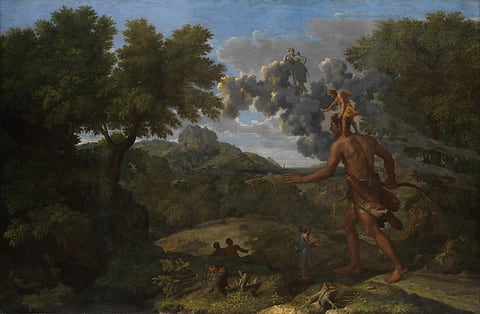
  1. Blind Orion Searching for the Rising Sun, by Nicolas Poussin, 1658
    Blind Orion Searching for the Rising SunNicolas Poussin, 1658Courtesy of The Metropolitan Museum of Art
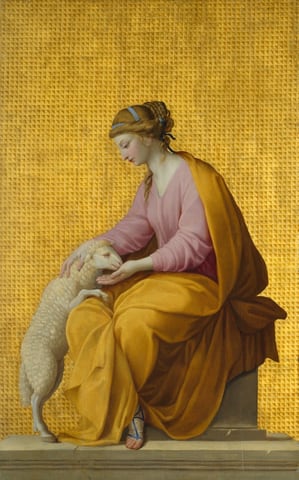
  2. A work made of oil on panel.
    MeeknessEustache Le Sueur, 1650Courtesy of the Art Institute of Chicago

Second room, south wall
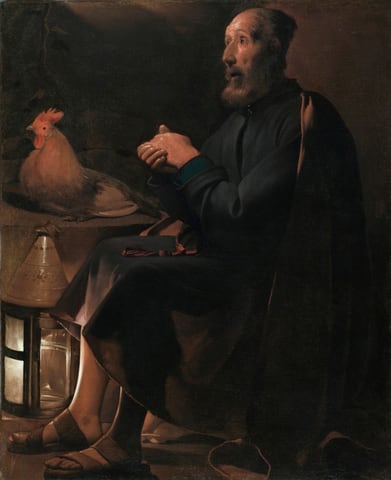
  1. Saint Peter Repentant, by Georges de La Tour, 1645
    Saint Peter RepentantGeorges de La Tour, 1645Courtesy of the Cleveland Museum of Art
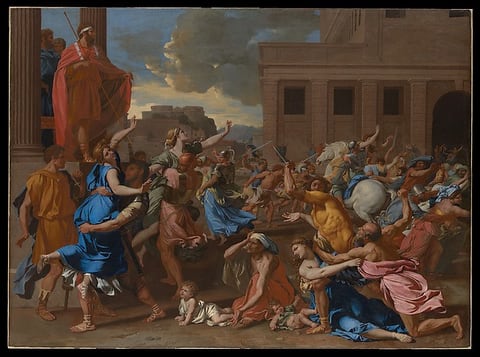
  2. The Abduction of the Sabine Women, by Nicolas Poussin, probably 1633–34
    The Abduction of the Sabine WomenNicolas Poussin, probably 1633–34Courtesy of The Metropolitan Museum of Art

Second room, north wall
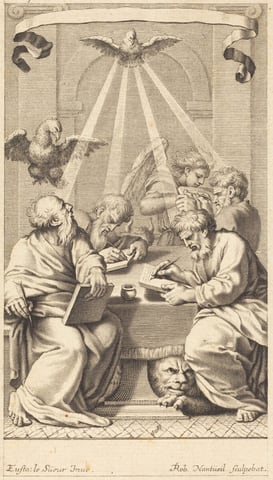
  1. The image shows four elderly men around a table. They have long hair and beards, and appear focused as they write or take notes on tablets. They wear classical robes and sit in different postures, engaged in writing or possibly calculating. Two hold writing implements and tablets, while a third holds a scroll. Above them, a seated figure with wings is present. Light rays emanate from a dove at the top, highlighting a celestial influence. An eagle is perched nearby. Architectural elements like columns and arches are in the background. A lion's head is under the table.
    The Four EvangelistsRobert NanteuilCourtesy National Gallery of Art, Washington
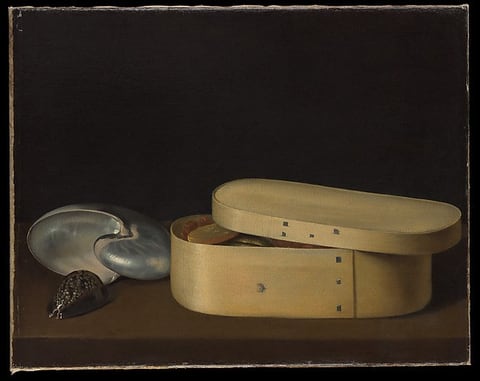
  2. Still Life with Shells and a Chip-Wood Box, by Sebastian Stoskopff, late 1620s
    Still Life with Shells and a Chip-Wood BoxSebastian Stoskopff, late 1620sCourtesy of The Metropolitan Museum of Art
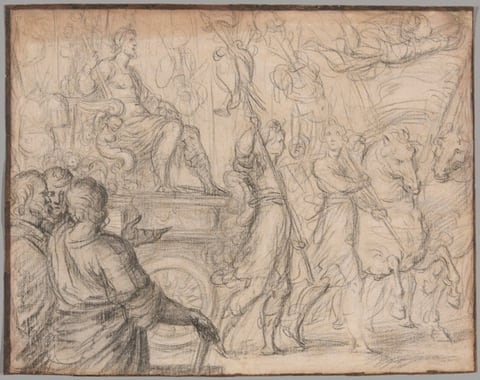
  3. A work made of black chalk, with touches of white chalk, on cream laid paper.
    A ProcessionAmbroise Dubois, c. 1610Courtesy of the Art Institute of Chicago
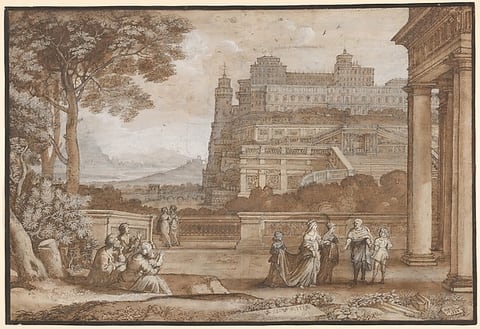
  4. Queen Esther Approaching the Palace of Ahasuerus, by Claude Lorrain (Claude Gellée), 1658
    Queen Esther Approaching the Palace of AhasuerusClaude Lorrain (Claude Gellée), 1658Courtesy of The Metropolitan Museum of Art

Third room, north wall
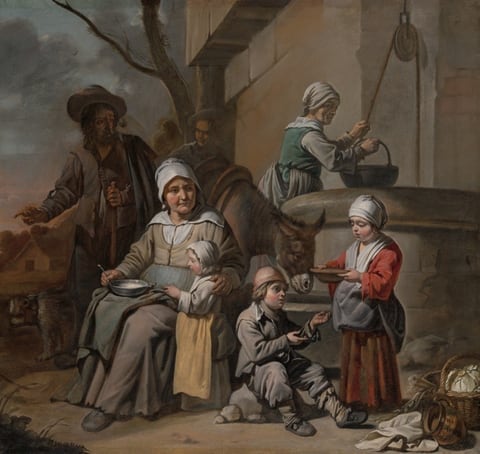
  1. A work made of oil on canvas.
    Peasant Family at a WellThe Master of the Children's Caps, 1650/60Courtesy of the Art Institute of Chicago
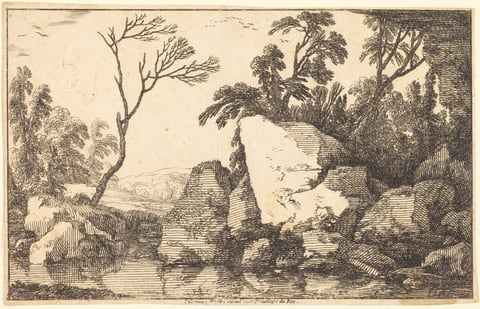
  2. The image is a landscape view with a natural scene depicted in fine etching. The horizon is situated towards the middle of the composition, where the land gently rises, and a subtle outline of distant hills is visible. Large rocks and foliage are depicted close to us, with a lone, barren tree extending upwards on the left side. The etching features intricate and well-defined brushstrokes, including thin lines and cross-hatching to create texture and depth. The color palette is monochromatic, with dark tones against a lighter background. In the distance, additional clusters of trees can be seen, rendered with similar linework to convey movement and detail.
    A Rocky PondLaurent de La Hyre, 1640Courtesy National Gallery of Art, Washington

Third room, south wall
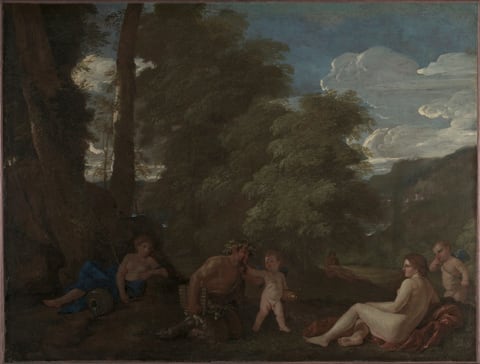
  1. Nymphs and a Satyr (Amor Vincit Omnia), by Nicolas Poussin, c. 1625–27
    Nymphs and a Satyr (Amor Vincit Omnia)Nicolas Poussin, c. 1625–27Courtesy of the Cleveland Museum of Art
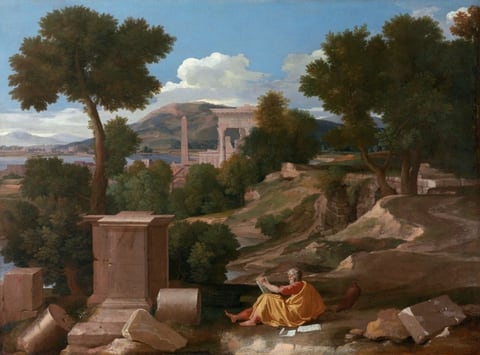
  2. Painting of Greek landscape, classical architecture, yellow, red robed man reading.
    Landscape with Saint John on PatmosNicolas Poussin, 1640Courtesy of the Art Institute of Chicago

Walk on

  • French classicism, room 2
  • More by Nicolas Poussin 6 works
  • 17th-century France 30 works
Ochre Editions

The world's museums, on your wall. Every work here is a reproduction of a public-domain original, credited to the museum that holds it.

Shop

All artCollectionsLimited dropsPrints and framing

Help

Find an orderShippingReturnsVerify a certificate

About

About Ochre EditionsMuseum creditsFor agentsDevelopers

Legal

Terms of UseTerms of SaleLimited Editions and CertificatesPrivacy PolicyCookie PolicyAcceptable Use PolicyAgent & API TermsCopyright and DMCA PolicyPrinting Your Own PhotoVulnerability Disclosure PolicyAccessibility StatementOpen-Access Credits
© 2026 Ochre EditionsPrices in US dollars. Prints ship within the United States.