Skip to content
Ochre Editions
ArtArtistsCollectionsGalleriesDrops
SearchSign inCart (0)
The galleries · Style galleries

The Etching Revival

Artists who took up the etching needle again, from Whistler to the Paris printmakers.

50 works · hang 4112 ·

Share The Etching Revival, in the galleries

The rooms are imagined; every work on their walls is real.

Walk this roomRehang this room

Section 1, north wall

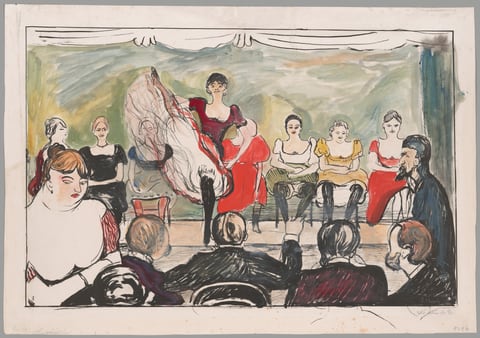
  1. A work made of lithograph in black ink, with additions in brush and red, blue, yellow, green, orange-brown and gray watercolor on ivory wove paper.
    TingletangleEdvard Munch, 1895Courtesy of the Art Institute of Chicago
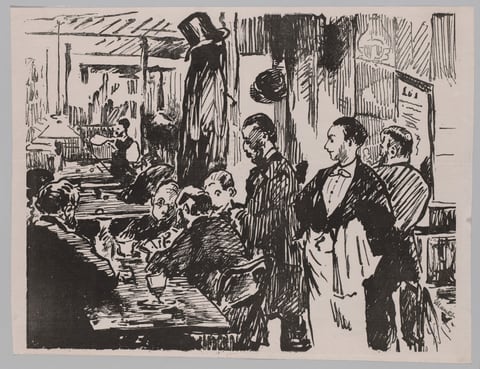
  2. At the Café, by Édouard Manet, 1874
    At the CaféÉdouard Manet, 1874Courtesy of the Cleveland Museum of Art

Section 1, south wall
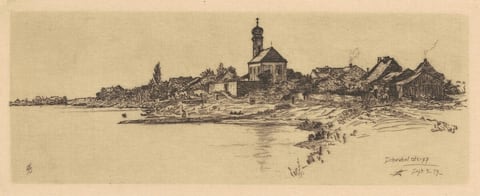
  1. The image shows a village scene viewed from a low vantage point near a water's edge. A row of small, closely packed buildings and a church with an onion-shaped dome are prominently featured. There are gentle slopes leading towards the structures. The image uses fine, detailed line work to depict texture and depth in the buildings and natural landscape. The lines are delicate and varied, creating a sense of detail and softness. The color palette is monochromatic, with dark ink on a pale background, resulting in a classic and timeless feel.
    SchwabelweissOtto Henry Bacher, 1879Courtesy National Gallery of Art, Washington
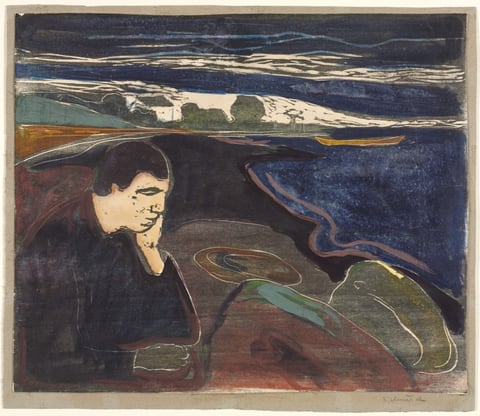
  2. Evening, Melancholy I, by Edvard Munch, 1896
    Evening, Melancholy IEdvard Munch, 1896Courtesy of the Cleveland Museum of Art
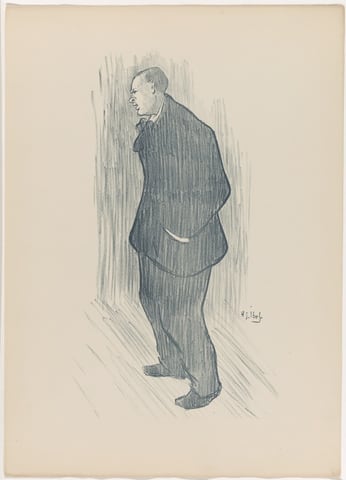
  3. A work made of lithograph in dark green on cream wove paper.
    Mévisto, from Le Café-ConcertHenri-Gabriel Ibels, 1893Courtesy of the Art Institute of Chicago

Section 2, south wall
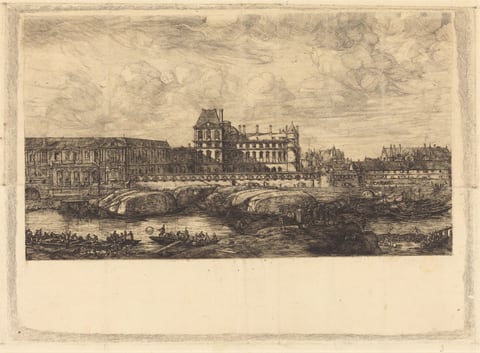
  1. The image features a riverside scene with a large building in the center and smaller structures in the background. The sky is filled with clouds, and there are boats on the water. The artwork is done in an etching style, with detailed lines showing architectural elements, boats, and water ripples. The color scheme is monochromatic in shades of brown and black.
    L'ancien Louvre d'après une peinture de Zeeman, 1651 (The Old Louvre, from a Painting by Zeeman, l651)Charles Meryon, 1866Courtesy National Gallery of Art, Washington
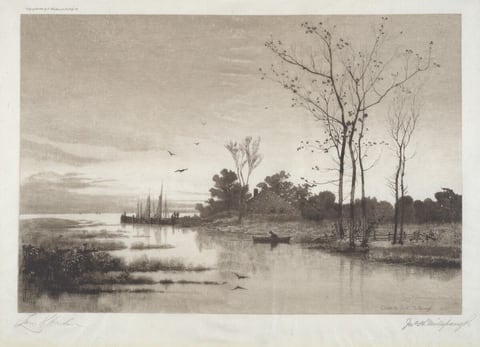
  2. The image depicts a landscape with a river flowing through it. In the foreground, there is a small boat on the water, and in the background, sailboats are docked near a strip of land. Tall trees with sparse foliage are on the right side, with a structure nestled among them near the water. The horizon is slightly above the center of the image, with a calm sky above it. The brushstrokes vary in texture, with fine strokes for the sky and water and more detailed strokes for the trees. The color palette is muted, with sepia and gray tones creating a peaceful atmosphere. Birds are scattered in the sky.
    Shrewsbury RiverJohn Hill Millspaugh, 1887Courtesy National Gallery of Art, Washington

Section 2, north wall
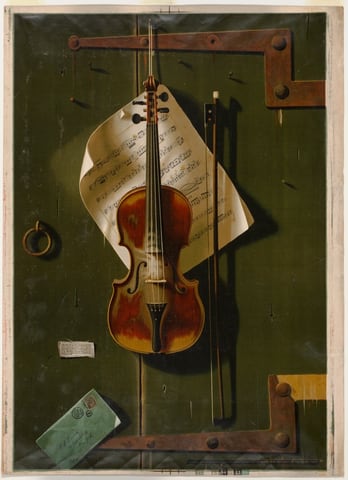
  1. A work made of color lithograph on paper.
    The Old ViolinWilliam Michael Harnett, 1887Courtesy of the Art Institute of Chicago
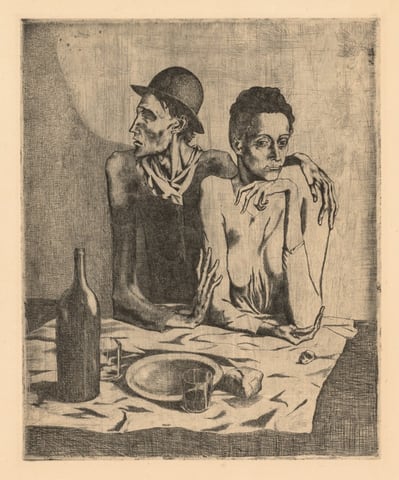
  2. The Frugal Meal, by Pablo Picasso, September 1904, printed 1913
    The Frugal MealPablo Picasso, September 1904, printed 1913Courtesy of the Cleveland Museum of Art

Section 3, north wall
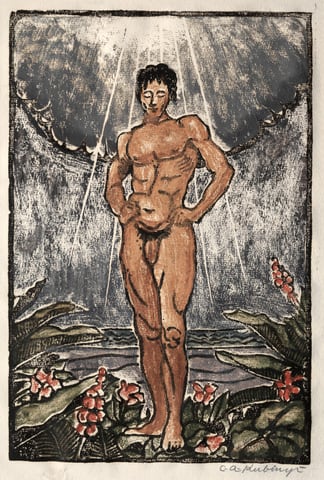
  1. The Creation, by Kálmán Kubinyi, before 1927
    The CreationKálmán Kubinyi, before 1927Courtesy of the Cleveland Museum of Art
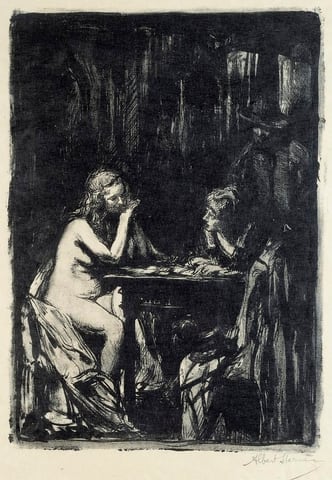
  2. The Stranger, by Albert Sterner, 1916
    The StrangerAlbert Sterner, 1916Courtesy of the Smithsonian American Art Museum
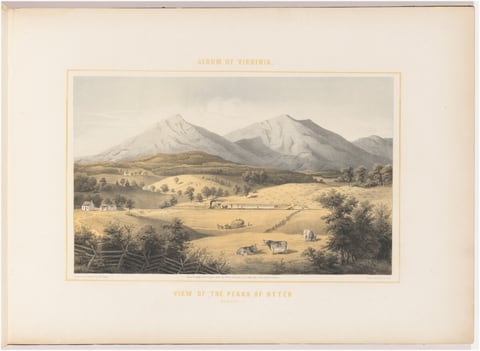
  3. The image shows a landscape with a valley leading towards two mountain peaks known as the Peaks of Otter. The horizon is low, with the mountains dominating the scene. The brushwork is smooth and delicate, and the color palette consists of muted earth tones, greens, and soft blues. In the foreground, there are cattle grazing in a field with a wooden fence, and a couple of houses among trees to the left. Further back, there are open fields with horses and agricultural activities, leading to a dense tree line at the base of the mountains.
    View of the Peaks of OtterWoldemar Rau, 1858Courtesy National Gallery of Art, Washington

Section 3, south wall
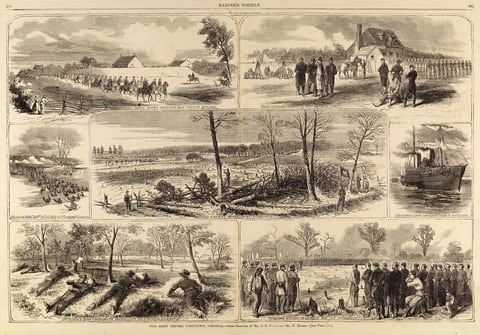
  1. Our Army before Yorktown, Virginia, from Harper's Weekly, May 3, 1862, by Winslow Homer, 1862
    Our Army before Yorktown, Virginia, from Harper's Weekly, May 3, 1862Winslow Homer, 1862Courtesy of the Smithsonian American Art Museum
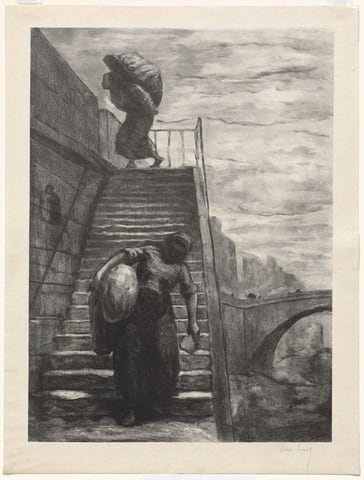
  2. Washerwomen Descending a Quai Staircase, by Alexandre Lunois, 1888
    Washerwomen Descending a Quai StaircaseAlexandre Lunois, 1888Courtesy of the Cleveland Museum of Art

Section 4, south wall
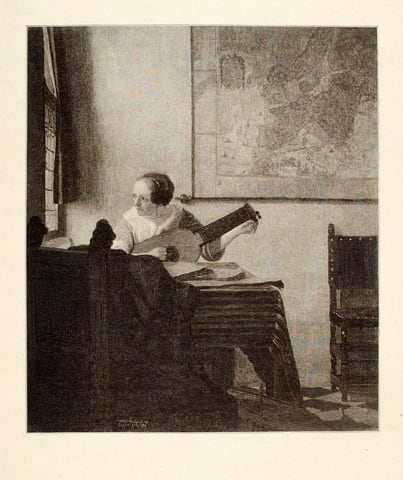
  1. Lady with the Lute, by Henry Wolf, 1909
    Lady with the LuteHenry Wolf, 1909Courtesy of the Smithsonian American Art Museum
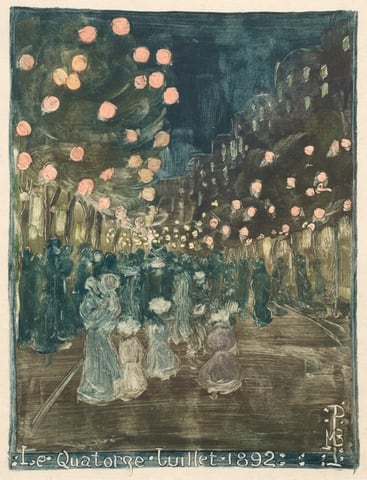
  2. Bastille Day, by Maurice Prendergast, 1892
    Bastille DayMaurice Prendergast, 1892Courtesy of the Cleveland Museum of Art

Walk on

  • The Etching Revival, room 2
  • Maurice Prendergast's contemporaries 8 works
  • 19th-century United States 198 works
Ochre Editions

The world's museums, on your wall. Every work here is a reproduction of a public-domain original, credited to the museum that holds it.

Shop

All artCollectionsLimited dropsPrints and framing

Help

Find an orderShippingReturnsVerify a certificate

About

About Ochre EditionsMuseum creditsFor agentsDevelopers

Legal

Terms of UseTerms of SaleLimited Editions and CertificatesPrivacy PolicyCookie PolicyAcceptable Use PolicyAgent & API TermsCopyright and DMCA PolicyPrinting Your Own PhotoVulnerability Disclosure PolicyAccessibility StatementOpen-Access Credits
© 2026 Ochre EditionsPrices in US dollars. Prints ship within the United States.