The Etching Revival
Artists who took up the etching needle again, from Whistler to the Paris printmakers.
Section 1, north wall
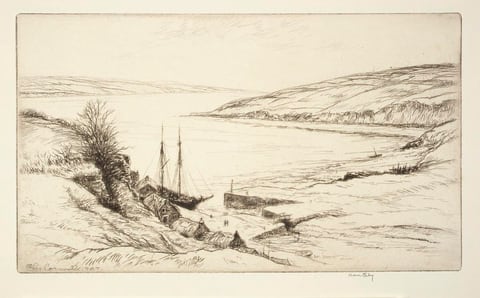
CornwallKerr Eby, 1927Courtesy of the Smithsonian American Art Museum 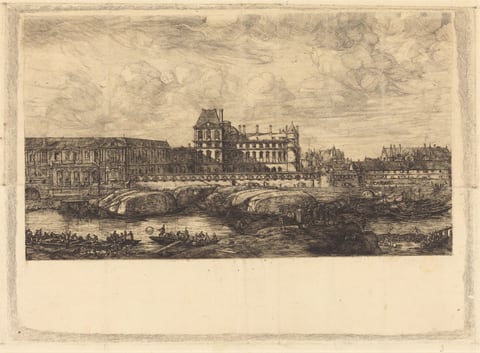
L'ancien Louvre d'après une peinture de Zeeman, 1651 (The Old Louvre, from a Painting by Zeeman, l651)Charles Meryon, 1866Courtesy National Gallery of Art, Washington
Section 1, south wall
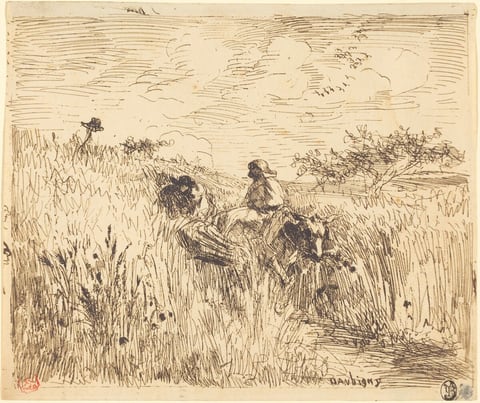
Path through a Wheat Field (Sentier dans les bles)Charles-François Daubigny, 1862Courtesy National Gallery of Art, Washington 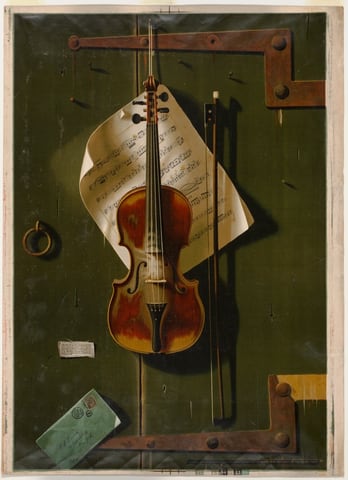
The Old ViolinWilliam Michael Harnett, 1887Courtesy of the Art Institute of Chicago
Section 2, south wall
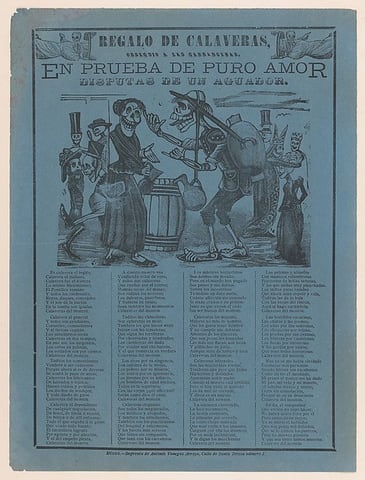
In proof of true love, a watercarrier skeleton arguing with a woman (Posada); two skeleton angels in upper corners (Manilla)José Guadalupe Posada, ca. 1890–96Courtesy of The Metropolitan Museum of Art 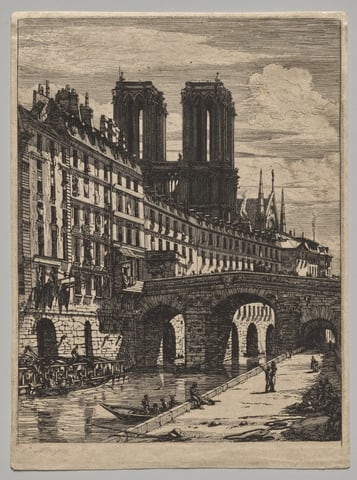
The Petit PontCharles Meryon, 1850Courtesy of the Cleveland Museum of Art
Section 2, north wall
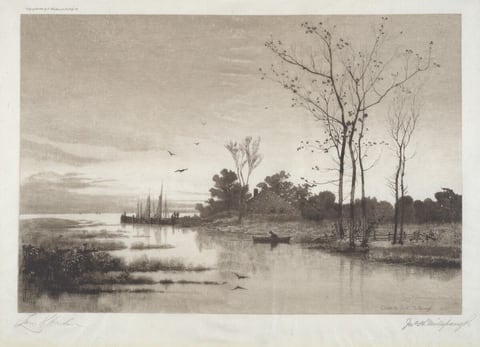
Shrewsbury RiverJohn Hill Millspaugh, 1887Courtesy National Gallery of Art, Washington 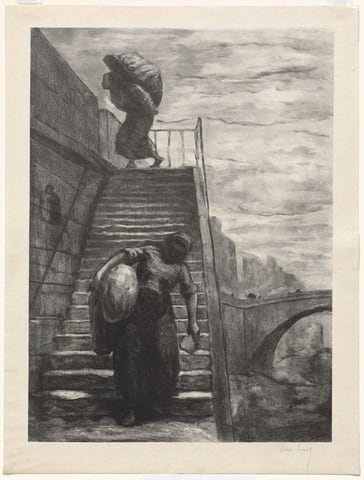
Washerwomen Descending a Quai StaircaseAlexandre Lunois, 1888Courtesy of the Cleveland Museum of Art
Section 3, north wall
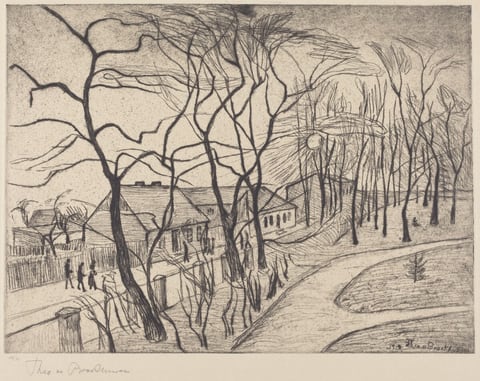
LandscapeTheo von BrockhusenCourtesy National Gallery of Art, Washington 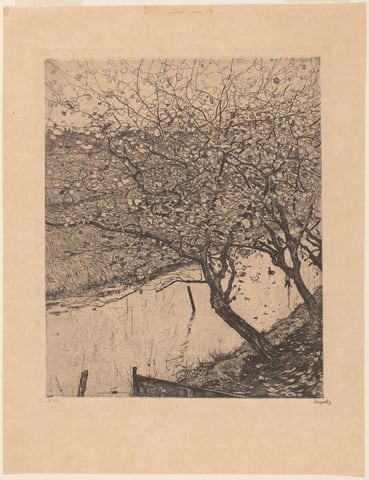
Apple Trees along the Side of a DitchPieter Dupont, 1894Courtesy National Gallery of Art, Washington
Section 3, south wall
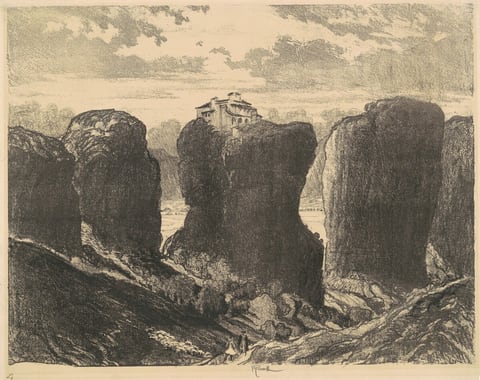
The Cliffs of the TrinityJoseph Pennell, 1913Courtesy National Gallery of Art, Washington 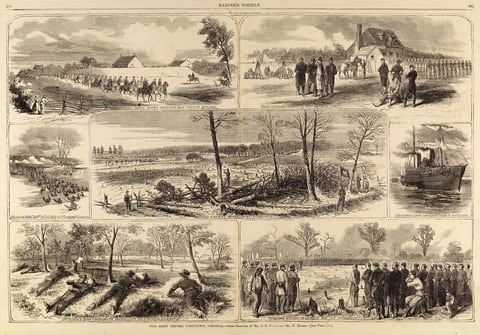
Our Army before Yorktown, Virginia, from Harper's Weekly, May 3, 1862Winslow Homer, 1862Courtesy of the Smithsonian American Art Museum
Section 4, south wall
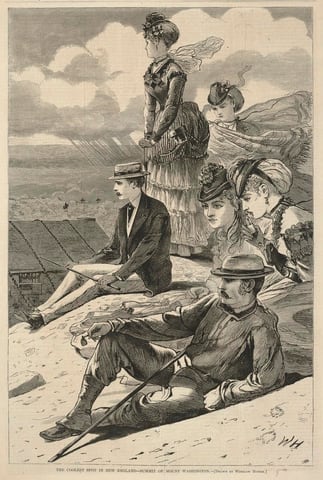
The Coolest Spot in New England--Summit of Mount Washington, from Harper's Bazar, July 23, 1870Winslow Homer, 1870Courtesy of the Smithsonian American Art Museum 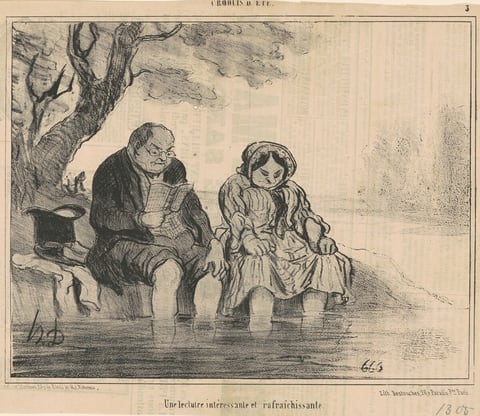
Une lecture intéressante et rafraichissanteHonoré Daumier, 1854Courtesy National Gallery of Art, Washington
Section 4, north wall
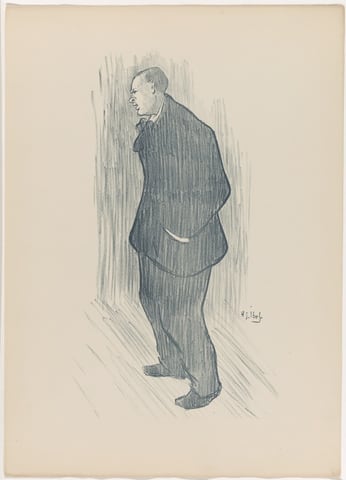
Mévisto, from Le Café-ConcertHenri-Gabriel Ibels, 1893Courtesy of the Art Institute of Chicago 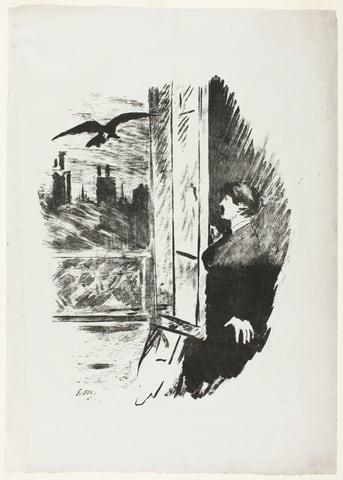
At the window ("Open here I flung the shutter..."), from The Raven (Le Corbeau)Édouard Manet, 1875Courtesy of the Art Institute of Chicago