Still Life
A table, a vessel, a few things arranged under a window: still life gave painters a subject they could control completely, and they used it to test light, texture and the passing of time. The genre's quiet surface often carries a moral about abundance and decay.
North wall
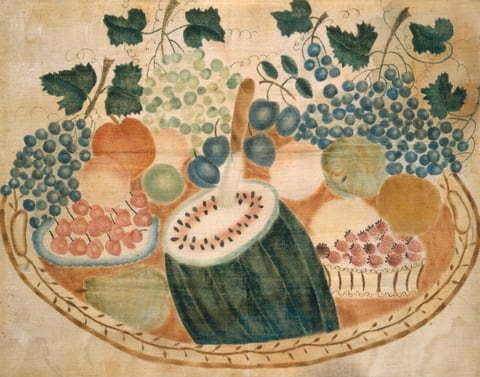
Fruit on a TrayUnrecorded American maker, c. 1840Courtesy National Gallery of Art, Washington 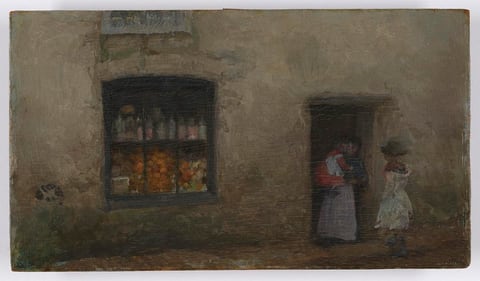
An Orange Note: Sweet ShopJames McNeill Whistler, 1883 or 1884Courtesy of the National Museum of Asian Art, Smithsonian Institution 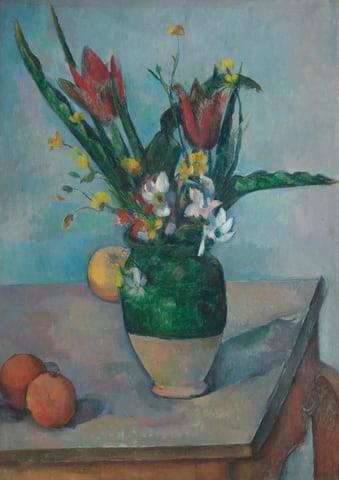
The Vase of TulipsPaul Cézanne, c. 1890Courtesy of the Art Institute of Chicago 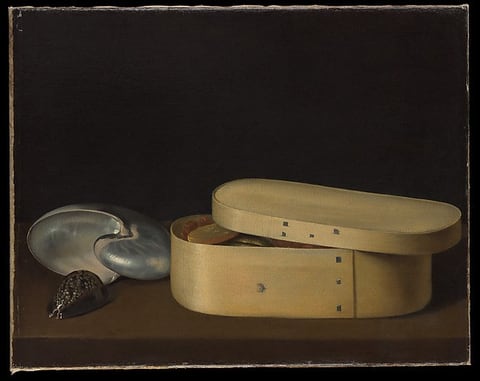
Still Life with Shells and a Chip-Wood BoxSebastian Stoskopff, late 1620sCourtesy of The Metropolitan Museum of Art
East wall
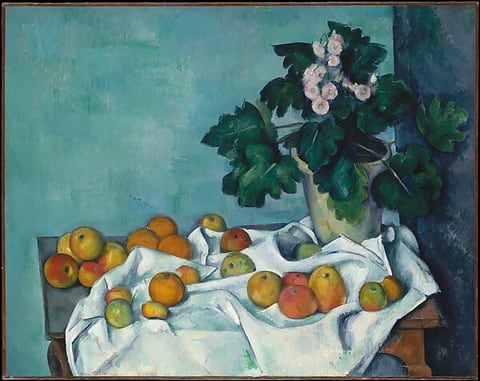
Still Life with Apples and a Pot of PrimrosesPaul Cézanne, ca. 1890Courtesy of The Metropolitan Museum of Art 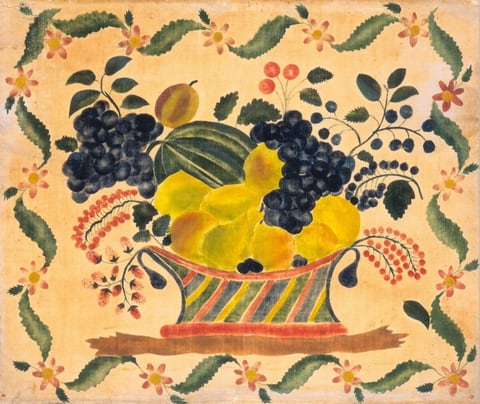
Basket of FruitUnrecorded American maker, c. 1830Courtesy National Gallery of Art, Washington 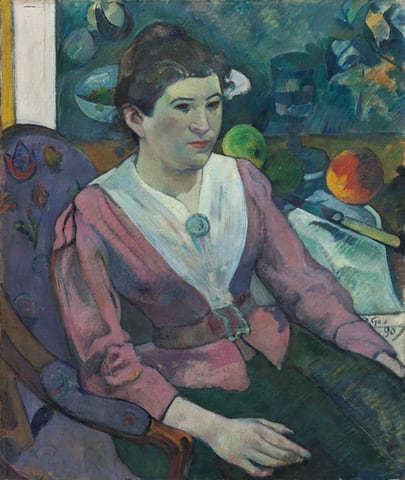
Woman in Front of a Still Life by CezannePaul Gauguin, 1890Courtesy of the Art Institute of Chicago 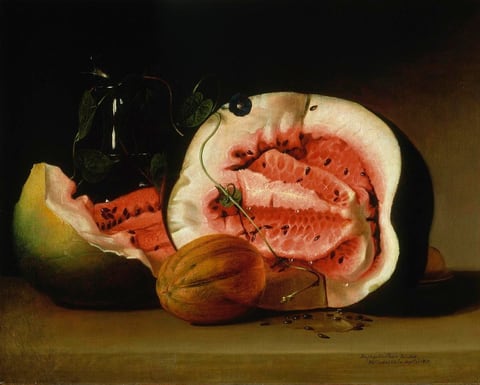
Melons and Morning GloriesRaphaelle Peale, 1813Courtesy of the Smithsonian American Art Museum
West wall
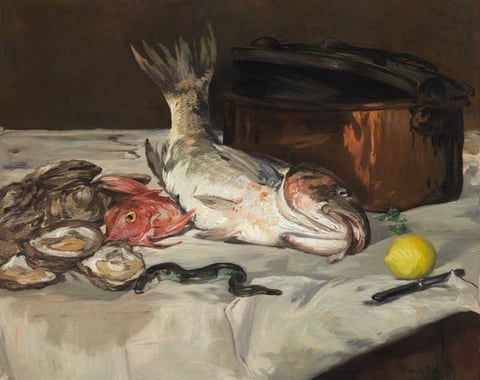
Fish (Still Life)Édouard Manet, 1864Courtesy of the Art Institute of Chicago 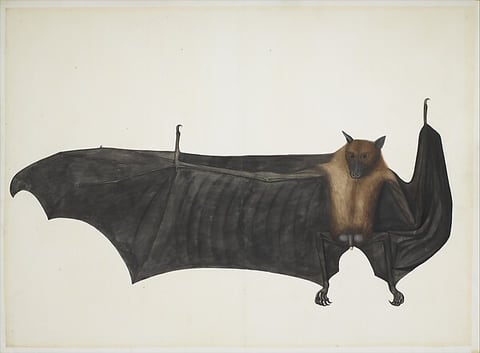
Great Indian Fruit BatBhawani Das, ca. 1777–82Courtesy of The Metropolitan Museum of Art 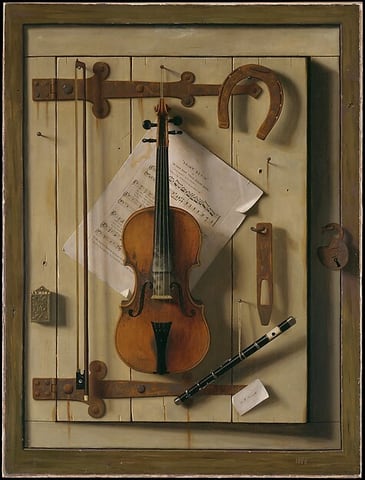
Still Life—Violin and MusicWilliam Michael Harnett, 1888Courtesy of The Metropolitan Museum of Art 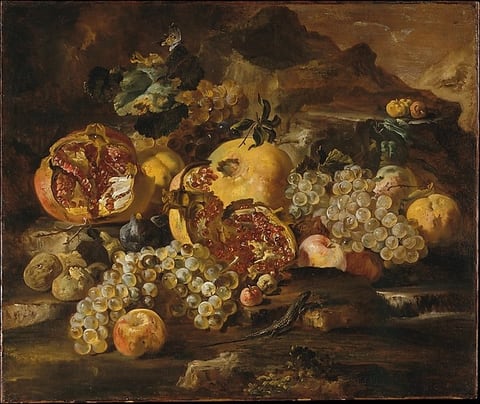
Pomegranates and Other Fruit in a LandscapeAbraham BrueghelCourtesy of The Metropolitan Museum of Art
South wall
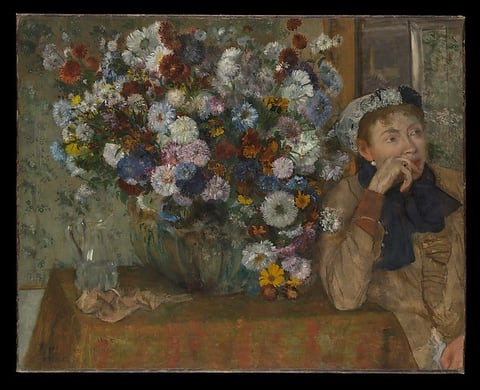
A Woman Seated beside a Vase of Flowers (Madame Paul Valpinçon?)Edgar Degas, 1865Courtesy of The Metropolitan Museum of Art 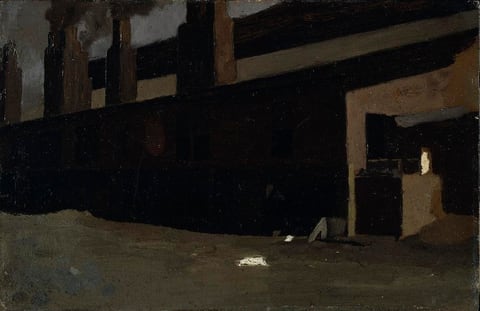
Factory--Study for "Ironworkers, Noontime"/Verso: Still Life with OrangeThomas Anshutz, (1880)Courtesy of the Hirshhorn Museum and Sculpture Garden, Smithsonian Institution 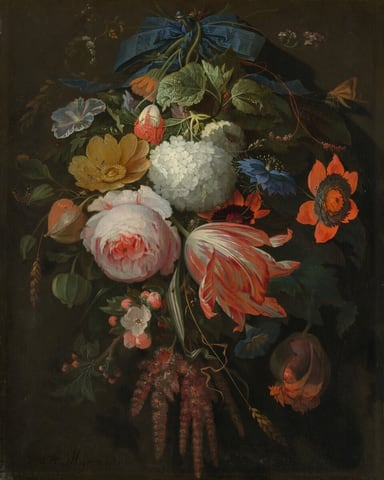
A Hanging Bouquet of FlowersAbraham Mignon, probably 1665/1670Courtesy National Gallery of Art, Washington 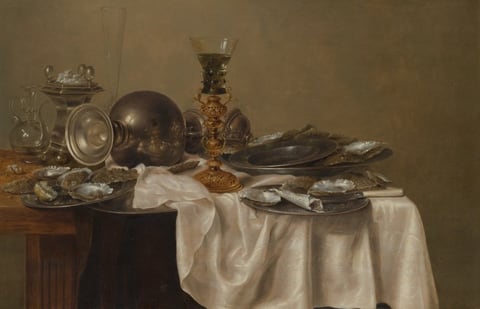
Breakfast Still LifeWillem Claesz. Heda, 1647Courtesy of the Art Institute of Chicago