Skip to content
Ochre Editions
ArtArtistsCollectionsGalleriesDrops
SearchSign inCart (0)
The galleries · Time and place

The 19th century

Works made in the 19th century, anywhere in the world.

731 works · hang 1844 ·

Share The 19th century, in the galleries

The rooms are imagined; every work on their walls is real.

Walk this roomRehang this room

Section 1, north wall

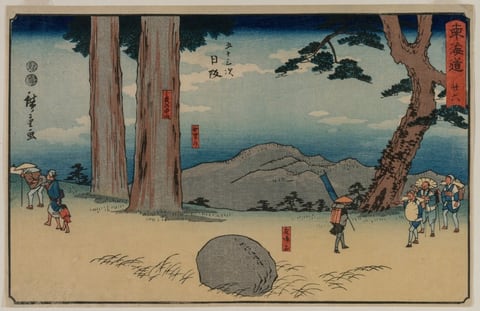
  1. Nissaka: The Night-Weeping Stone at Sayo no Nakayama, from the series The Fifty-Three Stations of the Tōkaidō, by Utagawa Hiroshige, c. 1848–50
    Nissaka: The Night-Weeping Stone at Sayo no Nakayama, from the series The Fifty-Three Stations of the TōkaidōUtagawa Hiroshige, c. 1848–50Courtesy of the Cleveland Museum of Art
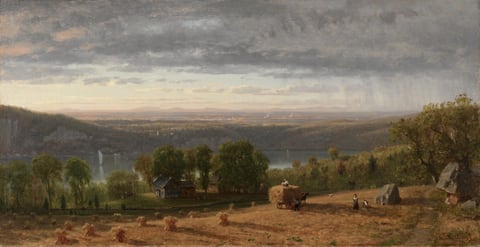
  2. Landscape with Haywain, by Worthington Whittredge, 1861
    Landscape with HaywainWorthington Whittredge, 1861Courtesy of the Cleveland Museum of Art
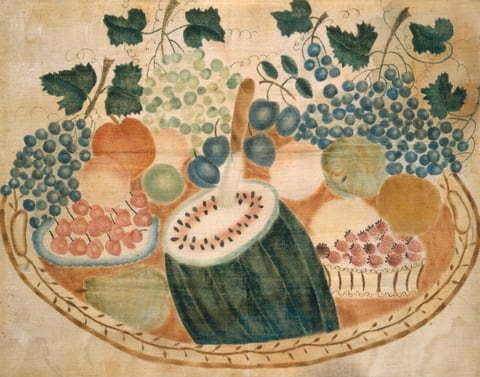
  3. The image shows a large cut watermelon in a woven basket surrounded by various fruits including grapes, peaches, and small round red fruits. The color palette includes greens, blues, oranges, and browns. The basket takes up most of the space and is filled with fruits, with grape clusters hanging above it.
    Fruit on a TrayUnrecorded American maker, c. 1840Courtesy National Gallery of Art, Washington

Section 1, south wall
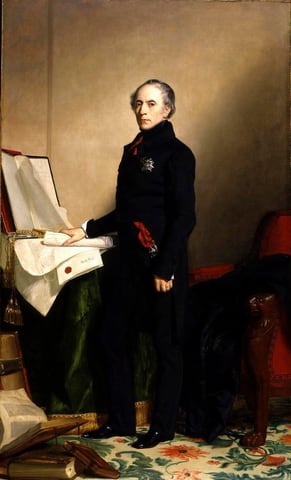
  1. Francois Pierre Guillaume Guizot, by George Peter Alexander Healy, 1841
    Francois Pierre Guillaume GuizotGeorge Peter Alexander Healy, 1841Courtesy of the Smithsonian American Art Museum
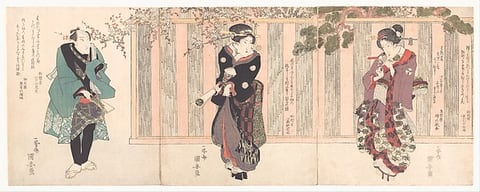
  2. Three Kabuki Actors Playing Hanetsuki, by Utagawa Kuniyasu, ca. 1823
    Three Kabuki Actors Playing HanetsukiUtagawa Kuniyasu, ca. 1823Courtesy of The Metropolitan Museum of Art
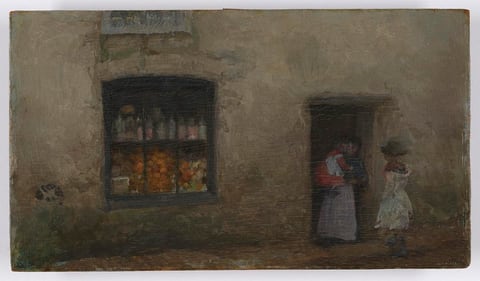
  3. Oil painting
    An Orange Note: Sweet ShopJames McNeill Whistler, 1883 or 1884Courtesy of the National Museum of Asian Art, Smithsonian Institution
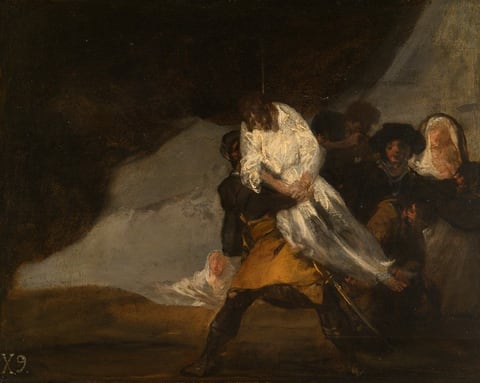
  4. A work made of oil on panel.
    The Hanged MonkFrancisco Goya, c. 1810Courtesy of the Art Institute of Chicago

Section 2, south wall
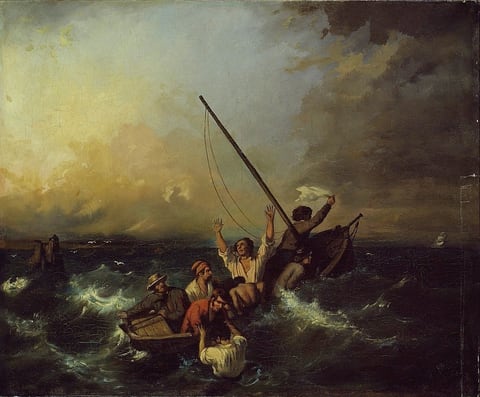
  1. A work made of oil on canvas.
    ShipwreckAfter Eugène Isabey, 19th centuryCourtesy of the Art Institute of Chicago
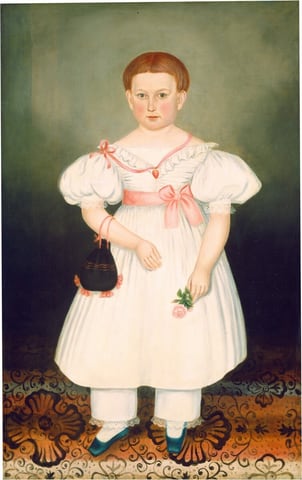
  2. The image shows a child standing upright, facing forward. They have fair skin, rounded cheeks, short reddish-brown hair, and are wearing a white dress with lace details and a pink ribbon, white pants with lace trim, blue shoes, a red necklace and a heart-shaped pendant. They hold a light pink rose in their left hand and a small black drawstring purse with red accents in their right hand. The background is a gradient from dark green to light green, with a floral-patterned carpet in black, brown, and red on the floor.
    Girl with Reticule and RoseJoseph Whiting Stock, c. 1840Courtesy National Gallery of Art, Washington
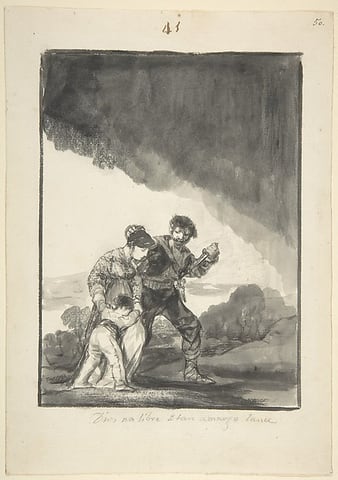
  3. God save us from such a bitter fate; a bandit threatening a woman and a child with a knife, page 41 from the "Black Border Album" (E), by Francisco Goya, ca. 1816–20
    God save us from such a bitter fate; a bandit threatening a woman and a child with a knife, page 41 from the "Black Border Album" (E)Francisco Goya, ca. 1816–20Courtesy of The Metropolitan Museum of Art
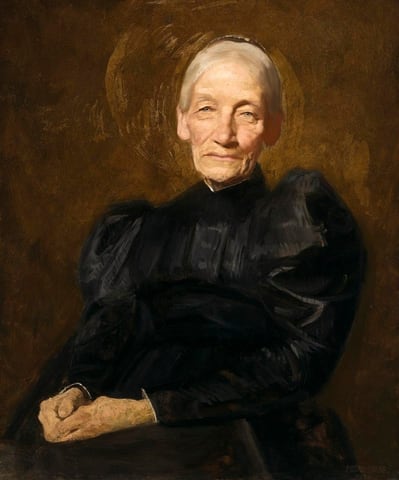
  4. Artist: Robert Bolling Brandegee, Sitter: Sarah Porter, Current owner: National Portrait Gallery, Smithsonian Institution
    Sarah PorterRobert Bolling Brandegee, 1896Courtesy of the National Portrait Gallery, Smithsonian Institution

Section 2, north wall
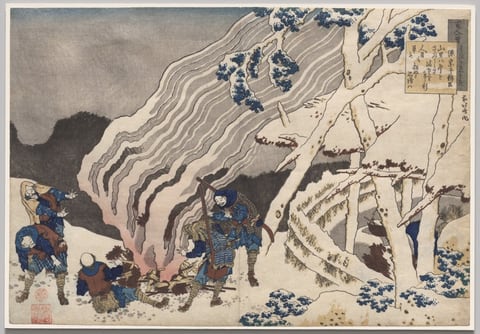
  1. Poem by Minamoto no Muneyuki from the series One Hundred Poems by One Hundred Poets Explained by the Nurse, by Katsushika Hokusai, 1835–36
    Poem by Minamoto no Muneyuki from the series One Hundred Poems by One Hundred Poets Explained by the NurseKatsushika Hokusai, 1835–36Courtesy of the Cleveland Museum of Art
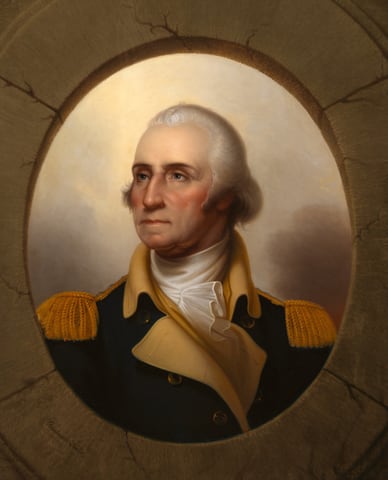
  2. Artist: Rembrandt Peale, Sitter: George Washington, Current owner: National Portrait Gallery, Smithsonian Institution
    George Washington (Porthole type)Rembrandt Peale, c. 1853Courtesy of the National Portrait Gallery, Smithsonian Institution
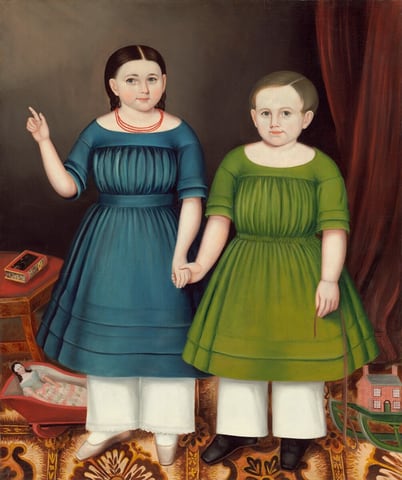
  3. The image features two young children standing side by side. The child on the left extends one arm sideways and has the other arm lowered, while the child on the right has both arms relaxed by their sides, one holding a string. Both children have round faces with light complexions; the child on the left has dark brown hair styled in waves down to the shoulders, while the child on the right has light brown hair. The child on the left is dressed in a blue dress with a loosely gathered waist and short sleeves, white stockings, white shoes, and a red beaded necklace. The child on the right wears a green dress with similar design features, white stockings, and black shoes. Near their feet are a toy doll in a red cradle and a small toy house. In the background, there is a plain dark wall, a deep red drapery, a carpet with elaborate patterns, and a small wooden table with a box on top.
    Mary and Francis WilcoxJoseph Whiting Stock, 1845Courtesy National Gallery of Art, Washington

Section 3, north wall
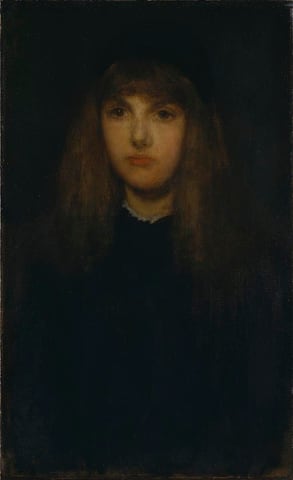
  1. James Abbott McNeill Whistler
    Girl in Black (Pouting Tom)James McNeill Whistler, (1896-1901)Courtesy of the Hirshhorn Museum and Sculpture Garden, Smithsonian Institution
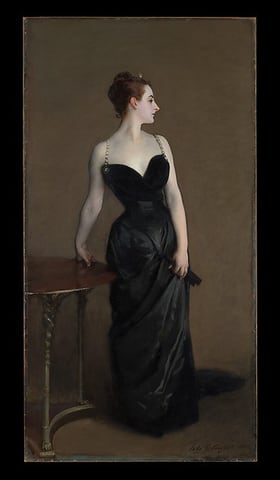
  2. Madame X (Virginie Amélie Avegno Gautreau), by John Singer Sargent, 1883–84
    Madame X (Virginie Amélie Avegno Gautreau)John Singer Sargent, 1883–84Courtesy of The Metropolitan Museum of Art

Walk on

  • The 19th century, room 2
  • More by John Singer Sargent 4 works
  • More Realism 41 works
Ochre Editions

The world's museums, on your wall. Every work here is a reproduction of a public-domain original, credited to the museum that holds it.

Shop

All artCollectionsLimited dropsPrints and framing

Help

Find an orderShippingReturnsVerify a certificate

About

About Ochre EditionsMuseum creditsFor agentsDevelopers

Legal

Terms of UseTerms of SaleLimited Editions and CertificatesPrivacy PolicyCookie PolicyAcceptable Use PolicyAgent & API TermsCopyright and DMCA PolicyPrinting Your Own PhotoVulnerability Disclosure PolicyAccessibility StatementOpen-Access Credits
© 2026 Ochre EditionsPrices in US dollars. Prints ship within the United States.