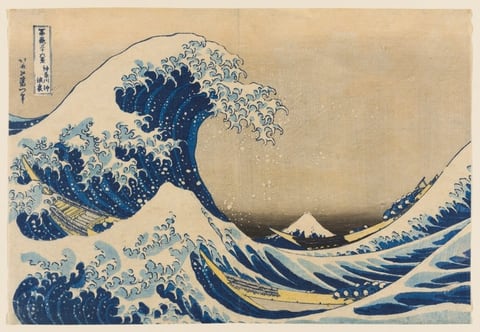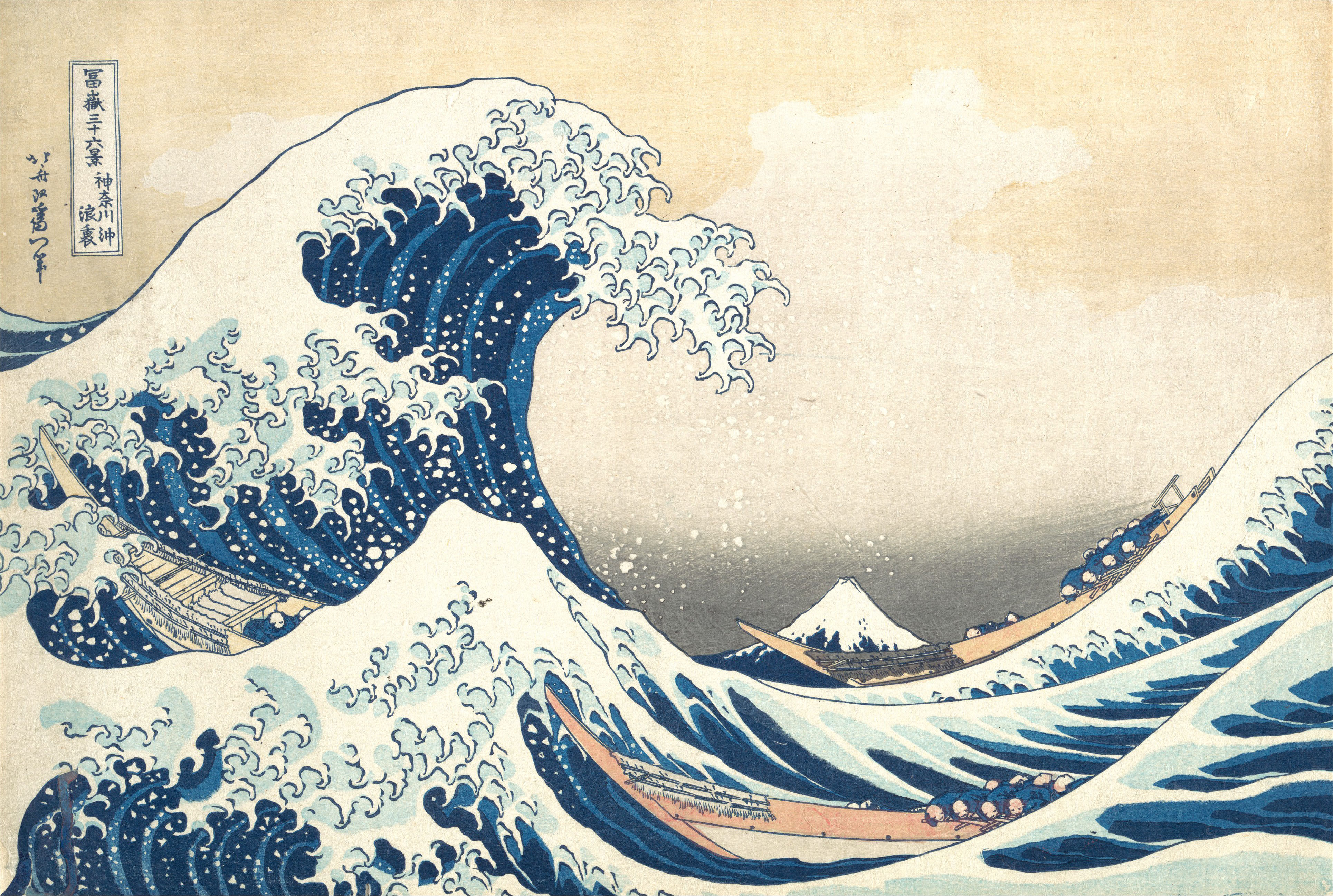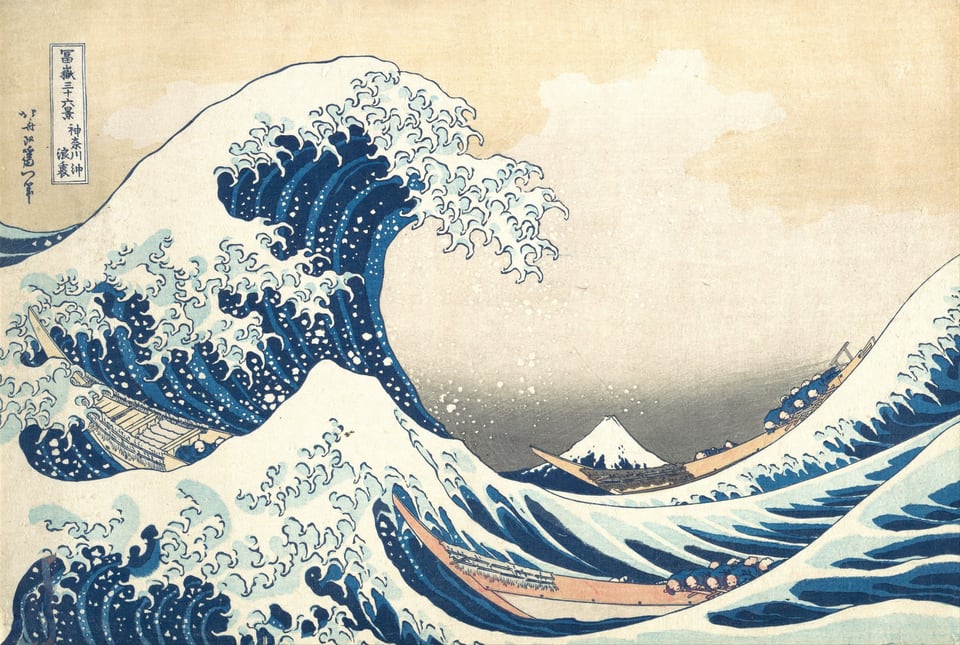
Under the Wave off Kanagawa (Kanagawa oki nami ura), also known as The Great Wave, from the series Thirty-six Views of Mount Fuji (Fugaku sanjūrokkei)ca. 1830–32
The most famous image in Japanese art pits human fragility against the force of nature: boatmen bend to their oars beneath a wall of water whose fingers of foam reach down towards them, while Mount Fuji, the sacred mountain, sits calm and tiny in the distance. More about this work
About this work
The most famous image in Japanese art pits human fragility against the force of nature: boatmen bend to their oars beneath a wall of water whose fingers of foam reach down towards them, while Mount Fuji, the sacred mountain, sits calm and tiny in the distance. Hokusai designed it around 1830–32 for his series Thirty-Six Views of Mount Fuji. When Japanese prints reached Europe later in the century, the Great Wave captivated artists and composers alike: Van Gogh wrote admiringly of its claw-like waves, and Debussy chose it for the cover of the first edition of La Mer.
Written by Ochre Editions.
How it was made
- Colour woodblock print
- In Japan these were a team effort. The artist drew the design, a carver cut it into cherry-wood blocks, one block for each colour, and a printer brushed on the pigment and rubbed each sheet by hand. Full-colour prints of this kind were called nishiki-e, “brocade pictures”, from the 1760s on.
Katsushika Hokusai
Japanese, 1760–1849
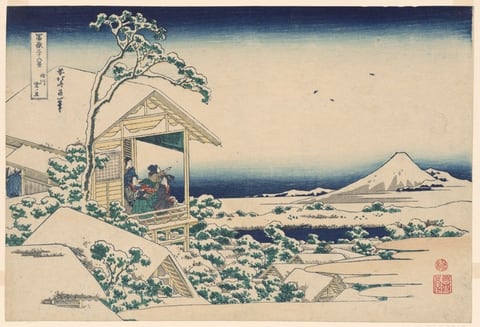
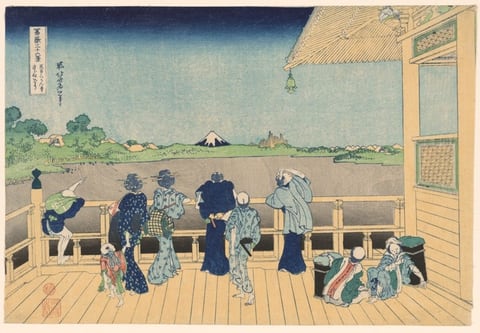
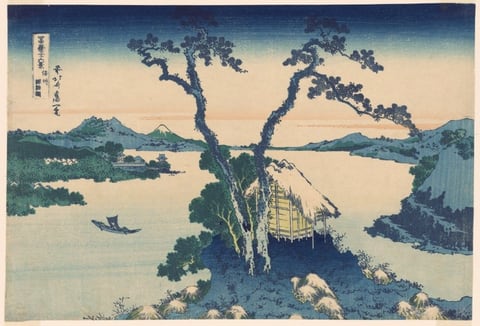
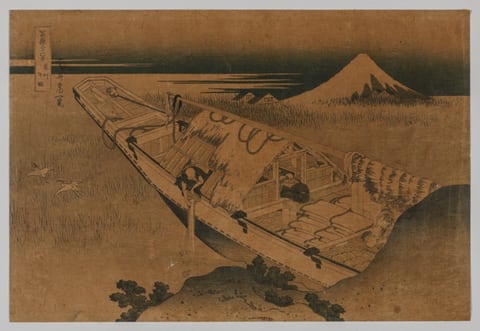
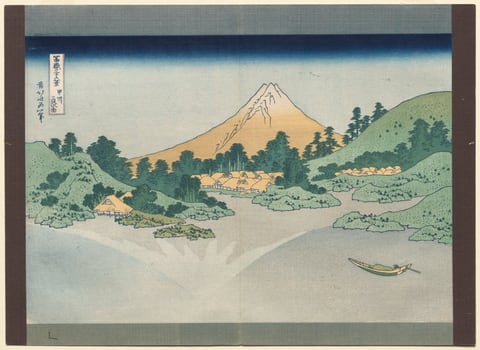
Hokusai trained in the studio of the actor-portraitist Katsukawa Shunshō and went on to work under more than thirty names across a career of some seventy years. Alongside book illustration, paintings and the sketch volumes known as Hokusai Manga, he made landscape a leading subject of ukiyo-e with Thirty-six Views of Mount Fuji, issued around 1830–33, in which the mountain appears from city, coast and countryside, often in the newly imported Prussian blue.
Written by Ochre Editions.
Ukiyo-e
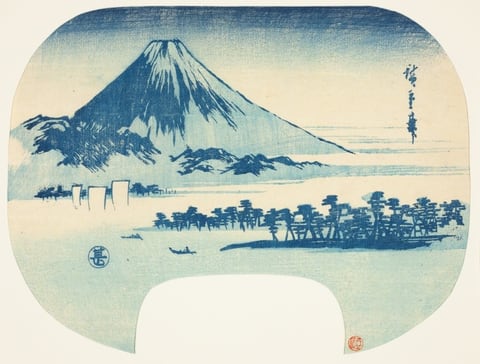
Japanese woodblock prints of the floating world: actors, courtesans, landscapes and the sea.
Rights and the museum’s record
Public domain. The Met has dedicated this image to the public domain under CC0, so anyone may copy, adapt and use it, for any purpose, without asking. Our prints and files are reproductions made from the museum’s image; the museum doesn’t endorse them.
- Object number
- JP1847
- Credit
- Courtesy of The Metropolitan Museum of Art
- Type
- Prints
- Department
- Asian Art
- Licence
- CC0 1.0 Universal
- Museum record
- See it on the museum’s site
Report this work
More by Katsushika Hokusai
All their works