The Falls of Niagaraca. 1825
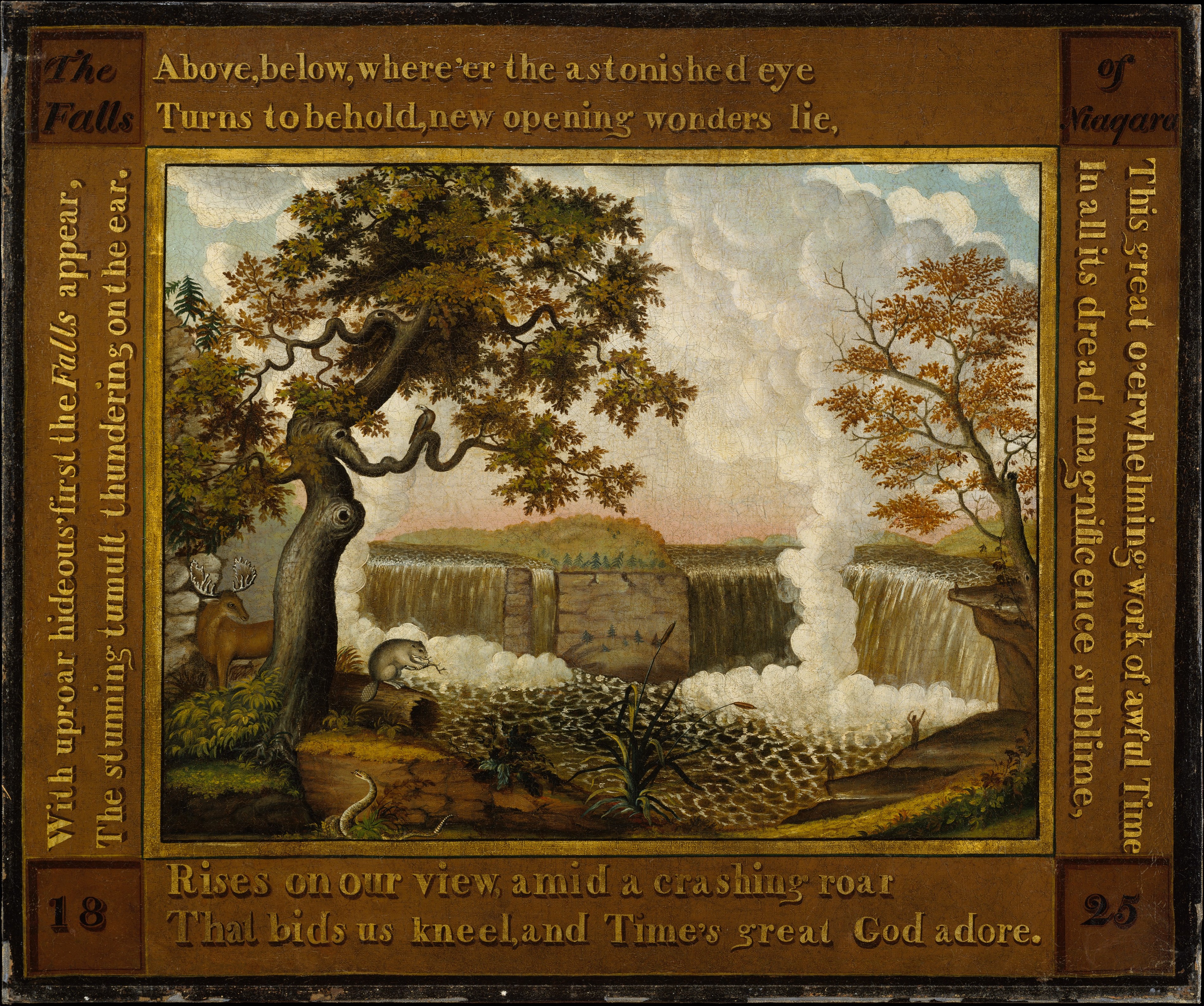
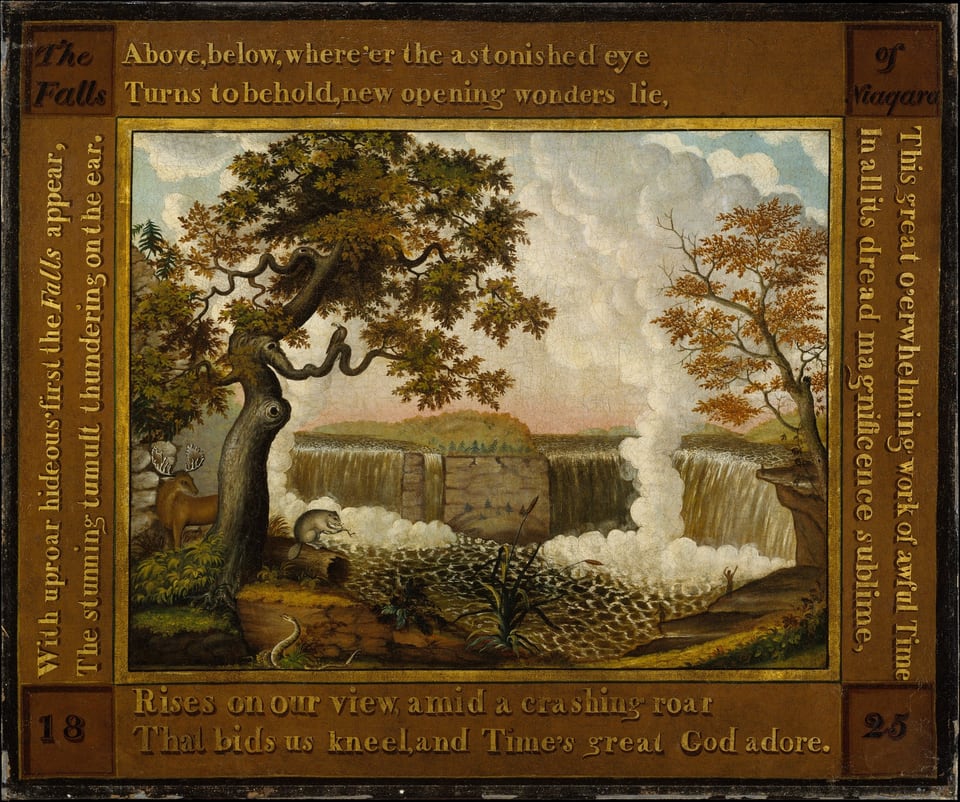
Niagara Falls pours down at the centre while animals of the American wilderness, among them an eagle and a snake, gather in the foreground as if presenting the wildlife of the continent. More about this work
About this work
Niagara Falls pours down at the centre while animals of the American wilderness, among them an eagle and a snake, gather in the foreground as if presenting the wildlife of the continent. Edward Hicks, a Quaker preacher from Pennsylvania who earned his living as a sign and carriage painter, probably based the view on a printed source rather than on a visit, and he framed it with lines of verse lettered around the border. The flattened forms, bright colour and lettered frame put the skills of his trade to the service of wonder at the American landscape.
Written by Ochre Editions.
How it was made
- Oil paint
- Pigment ground in a drying oil, usually linseed. It dries slowly, so painters could blend on the canvas, build up thin translucent glazes, and rework a picture over weeks. Canvas replaced wooden panels in the 1500s because it is lighter and can be rolled.
Edward Hicks
American, 1780–1849 · Born in Langhorne, Pennsylvania; died in Newtown, Pennsylvania.
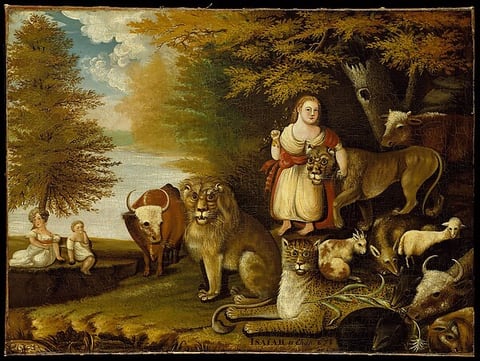
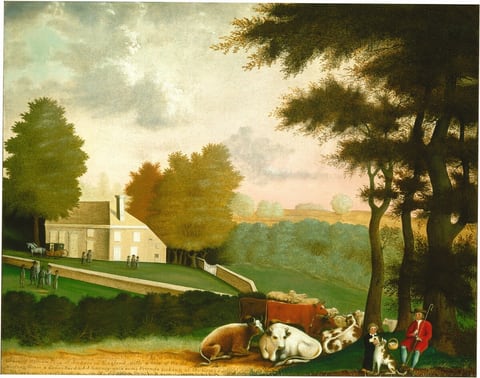
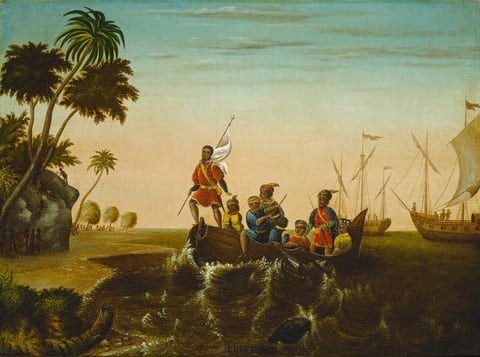
Hicks was a Quaker minister in Bucks County, Pennsylvania, who earned his living as a coach and sign painter. He is best known for the Peaceable Kingdom, a subject drawn from Isaiah’s prophecy of animals lying down together, which he painted more than sixty times, often with William Penn’s treaty with the Lenape in the background. The pictures reflect his faith and the divisions within his own Quaker community. He also painted farm scenes and historical subjects.
Written by Ochre Editions.
Rights and the museum’s record
Public domain. The Met has dedicated this image to the public domain under CC0, so anyone may copy, adapt and use it, for any purpose, without asking. Our prints and files are reproductions made from the museum’s image; the museum doesn’t endorse them.
- Object number
- 62.256.3
- Credit
- Courtesy of The Metropolitan Museum of Art
- Type
- Painting
- Department
- The American Wing
- Licence
- CC0 1.0 Universal
- Museum record
- See it on the museum’s site