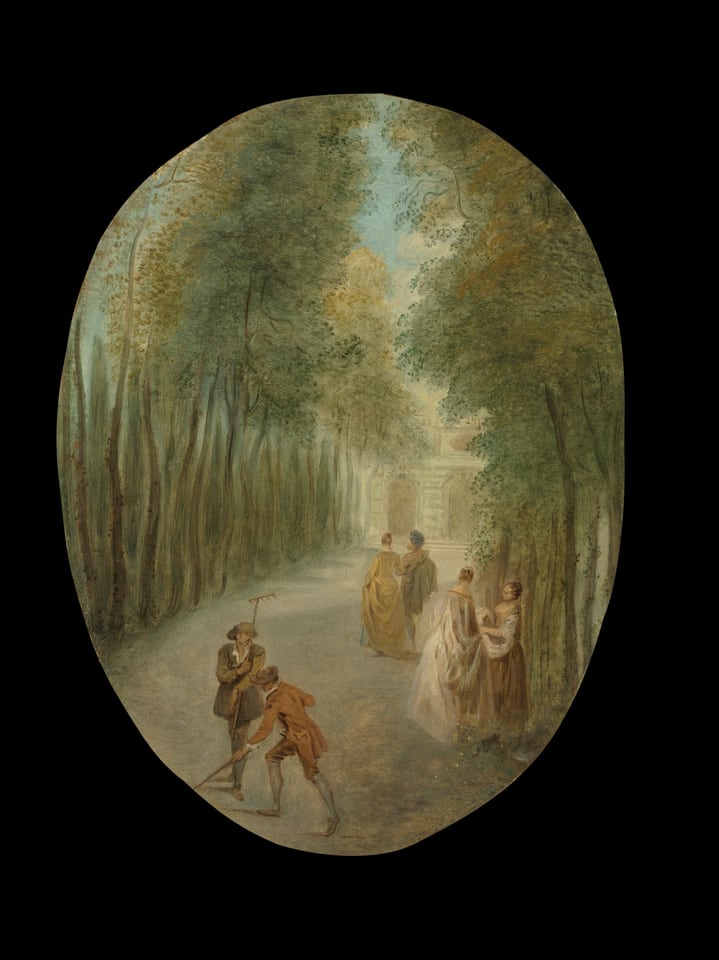
Springc. 1720–36
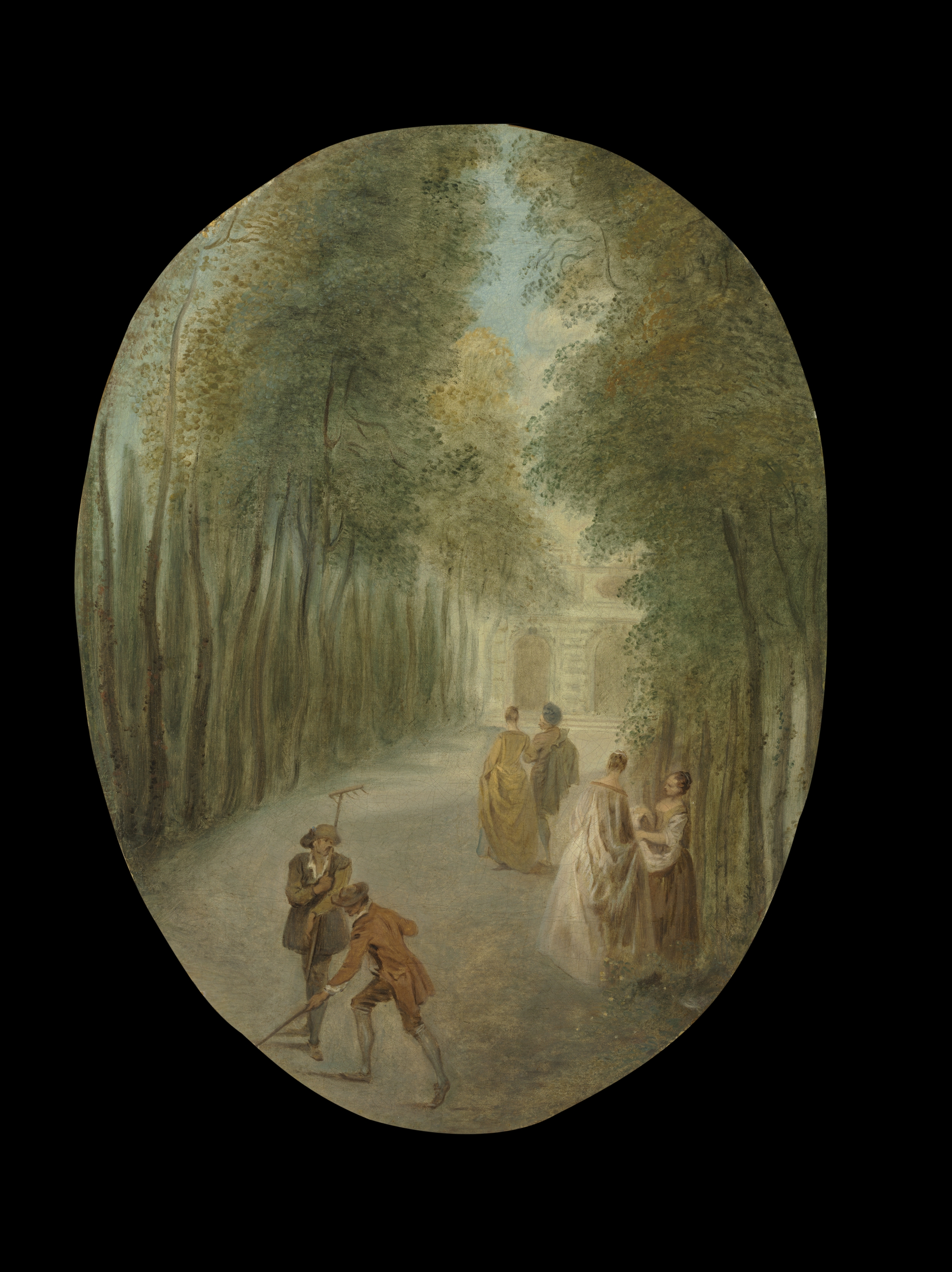
Spring and Summer are two scenes from a four-season series. These landscapes were originally a part of a screen or a decorative panel, indicated by their floral borders and oval shape. More about this work
About this work
Spring and Summer are two scenes from a four-season series. These landscapes were originally a part of a screen or a decorative panel, indicated by their floral borders and oval shape. The setting of Spring is believed to be the grounds of Montmorency, the country estate of Pierre Crozat (1665–1740), a wealthy financier and art collector in early eighteenth-century Paris. Summer counters Spring 's aristocratic leisure by depicting rural labor. Befitting the work's decorative origins, however, Pater's scene belongs to the tradition of the timeless pastoral. More idyllic than a statement about class differences, the reapers peacefully gather sheaves of wheat as shepherds rest with their flocks in the foreground.
Text from the Cleveland Museum of Art.
How it was made
- Oil paint
- Pigment ground in a drying oil, usually linseed. It dries slowly, so painters could blend on the canvas, build up thin translucent glazes, and rework a picture over weeks. Canvas replaced wooden panels in the 1500s because it is lighter and can be rolled.
Jean-Baptiste Pater
French, 1695–1736
Rights and the museum’s record
Public domain. The Cleveland Museum of Art has dedicated this image to the public domain under CC0, so anyone may copy, adapt and use it, for any purpose, without asking. Our prints and files are reproductions made from the museum’s image; the museum doesn’t endorse them.
- Object number
- 1951.486
- Credit
- Courtesy of the Cleveland Museum of Art
- Type
- Painting
- Department
- European Painting and Sculpture
- Licence
- CC0 1.0 Universal
- Museum record
- See it on the museum’s site
Report this work
Close in colour