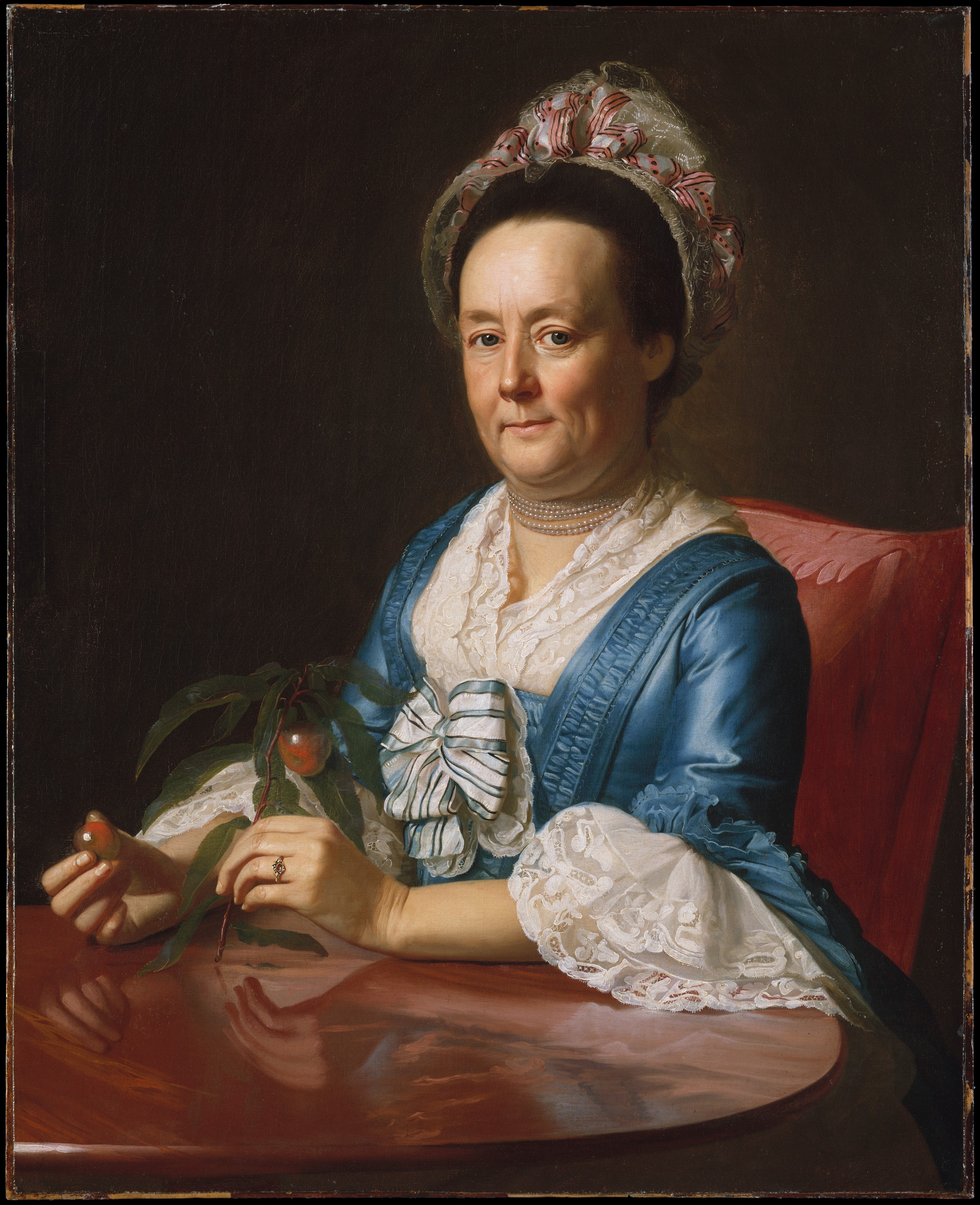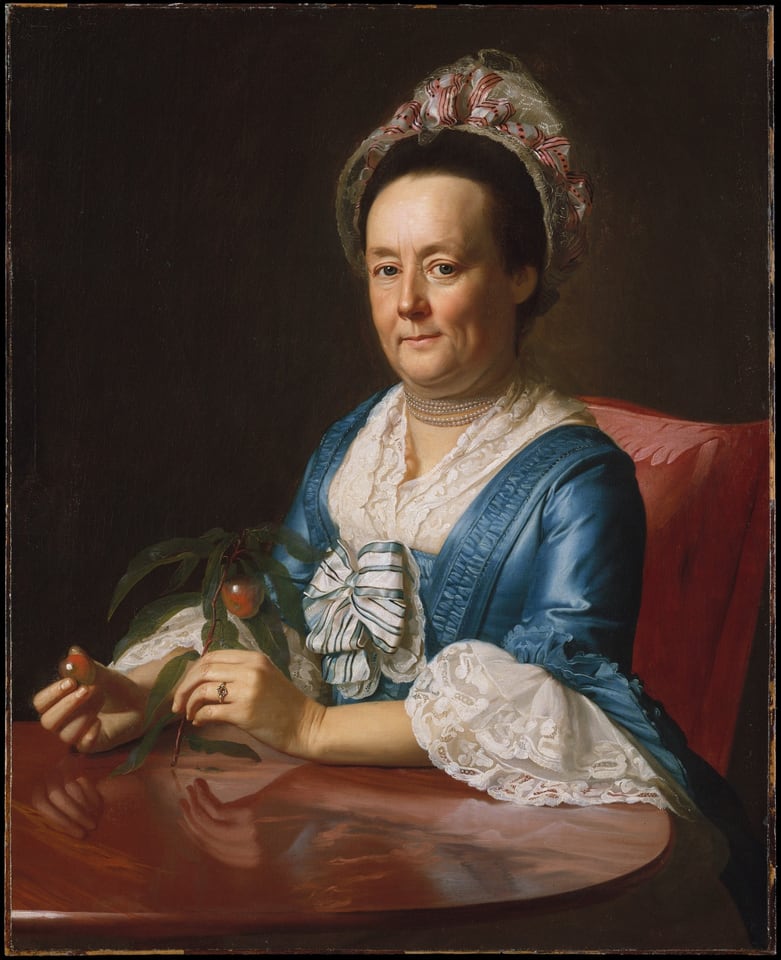
Mrs. John Winthrop1773
Hannah Winthrop, wife of the Harvard scientist John Winthrop, sits at a polished mahogany table holding a branch of nectarines, and the tabletop reflects her hands and the fruit like a mirror. More about this work
About this work
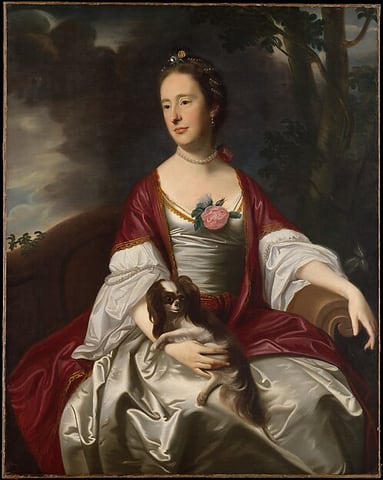
Hannah Winthrop, wife of the Harvard scientist John Winthrop, sits at a polished mahogany table holding a branch of nectarines, and the tabletop reflects her hands and the fruit like a mirror. Copley painted her in 1773, near the end of his Boston career, and the portrait shows his unflinching realism: the lace, the silk and the shrewd, intelligent face are described with equal care. Such feats of illusion, achieved largely without formal training, made him the most sought-after painter in colonial America.
Written by Ochre Editions.
How it was made
- Oil paint
- Pigment ground in a drying oil, usually linseed. It dries slowly, so painters could blend on the canvas, build up thin translucent glazes, and rework a picture over weeks. Canvas replaced wooden panels in the 1500s because it is lighter and can be rolled.
John Singleton Copley
American, 1738–1815 · Born in Boston, Massachusetts; died in London.
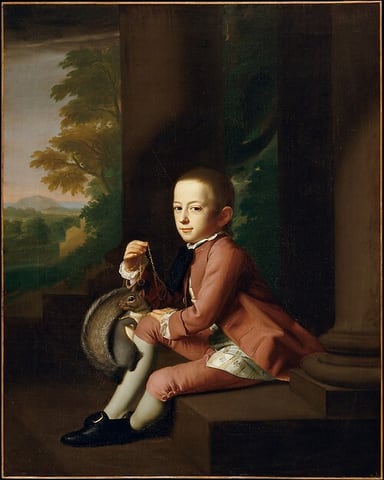
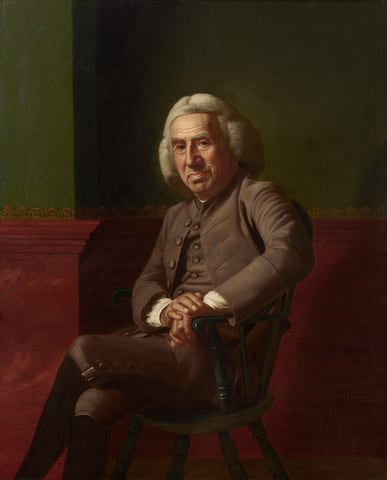
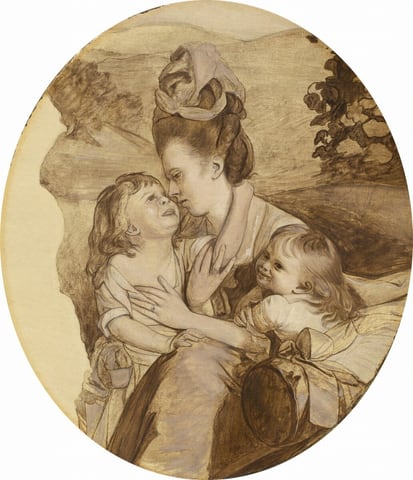
Copley was largely self-taught and became colonial America’s finest portraitist, painting Boston merchants and their families with sharp, tactile realism, from glinting silver to polished mahogany. In 1774, on the eve of the Revolution, he left for Europe and settled in London, where he turned to large modern history paintings such as Watson and the Shark and The Death of Major Peirson. He never returned to America.
Written by Ochre Editions.
Rights and the museum’s record
Public domain. The Met has dedicated this image to the public domain under CC0, so anyone may copy, adapt and use it, for any purpose, without asking. Our prints and files are reproductions made from the museum’s image; the museum doesn’t endorse them.
- Object number
- 31.109
- Credit
- Courtesy of The Metropolitan Museum of Art
- Type
- Painting
- Department
- The American Wing
- Licence
- CC0 1.0 Universal
- Museum record
- See it on the museum’s site