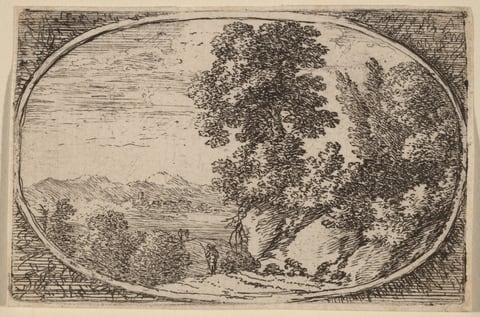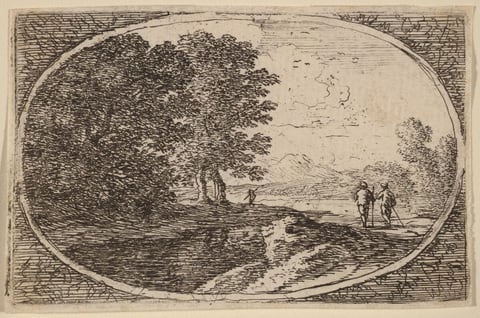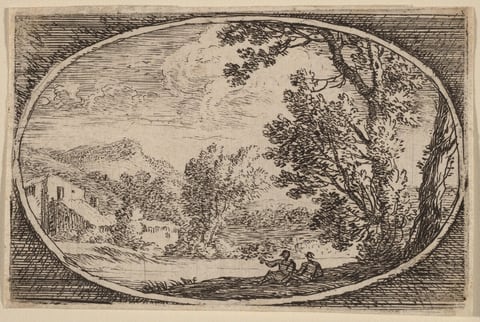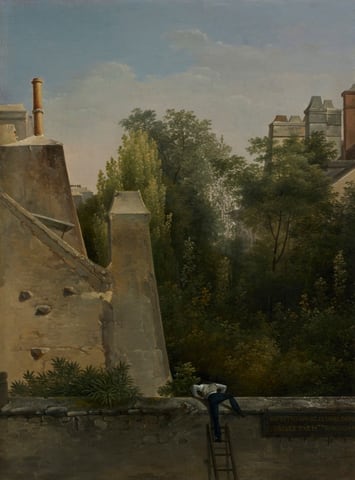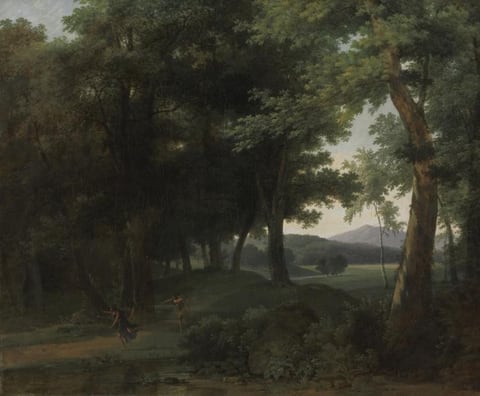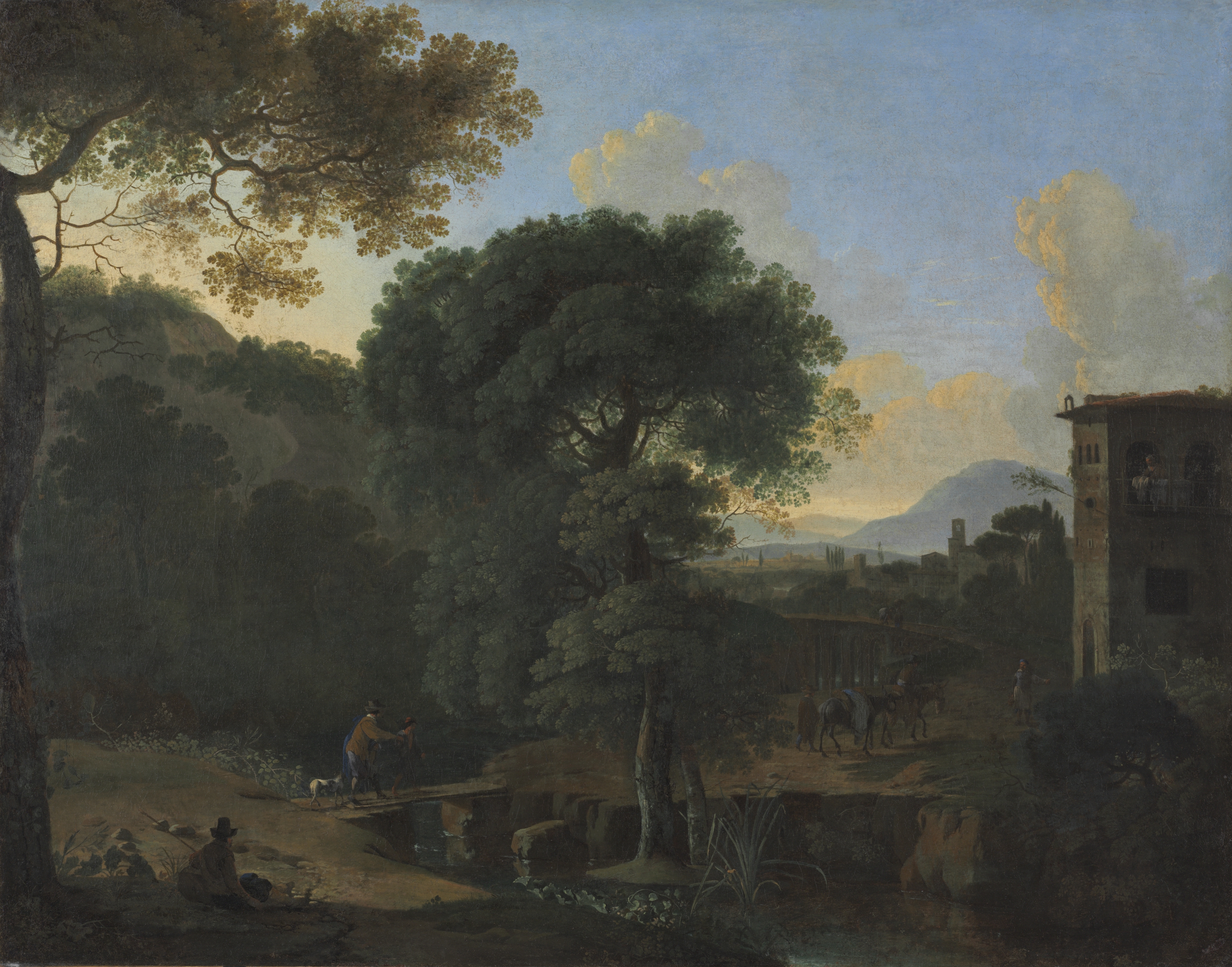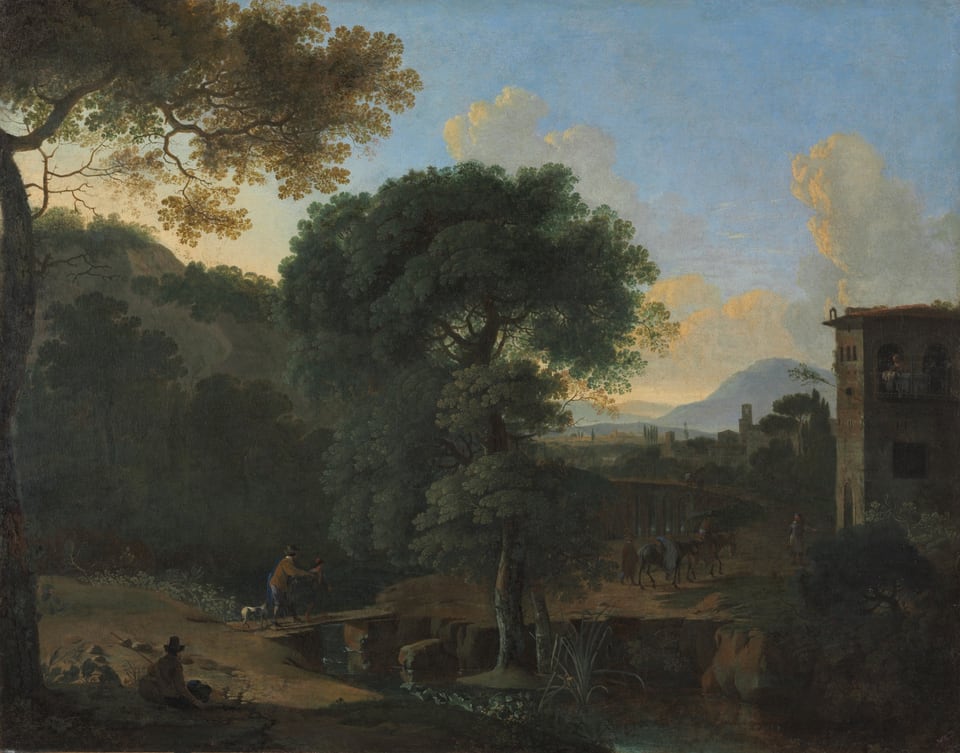
Landscape with Travelers1630s
Swanevelt played an important role in the development of 17th-century landscape painting in Rome. More about this work
About this work
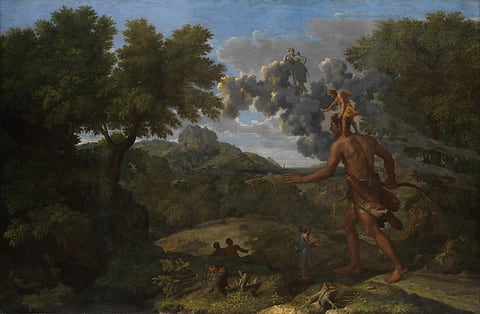
Swanevelt played an important role in the development of 17th-century landscape painting in Rome. Often regarded as a follower of Claude Lorrain (1600-1682), with whom he briefly shared a home, most scholars now believe that the influence was mutual. Swanevelt's landscapes are distinguished by the use of Roman peasants, rather than the classical figures preferred by his contemporaries.
Text from the Cleveland Museum of Art.
How it was made
- Oil paint
- Pigment ground in a drying oil, usually linseed. It dries slowly, so painters could blend on the canvas, build up thin translucent glazes, and rework a picture over weeks. Canvas replaced wooden panels in the 1500s because it is lighter and can be rolled.
Herman van Swanevelt
Dutch, c. 1600–1655
Van Swanevelt, from Woerden in Holland, spent the late 1620s and 1630s in Rome, where he worked in the circle of Claude Lorrain and became one of the Dutch painters who carried the golden light of the Roman Campagna into northern landscape. He settled in Paris in the 1640s, painted decorations there and became a member of the Royal Academy of Painting and Sculpture. His many landscape etchings spread his Italianate style widely.
Written by Ochre Editions.
Dutch Golden Age
Seventeenth-century painting from the Dutch Republic: still lifes, interiors, portraits and flat, wide skies.
Rights and the museum’s record
Public domain. The Cleveland Museum of Art has dedicated this image to the public domain under CC0, so anyone may copy, adapt and use it, for any purpose, without asking. Our prints and files are reproductions made from the museum’s image; the museum doesn’t endorse them.
- Object number
- 1916.823
- Credit
- Courtesy of the Cleveland Museum of Art
- Type
- Painting
- Department
- European Painting and Sculpture
- Licence
- CC0 1.0 Universal
- Museum record
- See it on the museum’s site