Italian FarmhouseSeptember 1868 - April 1869
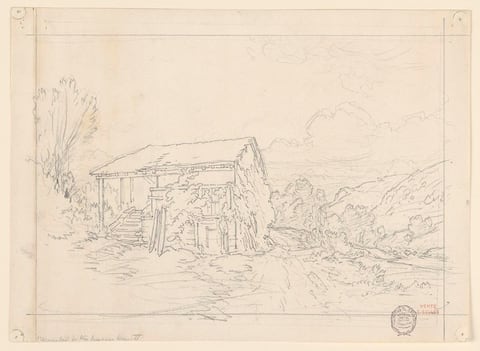
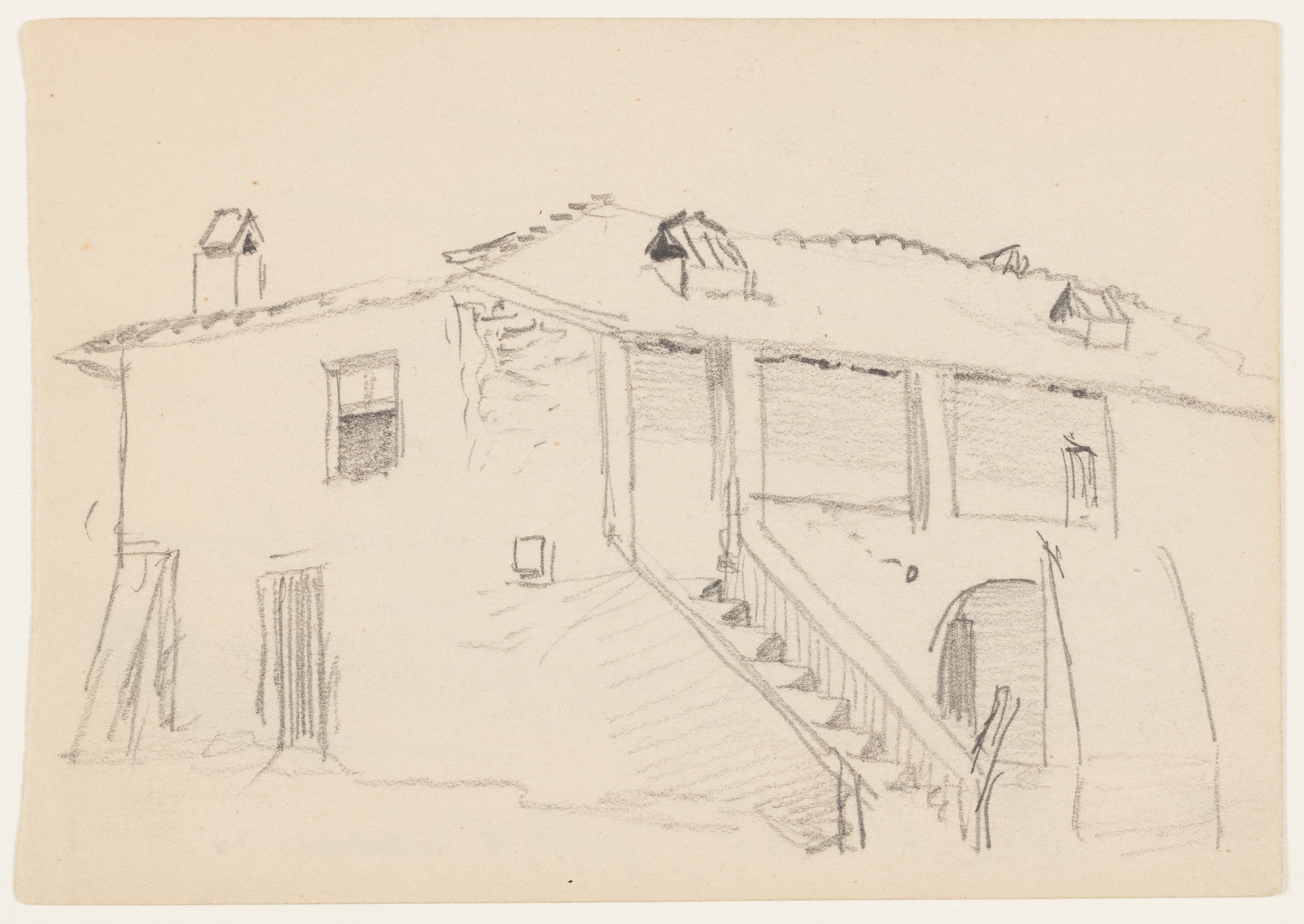
Architectural sketch showing an oblique view of a rustic, Italian farmhouse. A staircase of eight steps leads to an elevated front porch. Roof is madeup of shingled tiles with a chimney at left. More about this work
About this work
Architectural sketch showing an oblique view of a rustic, Italian farmhouse. A staircase of eight steps leads to an elevated front porch. Roof is madeup of shingled tiles with a chimney at left. Window also shown at left.
Text from Cooper Hewitt, Smithsonian Design Museum.
How it was made
- Graphite
- Pencil. Graphite has been used for drawing since the 1500s; in 1795 Nicolas-Jacques Conté mixed it with clay, so its hardness could be graded.
Frederic Edwin Church
American, 1826–1900 · Born in Hartford, Connecticut; died in New York.
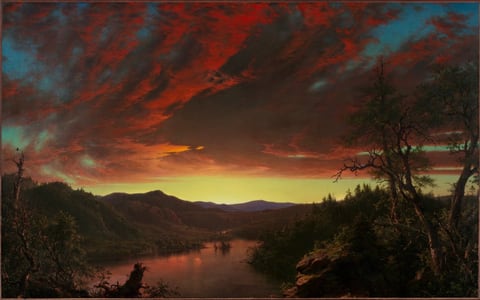
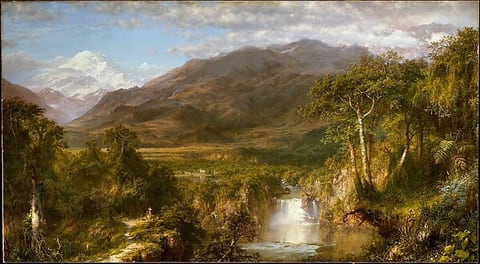
Church studied with Thomas Cole in the Catskills and became the most celebrated American landscape painter of the mid-nineteenth century. He travelled to South America, the Arctic, Europe and the Near East in search of grand subjects, and pictures such as Heart of the Andes drew paying crowds when exhibited on their own in New York. Twilight in the Wilderness of 1860 is among his most admired American views. He later designed his own house, Olana, overlooking the Hudson River.
Written by Ochre Editions.
Hudson River School
American landscape painters of the mid-1800s who made wilderness their grand subject.
Rights and the museum’s record
Public domain. Cooper Hewitt, Smithsonian Design Museum has dedicated this image to the public domain under CC0, so anyone may copy, adapt and use it, for any purpose, without asking. Our prints and files are reproductions made from the museum’s image; the museum doesn’t endorse them.
- Object number
- 1917-4-1500
- Credit
- Courtesy of Cooper Hewitt, Smithsonian Design Museum
- Type
- Drawing
- Department
- Cooper Hewitt, Smithsonian Design Museum
- Licence
- CC0 1.0 Universal
- Museum record
- See it on the museum’s site