Unknown maker
Crucifix with Scenes of the Passionc. 1230–40
Large painted crucifixes dating from the 1100s and 1200s are among the earliest surviving Italian panel paintings. More about this work
About this work
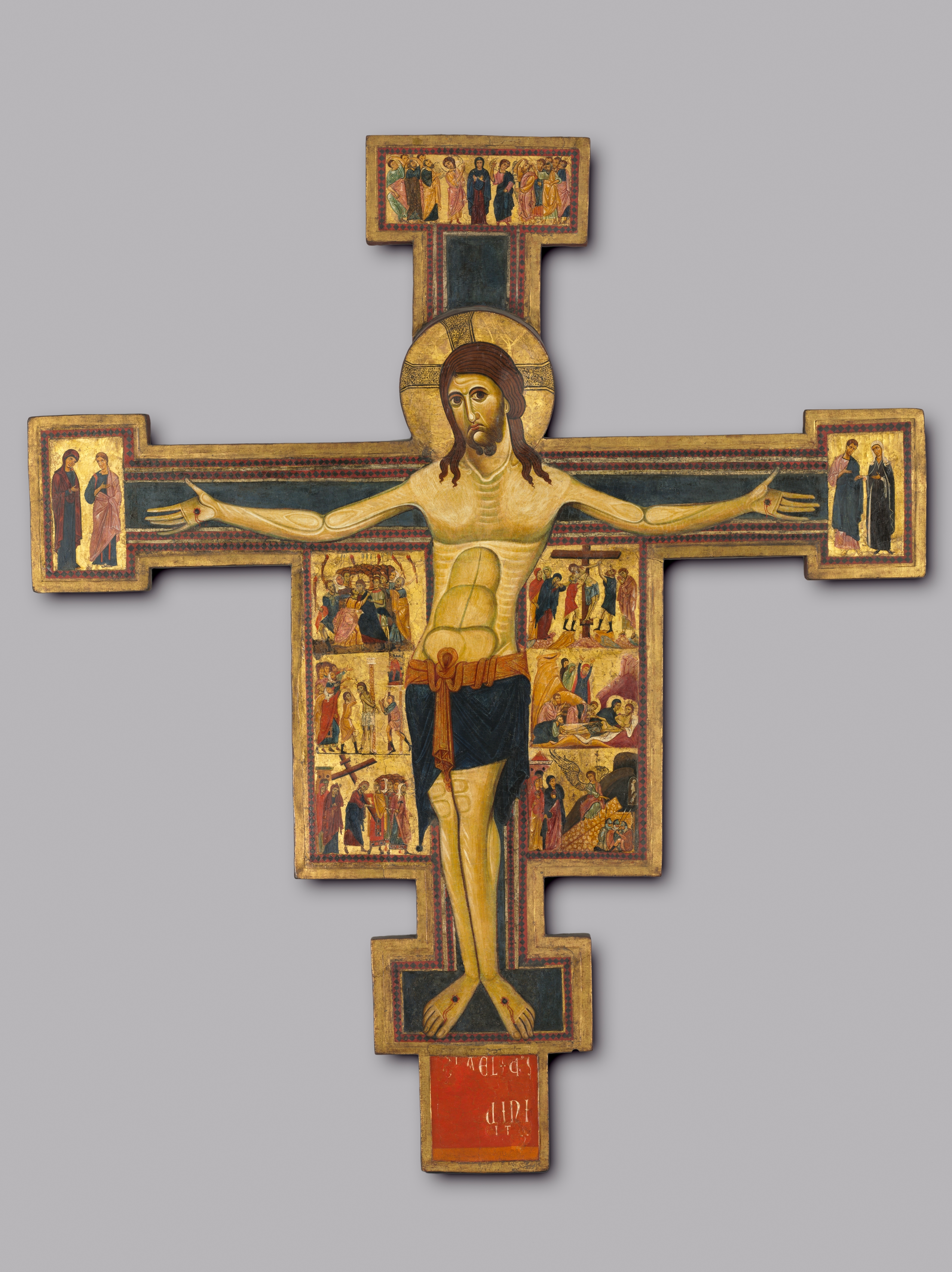
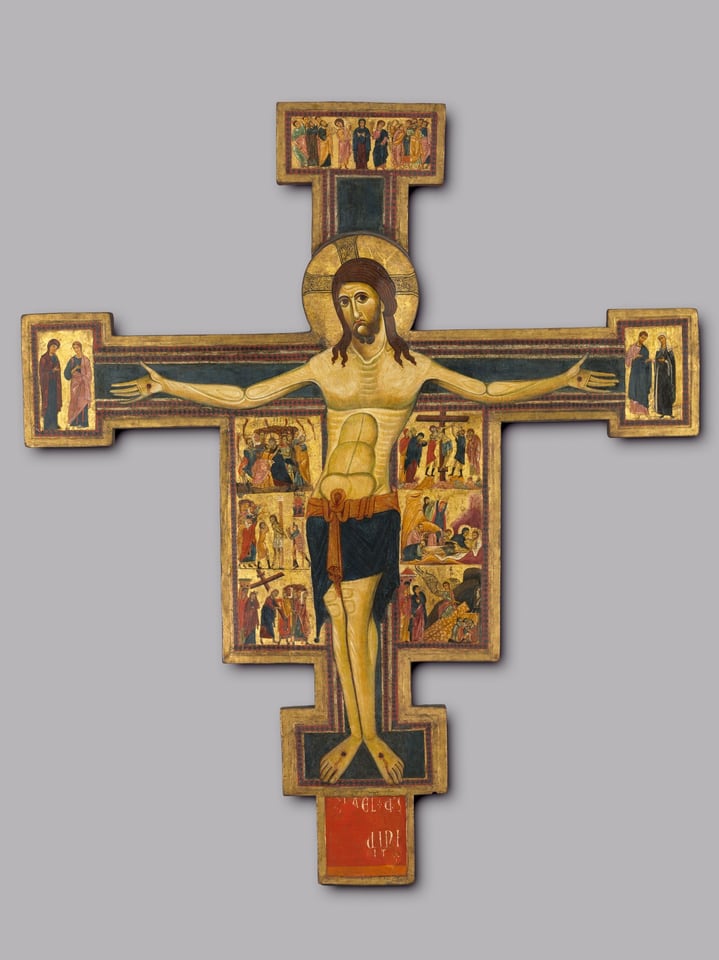
Large painted crucifixes dating from the 1100s and 1200s are among the earliest surviving Italian panel paintings. Large crosses, like this beautiful example, were typically suspended high above an altar in the main apse of Italian churches. Smaller crosses were placed on or just above altars in small side chapels. Such crosses served as the visual focus for devotion and symbolized the Eucharistic sacrament performed by the priest on the altar below. This crucifix shows Christ alive on the cross as the triumphant savior of mankind. Smaller images on the "apron" represent images of Christ's Passion (to the left) and his death and Resurrection (to the right). On the far left terminal appear the mourning Virgin and Saint John the Evangelist, while on the right the viewer is shown Saint James Major and Saint Bona, patroness of the city of Pisa. The concluding event, the Ascension of Christ, once appeared on the upper terminal, just above the Virgin and Apostles. The figure of Christ is painted in a severe and hieratic style suggestive of medieval Pisa's artistic and commercial links with the Byzantine East. The appearance of Saint Bona on this cross may suggest that it was made for the Church of S. Martino in Pisa, where Franciscan nuns tended the holy woman's relics.
Text from the Cleveland Museum of Art.
How it was made
- Tempera
- Pigment bound with egg yolk. It dries in minutes and can’t be blended wet, so painters built up form with fine, hatched strokes. It was Europe’s main panel technique before oil.
Rights and the museum’s record
Public domain. The Cleveland Museum of Art has dedicated this image to the public domain under CC0, so anyone may copy, adapt and use it, for any purpose, without asking. Our prints and files are reproductions made from the museum’s image; the museum doesn’t endorse them.
- Object number
- 1995.5
- Credit
- Courtesy of the Cleveland Museum of Art
- Type
- Painting
- Department
- Medieval Art
- Licence
- CC0 1.0 Universal
- Museum record
- See it on the museum’s site