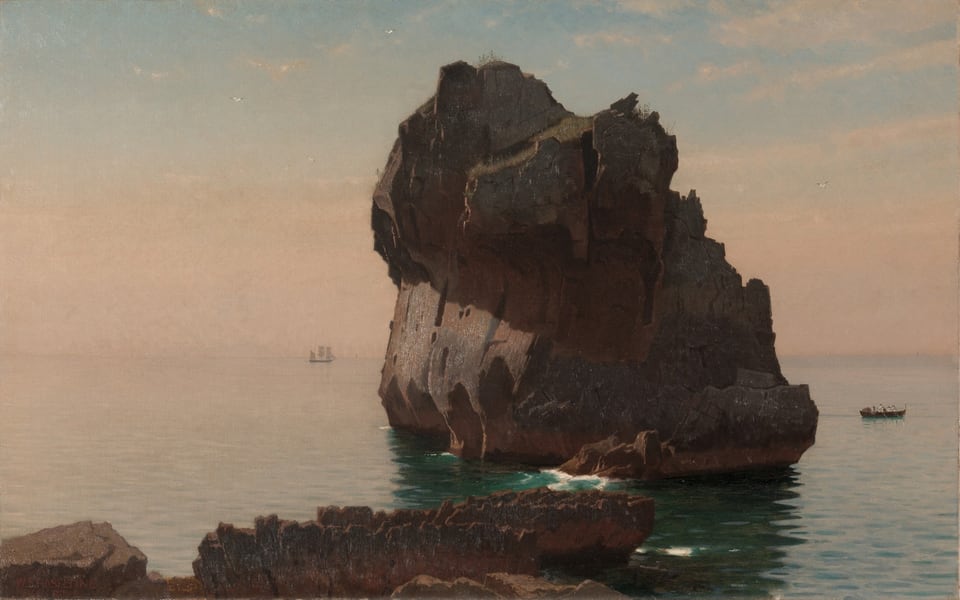
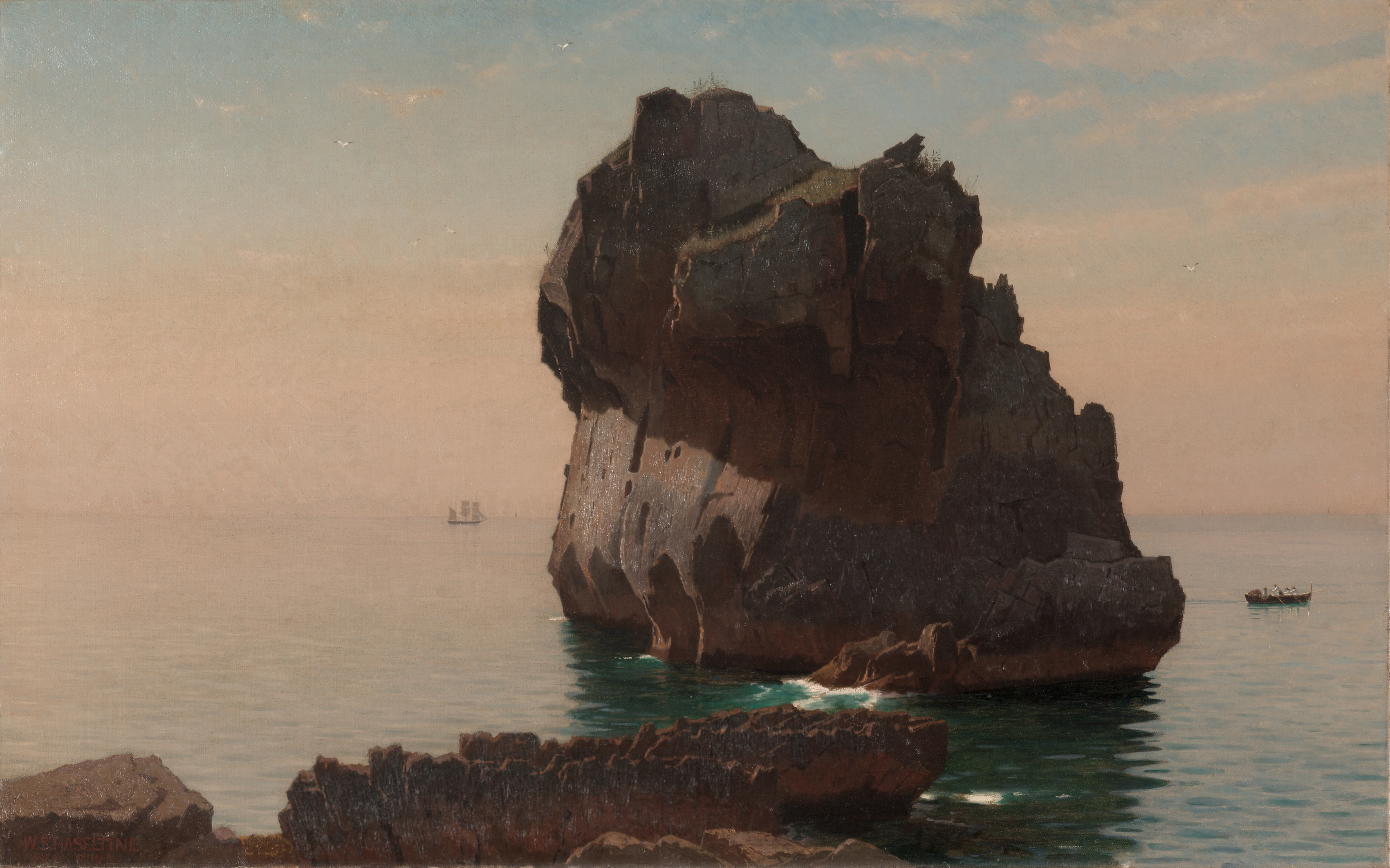
Capri1869
The Philadelphia-born Haseltine favored images of coastal rocks, painting them on both sides of the Atlantic throughout his career. More about this work
About this work
The Philadelphia-born Haseltine favored images of coastal rocks, painting them on both sides of the Atlantic throughout his career. Best known for his scenes of Maine and Massachusetts shorelines, Haseltine based this painting on volcanic rocks from the uninhabited eastern end of Capri, an island off the southwestern coast of Italy.
Text from the Cleveland Museum of Art.
How it was made
- Oil paint
- Pigment ground in a drying oil, usually linseed. It dries slowly, so painters could blend on the canvas, build up thin translucent glazes, and rework a picture over weeks. Canvas replaced wooden panels in the 1500s because it is lighter and can be rolled.
William Stanley Haseltine
American, 1835–1900
Haseltine was born in Philadelphia, studied at Harvard and trained in Düsseldorf, where he travelled and painted with Albert Bierstadt and Worthington Whittredge. Back in America he became known for crisp, sharply lit views of the rocky New England coast at Nahant, Narragansett and Mount Desert Island. In 1869 he settled permanently in Rome, painting the coasts of Italy, Sicily and Capri in the same clear manner.
Written by Ochre Editions.
Rights and the museum’s record
Public domain. The Cleveland Museum of Art has dedicated this image to the public domain under CC0, so anyone may copy, adapt and use it, for any purpose, without asking. Our prints and files are reproductions made from the museum’s image; the museum doesn’t endorse them.
- Object number
- 1975.4
- Credit
- Courtesy of the Cleveland Museum of Art
- Type
- Painting
- Department
- American Painting and Sculpture
- Licence
- CC0 1.0 Universal
- Museum record
- See it on the museum’s site
Report this work
More by William Stanley Haseltine
All their works
Close in colour