Ukiyo-e
Japanese woodblock prints of the floating world: actors, courtesans, landscapes and the sea.
Section 1, north wall
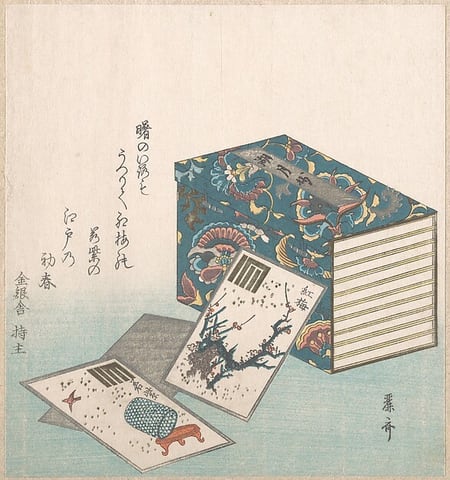
Books and CardsReisai, 18th–19th centuryCourtesy of The Metropolitan Museum of Art 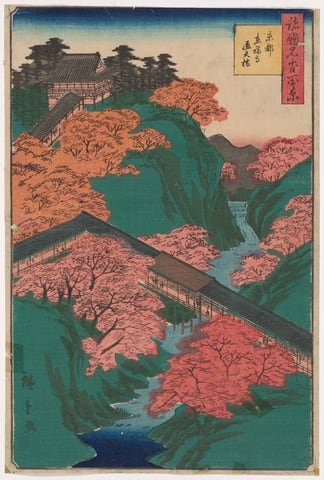
Tsuten-kyo Bridge, Tofuku Temple, Kyoto (Kyoto Tofukuji Tsutenkyo bashi) from the series “One Hundred Famous Views in the Various Provinces (Shokoku meisho hyakkei)”Utagawa Hiroshige II, 1859Courtesy of the Art Institute of Chicago 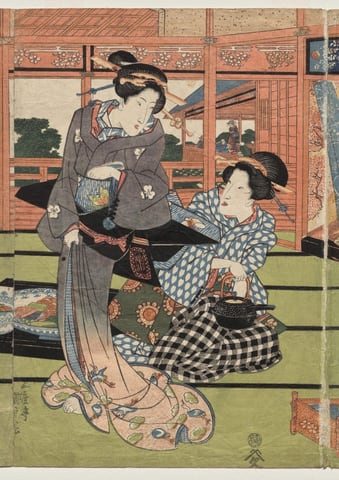
A View of the Large New Room at SakuraiUtagawa Kunisada, early or mid 1830sCourtesy of the Cleveland Museum of Art
Section 1, south wall
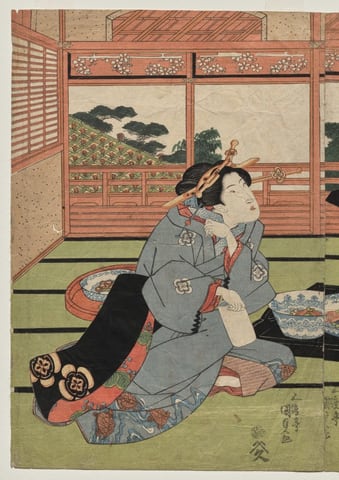
A View of the Large New Room at SakuraiUtagawa Kunisada, early or mid 1830sCourtesy of the Cleveland Museum of Art 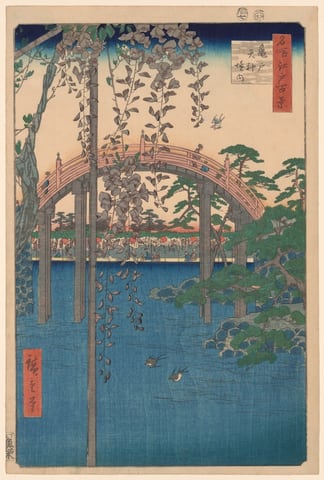
Precincts of Kameido Tenjin Shrine (Kameido Tenjin keidai), from the series "One Hundred Famous Views of Edo (Meisho Edo hyakkei)"Utagawa Hiroshige, 1856Courtesy of the Art Institute of Chicago 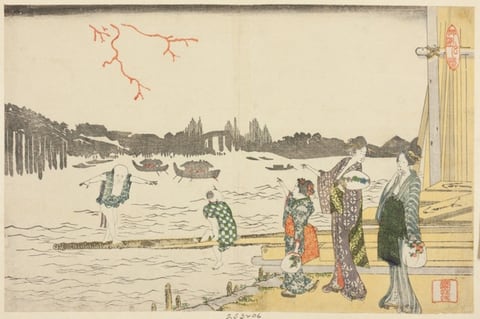
Women and Children Viewing the FireworksKatsushika Hokusai, c. 1798Courtesy of the Art Institute of Chicago
Section 2, south wall
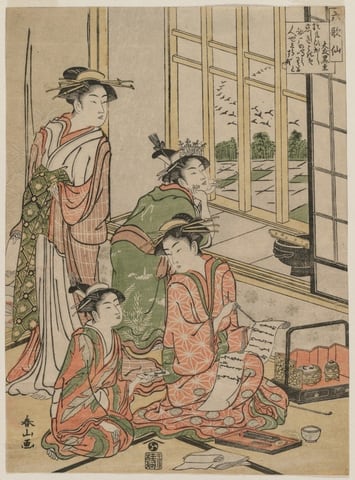
Courtesans at Leisure from the series The Six Immortal PoetsKatsukawa Shunzan, early 1780sCourtesy of the Cleveland Museum of Art 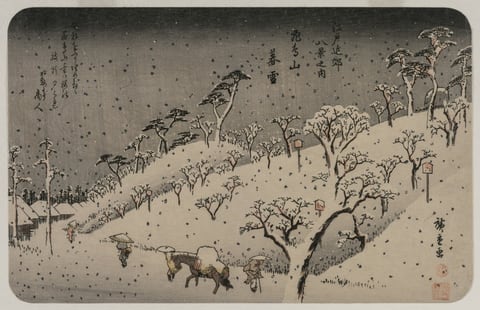
Evening Snow at Asuka Hill, from the series Eight Views of the Environs of EdoUtagawa Hiroshige, c. 1837–38Courtesy of the Cleveland Museum of Art 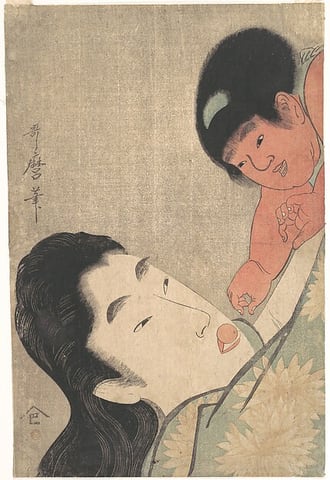
Yamauba and Kintarō Playing with a CherryKitagawa Utamaro, ca. 1795Courtesy of The Metropolitan Museum of Art
Section 2, north wall
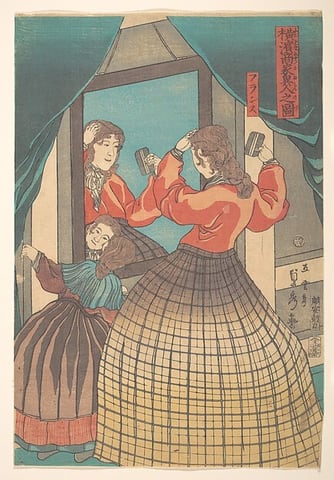
French Woman and Girl, from the series Foreign Merchants in Yokohama (Yokohama shōka ijin no zu)Utagawa (Gountei) Sadahide, 1st month, 1861Courtesy of The Metropolitan Museum of Art 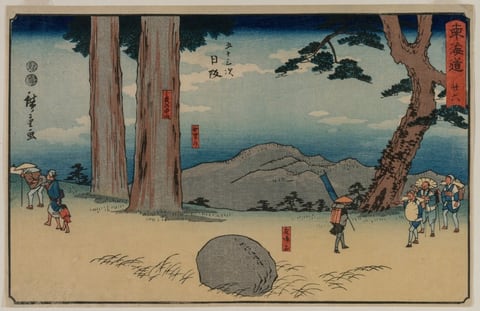
Nissaka: The Night-Weeping Stone at Sayo no Nakayama, from the series The Fifty-Three Stations of the TōkaidōUtagawa Hiroshige, c. 1848–50Courtesy of the Cleveland Museum of Art
Section 3, north wall
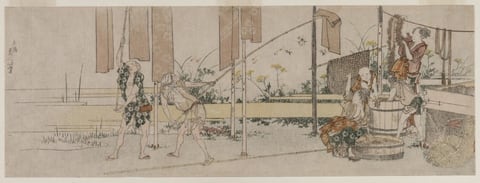
Dyers at WorkKatsushika Hokusai, c. 1800Courtesy of the Cleveland Museum of Art 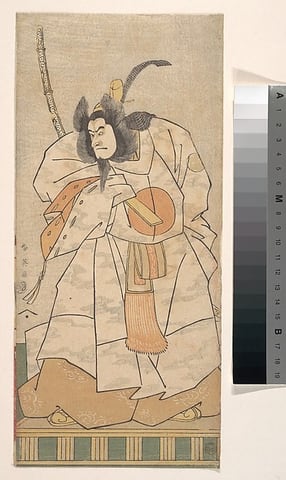
The Actor Morita Kanya VIII as TatsugorōKatsukawa Shun'ei, 1794 (Kansei 6)Courtesy of The Metropolitan Museum of Art 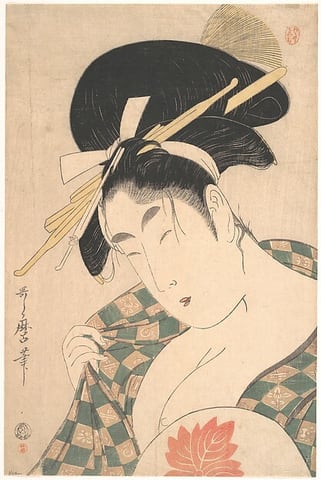
A CourtesanKitagawa UtamaroCourtesy of The Metropolitan Museum of Art
Section 3, south wall
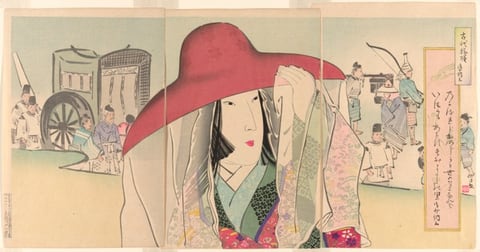
Sei Shonagon, from the series Ancient Patterns (Kodai moyo)Kobayashi Kiyochika, Meiji period (1896–1912), 1896Courtesy of the Art Institute of Chicago 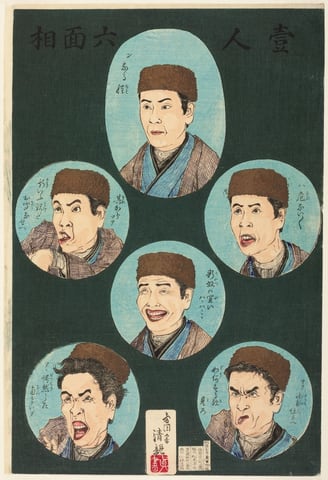
One Person, Six Expressions (Hitori rokumenso)Kobayashi Kiyochika, 1884Courtesy of the Art Institute of Chicago