Skip to content
Ochre Editions
ArtArtistsCollectionsGalleriesDrops
SearchSign inCart (0)
The galleries · Style galleries

Early modernism

The first decades of the twentieth century, when artists broke with the academy.

68 works · hang 2505 ·

Share Early modernism, in the galleries

The rooms are imagined; every work on their walls is real.

Walk this roomRehang this room

First room, north wall

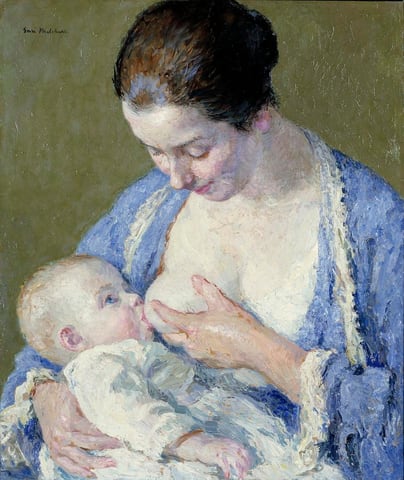
  1. Mother and Child, by Gari Melchers, ca. 1920
    Mother and ChildGari Melchers, ca. 1920Courtesy of the Smithsonian American Art Museum
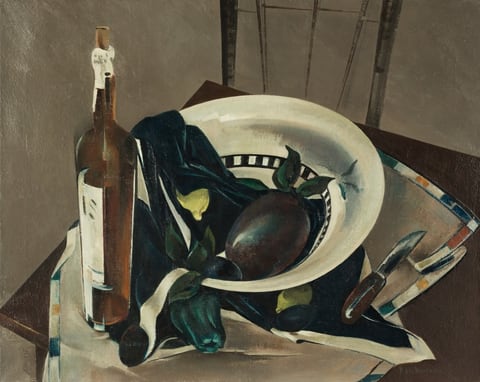
  2. Still Life, by Preston Dickinson, c. 1924
    Still LifePreston Dickinson, c. 1924Courtesy of the Cleveland Museum of Art
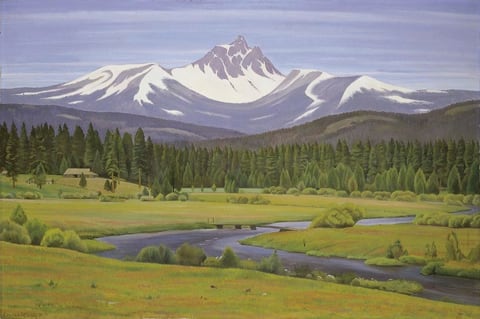
  3. In the Cascade Mountains, by Edward Bruce, 1931
    In the Cascade MountainsEdward Bruce, 1931Courtesy of the Smithsonian American Art Museum

First room, south wall
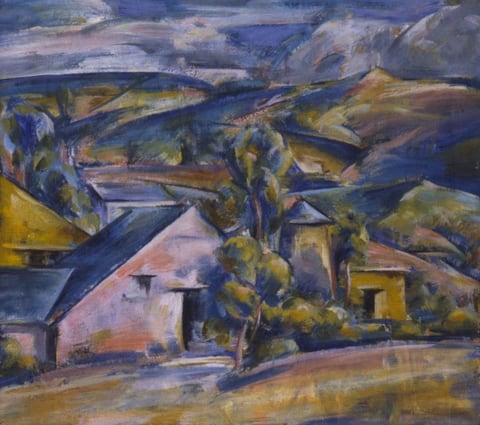
  1. The Hills, by Preston Dickinson, ca. 1919
    The HillsPreston Dickinson, ca. 1919Courtesy of the Smithsonian American Art Museum
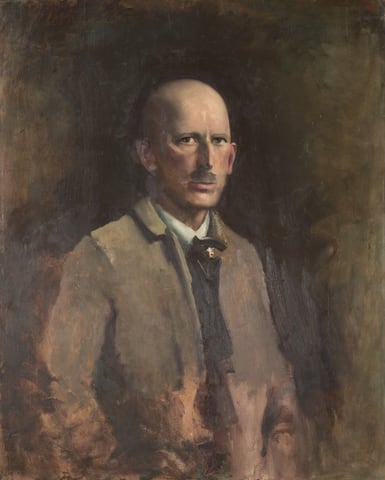
  2. Self-Portrait, by Abbott Handerson Thayer, 1920
    Self-PortraitAbbott Handerson Thayer, 1920Courtesy of the Cleveland Museum of Art
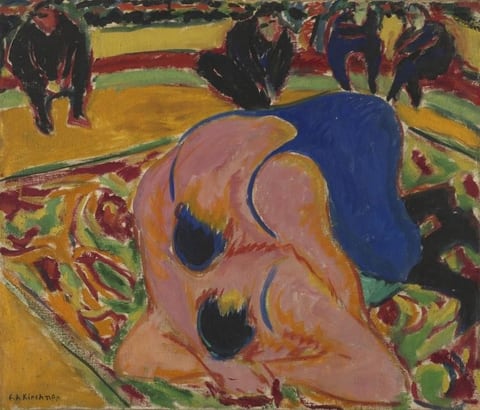
  3. Wrestlers in a Circus, by Ernst Ludwig Kirchner, 1909
    Wrestlers in a CircusErnst Ludwig Kirchner, 1909Courtesy of the Cleveland Museum of Art

Second room, south wall
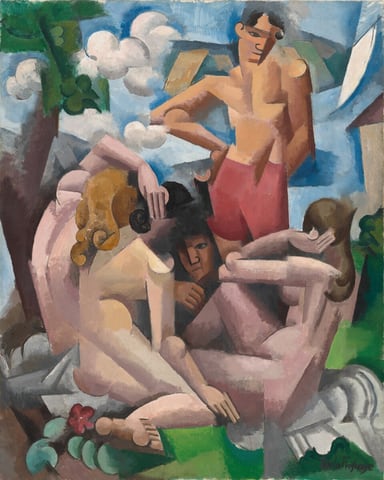
  1. This painting depicts a group of men and women created by a collection of angular, geometric shapes with flat planes and blocks of color. One person is standing, and they appear to be a bare-chested man with tan skin and short, dark hair, who is wearing red shorts. He has his hand on his hip and looks off to the right. At his feet appear to be several seated people, although they are only partially visible. Three women with pale skin seem to be facing away from us; we can see their legs, arms, and torsos, although these don't all fit together. The woman on the left has blonde hair, the woman on the right has brown hair, and the woman between them has short black hair. None of their faces are visible. In the middle of this group, at the center of the painting, we see the face and hand of another person who is looking to the left. This person has light brown skin, and we can't see the rest of their body. Surrounding elements include a blue sky with abstract cloud forms, an angular tree on the left, and patches of brown, white, and green on the ground, with one red flower. A tan rectangle under a red triangle on the right edge suggests a building.
    The BathersRoger de La Fresnaye, 1912Courtesy National Gallery of Art, Washington
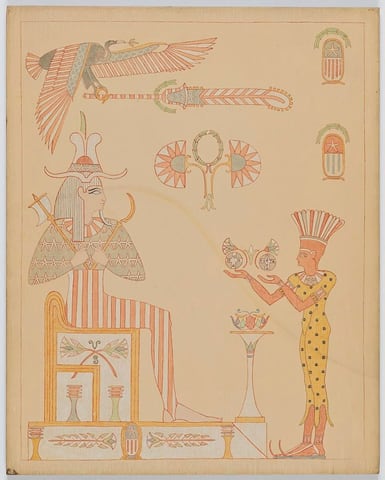
  2. THE TRIUMPH OF UNCLE SAM
    The Triumph of Uncle SamVictor Wilbour, 1917Courtesy of Cooper Hewitt, Smithsonian Design Museum
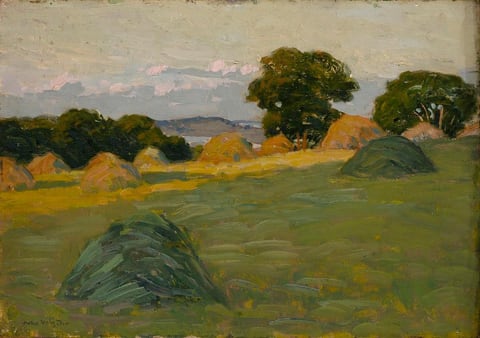
  3. The Hill Field, by Arthur Wesley Dow, 1908-1910
    The Hill FieldArthur Wesley Dow, 1908-1910Courtesy of the Smithsonian American Art Museum

Second room, north wall
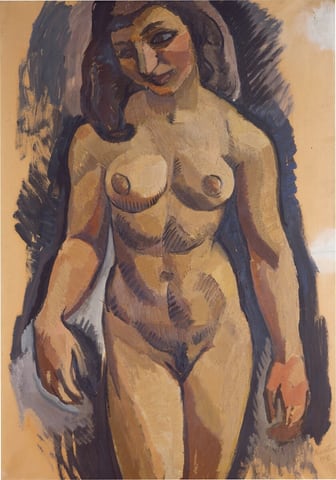
  1. The image is a painting of a woman's nude upper body extending from her head down to her hips, depicted in a standing position with her head slightly tilted to one side. Her facial features are distinct with a strong brow, prominent nose, and full lips, and her long dark hair cascades down to her shoulders. The background features abstract brushstrokes in dark blues and browns, blending into the lighter brown tone of the canvas, enhancing the figure's prominence in the composition. The woman appears naturalistic, with no jewelry or other objects visible in the painting.
    NudeRoger de La Fresnaye, 1910Courtesy National Gallery of Art, Washington
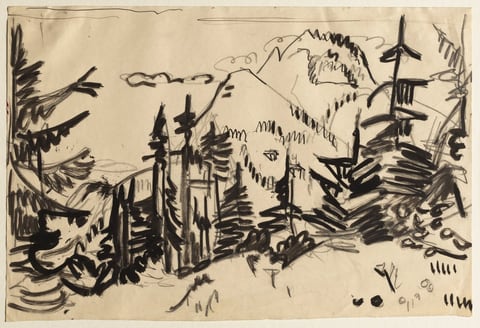
  2. Mountain Landscape with Fir Trees, by Ernst Ludwig Kirchner, 1918/19
    Mountain Landscape with Fir TreesErnst Ludwig Kirchner, 1918/19Courtesy of the Cleveland Museum of Art
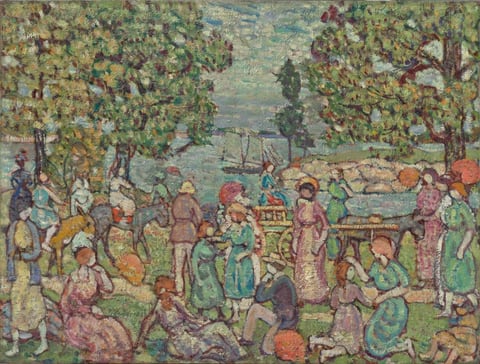
  3. On the Beach, No. 3, by Maurice Prendergast, c. 1915–18
    On the Beach, No. 3Maurice Prendergast, c. 1915–18Courtesy of the Cleveland Museum of Art
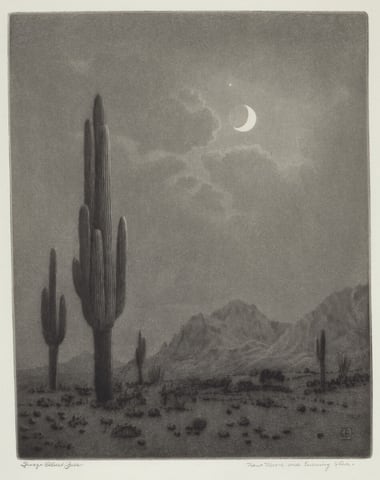
  4. This print depicts a grayscale desert landscape with a prominent saguaro cactus to the left. In the background, rocky mountains are visible in the darkness. The sky shows a crescent moon and a bright star through an opening in the soft gray clouds. Sparse desert vegetation is faintly visible on the ground, and more cacti can be seen in the distance.
    New Moon and Evening StarGeorge Elbert Burr, c. 1932Courtesy National Gallery of Art, Washington

Third room, north wall
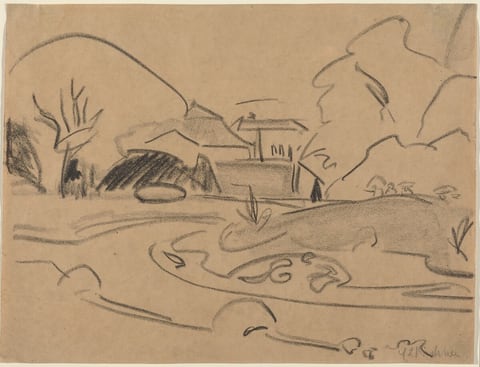
  1. The image shows a landscape drawing with buildings, trees, and a winding path or water feature. The drawing is done in black charcoal on brownish background paper, creating a monochromatic color palette.
    Footpaths and Pavilion in the Dresden Grosser GartenErnst Ludwig Kirchner, c. 1909Courtesy National Gallery of Art, Washington
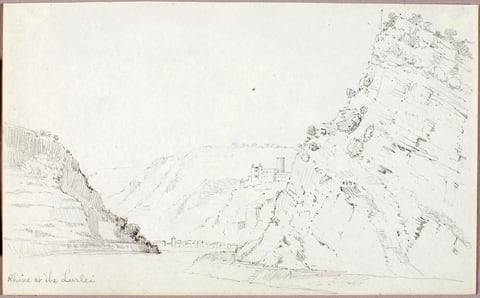
  2. Rhine at the Lurlei, by George Elbert Burr, 1900
    Rhine at the LurleiGeorge Elbert Burr, 1900Courtesy of the Smithsonian American Art Museum
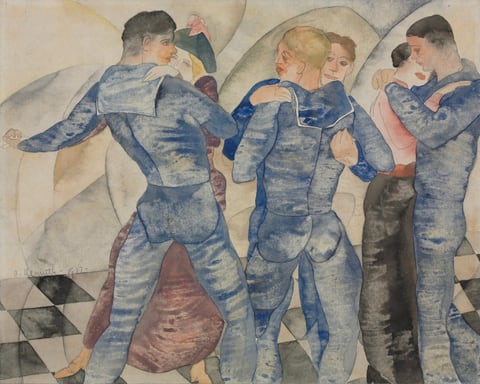
  3. Dancing Sailors, by Charles Demuth, 1917
    Dancing SailorsCharles Demuth, 1917Courtesy of the Cleveland Museum of Art

Walk on

  • Early modernism, room 2
  • Charles Demuth's contemporaries 8 works
  • 20th-century United States 124 works
Ochre Editions

The world's museums, on your wall. Every work here is a reproduction of a public-domain original, credited to the museum that holds it.

Shop

All artCollectionsLimited dropsPrints and framing

Help

Find an orderShippingReturnsVerify a certificate

About

About Ochre EditionsMuseum creditsFor agentsDevelopers

Legal

Terms of UseTerms of SaleLimited Editions and CertificatesPrivacy PolicyCookie PolicyAcceptable Use PolicyAgent & API TermsCopyright and DMCA PolicyPrinting Your Own PhotoVulnerability Disclosure PolicyAccessibility StatementOpen-Access Credits
© 2026 Ochre EditionsPrices in US dollars. Prints ship within the United States.