Skip to content
Ochre Editions
ArtArtistsCollectionsGalleriesDrops
SearchSign inCart (0)
The galleries · Style galleries

Drawings

Every one of the collection's drawings, in today's hang.

295 works · hang 4877 ·

Share Drawings, in the galleries

The rooms are imagined; every work on their walls is real.

Walk this roomRehang this room

Section 1, north wall

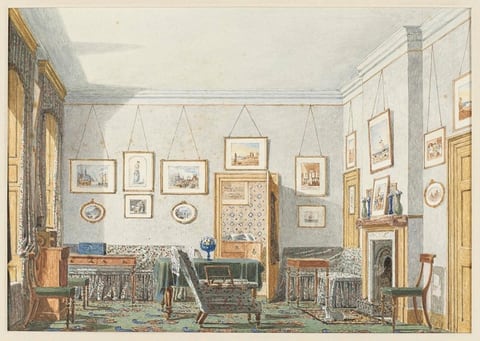
  1. GEORGE JAMES DRUMMOND'S ROOM AT OXFORD, 1853
    George James Drummond's Room at Oxford, 1853George Pyne, 1853Courtesy of Cooper Hewitt, Smithsonian Design Museum
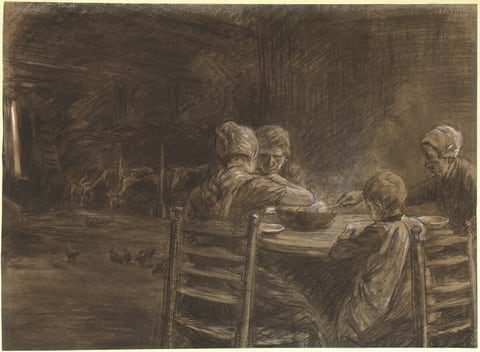
  2. This is a drawing of a rustic interior scene. The artwork depicts an interior where a table is surrounded by chairs. On the table, there is a bowl, as the individuals appear to be interacting or reaching towards it. In the background, livestock and chickens are visible, suggesting the environment is possibly a farm or a barn with a dining space. The use of soft lines and shading creates a warm, intimate, and slightly somber atmosphere within the image, with light and shadow playing an important role in highlighting the subjects and their surroundings.
    East Frisian Peasants Eating SupperMax Liebermann, 1893Courtesy National Gallery of Art, Washington

Section 1, south wall
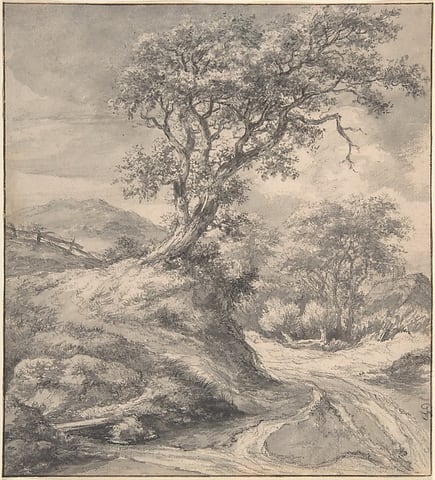
  1. Dune Landscape with Oak Tree, by Jacob van Ruisdael, 1650–55
    Dune Landscape with Oak TreeJacob van Ruisdael, 1650–55Courtesy of The Metropolitan Museum of Art
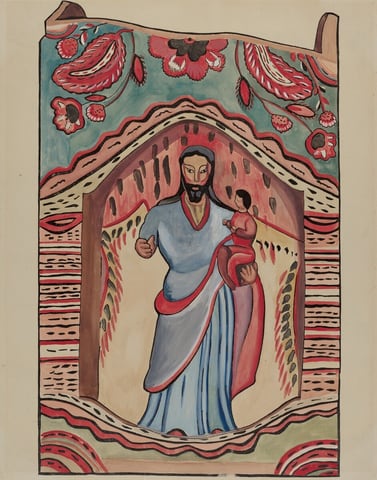
  2. This is a painting of stylized figures within an ornate frame. The artwork features two central figures that are reminiscent of a traditional religious iconography but rendered in a simplified and almost cartoonish form. The larger figure is draped in blue with red accents, while a smaller figure is held in one hand, enrobed in red. The background is decorated with a variety of patterns including an arch-like structure with wavy designs and lines, all outlining the central figures. The outer sections feature floral patterns with bold, contrasting colors of red, black, and teal. The use of thick outlines and vivid colors suggests a playful and decorative approach to the portrayal of the figures, drawing inspiration possibly from folk art traditions.
    St. JosephE. Boyd, 1936Courtesy National Gallery of Art, Washington
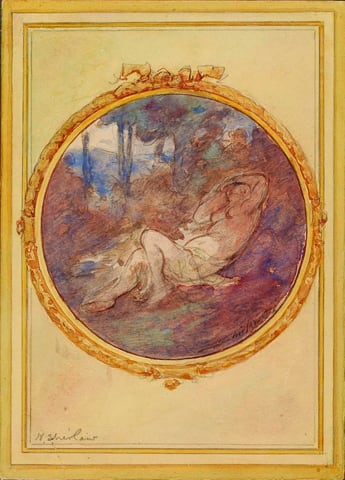
  3. Figure Study for Decorative Panel, by Walter Shirlaw, n.d.
    Figure Study for Decorative PanelWalter Shirlaw, n.d.Courtesy of the Smithsonian American Art Museum

Section 2, south wall
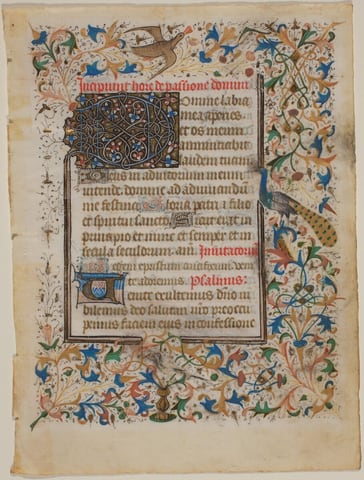
  1. This is a drawing of a decorated manuscript page. The image features an ornate design with illuminated letters and intricate floral borders. The text is in Latin, written in a Gothic script, with larger, stylized letters at the beginning of paragraphs. Floral motifs and vine patterns, painted in vibrant colors including gold, blue, and red, frame the text. Illustrations of a bird and a peacock are integrated into the decorative borders. A small heraldic shield appears just below the middle of the page, adding a heraldic element to the composition. The craftsmanship and artistry associated with illuminated manuscript traditions are showcased, inviting viewers to appreciate the detailed embellishments and the skillful blending of text and imagery.
    Manuscript Leaf from a Book of Hours (incip. Passionis)Unrecorded French maker, 1390Courtesy National Gallery of Art, Washington
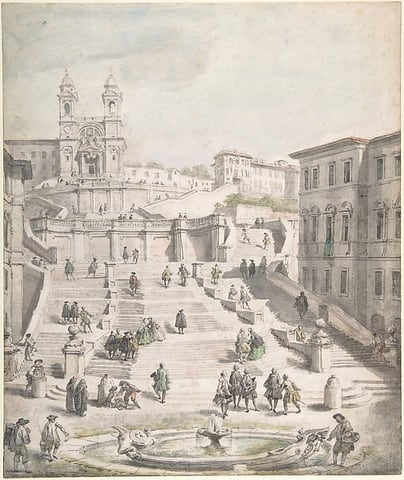
  2. Scalinata della Trinità dei Monti, by Giovanni Paolo Panini, ca. 1756–58
    Scalinata della Trinità dei MontiGiovanni Paolo Panini, ca. 1756–58Courtesy of The Metropolitan Museum of Art
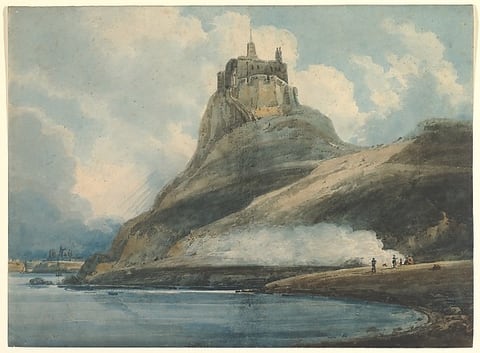
  3. Lindisfarne Castle, Holy Island, Northumberland, by Thomas Girtin, 1796–97
    Lindisfarne Castle, Holy Island, NorthumberlandThomas Girtin, 1796–97Courtesy of The Metropolitan Museum of Art

Section 2, north wall
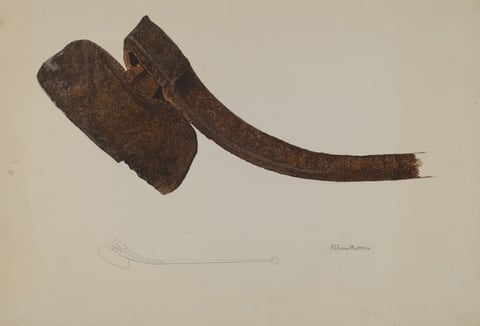
  1. The image shows a large, rusted ax with a curved brown handle placed diagonally across the canvas. The color palette consists of muted browns and beiges, highlighting the aged appearance of the ax. Beneath the ax, there is a faint outline sketch of a similar object, and the artist's signature is located to the right of the sketch. The ax is in the upper half of the image, while the sketch and signature are in the center-bottom section.
    Dumb IronAlfonso Moreno, c. 1938Courtesy National Gallery of Art, Washington
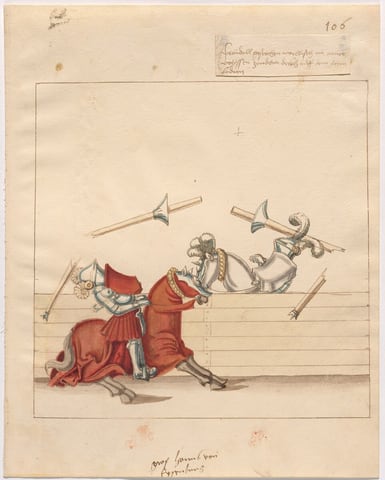
  2. This is a drawing of two armored figures on horseback engaged in a joust. Both knights are clad in ornate armor and mounted on horses as they participate in the match. The scene captures the moment of impact, with splintered lances flying in the air. One knight in silver armor with blue accents is being unseated from his horse, while the other knight in red and silver armor remains mounted. Both horses are draped in colors matching their riders' armors. The focus is on the dynamic action and energy of the joust, with fine details showing the armor's shine and the movement of the horses. The drawing is bordered, and there is some script at the top and bottom.
    Italian Joust of PeaceUnrecorded German maker, c.1512-1515Courtesy National Gallery of Art, Washington
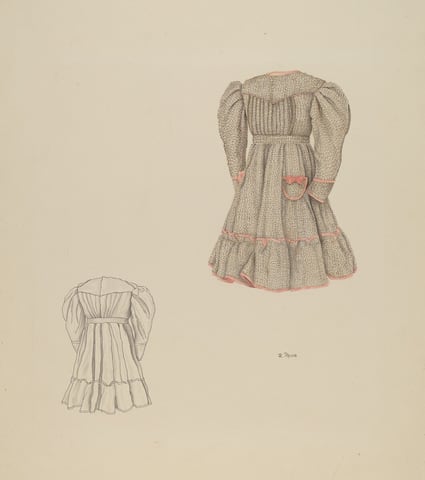
  3. The image depicts a detailed illustration of a dress with exaggerated puff sleeves and ruffles towards the bottom. It is created using a dotted pattern with red accents around the edges and seams. The color palette consists of mostly muted tones with touches of red. The dress is positioned in the upper right quadrant of the image, while a smaller, less detailed sketch of the same dress without colors is located in the lower left quadrant.
    Child's DressRay Price, c. 1937Courtesy National Gallery of Art, Washington

Section 3, north wall
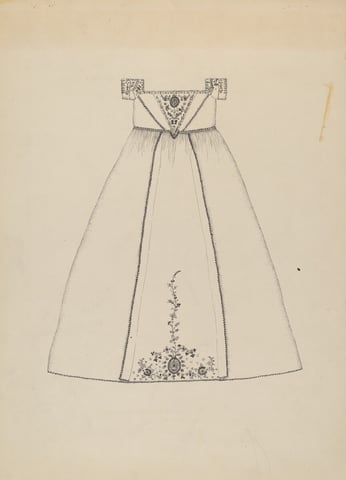
  1. This is a drawing of a dress design. The illustration features a dress with a square neckline, adorned with embroidery around the bust area. The dress has a high waistline with a gathered skirt. The lower part of the dress also features floral embroidery patterns. The design emphasizes fine lines and delicate patterns.
    Baptismal DressEvelyn Bailey, c. 1936Courtesy National Gallery of Art, Washington
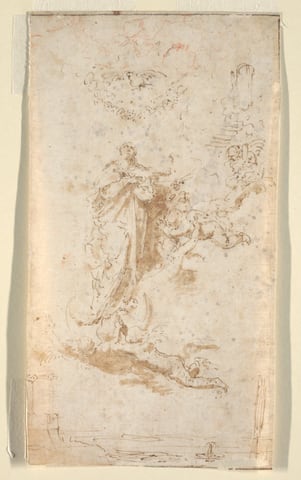
  2. THE IMMACULATE CONCEPTION
    The Immaculate ConceptionJusepe de Ribera (called Lo Spagnoletto), ca. 1640Courtesy of Cooper Hewitt, Smithsonian Design Museum
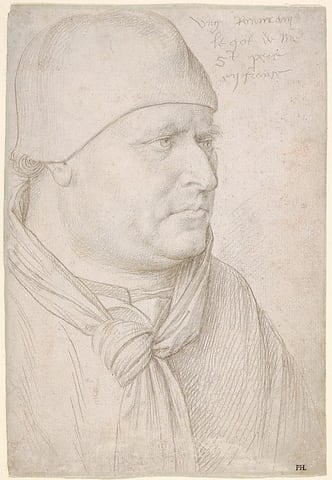
  3. Portrait of Alain de Coëtivy (1407–1474), by Jean Fouquet, ca. 1451–55
    Portrait of Alain de Coëtivy (1407–1474)Jean Fouquet, ca. 1451–55Courtesy of The Metropolitan Museum of Art

Section 3, south wall
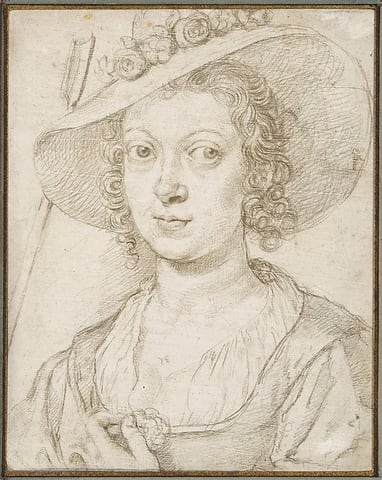
  1. Portrait of a woman as a shepherdess, by Crispijn de Passe the Younger, 1635-40
    Portrait of a woman as a shepherdessCrispijn de Passe the Younger, 1635-40Courtesy of The Metropolitan Museum of Art
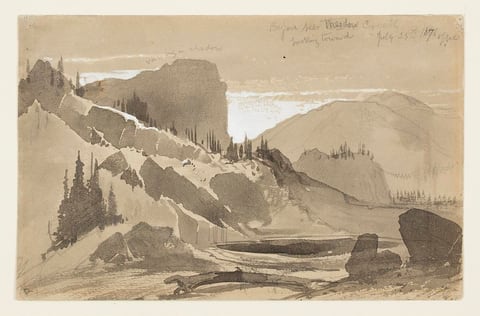
  2. NEAR MEADOW CREEK, UTAH
    Near Meadow Creek, UtahThomas Moran, July 25, 1871Courtesy of Cooper Hewitt, Smithsonian Design Museum

Walk on

  • Drawings, room 2
  • More by Thomas Moran 5 works
  • 19th-century United States 198 works
Ochre Editions

The world's museums, on your wall. Every work here is a reproduction of a public-domain original, credited to the museum that holds it.

Shop

All artCollectionsLimited dropsPrints and framing

Help

Find an orderShippingReturnsVerify a certificate

About

About Ochre EditionsMuseum creditsFor agentsDevelopers

Legal

Terms of UseTerms of SaleLimited Editions and CertificatesPrivacy PolicyCookie PolicyAcceptable Use PolicyAgent & API TermsCopyright and DMCA PolicyPrinting Your Own PhotoVulnerability Disclosure PolicyAccessibility StatementOpen-Access Credits
© 2026 Ochre EditionsPrices in US dollars. Prints ship within the United States.