Skip to content
Ochre Editions
ArtArtistsCollectionsGalleriesDrops
SearchSign inCart (0)
The galleries · Time and place

The 20th century

Works made in the 20th century, anywhere in the world.

189 works · hang 4877 ·

Share The 20th century, in the galleries

The rooms are imagined; every work on their walls is real.

Walk this roomRehang this room

Section 1, north wall

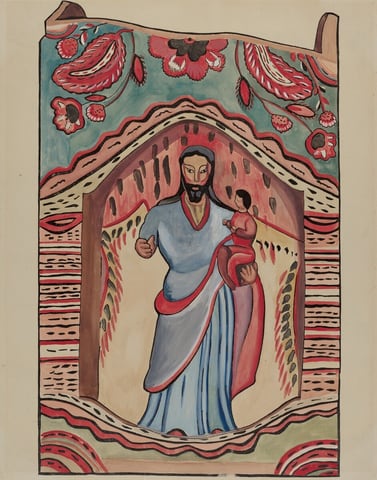
  1. This is a painting of stylized figures within an ornate frame. The artwork features two central figures that are reminiscent of a traditional religious iconography but rendered in a simplified and almost cartoonish form. The larger figure is draped in blue with red accents, while a smaller figure is held in one hand, enrobed in red. The background is decorated with a variety of patterns including an arch-like structure with wavy designs and lines, all outlining the central figures. The outer sections feature floral patterns with bold, contrasting colors of red, black, and teal. The use of thick outlines and vivid colors suggests a playful and decorative approach to the portrayal of the figures, drawing inspiration possibly from folk art traditions.
    St. JosephE. Boyd, 1936Courtesy National Gallery of Art, Washington
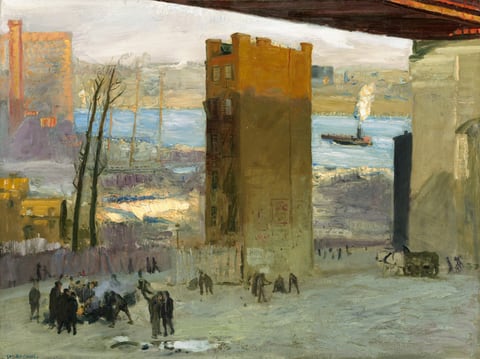
  2. A six-story, narrow building stands alone in an otherwise unoccupied lot under the deck of a high bridge, with a river and cityscape in the background in this horizontal painting. Dozens of people, small in scale, are each painted with a few swipes of black and some with peach-colored faces. They gather at the foot of the building and around a fire to our left, near the lower left corner of the composition. The fire is painted with a dash of orange, a few touches of canary yellow, and a smudge of gray smoke. Several more people stand and sit against the building, which has a streetlamp near its entrance. The back end of the building angles away from us to our right, so we see the narrow, front entrance side to our left. Each of the six floors of the building has two windows with fire escape ladders on the narrow side we can see. Some strokes in red and white on the lower levels of the long, flat side of the building suggest signs or posters. The top story glows a warm sienna brown in sunlight, while the rest of the building and the scene below are in shadow. More people walk along a grayish-violet fence that encloses the lot beyond the building. The ground is painted thickly with slate gray, pale, sage green, and one smear of white to suggest snow. To our right and a short distance from us, a white horse pulls a carriage near the foot of the bridge. The ivory-white, concrete piling rises up and off the right edge of the canvas and supports the deck of the bridge above. Only a sliver of the brick-red underside of the bridge is visible, skimming the top edge of the painting in the upper right corner. Two twiggy, barren trees grow up beyond the muted purple fence, and the landscape beyond is bright in the sunlight. A terracotta-orange building rises along the left edge of the painting, with the area between it and the lot under the bridge filled with thickly painted patches of butter yellow, amethyst purple, and sage green. Beyond that, an ice-blue river flows across the composition. The shore beyond is lined with patches of beige and tan paint that could be buildings. A black tugboat puffs bright white smoke in the river. The sky above is frosty white. The artist signed the work with dark blue in the lower left corner of the painting, “Geo Bellows.”
    The Lone TenementGeorge Bellows, 1909Courtesy National Gallery of Art, Washington
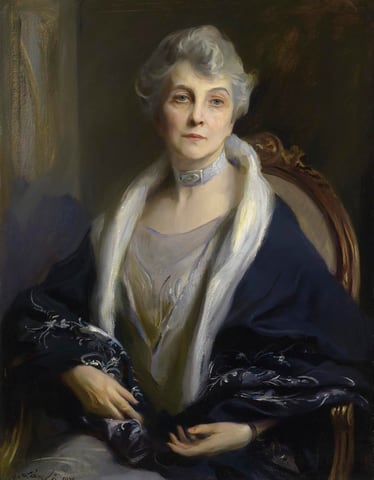
  3. Artist: Philip Alexius de László, Sitter: Clara Margaret Cook Kellogg, Current owner: National Portrait Gallery, Smithsonian Institution
    Clara Cook KelloggPhilip Alexius de László, 1929Courtesy of the National Portrait Gallery, Smithsonian Institution
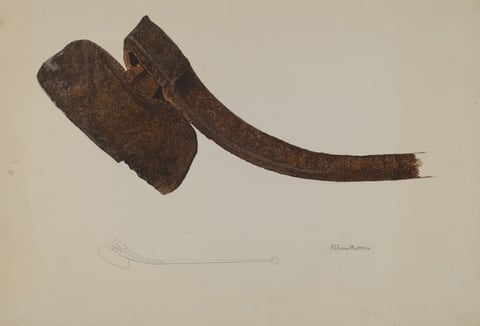
  4. The image shows a large, rusted ax with a curved brown handle placed diagonally across the canvas. The color palette consists of muted browns and beiges, highlighting the aged appearance of the ax. Beneath the ax, there is a faint outline sketch of a similar object, and the artist's signature is located to the right of the sketch. The ax is in the upper half of the image, while the sketch and signature are in the center-bottom section.
    Dumb IronAlfonso Moreno, c. 1938Courtesy National Gallery of Art, Washington

Section 1, south wall
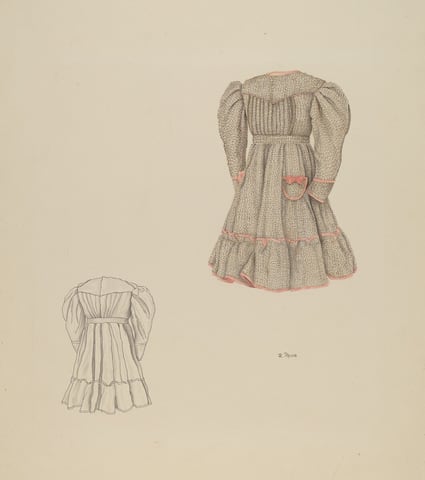
  1. The image depicts a detailed illustration of a dress with exaggerated puff sleeves and ruffles towards the bottom. It is created using a dotted pattern with red accents around the edges and seams. The color palette consists of mostly muted tones with touches of red. The dress is positioned in the upper right quadrant of the image, while a smaller, less detailed sketch of the same dress without colors is located in the lower left quadrant.
    Child's DressRay Price, c. 1937Courtesy National Gallery of Art, Washington
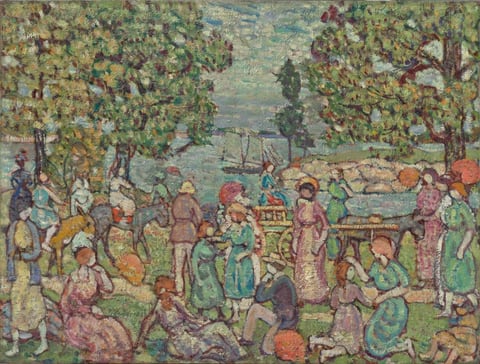
  2. On the Beach, No. 3, by Maurice Prendergast, c. 1915–18
    On the Beach, No. 3Maurice Prendergast, c. 1915–18Courtesy of the Cleveland Museum of Art
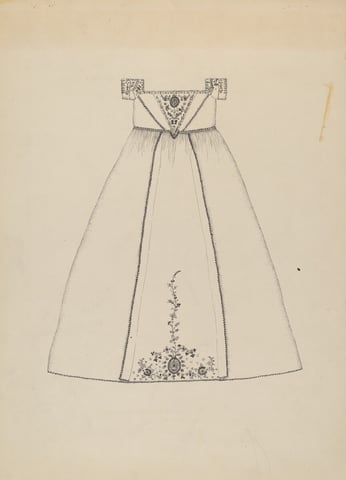
  3. This is a drawing of a dress design. The illustration features a dress with a square neckline, adorned with embroidery around the bust area. The dress has a high waistline with a gathered skirt. The lower part of the dress also features floral embroidery patterns. The design emphasizes fine lines and delicate patterns.
    Baptismal DressEvelyn Bailey, c. 1936Courtesy National Gallery of Art, Washington
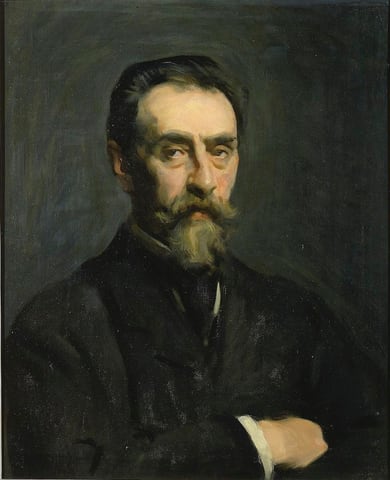
  4. Portrait of William E. Norton, by William Penhallow Henderson, 1901
    Portrait of William E. NortonWilliam Penhallow Henderson, 1901Courtesy of the Smithsonian American Art Museum

Section 2, south wall
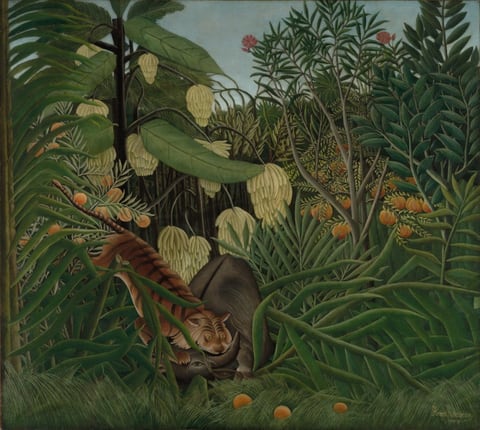
  1. Fight Between a Tiger and a Buffalo, by Henri Rousseau, 1908
    Fight Between a Tiger and a BuffaloHenri Rousseau, 1908Courtesy of the Cleveland Museum of Art
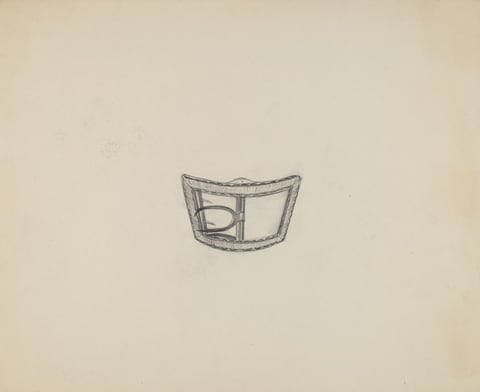
  2. The image displays a detailed pencil sketch of a curved architectural structure in the center of a light beige canvas. The sketch is in grayscale, with a simple color palette. The object occupies a small portion of the canvas, surrounded by negative space.
    Knee BuckleEdna Crenshaw Rex, c. 1937Courtesy National Gallery of Art, Washington
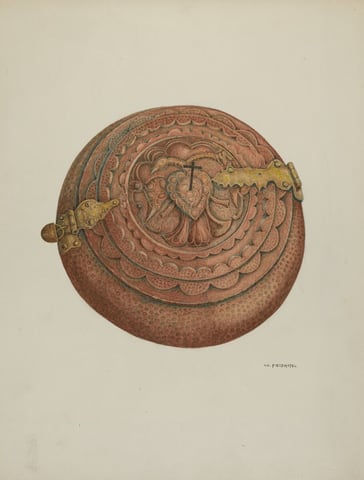
  3. The image features a round, ornately decorated object resembling a shield with metallic-looking decorative hinges on its surface. The color palette is primarily earthy tones such as brown, red, and hints of gold. The object is centered in the image, viewed from the front, with engravings decorating its surface. The background is plain and light in color.
    Baptismal FontWilliam Kieckhofel, c. 1941Courtesy National Gallery of Art, Washington
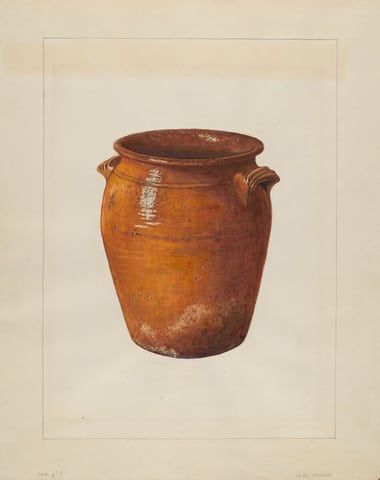
  4. The image features a large terracotta pot with two small handles on its sides. The pot is primarily in shades of earthy orange and brown with some lighter patches that suggest a slightly weathered texture. It is positioned centrally against a plain, light background.
    Preserving JarWilford H. Shurtliff, c. 1938Courtesy National Gallery of Art, Washington

Section 2, north wall
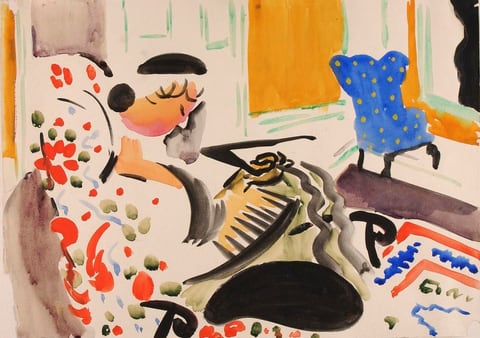
  1. Calligraphic Interior, by H. Lyman Saÿen, ca. 1915
    Calligraphic InteriorH. Lyman Saÿen, ca. 1915Courtesy of the Smithsonian American Art Museum
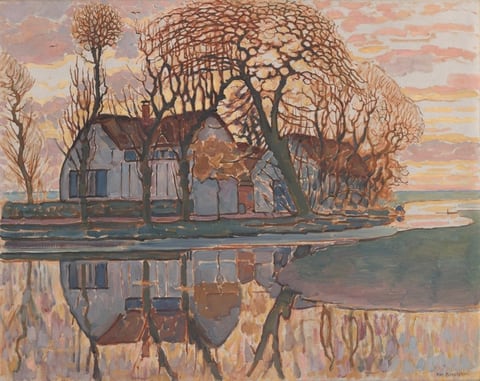
  2. A work made of oil on canvas.
    Farm near DuivendrechtPiet Mondrian, c. 1916Courtesy of the Art Institute of Chicago
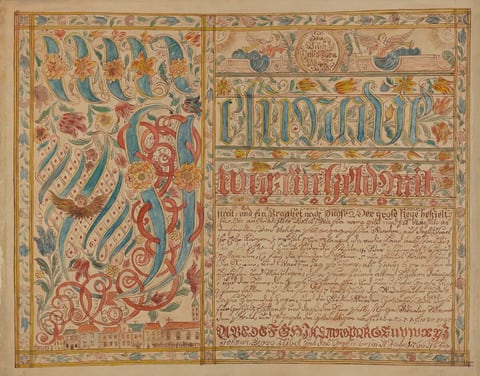
  3. This is a painting of an intricate and colorful illuminated manuscript page. The full-description includes a richly decorated page featuring elaborate calligraphy and floral motifs. The left side showcases swirling ornamental patterns with vibrant colors - blues, reds, and golds - interwoven with blooming flowers and a small figure with wings. In the lower portion, there is a depiction of small buildings. The right side contains text in different styles, with the top section written in large decorative letters and the lower section in a more detailed script. The overall design is bordered with floral elements and intertwining vines. This is in the style of illuminated manuscripts found in historical European documents and books.
    FrakturAlbert Levone, 1935/1942Courtesy National Gallery of Art, Washington
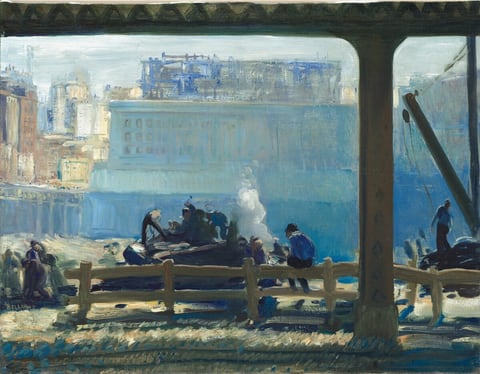
  4. From under an elevated train track, we look at a cluster of people hammering and working on the far side of a wooden fence, all against a silvery-blue building that fills most of the background in this horizontal painting. The scene is loosely painted mostly in tones of hazy and saturated blues, so many of the details are indistinct. About a quarter of the way in from the right edge of the composition, a thin iron column holds up the train platform. The column nearly spans the height of the painting, and the track it supports runs across the top edge of the canvas. At the foot of the column, along the bottom edge, are two parallel tracks embedded in an area otherwise painted with short, diagonal strokes in topaz blue, olive green, and straw yellow. Just beyond the tracks, the split-rail wooden fence runs across most of the painting, though there is an opening at the left edge of the canvas. A man sits with his back to us on the railing to our right of center. He wears a dark cap, a lapis-blue shirt, and navy-blue pants. Several men work on or near a mound-shaped form, perhaps a piece of machinery, just beyond the fence, near the center of the painting. One man holds a hammer high overhead while another reaches down or strikes the mound with his feet planted wide. More people work together to our left, and a man to our right stands near a crane. The people and these areas are painted with broad strokes and touches of cobalt blue, charcoal gray, khaki brown, and a few swipes of shell pink and bright white. A puff of white smoke billows up behind the central group, before the land drops precipitously away. The chasm is painted with shimmering tones of aquamarine and cerulean blue. A sky-blue, rectangular building perches at the far edge. A few windows are outlined in royal blue to our left but the rest of the building is loosely painted with long, vertical strokes so no architectural details can be made out. Behind this structure are more city buildings, suggested with strokes of muted rust red, parchment and bright white, and cobalt blue. The ice-blue sky fills the band between the top of the buildings and the train track running overhead. The artist signed his name near the lower left corner, “BELLOWS.”
    Blue MorningGeorge Bellows, 1909Courtesy National Gallery of Art, Washington

Walk on

  • The 20th century, room 2
  • More by George Bellows 6 works
  • More American Gilded Age 67 works
Ochre Editions

The world's museums, on your wall. Every work here is a reproduction of a public-domain original, credited to the museum that holds it.

Shop

All artCollectionsLimited dropsPrints and framing

Help

Find an orderShippingReturnsVerify a certificate

About

About Ochre EditionsMuseum creditsFor agentsDevelopers

Legal

Terms of UseTerms of SaleLimited Editions and CertificatesPrivacy PolicyCookie PolicyAcceptable Use PolicyAgent & API TermsCopyright and DMCA PolicyPrinting Your Own PhotoVulnerability Disclosure PolicyAccessibility StatementOpen-Access Credits
© 2026 Ochre EditionsPrices in US dollars. Prints ship within the United States.