Skip to content
Ochre Editions
ArtArtistsCollectionsGalleriesDrops
SearchSign inCart (0)
The galleries · Time and place

The 20th century

Works made in the 20th century, anywhere in the world.

189 works · hang 4748 ·

Share The 20th century, in the galleries

The rooms are imagined; every work on their walls is real.

Walk this roomRehang this room

Section 1, north wall

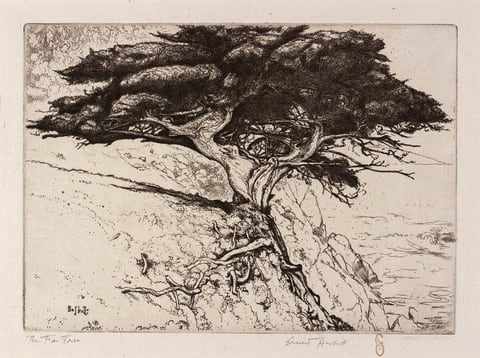
  1. The Fan Tree, by Ernest Haskell, ca. 1915
    The Fan TreeErnest Haskell, ca. 1915Courtesy of the Smithsonian American Art Museum
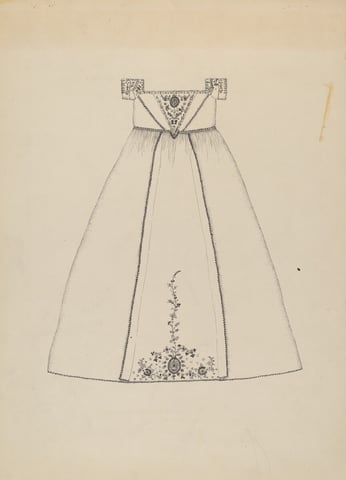
  2. This is a drawing of a dress design. The illustration features a dress with a square neckline, adorned with embroidery around the bust area. The dress has a high waistline with a gathered skirt. The lower part of the dress also features floral embroidery patterns. The design emphasizes fine lines and delicate patterns.
    Baptismal DressEvelyn Bailey, c. 1936Courtesy National Gallery of Art, Washington
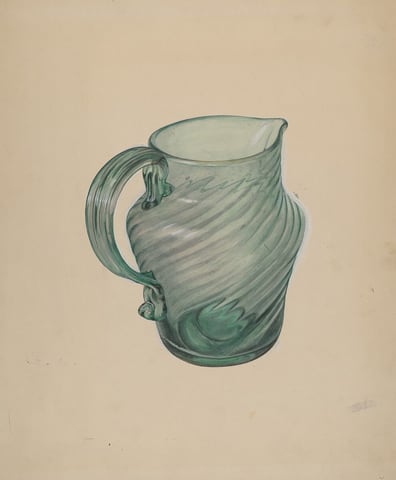
  3. The image shows a translucent pitcher in soft, pale green with swirling, striped patterns and a curved handle. It is placed in the center of the frame, with a neutral off-white background. The spout faces slightly to the left and the handle curves from the right side.
    Glass PitcherBeverly Chichester, c. 1937Courtesy National Gallery of Art, Washington
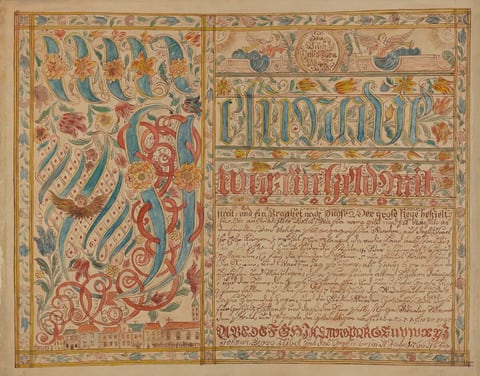
  4. This is a painting of an intricate and colorful illuminated manuscript page. The full-description includes a richly decorated page featuring elaborate calligraphy and floral motifs. The left side showcases swirling ornamental patterns with vibrant colors - blues, reds, and golds - interwoven with blooming flowers and a small figure with wings. In the lower portion, there is a depiction of small buildings. The right side contains text in different styles, with the top section written in large decorative letters and the lower section in a more detailed script. The overall design is bordered with floral elements and intertwining vines. This is in the style of illuminated manuscripts found in historical European documents and books.
    FrakturAlbert Levone, 1935/1942Courtesy National Gallery of Art, Washington

Section 1, south wall
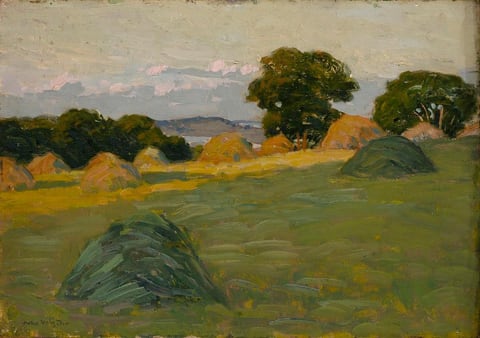
  1. The Hill Field, by Arthur Wesley Dow, 1908-1910
    The Hill FieldArthur Wesley Dow, 1908-1910Courtesy of the Smithsonian American Art Museum
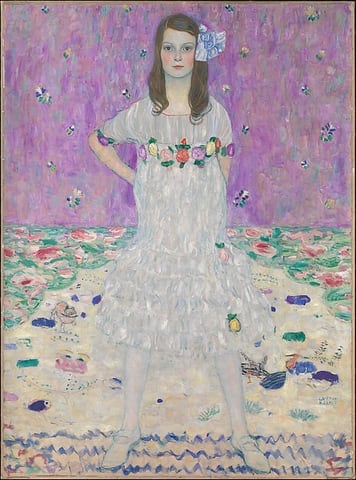
  2. Mäda Primavesi (1903–2000), by Gustav Klimt, 1912–13
    Mäda Primavesi (1903–2000)Gustav Klimt, 1912–13Courtesy of The Metropolitan Museum of Art
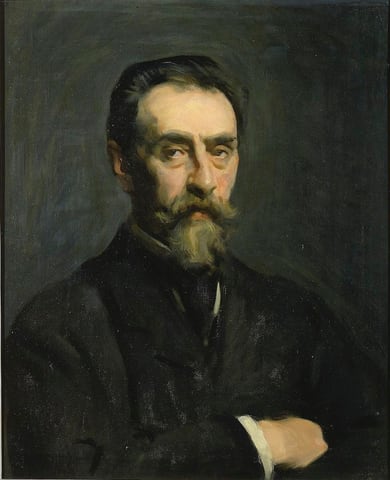
  3. Portrait of William E. Norton, by William Penhallow Henderson, 1901
    Portrait of William E. NortonWilliam Penhallow Henderson, 1901Courtesy of the Smithsonian American Art Museum
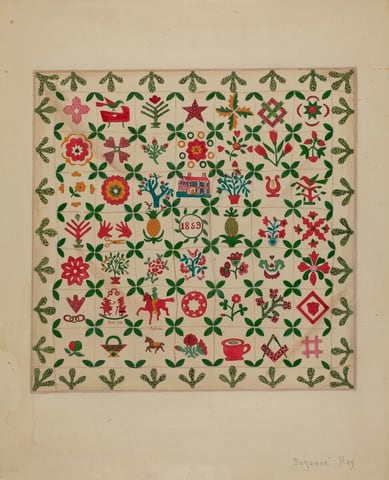
  4. This is a painting of a decorative quilt pattern. The image shows a grid of square sections with various colorful motifs including stars, flowers, a horse, a house, and a cup. The design features vibrant colors, symmetrical patterns, and a central section with the date "1859". The quilt border has leaf-like patterns creating a frame around the central grid. The style is folk art.
    Applique QuiltSuzanne Roy, 1938Courtesy National Gallery of Art, Washington

Section 2, south wall
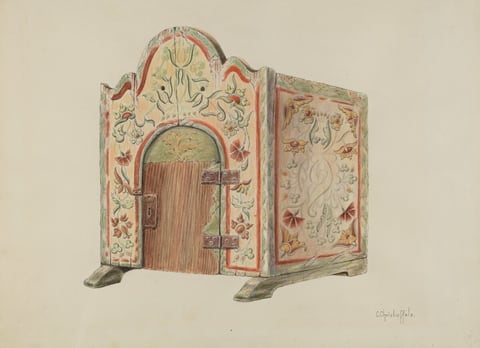
  1. The image shows a small intricately decorated wooden structure with an arched top and a central door flanked by two metal hinges. The structure is painted with a floral and vine motif in colors such as red, green, and yellow on a light background. The wooden door has a textured appearance. The object is positioned centrally with the door facing forward, placed on a slightly elevated base with two footings extending forward. The overall look is ornate and symmetrical, showcasing detailed design work.
    Tabernacle (Ecclesiastical Furniture)Cornelius Christoffels, c. 1938Courtesy National Gallery of Art, Washington
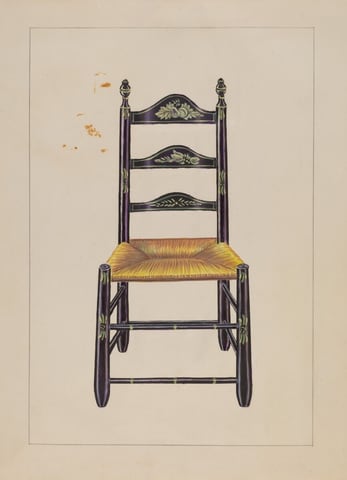
  2. The image shows a wooden chair with a rush seat. It features ornate details on the backrest. The color palette includes dark wood tones, pale greenish detailing, and a warm yellowish hue for the seat. The chair is centrally positioned in the image, viewed from the front, with no other objects around it.
    Ladderback ChairGerald Bernhardt, c. 1936Courtesy National Gallery of Art, Washington
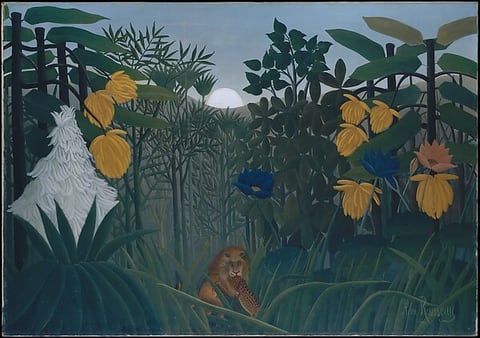
  3. The Repast of the Lion, by Henri Rousseau, ca. 1907
    The Repast of the LionHenri Rousseau, ca. 1907Courtesy of The Metropolitan Museum of Art
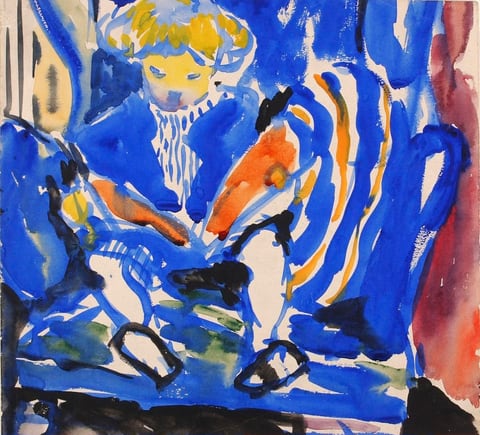
  4. Child Reading, by H. Lyman Saÿen, 1915-1918
    Child ReadingH. Lyman Saÿen, 1915-1918Courtesy of the Smithsonian American Art Museum

Section 2, north wall
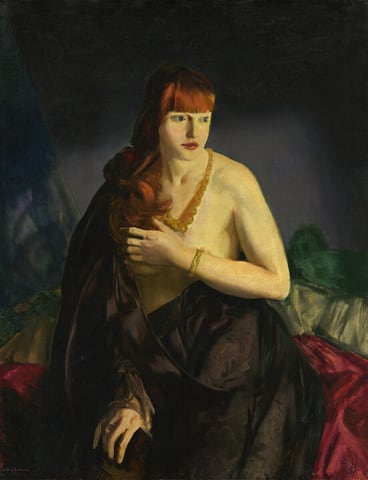
  1. Shown from the knees up, a woman sits partially covered by a black cloth as she holds one forearm across her bare breasts in this vertical painting. The woman has pale, yellow-tinged skin and long, copper-red hair and bangs. Her body faces us, but she turns her head to look off to our right with large blue, wide-set eyes. Her cheeks are flushed, and her full, dark pink lips are closed. A strand of gradually larger amber-yellow beads hangs around her neck, and she wears a gold-colored bracelet on the arm braced across her chest, her left arm, to our right. Glimpses of pale pink nipples are visible. The voluminous black cloth drapes down over one shoulder and across her hips. She wears a ring on the other hand, which emerges from the cloth to rest on that knee. Piles of garnet red, peridot green, and forest green are piled up to chest height behind her, and the background is nickel gray around her body and darkens to black around the top and side edges. The scene is loosely painted, especially in the fabric and background. The artist signed the canvas in the lower left corner, “Geo. Bellows E.S.B.”
    Nude with Red HairGeorge Bellows, 1920Courtesy National Gallery of Art, Washington
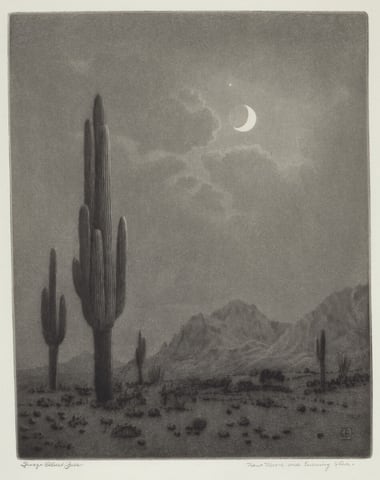
  2. This print depicts a grayscale desert landscape with a prominent saguaro cactus to the left. In the background, rocky mountains are visible in the darkness. The sky shows a crescent moon and a bright star through an opening in the soft gray clouds. Sparse desert vegetation is faintly visible on the ground, and more cacti can be seen in the distance.
    New Moon and Evening StarGeorge Elbert Burr, c. 1932Courtesy National Gallery of Art, Washington
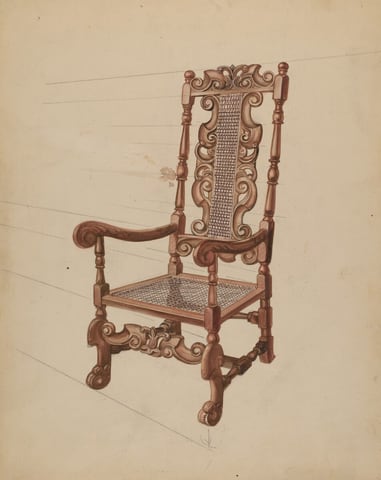
  3. The image shows an ornate chair with a high back, decorative carvings along its arms, legs, and backrest, a woven or cane seat and back, and intricate patterns. The chair is detailed with earthy brown tones and subtle shading accentuating the wood texture and design motifs. It is placed in the center of the image, facing slightly to the left, with linear guides indicating perspective and depth on a plain background.
    ArmchairAgnes Karlin, c. 1936Courtesy National Gallery of Art, Washington
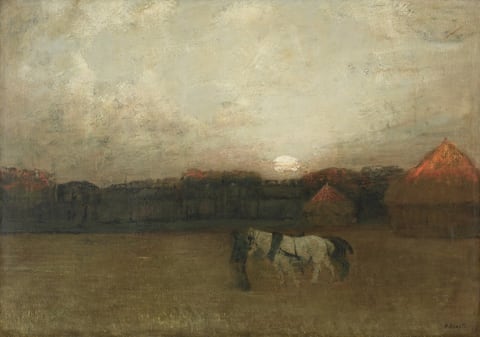
  4. The Stubble Field, by Henry Golden Dearth, c. 1909
    The Stubble FieldHenry Golden Dearth, c. 1909Courtesy of the Cleveland Museum of Art

Walk on

  • The 20th century, room 2
  • Henry Golden Dearth's contemporaries 8 works
  • More American Gilded Age 67 works
Ochre Editions

The world's museums, on your wall. Every work here is a reproduction of a public-domain original, credited to the museum that holds it.

Shop

All artCollectionsLimited dropsPrints and framing

Help

Find an orderShippingReturnsVerify a certificate

About

About Ochre EditionsMuseum creditsFor agentsDevelopers

Legal

Terms of UseTerms of SaleLimited Editions and CertificatesPrivacy PolicyCookie PolicyAcceptable Use PolicyAgent & API TermsCopyright and DMCA PolicyPrinting Your Own PhotoVulnerability Disclosure PolicyAccessibility StatementOpen-Access Credits
© 2026 Ochre EditionsPrices in US dollars. Prints ship within the United States.