Skip to content
Ochre Editions
ArtArtistsCollectionsGalleriesDrops
SearchSign inCart (0)
The galleries · Time and place

The 20th century

Works made in the 20th century, anywhere in the world.

189 works · hang 322 ·

Share The 20th century, in the galleries

The rooms are imagined; every work on their walls is real.

Walk this roomRehang this room

Section 1, north wall

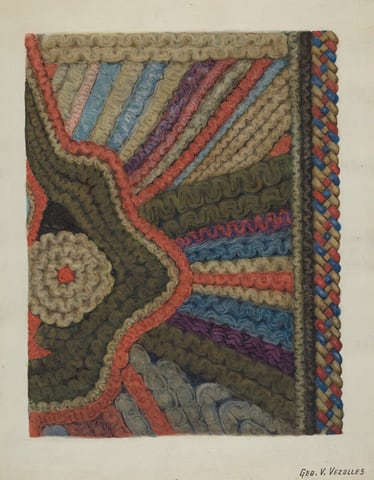
  1. The image displays wavy lines and shapes with a mix of colors, creating an abstract composition. Curved lines are intertwined, resembling braided patterns or woven fabric textures. On the left, there is a large, organic shape bordered by red, green, and beige. The right side showcases a rhythmic pattern resembling a braided rug, with strands of red, blue, and brown. The overall composition resembles a textured textile piece.
    Shaker Woolen RugGeorge V. Vezolles, 1935/1942Courtesy National Gallery of Art, Washington
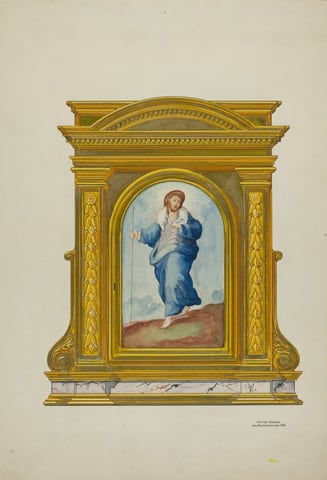
  2. The image shows a painted artwork within an ornate frame. The artwork features a figure standing with one hand raised. The figure has long hair and a beard, and wears flowing blue and white garments. The background shows an earthy surface and a sky. The frame is gold and elaborately designed. The scene is set against a blank, light-colored background.
    Original Tabernacle, for Communion VesselsDayton Brown, 1936Courtesy National Gallery of Art, Washington
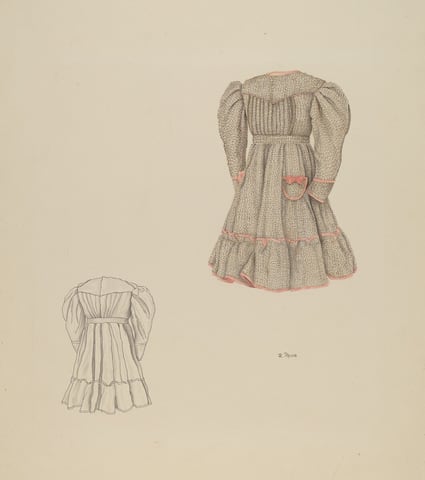
  3. The image depicts a detailed illustration of a dress with exaggerated puff sleeves and ruffles towards the bottom. It is created using a dotted pattern with red accents around the edges and seams. The color palette consists of mostly muted tones with touches of red. The dress is positioned in the upper right quadrant of the image, while a smaller, less detailed sketch of the same dress without colors is located in the lower left quadrant.
    Child's DressRay Price, c. 1937Courtesy National Gallery of Art, Washington
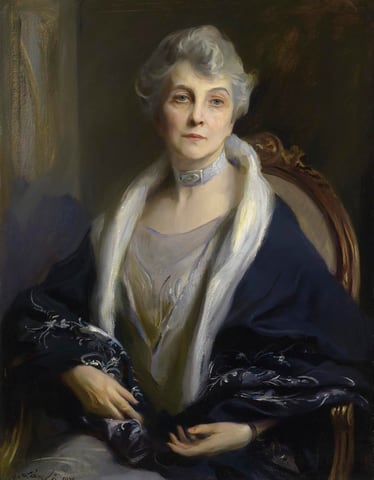
  4. Artist: Philip Alexius de László, Sitter: Clara Margaret Cook Kellogg, Current owner: National Portrait Gallery, Smithsonian Institution
    Clara Cook KelloggPhilip Alexius de László, 1929Courtesy of the National Portrait Gallery, Smithsonian Institution

Section 1, south wall
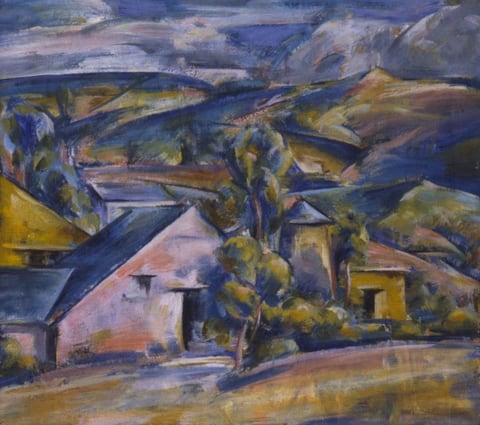
  1. The Hills, by Preston Dickinson, ca. 1919
    The HillsPreston Dickinson, ca. 1919Courtesy of the Smithsonian American Art Museum
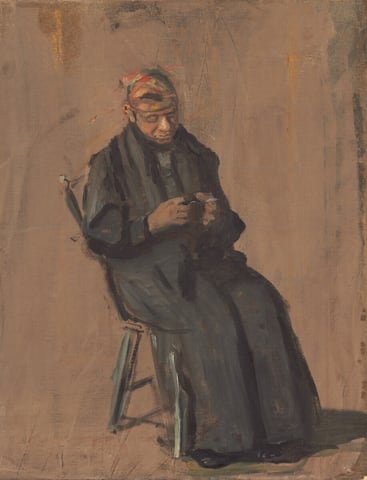
  2. This painting shows a person seated on a stool or chair, wearing a long, dark-blue robe or gown. They are slightly turned toward the right, looking downward at something they hold in their hands, and their head is covered with a cloth or cap. The background is textured with earthy tones, mostly tan with some patches of yellow ochre and gray.
    The ChaperoneThomas Eakins, c. 1908Courtesy National Gallery of Art, Washington
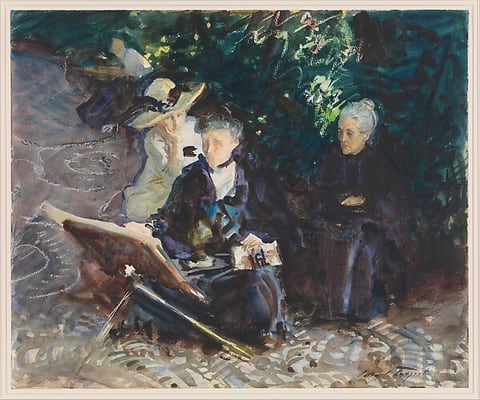
  3. In the Generalife, by John Singer Sargent, 1912
    In the GeneralifeJohn Singer Sargent, 1912Courtesy of The Metropolitan Museum of Art
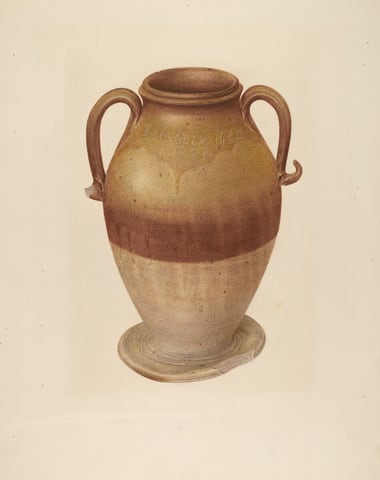
  4. The image shows a large ceramic vase with two curved handles positioned near the top on either side. The vase has an earthy color palette with shades of brown, beige, and a subtle hint of reddish-brown forming a band around its middle. The vase is centrally placed on a flat surface, and both handles extend outward at the top.
    VaseIsadore Goldberg, c. 1939Courtesy National Gallery of Art, Washington

Section 2, south wall
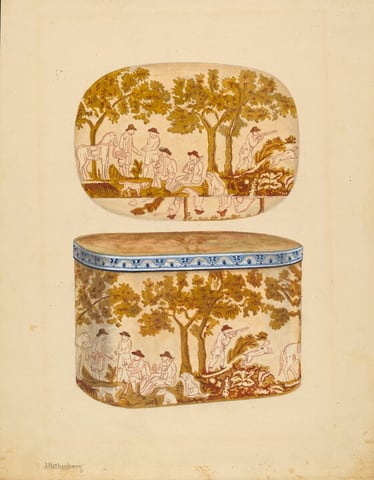
  1. This is a painting of a decorative box with pastoral scenes. The box has an oval lid and rectangular base adorned with intricate pastoral scenes in earthy tones. The scenes depict landscapes with trees, hills, and figures engaged in various activities against a warm backdrop. The lid has a similar scene, creating a cohesive decorative theme. The style resembles 19th-century European art focusing on pastoral genre scenes and decorative arts. The artwork delicately balances detail and composition, evoking calm and nostalgia.
    BandboxJohn Tarantino, c. 1937Courtesy National Gallery of Art, Washington
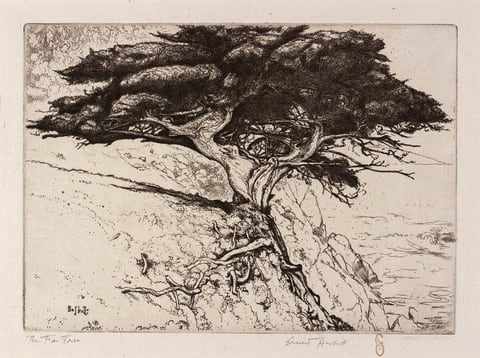
  2. The Fan Tree, by Ernest Haskell, ca. 1915
    The Fan TreeErnest Haskell, ca. 1915Courtesy of the Smithsonian American Art Museum
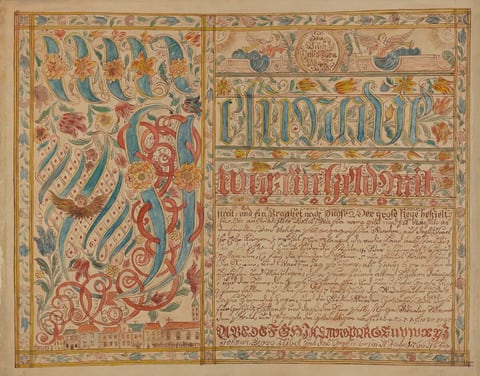
  3. This is a painting of an intricate and colorful illuminated manuscript page. The full-description includes a richly decorated page featuring elaborate calligraphy and floral motifs. The left side showcases swirling ornamental patterns with vibrant colors - blues, reds, and golds - interwoven with blooming flowers and a small figure with wings. In the lower portion, there is a depiction of small buildings. The right side contains text in different styles, with the top section written in large decorative letters and the lower section in a more detailed script. The overall design is bordered with floral elements and intertwining vines. This is in the style of illuminated manuscripts found in historical European documents and books.
    FrakturAlbert Levone, 1935/1942Courtesy National Gallery of Art, Washington
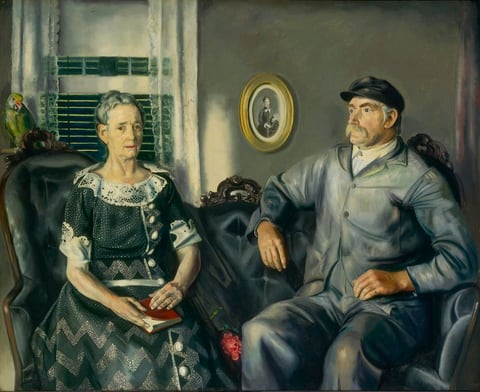
  4. Mr. and Mrs. Phillip Wase, by George Bellows, 1924
    Mr. and Mrs. Phillip WaseGeorge Bellows, 1924Courtesy of the Smithsonian American Art Museum

Section 2, north wall
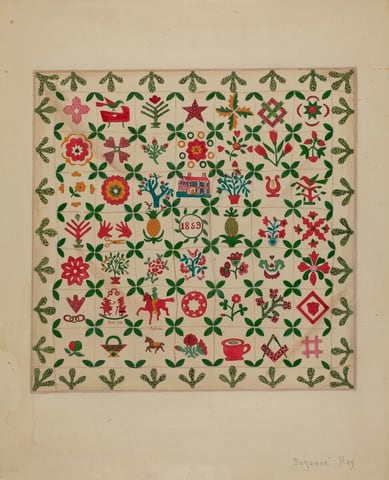
  1. This is a painting of a decorative quilt pattern. The image shows a grid of square sections with various colorful motifs including stars, flowers, a horse, a house, and a cup. The design features vibrant colors, symmetrical patterns, and a central section with the date "1859". The quilt border has leaf-like patterns creating a frame around the central grid. The style is folk art.
    Applique QuiltSuzanne Roy, 1938Courtesy National Gallery of Art, Washington
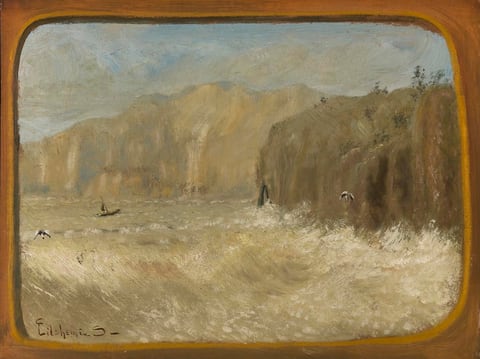
  2. Two Gulls and Cliffs, by Louis M. Eilshemius, ca. 1913-1921
    Two Gulls and CliffsLouis M. Eilshemius, ca. 1913-1921Courtesy of the Smithsonian American Art Museum

Section 3, north wall
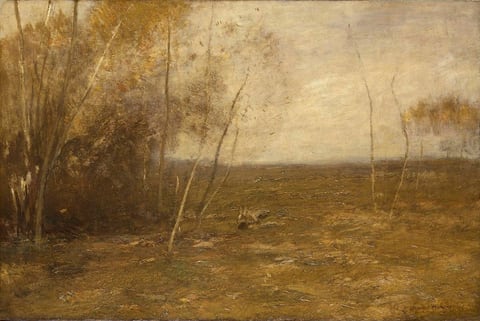
  1. The Sprout Lot, by J. Francis Murphy, 1915
    The Sprout LotJ. Francis Murphy, 1915Courtesy of the Smithsonian American Art Museum
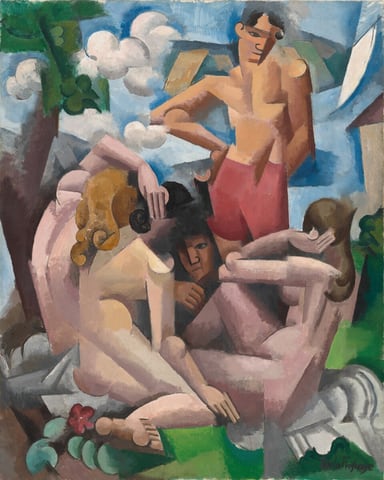
  2. This painting depicts a group of men and women created by a collection of angular, geometric shapes with flat planes and blocks of color. One person is standing, and they appear to be a bare-chested man with tan skin and short, dark hair, who is wearing red shorts. He has his hand on his hip and looks off to the right. At his feet appear to be several seated people, although they are only partially visible. Three women with pale skin seem to be facing away from us; we can see their legs, arms, and torsos, although these don't all fit together. The woman on the left has blonde hair, the woman on the right has brown hair, and the woman between them has short black hair. None of their faces are visible. In the middle of this group, at the center of the painting, we see the face and hand of another person who is looking to the left. This person has light brown skin, and we can't see the rest of their body. Surrounding elements include a blue sky with abstract cloud forms, an angular tree on the left, and patches of brown, white, and green on the ground, with one red flower. A tan rectangle under a red triangle on the right edge suggests a building.
    The BathersRoger de La Fresnaye, 1912Courtesy National Gallery of Art, Washington

Walk on

  • The 20th century, room 2
  • Roger de La Fresnaye's contemporaries 8 works
  • More Early modernism 68 works
Ochre Editions

The world's museums, on your wall. Every work here is a reproduction of a public-domain original, credited to the museum that holds it.

Shop

All artCollectionsLimited dropsPrints and framing

Help

Find an orderShippingReturnsVerify a certificate

About

About Ochre EditionsMuseum creditsFor agentsDevelopers

Legal

Terms of UseTerms of SaleLimited Editions and CertificatesPrivacy PolicyCookie PolicyAcceptable Use PolicyAgent & API TermsCopyright and DMCA PolicyPrinting Your Own PhotoVulnerability Disclosure PolicyAccessibility StatementOpen-Access Credits
© 2026 Ochre EditionsPrices in US dollars. Prints ship within the United States.