Skip to content
Ochre Editions
ArtArtistsCollectionsGalleriesDrops
SearchSign inCart (0)
The galleries · Time and place

16th-century Netherlands

Works made in the Netherlands in the 16th century.

35 works · hang 8559 ·

Share 16th-century Netherlands, in the galleries

The rooms are imagined; every work on their walls is real.

Walk this roomRehang this room

First room, north wall

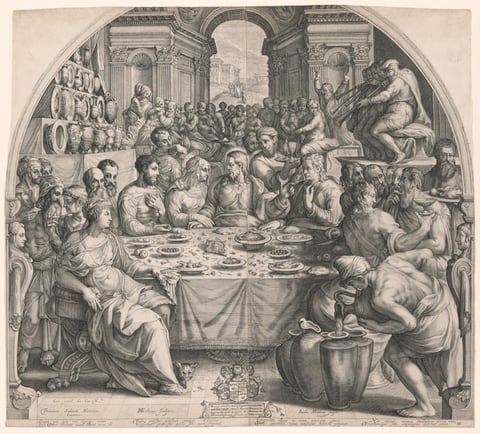
  1. A work made of engraving on two joined sheets of ivory laid paper.
    The Wedding at CanaHendrick Goltzius, c. 1590-1610Courtesy of the Art Institute of Chicago
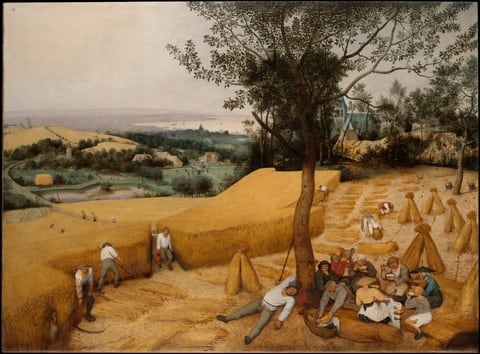
  2. The Harvesters, by Pieter Bruegel, 1565
    The HarvestersPieter Bruegel, 1565Courtesy of The Metropolitan Museum of Art
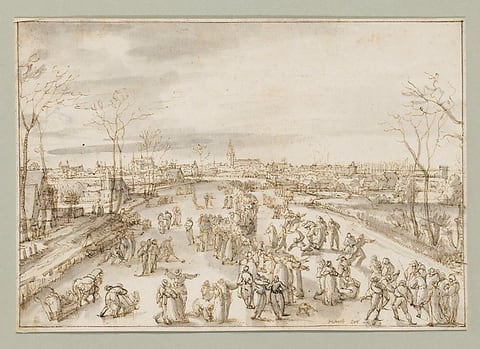
  3. Ice skaters on the Amstel in Amsterdam, by Hans Bol, 1589
    Ice skaters on the Amstel in AmsterdamHans Bol, 1589Courtesy of The Metropolitan Museum of Art

First room, south wall
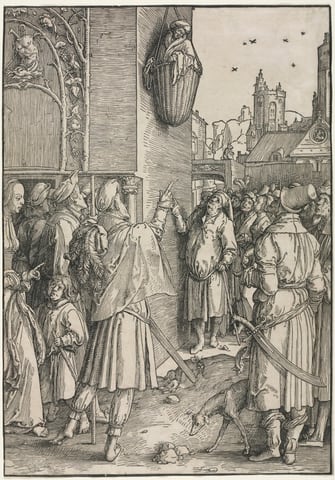
  1. The Power of Women: The Poet Virgil Suspended in a Basket, by Lucas van Leyden, c. 1512
    The Power of Women: The Poet Virgil Suspended in a BasketLucas van Leyden, c. 1512Courtesy of the Cleveland Museum of Art
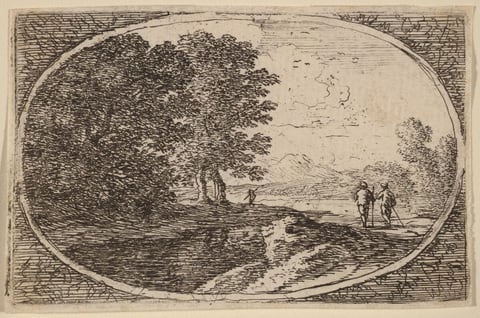
  2. The image shows a landscape scene viewed from an elevated perspective. The horizon is low, with mountains visible in the distance. The scene features detailed brushstroke technique and a monochromatic palette. Trees dominate the left side, with two figures walking along a path towards the horizon. The color palette is black and white, accentuating details, light, and shadow.
    Three Men Carrying StaffsHerman van SwaneveltCourtesy National Gallery of Art, Washington
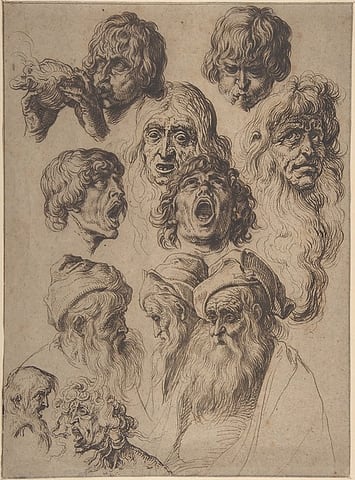
  3. Study of Eleven Heads, by Jacques de Gheyn II, late 16th–early 17th century
    Study of Eleven HeadsJacques de Gheyn II, late 16th–early 17th centuryCourtesy of The Metropolitan Museum of Art
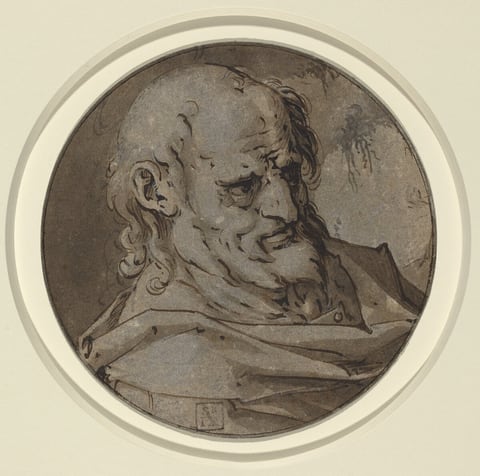
  4. The image features the upper body and head of a man in a circular frame. The man is facing slightly to the side and downward, with his body oriented to the left and his head turned towards the viewer. He has a prominent forehead, a defined nose, a furrowed brow, and a scrunched face. His hair is thinning on top, with longer strands curling around the back and sides of his head. The man has a beard with similar curled texture as his hair. He is wearing a garment that drapes over his shoulders, with visible folds and a texture that suggests a substantial fabric. No jewelry or objects are in his hands, as they are not visible in this image. The background is plain with a light, sketchy look, focusing attention on the man as the central figure in the circular composition.
    Head of an ApostleHendrick GoltziusCourtesy National Gallery of Art, Washington

Second room, south wall
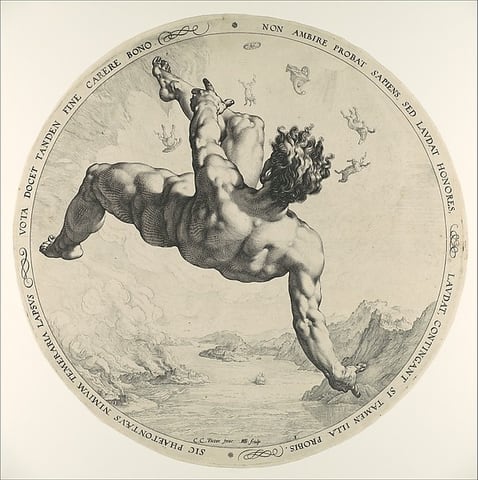
  1. Phaeton, from "The Four Disgracers", by Hendrick Goltzius, 1588
    Phaeton, from "The Four Disgracers"Hendrick Goltzius, 1588Courtesy of The Metropolitan Museum of Art
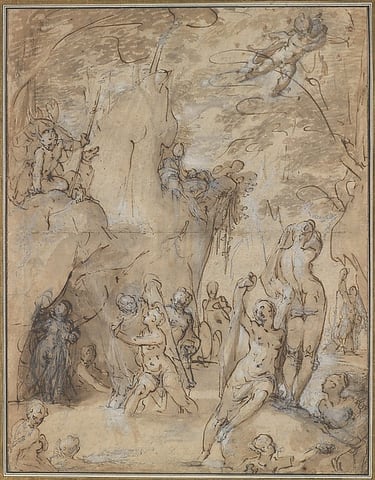
  2. Diana and Actaeon, by Bartholomeus Spranger, ca. 1580–85
    Diana and ActaeonBartholomeus Spranger, ca. 1580–85Courtesy of The Metropolitan Museum of Art
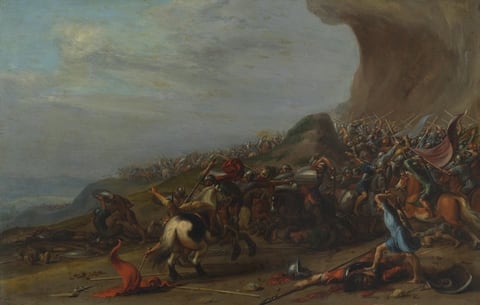
  3. A work made of oil on copper.
    David Slaying GoliathDutch, 1600–50Courtesy of the Art Institute of Chicago
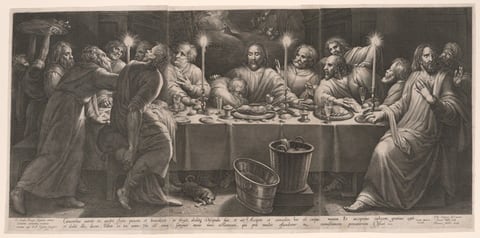
  4. A work made of engraving on three joined sheets of laid paper.
    The Last SupperJan Harmensz. Muller, 1594Courtesy of the Art Institute of Chicago

Second room, north wall
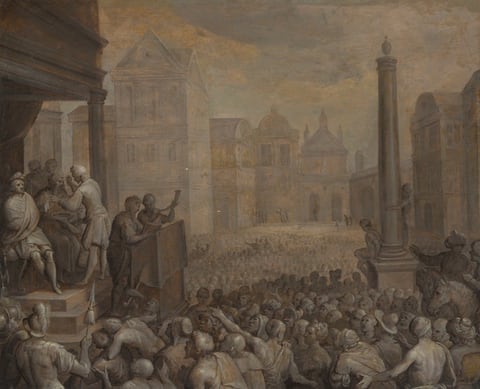
  1. A work made of oil on panel.
    The Judgement of ZaleucusOtto van Veen, c. 1605Courtesy of the Art Institute of Chicago
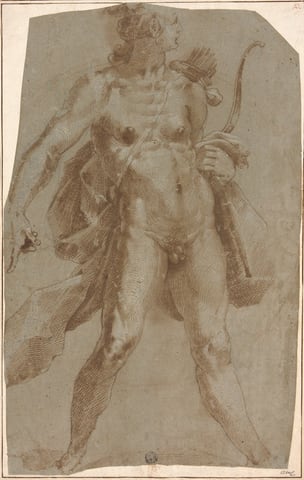
  2. A work made of pen and brown ink, heightened with lead white (partly discolored), over black chalk, on blue laid paper, laid down on ivory laid paper.
    ApolloJan Harmensz. Muller, c. 1600-1620Courtesy of the Art Institute of Chicago
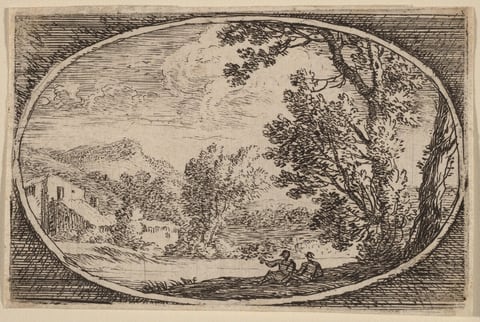
  3. The image shows an oval framing a scene with mountains, clouds, and trees. Delicate etched lines create textures in the landscape. The color palette is monochrome. Two figures are sitting under leafy trees, with a structure nearby.
    Two Men Seated Near the WatersideHerman van SwaneveltCourtesy National Gallery of Art, Washington

Third room, north wall
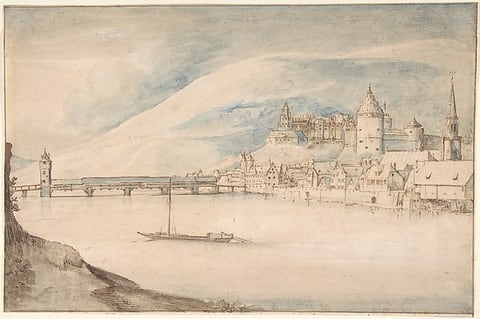
  1. View of Heidelberg, by Jan Brueghel the Elder, ca. 1588–89
    View of HeidelbergJan Brueghel the Elder, ca. 1588–89Courtesy of The Metropolitan Museum of Art
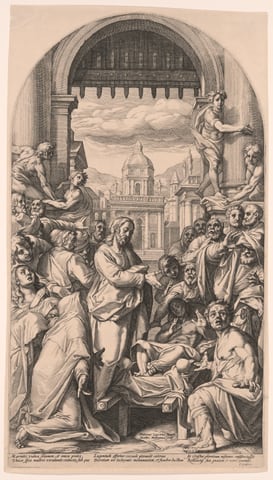
  2. A work made of engraving in black on cream laid paper.
    Christ Raises the Dead Son of the Widow of NainJacob Matham, 1593/94Courtesy of the Art Institute of Chicago

Walk on

  • 16th-century Netherlands, room 2
  • Jacob Matham's contemporaries 8 works
  • More Dutch Golden Age 44 works
Ochre Editions

The world's museums, on your wall. Every work here is a reproduction of a public-domain original, credited to the museum that holds it.

Shop

All artCollectionsLimited dropsPrints and framing

Help

Find an orderShippingReturnsVerify a certificate

About

About Ochre EditionsMuseum creditsFor agentsDevelopers

Legal

Terms of UseTerms of SaleLimited Editions and CertificatesPrivacy PolicyCookie PolicyAcceptable Use PolicyAgent & API TermsCopyright and DMCA PolicyPrinting Your Own PhotoVulnerability Disclosure PolicyAccessibility StatementOpen-Access Credits
© 2026 Ochre EditionsPrices in US dollars. Prints ship within the United States.