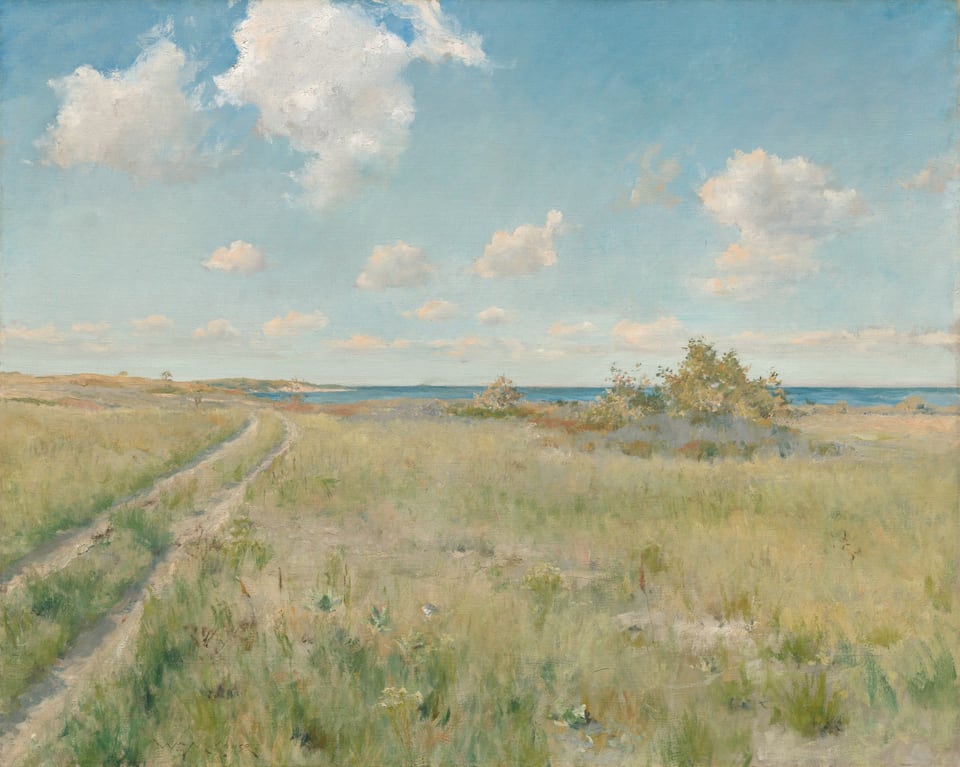
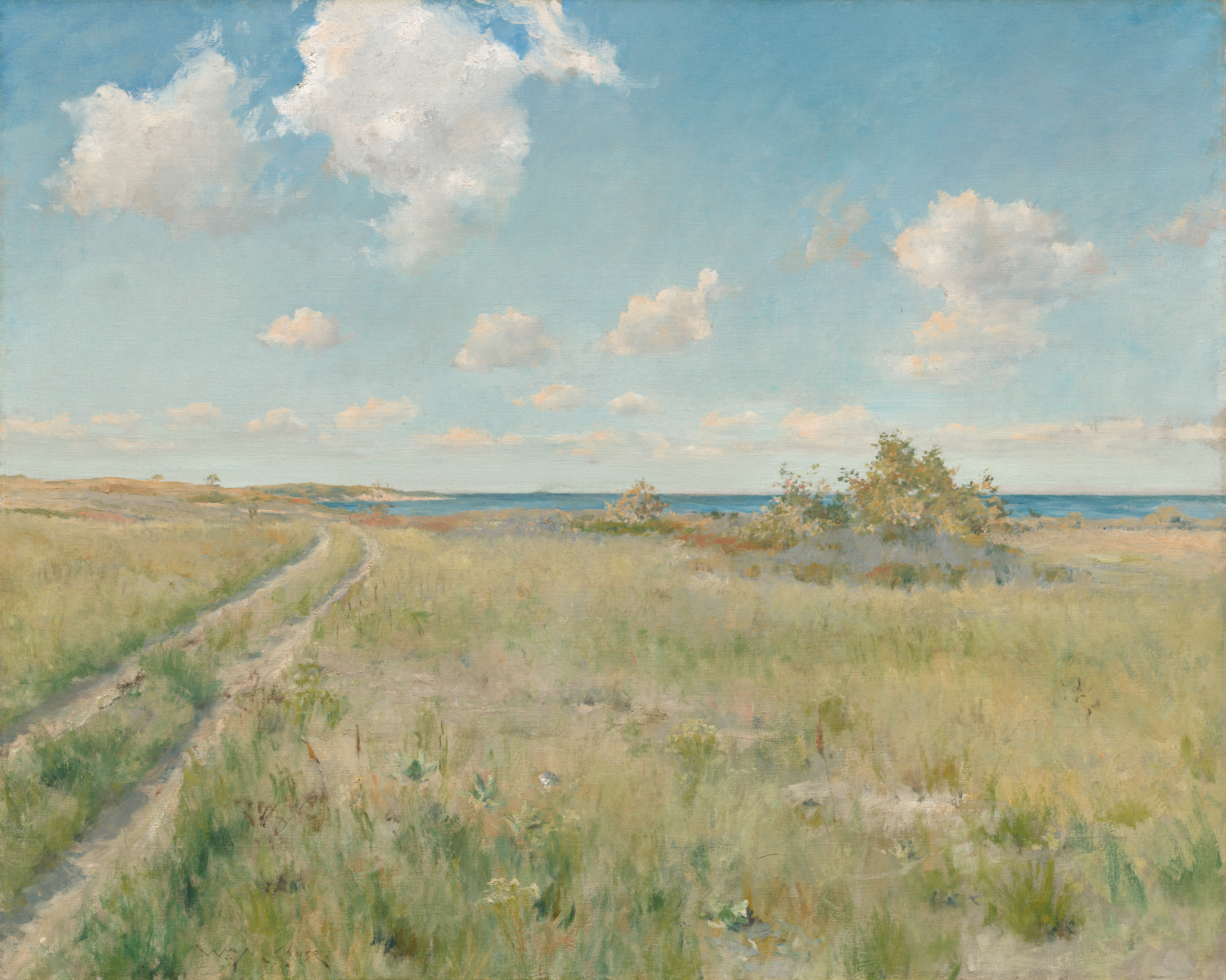
The Old Road to the Seac. 1893
One of the most influential of the American Impressionists, William Merritt Chase established his own summer school at Shinnecock, on the eastern tip of Long Island, New York. More about this work
About this work
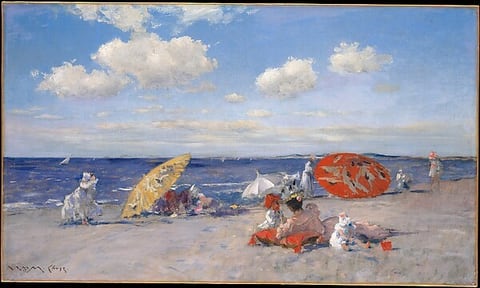
One of the most influential of the American Impressionists, William Merritt Chase established his own summer school at Shinnecock, on the eastern tip of Long Island, New York. Attracted to the low-lying dunes and beaches, Chase and his students were among the first American artists to pursue open-air painting. With its varied brushwork and warm colors, this painting is among the finest works Chase produced at Shinnecock. The panoramic scene glows with the light of a summer day. The Chase school at Shinnecock, active from 1891-1902, was instrumental in expanding the influence of Impressionism in the United States.
Text from the Cleveland Museum of Art.
How it was made
- Oil paint
- Pigment ground in a drying oil, usually linseed. It dries slowly, so painters could blend on the canvas, build up thin translucent glazes, and rework a picture over weeks. Canvas replaced wooden panels in the 1500s because it is lighter and can be rolled.
William Merritt Chase
American, 1849–1916 · Born in Williamsburg, Indiana; died in New York.
Chase studied at the Royal Academy in Munich, then returned to New York in 1878 to teach at the Art Students League, setting up a lavish Tenth Street studio that became a showcase. His style moved from dark Munich realism to bright, quick outdoor painting, seen in his views of city parks and of Shinnecock on Long Island, where he ran a summer school from 1891. He was among the most influential American teachers of his time, and his students included Georgia O’Keeffe and Edward Hopper.
Written by Ochre Editions.
Rights and the museum’s record
Public domain. The Cleveland Museum of Art has dedicated this image to the public domain under CC0, so anyone may copy, adapt and use it, for any purpose, without asking. Our prints and files are reproductions made from the museum’s image; the museum doesn’t endorse them.
- Object number
- 1938.333
- Credit
- Courtesy of the Cleveland Museum of Art
- Type
- Painting
- Department
- American Painting and Sculpture
- Licence
- CC0 1.0 Universal
- Museum record
- See it on the museum’s site
Report this work
More by William Merritt Chase
All their works
Close in colour