Unknown maker
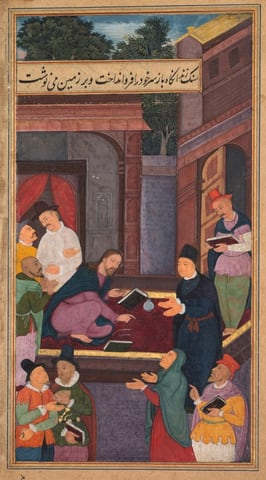
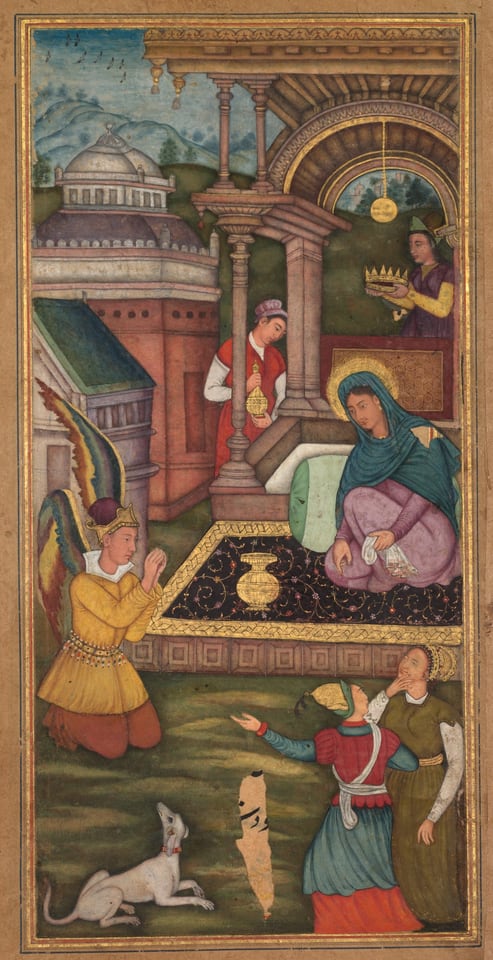
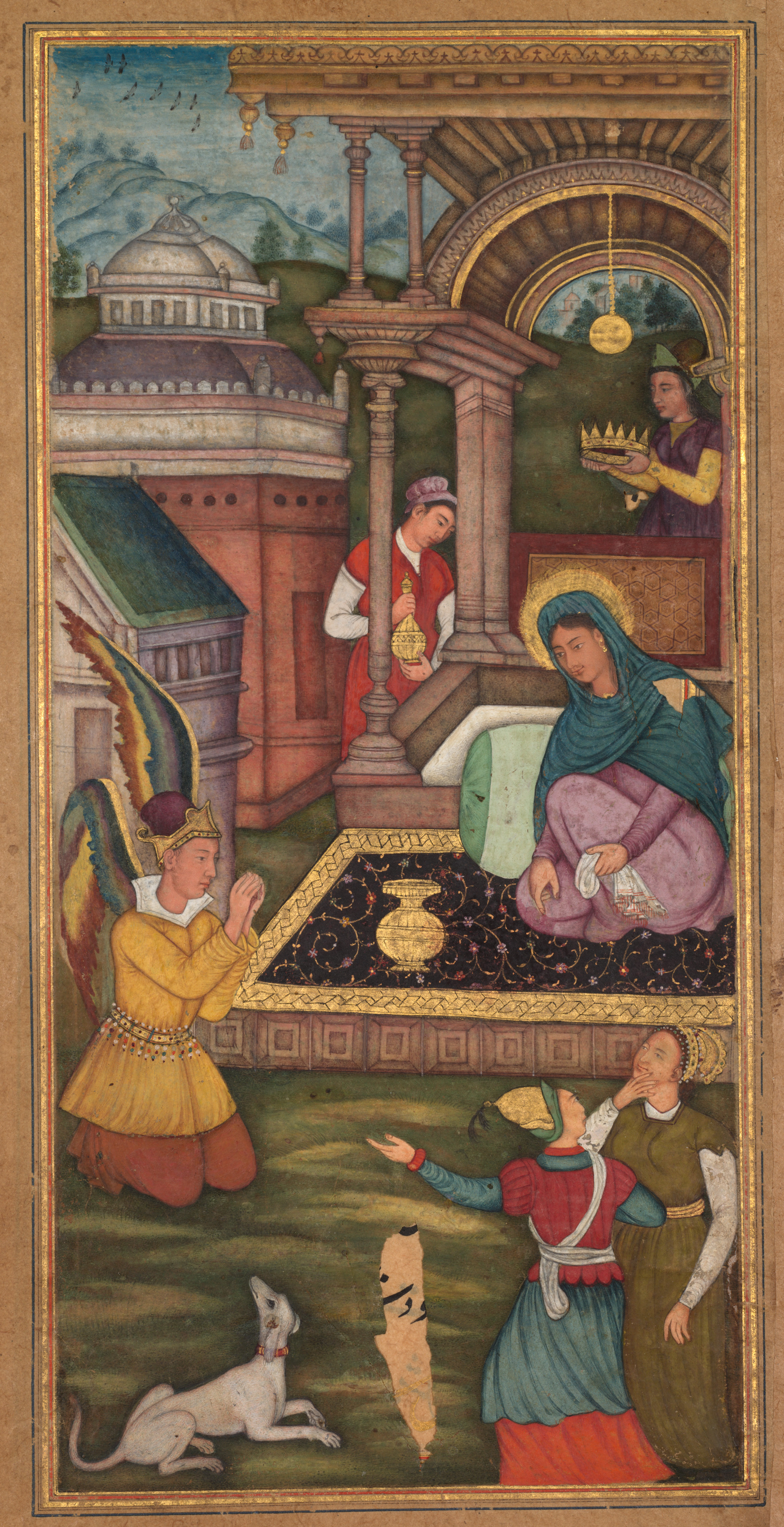
The Annunciation (folio 15 recto), from a Mirror of Holiness (Mir’at al-quds) of Father Jerome Xavier1602–4
Mary gazes down at the angel Gabriel as he kneels reverently, like a humble messenger, delivering the news that Mary will give birth to the son of God. More about this work
About this work
Mary gazes down at the angel Gabriel as he kneels reverently, like a humble messenger, delivering the news that Mary will give birth to the son of God. His multicolored wings are forced within the boundary line of the painting field, visually implying a sense of subordination. Unlike many of the paintings in the Mirror of Holiness , the Annunciation is a familiar subject in European art, but the emphases vary. The Indian version depicts her as a queen, with a crown held above her head and attendants standing by.
Text from the Cleveland Museum of Art.
How it was made
- Opaque watercolour
- Watercolour made opaque with white or chalk and laid in flat, even layers. Persian and Indian painters ground their colours from minerals, applied them with the finest brushes and burnished the finished page.
- Tempera
- Pigment bound with egg yolk. It dries in minutes and can’t be blended wet, so painters built up form with fine, hatched strokes. It was Europe’s main panel technique before oil.
- Ink on paper
- Ink made from soot and animal glue, ground with water on an inkstone. A single brush can give a hair-fine line or a broad wash, and nothing can be corrected.
Rights and the museum’s record
Public domain. The Cleveland Museum of Art has dedicated this image to the public domain under CC0, so anyone may copy, adapt and use it, for any purpose, without asking. Our prints and files are reproductions made from the museum’s image; the museum doesn’t endorse them.
- Object number
- 2005.145.15.a
- Credit
- Courtesy of the Cleveland Museum of Art
- Type
- Manuscript
- Department
- Indian and Southeast Asian Art
- Licence
- CC0 1.0 Universal
- Museum record
- See it on the museum’s site
Report this work
Close in colour