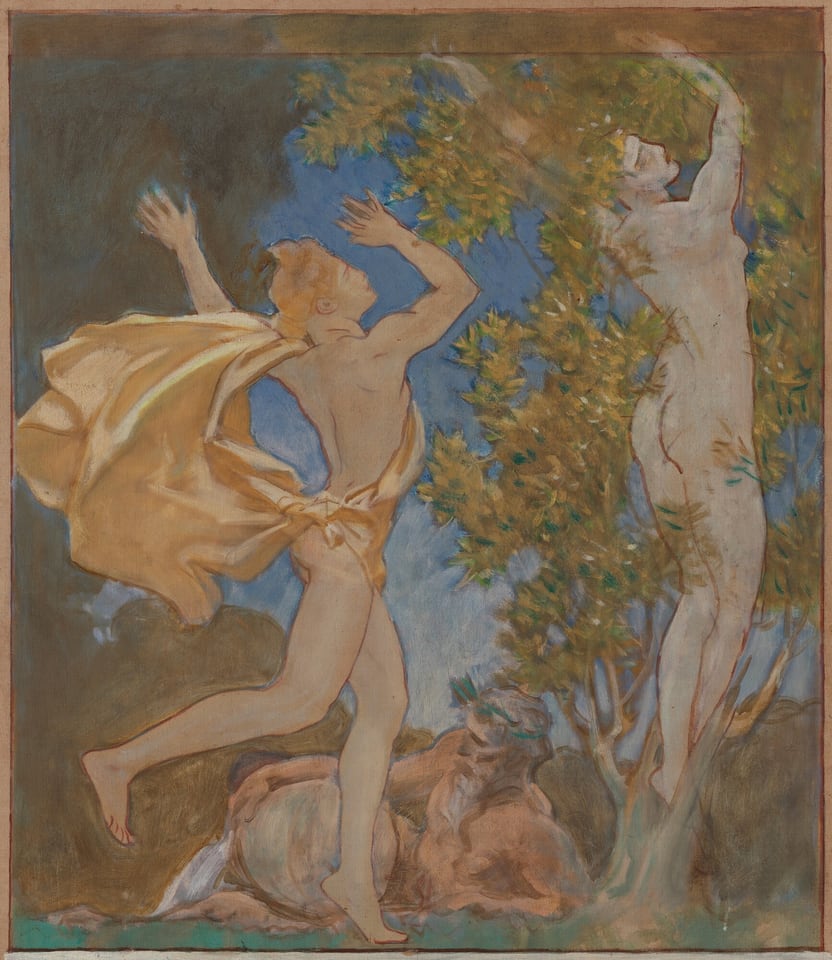
Apollo and Daphnec. 1916/1919
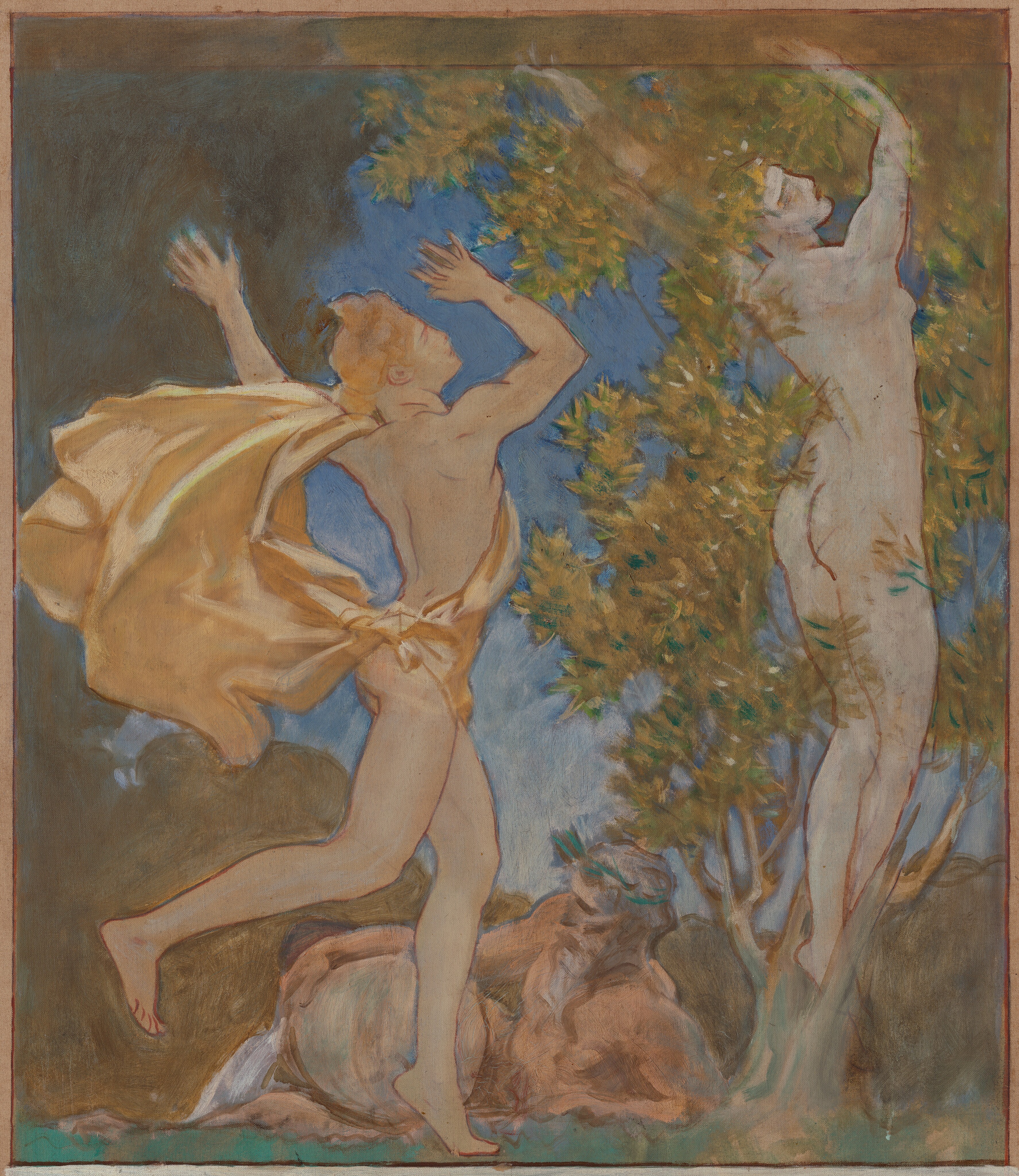
Apollo, golden-skinned and wrapped in billowing drapery, races towards the nymph Daphne just as she is transformed into a laurel tree, her feet rooting into the trunk and her head and hands sprouting leaves. More about this work
About this work
Apollo, golden-skinned and wrapped in billowing drapery, races towards the nymph Daphne just as she is transformed into a laurel tree, her feet rooting into the trunk and her head and hands sprouting leaves. The story comes from Ovid’s Metamorphoses: Daphne prayed to escape the god’s pursuit and was changed into the laurel, which Apollo then made his sacred tree. Sargent turned to classical subjects of this kind late in his career, in the years when he was designing mural decorations on mythological themes for the Museum of Fine Arts in Boston.
Written by Ochre Editions.
What you’re looking at
This is a painting showing two people in nature. The person on the left appears to be running towards the right, with one leg in the air and their arms outstretched. They have tan, golden-toned skin, blond hair, and golden fabric draped loosely around them, billowing backward as they run. On the right is a pale person standing upright in a tree, their arms outstretched. They appear intertwined with the tree, with their feet nestled in the light brown trunk and their head and hands covered in olive-green leaves. The background features indistinct brown shapes against a clear blue sky.
Description from the National Gallery of Art.
How it was made
- Oil paint
- Pigment ground in a drying oil, usually linseed. It dries slowly, so painters could blend on the canvas, build up thin translucent glazes, and rework a picture over weeks. Canvas replaced wooden panels in the 1500s because it is lighter and can be rolled.
John Singer Sargent
American, 1856–1925 · Born in Florence; died in London.
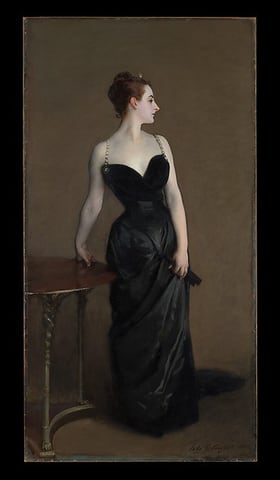
Sargent was born in Florence to American parents and grew up travelling across Europe. He trained in Paris under Carolus-Duran, and the scandal over his portrait Madame X at the 1884 Salon prompted his move to London, where he became the most sought-after society portraitist on both sides of the Atlantic. Around 1907 he largely gave up portrait commissions for watercolours made on his travels and for the murals he painted for the Boston Public Library and the Museum of Fine Arts, Boston.
Written by Ochre Editions.
Rights and the museum’s record
Public domain. The National Gallery of Art has dedicated this image to the public domain under CC0, so anyone may copy, adapt and use it, for any purpose, without asking. Our prints and files are reproductions made from the museum’s image; the museum doesn’t endorse them.
- Object number
- 2014.136.69
- Credit
- Courtesy National Gallery of Art, Washington
- Type
- Painting
- Licence
- CC0 1.0 Universal
- Museum record
- See it on the museum’s site
Report this work
More by John Singer Sargent
All their works
Close in colour