The Adoration of the Magipossibly ca. 1320
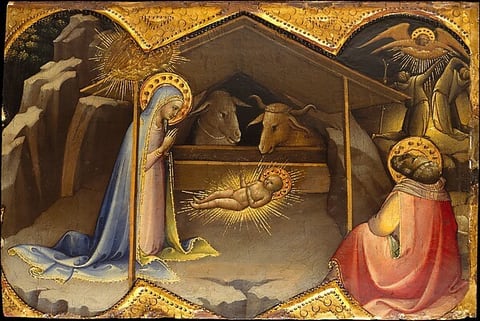
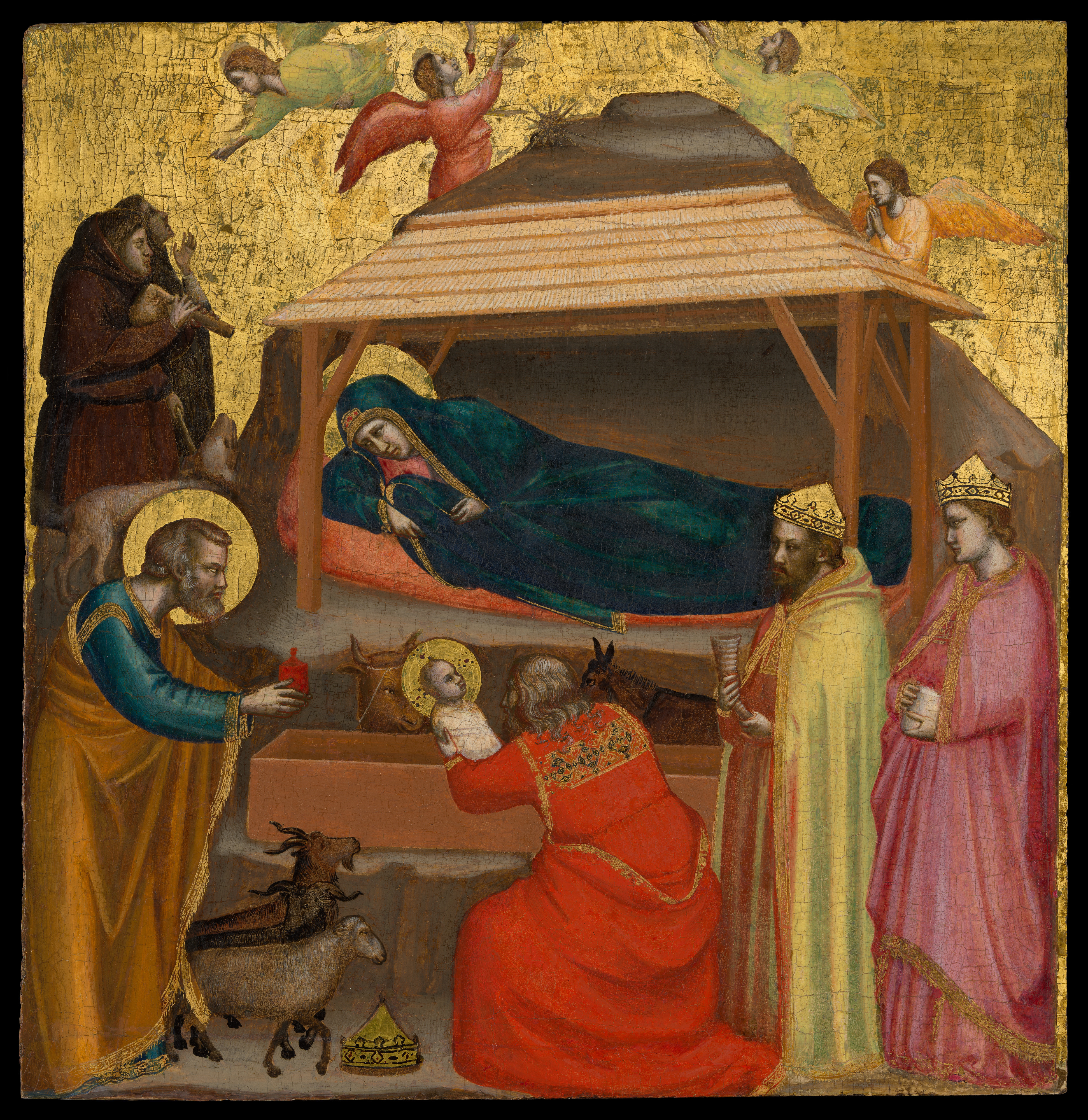
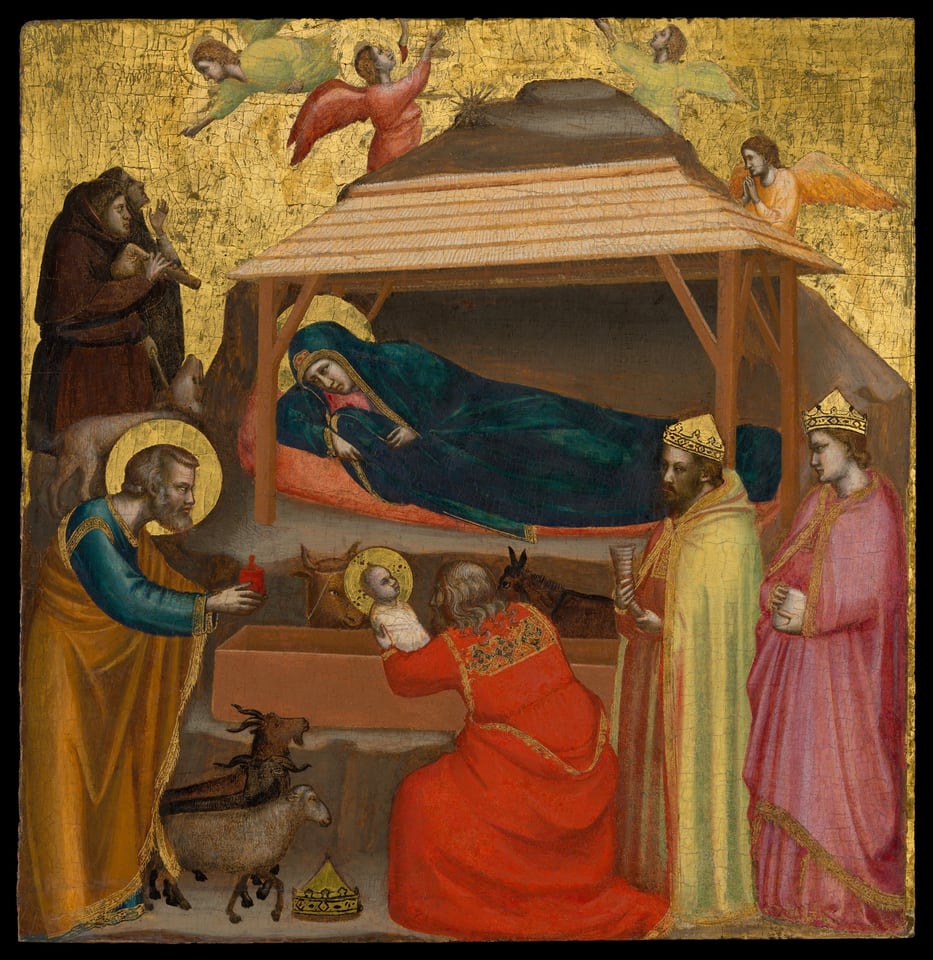
Against a gold ground, the three kings arrive at the stable in Bethlehem, the eldest kneeling before the Christ Child while an angel attends. More about this work
About this work
Against a gold ground, the three kings arrive at the stable in Bethlehem, the eldest kneeling before the Christ Child while an angel attends. Giotto, the Florentine painter credited with bringing new weight and naturalism to Italian painting, gives the figures solid bodies that occupy real space and gestures that read clearly at a glance. This small panel is generally thought to belong to a series of scenes from the life of Christ, now dispersed among several museums. The tooled gold and the tempera surface, built up in fine strokes, are typical of painting in the early fourteenth century.
Written by Ochre Editions.
How it was made
- Gold ground
- Gold leaf laid over a red clay and burnished to a mirror shine, often tooled with punches so it flickers in candlelight. Behind sacred figures it stands for heavenly light.
- Tempera
- Pigment bound with egg yolk. It dries in minutes and can’t be blended wet, so painters built up form with fine, hatched strokes. It was Europe’s main panel technique before oil.
Giotto di Bondone
Italian, Florentine, 1266/76–1337
Giotto, a Florentine, broke with the flat, stylised conventions of Byzantine painting, giving his figures weight, solid space and human emotion. His fresco cycle in the Arena, or Scrovegni, Chapel in Padua, completed around 1305, tells the lives of the Virgin and Christ with a new dramatic clarity. Dante and later writers celebrated him as the renewer of painting, and in 1334 he was appointed master of works for Florence Cathedral, designing its bell tower.
Written by Ochre Editions.
Rights and the museum’s record
Public domain. The Met has dedicated this image to the public domain under CC0, so anyone may copy, adapt and use it, for any purpose, without asking. Our prints and files are reproductions made from the museum’s image; the museum doesn’t endorse them.
- Object number
- 11.126.1
- Credit
- Courtesy of The Metropolitan Museum of Art
- Type
- Paintings
- Department
- European Paintings
- Licence
- CC0 1.0 Universal
- Museum record
- See it on the museum’s site