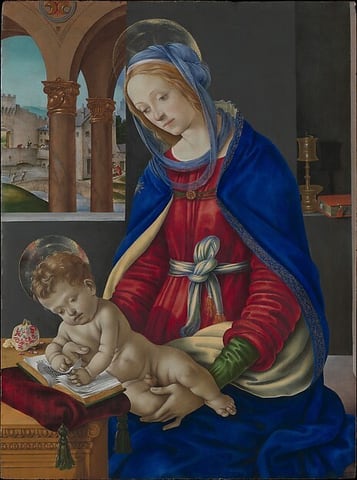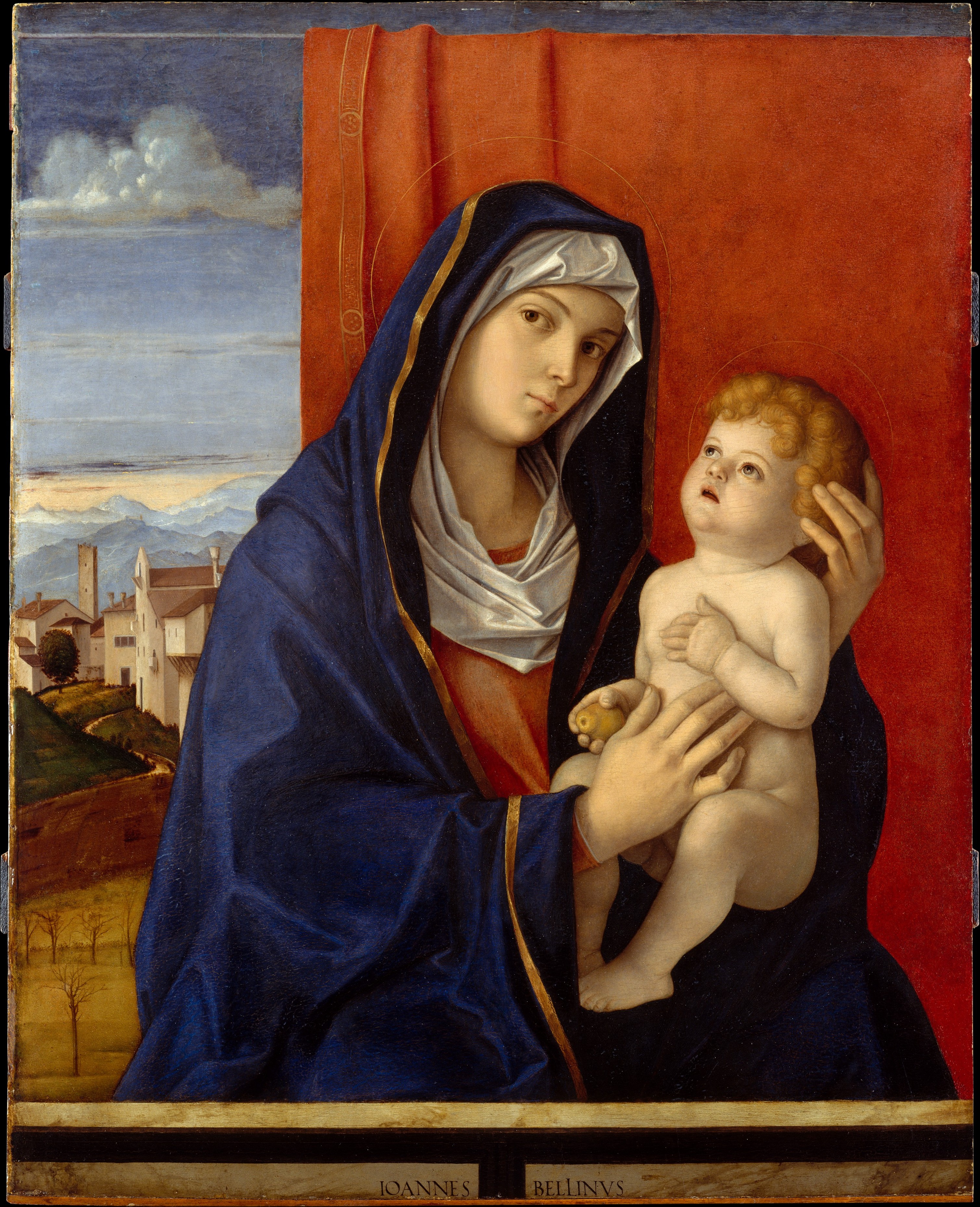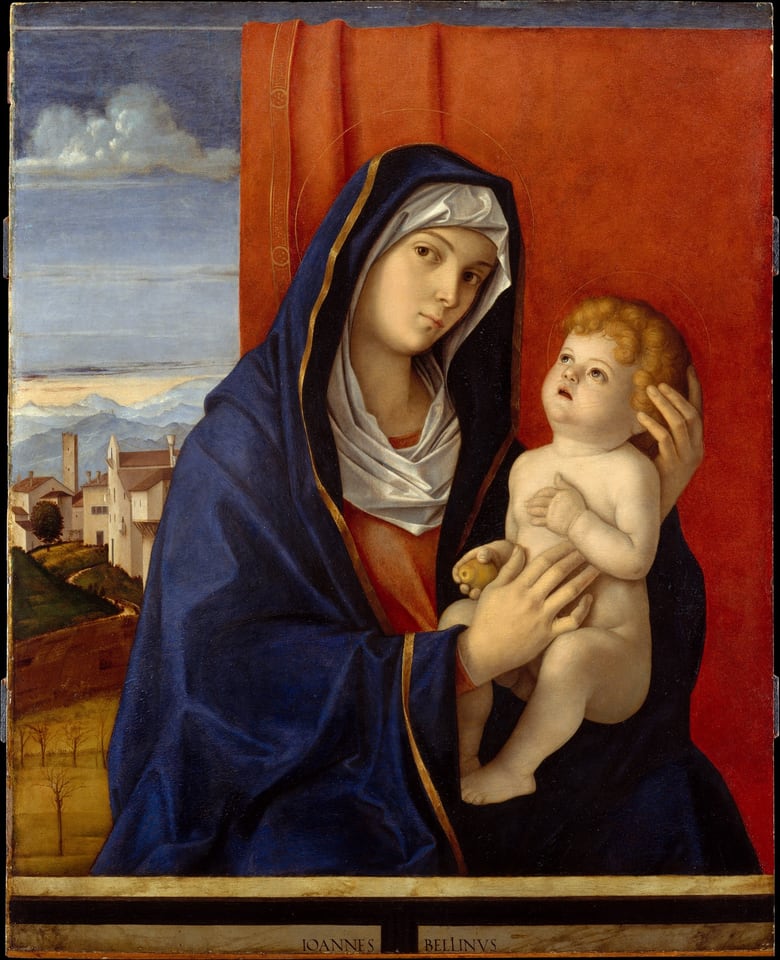
Madonna and Childlate 1480s
Giovanni Bellini painted this in the late 1480s, aged about 63. It is now at The Met in New York. More about this work
About this work
Giovanni Bellini painted this in the late 1480s, aged about 63. It is now at The Met in New York.
How it was made
- Oil on panel
- Oil paint on prepared wooden boards, usually oak in the north and poplar in Italy. The rigid, smooth surface suits fine detail and thin, glowing glazes.
- Oil paint
- Pigment ground in a drying oil, usually linseed. It dries slowly, so painters could blend on the canvas, build up thin translucent glazes, and rework a picture over weeks. Canvas replaced wooden panels in the 1500s because it is lighter and can be rolled.
Giovanni Bellini
Italian, 1424–1516 · Born and died in Venice.
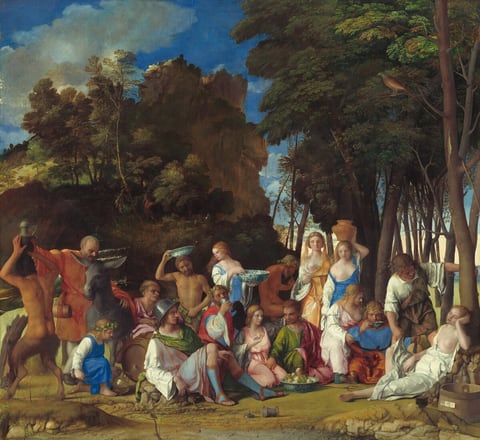
Giovanni Bellini, son of the painter Jacopo and brother-in-law of Andrea Mantegna, led Venetian painting for half a century. He did much to give the city its name for colour and light, adopting oil paint and developing serene altarpieces and devotional images of the Madonna and Child set in luminous landscapes. Giorgione and Titian emerged from his circle. The Feast of the Gods, painted for Alfonso d’Este of Ferrara, was later altered by Titian.
Written by Ochre Editions.
Rights and the museum’s record
Public domain. The Met has dedicated this image to the public domain under CC0, so anyone may copy, adapt and use it, for any purpose, without asking. Our prints and files are reproductions made from the museum’s image; the museum doesn’t endorse them.
- Object number
- 08.183.1
- Credit
- Courtesy of The Metropolitan Museum of Art
- Type
- Paintings
- Department
- European Paintings
- Licence
- CC0 1.0 Universal
- Museum record
- See it on the museum’s site