Unknown maker
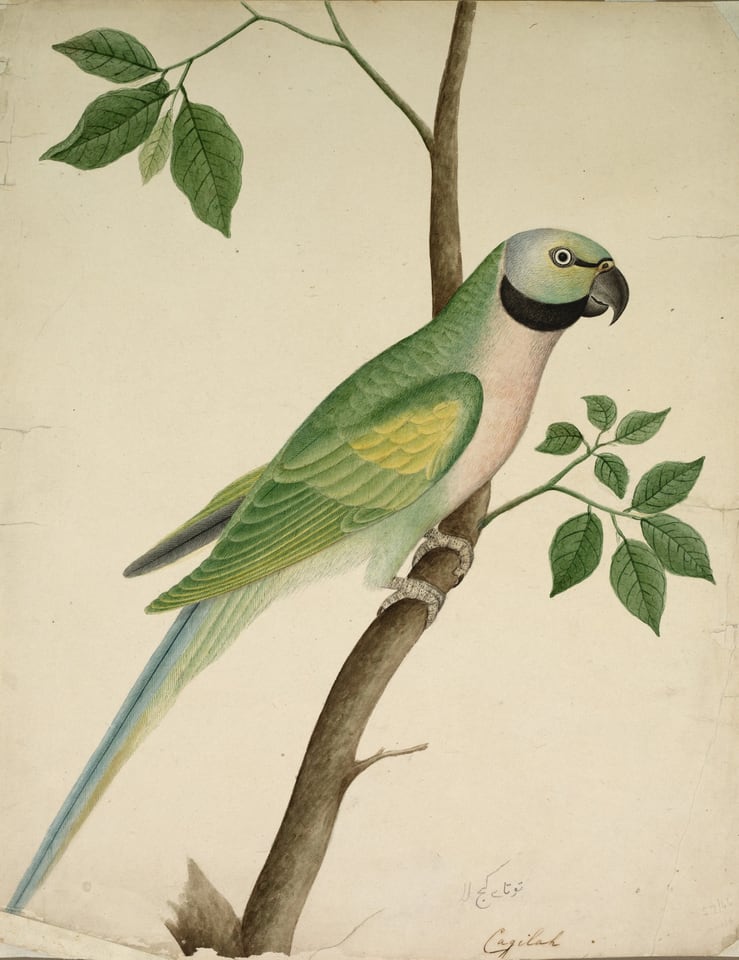
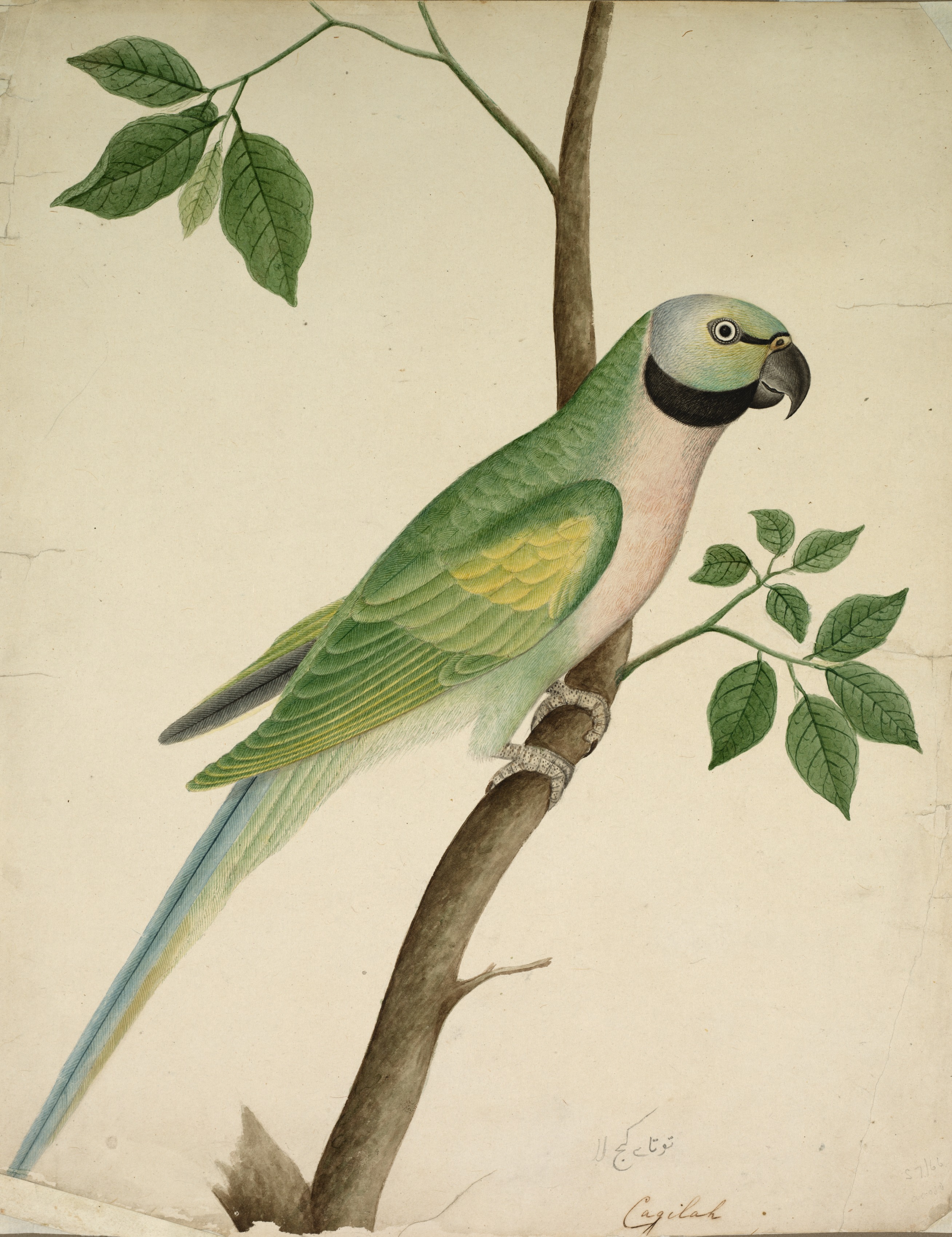
Green Parrotc. 1820
Made by an Indian artist for a British civil servant working in Calcutta (now Kolkata), this bird is portrayed with precision and brilliant color. More about this work
About this work
Made by an Indian artist for a British civil servant working in Calcutta (now Kolkata), this bird is portrayed with precision and brilliant color. It appears to be of the same type as Tuti, the protagonist of the early Mughal Tuti-nama (Tales of a Parrot) manuscript. This example, however, has a black beak, indicating she is female, while the male Tuti has a red beak. Though loosely translated as “parrot,” Tuti is technically a Lord Derby’s parakeet. Because of its ability to talk, the parrot often appears in Indo-Iranian tales as a messenger of moral wisdom.
Text from the Cleveland Museum of Art.
How it was made
- Opaque watercolour
- Watercolour made opaque with white or chalk and laid in flat, even layers. Persian and Indian painters ground their colours from minerals, applied them with the finest brushes and burnished the finished page.
- Tempera
- Pigment bound with egg yolk. It dries in minutes and can’t be blended wet, so painters built up form with fine, hatched strokes. It was Europe’s main panel technique before oil.
Rights and the museum’s record
Public domain. The Cleveland Museum of Art has dedicated this image to the public domain under CC0, so anyone may copy, adapt and use it, for any purpose, without asking. Our prints and files are reproductions made from the museum’s image; the museum doesn’t endorse them.
- Object number
- 1972.285
- Credit
- Courtesy of the Cleveland Museum of Art
- Type
- Painting
- Department
- Indian and Southeast Asian Art
- Licence
- CC0 1.0 Universal
- Museum record
- See it on the museum’s site
Report this work
Close in colour