The Italian Renaissance
Florence, Venice and Rome from 1400 to 1600: perspective, anatomy and the classical past.
First room, north wall
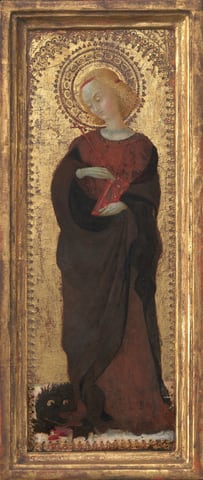
Saint MargaretSassetta, c. 1435Courtesy National Gallery of Art, Washington 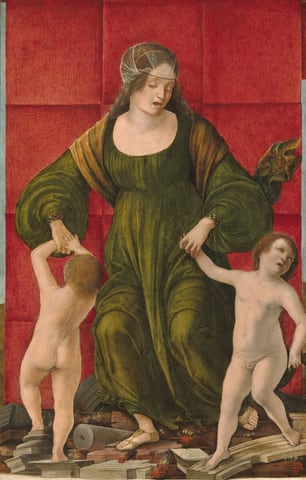
The Wife of Hasdrubal and Her ChildrenErcole de' Roberti, c. 1490/1493Courtesy National Gallery of Art, Washington 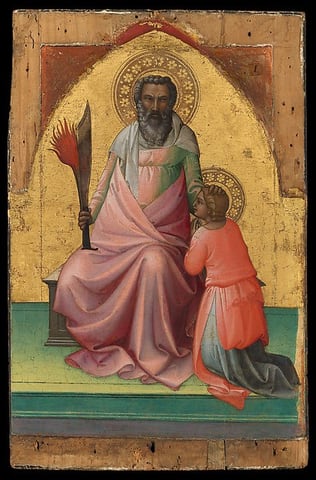
AbrahamLorenzo Monaco, ca. 1408–10Courtesy of The Metropolitan Museum of Art 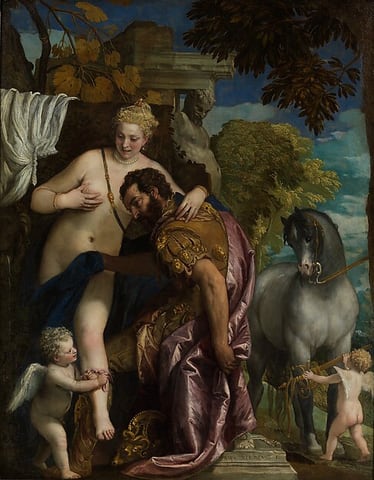
Mars and Venus United by LovePaolo Veronese (Paolo Caliari), 1570sCourtesy of The Metropolitan Museum of Art
First room, south wall
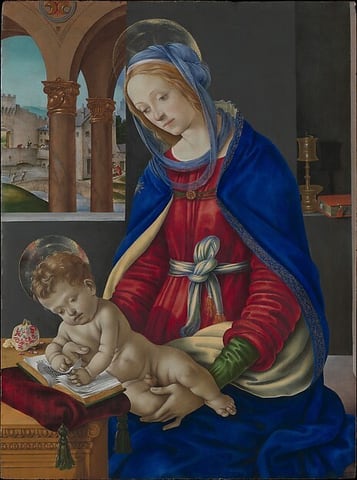
Madonna and ChildFilippino Lippi, ca. 1483–84Courtesy of The Metropolitan Museum of Art 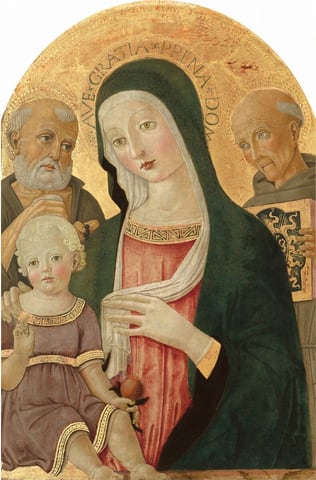
Madonna and Child with Saint Jerome and Saint Bernardino of SienaBenvenuto di Giovanni, c. 1480/1485Courtesy National Gallery of Art, Washington 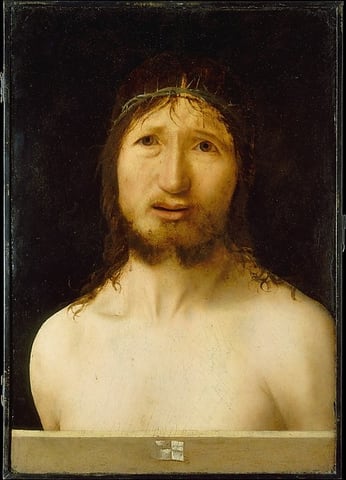
Christ Crowned with ThornsAntonello da Messina (Antonello di Giovanni d'Antonio)Courtesy of The Metropolitan Museum of Art 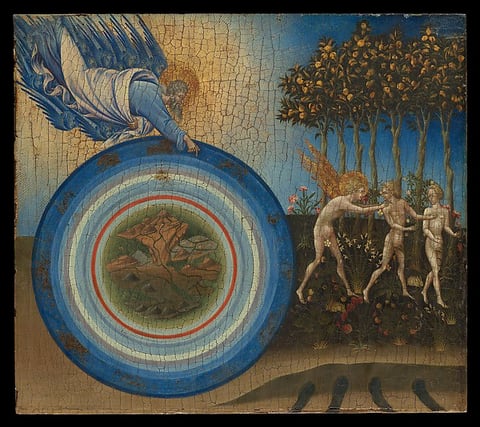
The Creation of the World and the Expulsion from ParadiseGiovanni di Paolo, 1445Courtesy of The Metropolitan Museum of Art
Second room, south wall
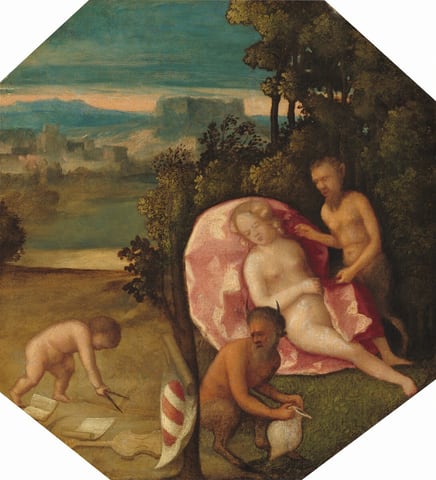
AllegoryPietro degli Ingannati, c. 1515-1525Courtesy National Gallery of Art, Washington 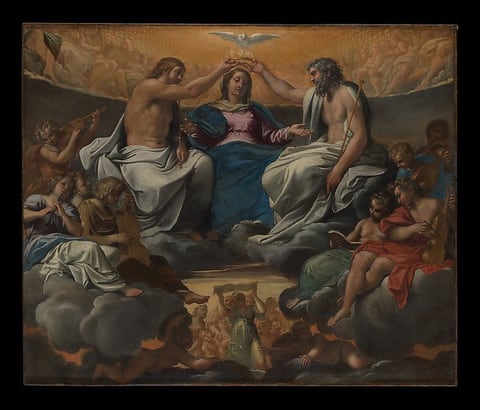
The Coronation of the VirginAnnibale Carracci, after 1595Courtesy of The Metropolitan Museum of Art 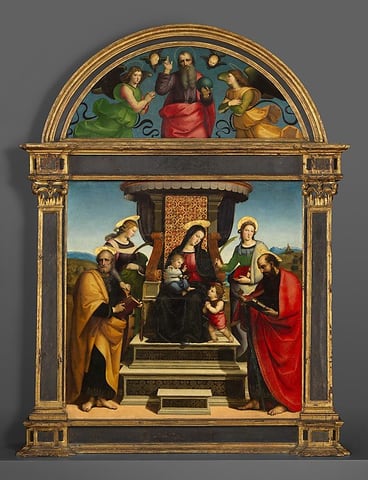
Madonna and Child Enthroned with SaintsRaphael, ca. 1504Courtesy of The Metropolitan Museum of Art
Second room, north wall
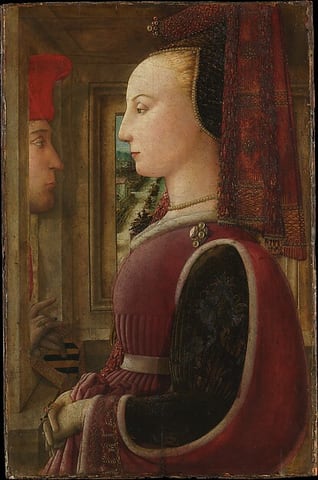
Portrait of a Woman with a Man at a CasementFra Filippo Lippi, ca. 1440Courtesy of The Metropolitan Museum of Art 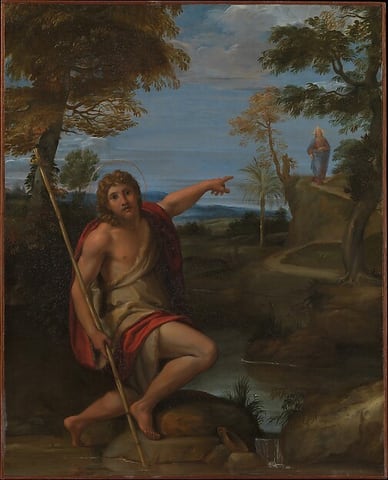
Saint John the Baptist Bearing WitnessAnnibale Carracci, ca. 1600Courtesy of The Metropolitan Museum of Art 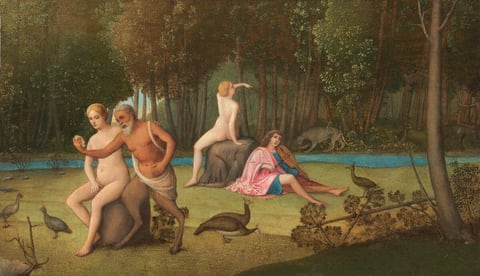
OrpheusUnrecorded Italian maker, c. 1515Courtesy National Gallery of Art, Washington
Third room, north wall
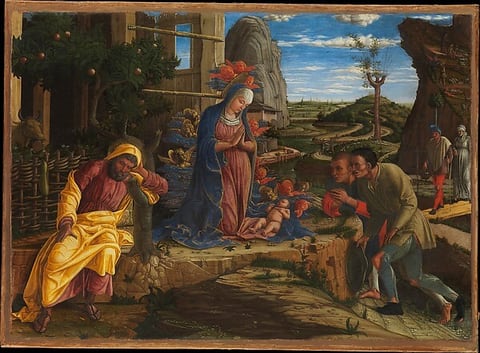
The Adoration of the ShepherdsAndrea Mantegna, shortly after 1450Courtesy of The Metropolitan Museum of Art 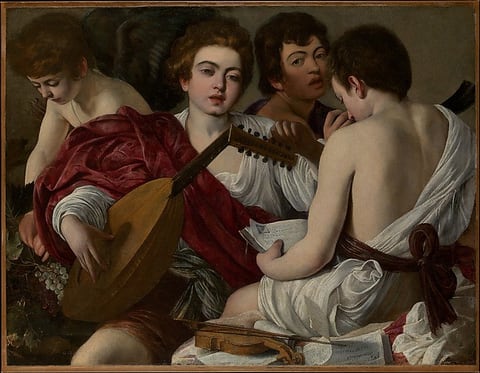
The MusiciansCaravaggio, 1597Courtesy of The Metropolitan Museum of Art