Skip to content
Ochre Editions
ArtArtistsCollectionsGalleriesDrops
SearchSign inCart (0)
The galleries · Time and place

The 20th century

Works made in the 20th century, anywhere in the world.

189 works · hang 3919 ·

Share Patchwork Quilt, in The 20th century

The rooms are imagined; every work on their walls is real.

Walk this roomRehang this room

Section 1, north wall

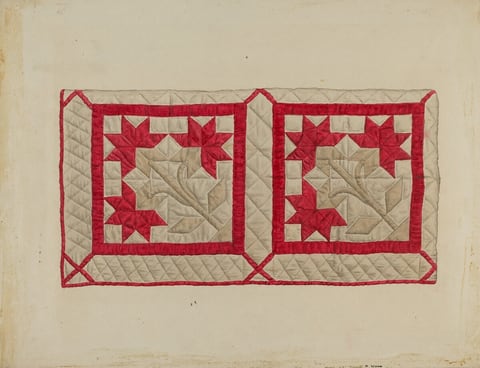
  1. The image shows two large quilt blocks with a matching design, side by side. Each block consists of red and beige fabric with quilted stitching creating a textured appearance. The color palette includes primarily red, beige, and dark stitching outlining the patterns. The quilt blocks are placed centrally on a light-colored surface.
    Patchwork QuiltPaul Ward, c. 1936Courtesy National Gallery of Art, Washington
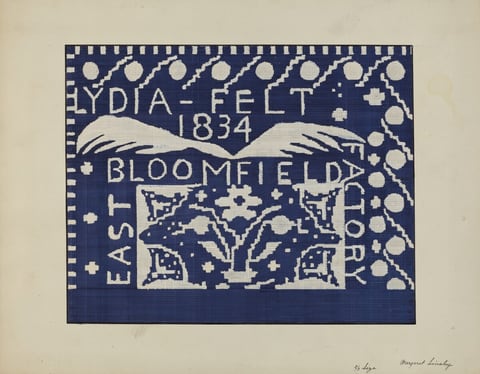
  2. This is a drawing of a textile design. The image consists of a pattern with the text "LYDIA FELT 1834 BLOOMFIELD" displayed along with decorative motifs of abstract leaves and floral shapes in a contrasting color against a dark background. The composition also includes the word "EAST" placed vertically and "YORK" placed horizontally. The combination of geometric shapes and organic elements forms a unified aesthetic typical of traditional textile patterns.
    CoverletMargaret Linsley, c. 1940Courtesy National Gallery of Art, Washington
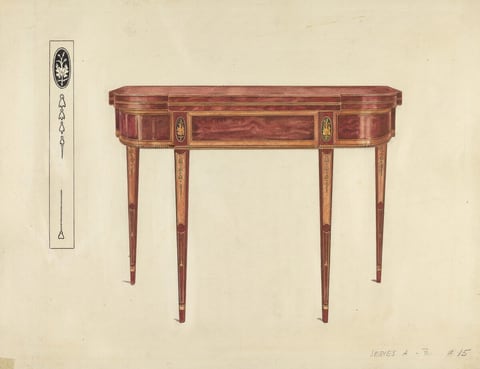
  3. The image shows a wooden side table with a smooth surface and four tapered legs, as well as a decorative drawer front. The table has a rich brown color with gold accents and black inlay details. It is positioned towards the center of the image. On the left, there are design patterns in an oval shape and a thin line drawing. The background is off-white. There are handwritten numbers and letters at the bottom right corner of the image.
    Card TableFlorence Choate, c. 1953Courtesy National Gallery of Art, Washington

Section 1, south wall
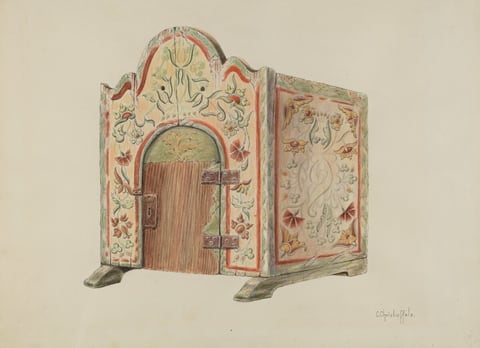
  1. The image shows a small intricately decorated wooden structure with an arched top and a central door flanked by two metal hinges. The structure is painted with a floral and vine motif in colors such as red, green, and yellow on a light background. The wooden door has a textured appearance. The object is positioned centrally with the door facing forward, placed on a slightly elevated base with two footings extending forward. The overall look is ornate and symmetrical, showcasing detailed design work.
    Tabernacle (Ecclesiastical Furniture)Cornelius Christoffels, c. 1938Courtesy National Gallery of Art, Washington
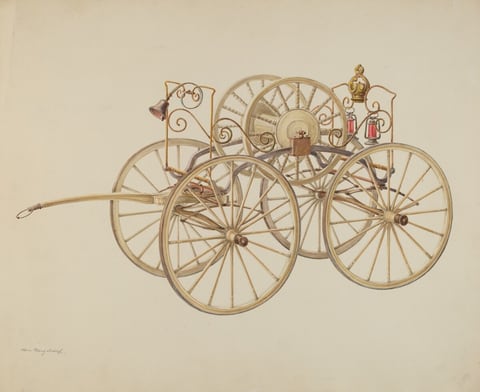
  2. This is a painting of a vintage fire hose cart. It is intricately designed, featuring a four-wheeled cart meant to hold a coiled fire hose. The painting showcases the cart's wooden spoked wheels and hose mechanism, as well as ornate wrought iron designs and a brass figure. A bell is depicted above one wheel. The painting captures the craftsmanship of the era and is reminiscent of the style of Charles Demuth, known for his attention to detail and focus on industrial and architectural elements.
    Fire Hose ReelHans Mangelsdorf, c. 1938Courtesy National Gallery of Art, Washington

Section 2, south wall
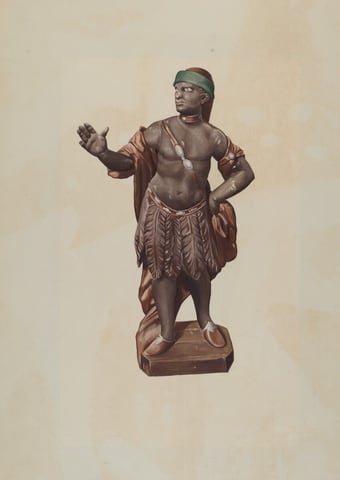
  1. The sculpture depicts a male figure standing upright with one hand raised and the other resting on his hip. The subject is wearing a garment that drapes over one shoulder and a feather-patterned skirt, accessorized with a headband. The colors of the sculpture are predominantly earth tones, including browns and a green headband. The material appears to be a type of stone or ceramic with a polished finish. The figure is slightly larger than everyday objects, allowing viewers to appreciate the intricacies of the carving and the details in the drapery and texture. The statue stands on a rectangular base that is consistent with the overall color palette.
    Cigar Store IndianRosamond P. Gray, 1935/1942Courtesy National Gallery of Art, Washington
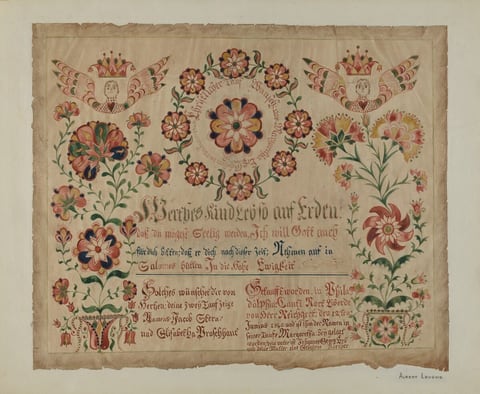
  2. This is a painting of a colorful floral design with text. The artwork features stylized flowers in shades of red, green, and yellow scattered across the page. In the center, there is calligraphic text in varying boldness and fonts, likely in German. Two symmetrical bird-like figures with human faces and crowns are above the text. The piece combines imagery with artistic lettering in a style reminiscent of traditional Pennsylvania German fraktur. The artwork is bordered by a thin line, suggesting it's part of a larger artifact or document.
    Pa. German Birth CertificateAlbert Levone, c. 1940Courtesy National Gallery of Art, Washington
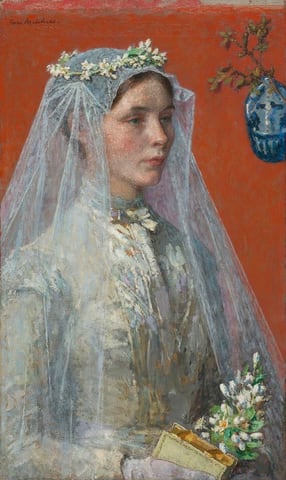
  3. The Bride, by Gari Melchers, ca. 1907
    The BrideGari Melchers, ca. 1907Courtesy of the Smithsonian American Art Museum

Section 2, north wall
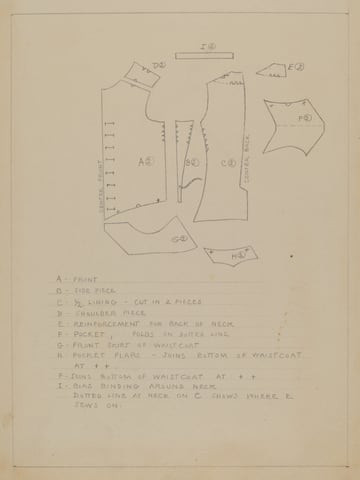
  1. This is a drawing depicting instructional annotations on a pattern for tailoring or assembling clothing. The pattern includes various pieces labeled with letters and numbers corresponding to specific parts of a garment, like "FRONT," "SIDE BACK," and "COLLAR." The layout is precise and technical, resembling a guide for constructing a garment with detailed cutting and assembly instructions.
    Waistcoat PatternRosalia Lane, c. 1936Courtesy National Gallery of Art, Washington
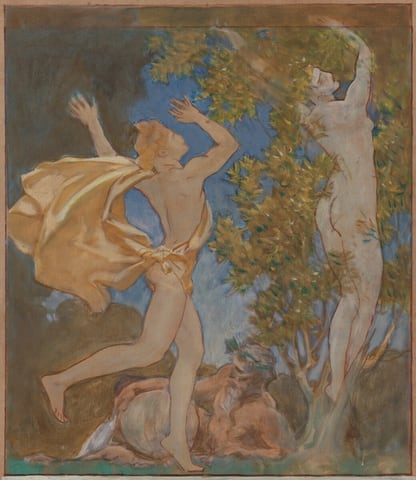
  2. This is a painting showing two people in nature. The person on the left appears to be running towards the right, with one leg in the air and their arms outstretched. They have tan, golden-toned skin, blond hair, and golden fabric draped loosely around them, billowing backward as they run. On the right is a pale person standing upright in a tree, their arms outstretched. They appear intertwined with the tree, with their feet nestled in the light brown trunk and their head and hands covered in olive-green leaves. The background features indistinct brown shapes against a clear blue sky.
    Apollo and DaphneJohn Singer Sargent, c. 1916/1919Courtesy National Gallery of Art, Washington
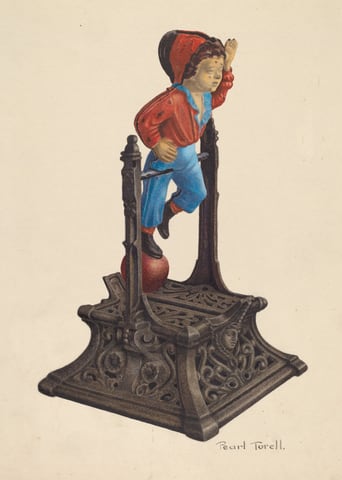
  3. The sculpture depicts a young boy dressed in a bright red coat, blue shirt, and blue pants, with black shoes. He is wearing a black hat with a red rim and has curly hair. The boy is balanced on one foot atop a red ball, with one leg lifted behind him and one hand held high above his head. The sculpture is made of painted, cast metal with intricate designs and textures. The boy stands on an ornately decorated dark pedestal.
    Toy BankPearl Torell, c. 1939Courtesy National Gallery of Art, Washington

Section 3, north wall
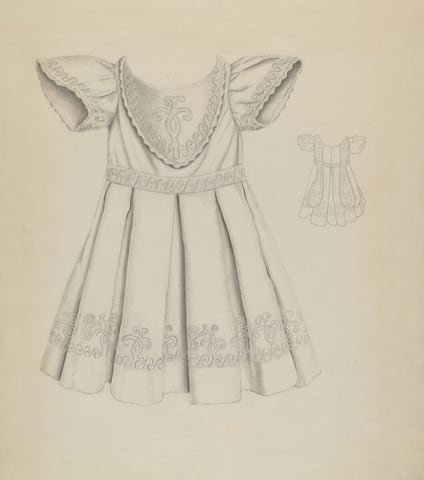
  1. The image shows a detailed sketch of a dress with short, puffed sleeves and a decorative neckline. There is a smaller sketch of the same dress to the right. The color palette is monochrome gray scale, with darker gray outlines and details against a light gray background. The main dress is centered, with the smaller sketch positioned to the right.
    Child's DressRay Price, c. 1937Courtesy National Gallery of Art, Washington
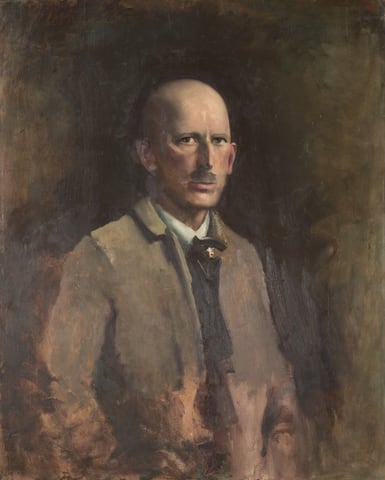
  2. Self-Portrait, by Abbott Handerson Thayer, 1920
    Self-PortraitAbbott Handerson Thayer, 1920Courtesy of the Cleveland Museum of Art

Section 3, south wall
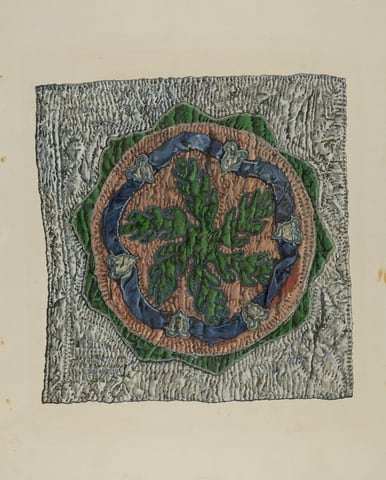
  1. The image shows various shapes and lines within a square border. In the center, there is an abstract circular pattern resembling a stylized floral design. The inner circle contains leaf-like shapes in green, surrounded by a ring resembling petals or decorative motifs. The overall effect is similar to a decorative shield or medallion. The background texture adds depth to the composition.
    Quilt Block - "E. Cooper" DesignFlorence Truelson, 1935/1942Courtesy National Gallery of Art, Washington
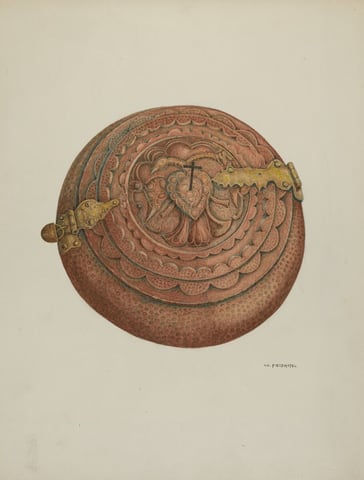
  2. The image features a round, ornately decorated object resembling a shield with metallic-looking decorative hinges on its surface. The color palette is primarily earthy tones such as brown, red, and hints of gold. The object is centered in the image, viewed from the front, with engravings decorating its surface. The background is plain and light in color.
    Baptismal FontWilliam Kieckhofel, c. 1941Courtesy National Gallery of Art, Washington
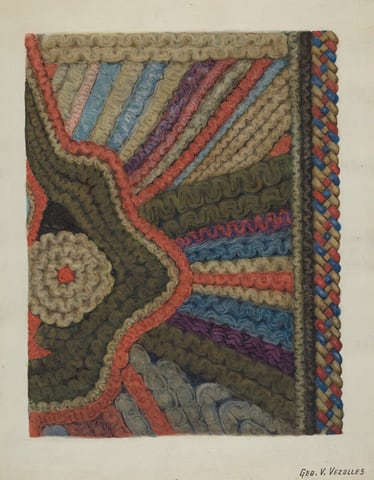
  3. The image displays wavy lines and shapes with a mix of colors, creating an abstract composition. Curved lines are intertwined, resembling braided patterns or woven fabric textures. On the left, there is a large, organic shape bordered by red, green, and beige. The right side showcases a rhythmic pattern resembling a braided rug, with strands of red, blue, and brown. The overall composition resembles a textured textile piece.
    Shaker Woolen RugGeorge V. Vezolles, 1935/1942Courtesy National Gallery of Art, Washington

Walk on

  • The 20th century, room 2
  • George V. Vezolles's contemporaries 8 works
  • More American folk and design 90 works
Ochre Editions

The world's museums, on your wall. Every work here is a reproduction of a public-domain original, credited to the museum that holds it.

Shop

All artCollectionsLimited dropsPrints and framing

Help

Find an orderShippingReturnsVerify a certificate

About

About Ochre EditionsMuseum creditsFor agentsDevelopers

Legal

Terms of UseTerms of SaleLimited Editions and CertificatesPrivacy PolicyCookie PolicyAcceptable Use PolicyAgent & API TermsCopyright and DMCA PolicyPrinting Your Own PhotoVulnerability Disclosure PolicyAccessibility StatementOpen-Access Credits
© 2026 Ochre EditionsPrices in US dollars. Prints ship within the United States.