Skip to content
Ochre Editions
ArtArtistsCollectionsGalleriesDrops
SearchSign inCart (0)
The galleries · Time and place

The 18th century

Works made in the 18th century, anywhere in the world.

347 works · hang 9523 ·

Share The 18th century, in the galleries

The rooms are imagined; every work on their walls is real.

Walk this roomRehang this room

First room, north wall

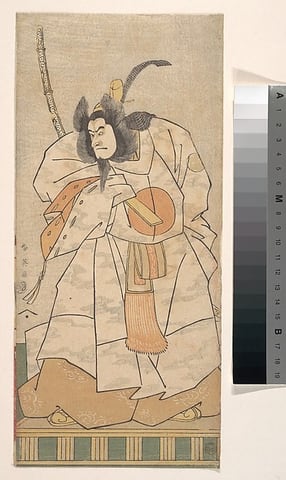
  1. The Actor Morita Kanya VIII as Tatsugorō, by Katsukawa Shun'ei, 1794 (Kansei 6)
    The Actor Morita Kanya VIII as TatsugorōKatsukawa Shun'ei, 1794 (Kansei 6)Courtesy of The Metropolitan Museum of Art
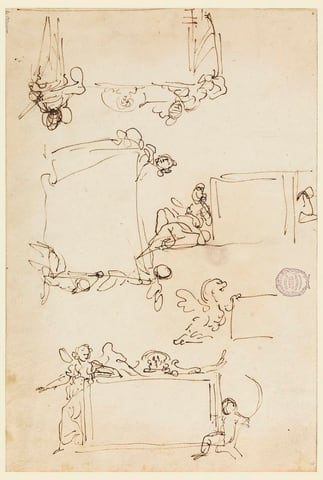
  2. SKETCHES FOR A TABLET
    Sketches for a tabletCarlo Marchionni, ca. 1750Courtesy of Cooper Hewitt, Smithsonian Design Museum
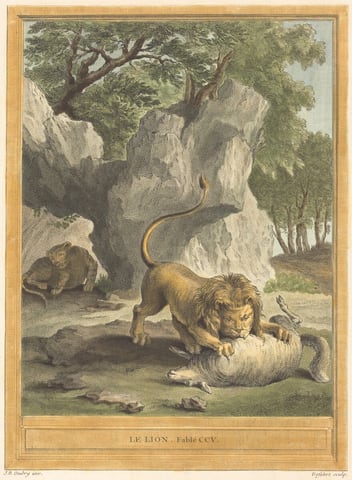
  3. This is a drawing of a lion in a forested rocky landscape. The lion is seen standing over a defeated animal. In the background, a forest with dense trees frames the scene. One monkey is visible among the rocks watching the lion. The setting conveys a wild, rugged terrain with rocky formations and scattered vegetation. Light and shadow emphasize textures in the lion's mane and the surrounding rocks. The composition focuses on the lion and its prey.
    Le lion (The Lion)A.-J. de Fehrt, published 1759Courtesy National Gallery of Art, Washington
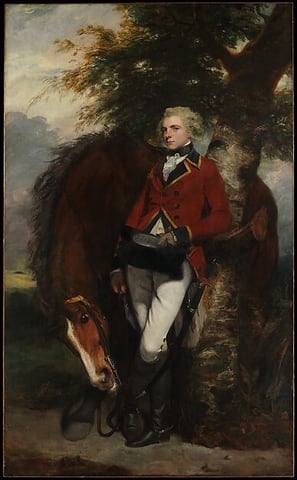
  4. Captain George K. H. Coussmaker (1759–1801), by Joshua Reynolds, 1782
    Captain George K. H. Coussmaker (1759–1801)Joshua Reynolds, 1782Courtesy of The Metropolitan Museum of Art

First room, south wall
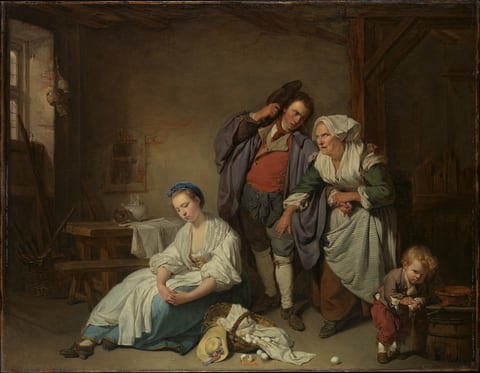
  1. Broken Eggs, by Jean Baptiste Greuze, 1756
    Broken EggsJean Baptiste Greuze, 1756Courtesy of The Metropolitan Museum of Art
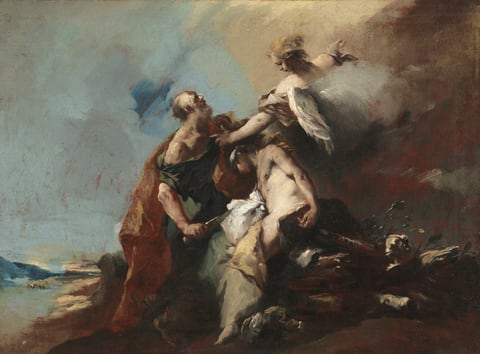
  2. The Sacrifice of Isaac, by Francesco Guardi, 1750s
    The Sacrifice of IsaacFrancesco Guardi, 1750sCourtesy of the Cleveland Museum of Art
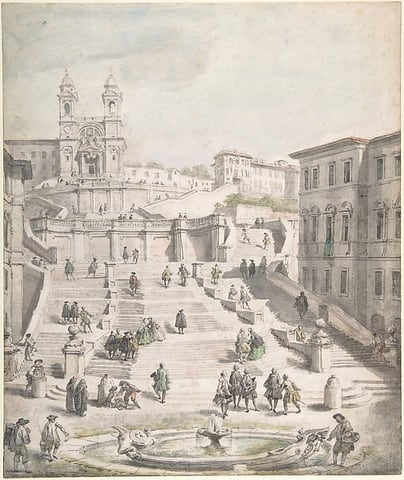
  3. Scalinata della Trinità dei Monti, by Giovanni Paolo Panini, ca. 1756–58
    Scalinata della Trinità dei MontiGiovanni Paolo Panini, ca. 1756–58Courtesy of The Metropolitan Museum of Art
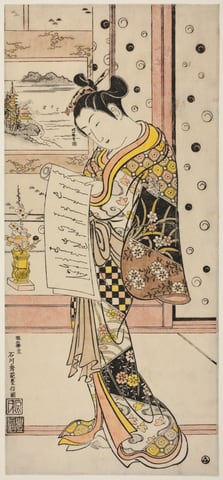
  4. A work made of hand-colored woodblock print; toku-oban, urushi-e.
    Courtesan Reading a LetterIshikawa Toyonobu, c. 1745Courtesy of the Art Institute of Chicago

Second room, south wall
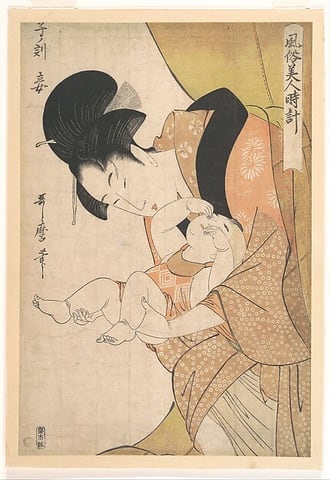
  1. “Hour of the Rat: Mistress,” from the series Women’s Daily Customs (Fuzoku bijin tokei), by Kitagawa Utamaro, 1790
    “Hour of the Rat: Mistress,” from the series Women’s Daily Customs (Fuzoku bijin tokei)Kitagawa Utamaro, 1790Courtesy of The Metropolitan Museum of Art
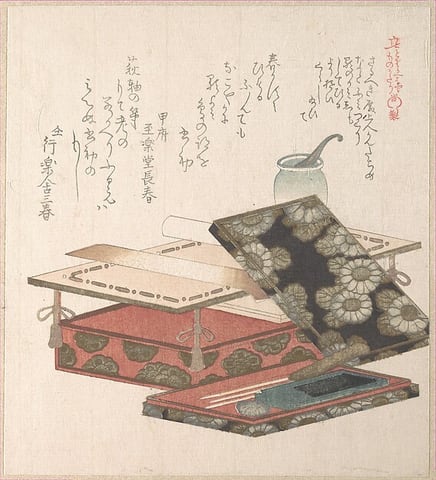
  2. Table and Writing Set, by Kubo Shunman, 19th century
    Table and Writing SetKubo Shunman, 19th centuryCourtesy of The Metropolitan Museum of Art
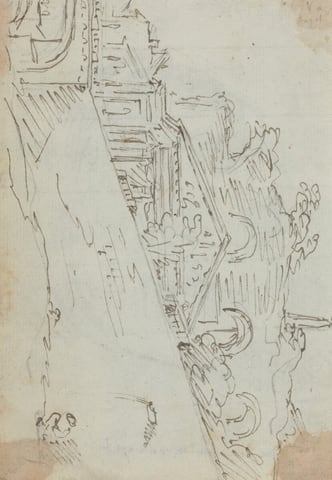
  3. The image shows a sketch of an architectural scene with structures lining a road or pathway. The horizon is not clearly defined, and the sketch focuses on architectural details. The drawing features loose, freehand lines outlining buildings and trees, with classical elements like columns and entablatures. The color palette is monochromatic, with light parchment and dark ink strokes creating contrast. Close-up details are lightly shaded for depth, while distant details are less defined. The composition is open and airy, emphasizing architectural features over precision.
    Ancient Ruins on the Bank of the TiberAugustin Pajou, 1752/1756Courtesy National Gallery of Art, Washington
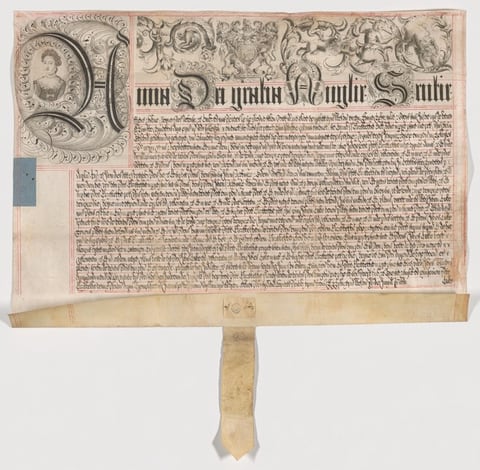
  4. A work made of engraved letterhead, pen and ink calligraphy, and graphite ruling on parchment, folded with strap and (missing) seal.
    Recovery Document (Land Title Grant)Unrecorded British maker, 1702/14 (Queen Anne period)Courtesy of the Art Institute of Chicago

Second room, north wall
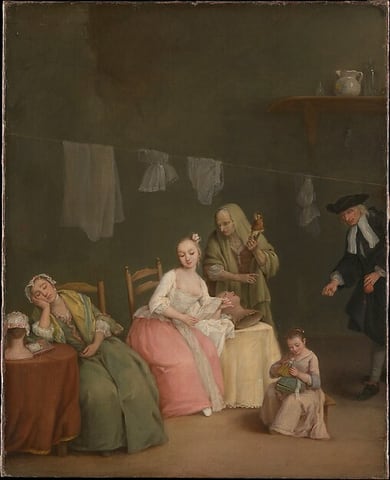
  1. The Letter, by Pietro Longhi, 1746
    The LetterPietro Longhi, 1746Courtesy of The Metropolitan Museum of Art
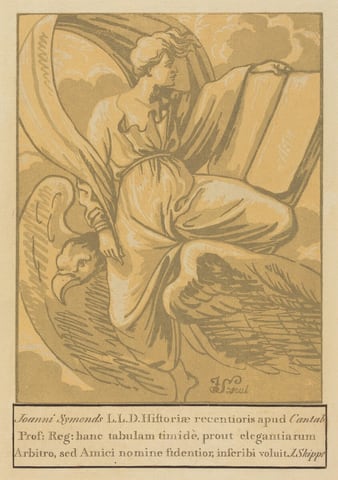
  2. This is a drawing of a winged figure seated on a bird. The image depicts a figure with flowing robes, wings outstretched, holding an open book in one hand. The figure appears to be looking off to the side, with a serene expression. The lower part of the image includes a bird upon which the figure is seated. The bird's head is turned slightly upwards, following the direction in which the figure is gazing. The image is rendered in a warm, monochromatic palette. In the lower section of the image, there is some text, likely Latin.
    Saint John the EvangelistJohn Skippe, 1771Courtesy National Gallery of Art, Washington

Third room, north wall
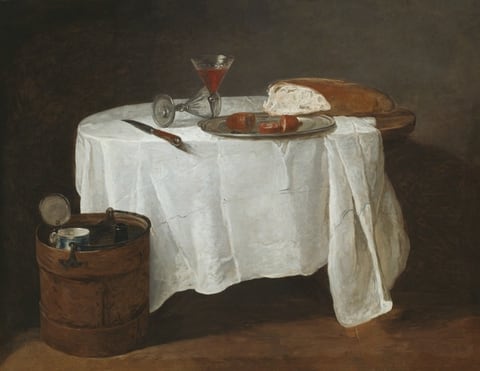
  1. A work made of oil on canvas.
    The White TableclothJean Siméon Chardin, c. 1731–32Courtesy of the Art Institute of Chicago
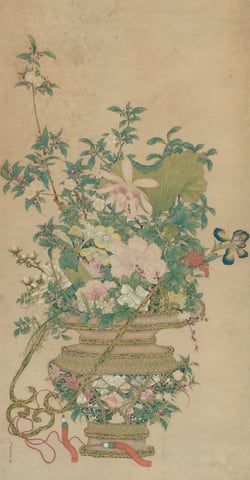
  2. A vertical painting of a bundle of many types of flowers set in a vase-like vessel. The bottom of this vessel contains netted rope through which many blossoms can be seen. A plethora of blooms and leaves extend upward from the top of the vessel.
    Flowers of the Four SeasonsUnrecorded Chinese maker, Qing dynasty (1644–1911), 18th/19th centuryCourtesy of the Art Institute of Chicago

Walk on

  • The 18th century, room 2
  • More by unrecorded makers of China 5 works
  • More Chinese painting 76 works
Ochre Editions

The world's museums, on your wall. Every work here is a reproduction of a public-domain original, credited to the museum that holds it.

Shop

All artCollectionsLimited dropsPrints and framing

Help

Find an orderShippingReturnsVerify a certificate

About

About Ochre EditionsMuseum creditsFor agentsDevelopers

Legal

Terms of UseTerms of SaleLimited Editions and CertificatesPrivacy PolicyCookie PolicyAcceptable Use PolicyAgent & API TermsCopyright and DMCA PolicyPrinting Your Own PhotoVulnerability Disclosure PolicyAccessibility StatementOpen-Access Credits
© 2026 Ochre EditionsPrices in US dollars. Prints ship within the United States.