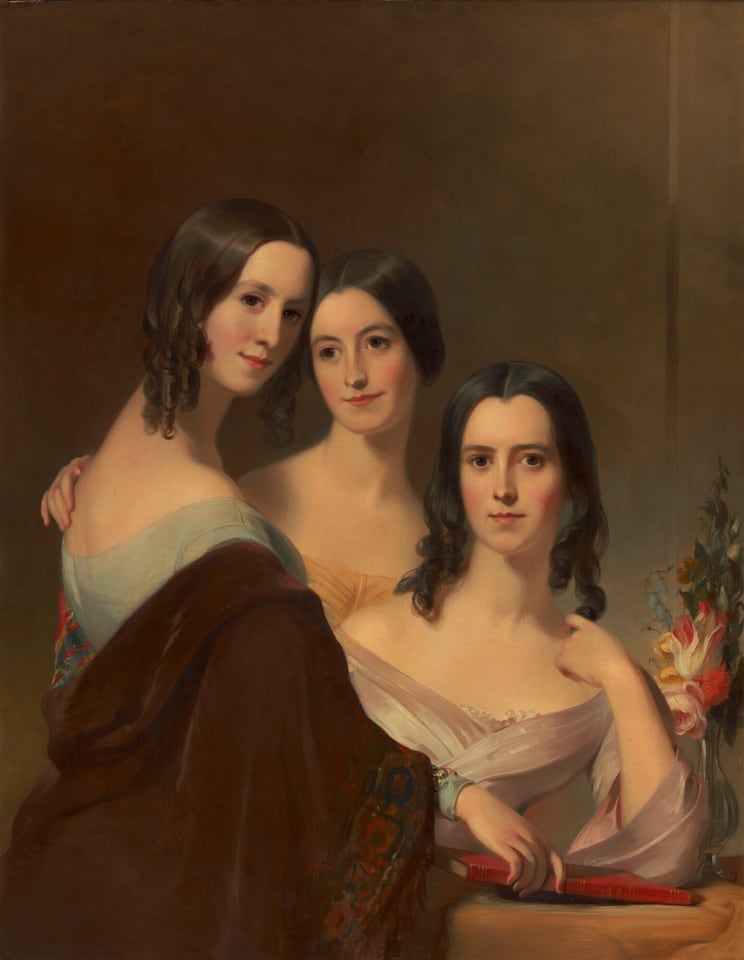
The Coleman Sisters1844
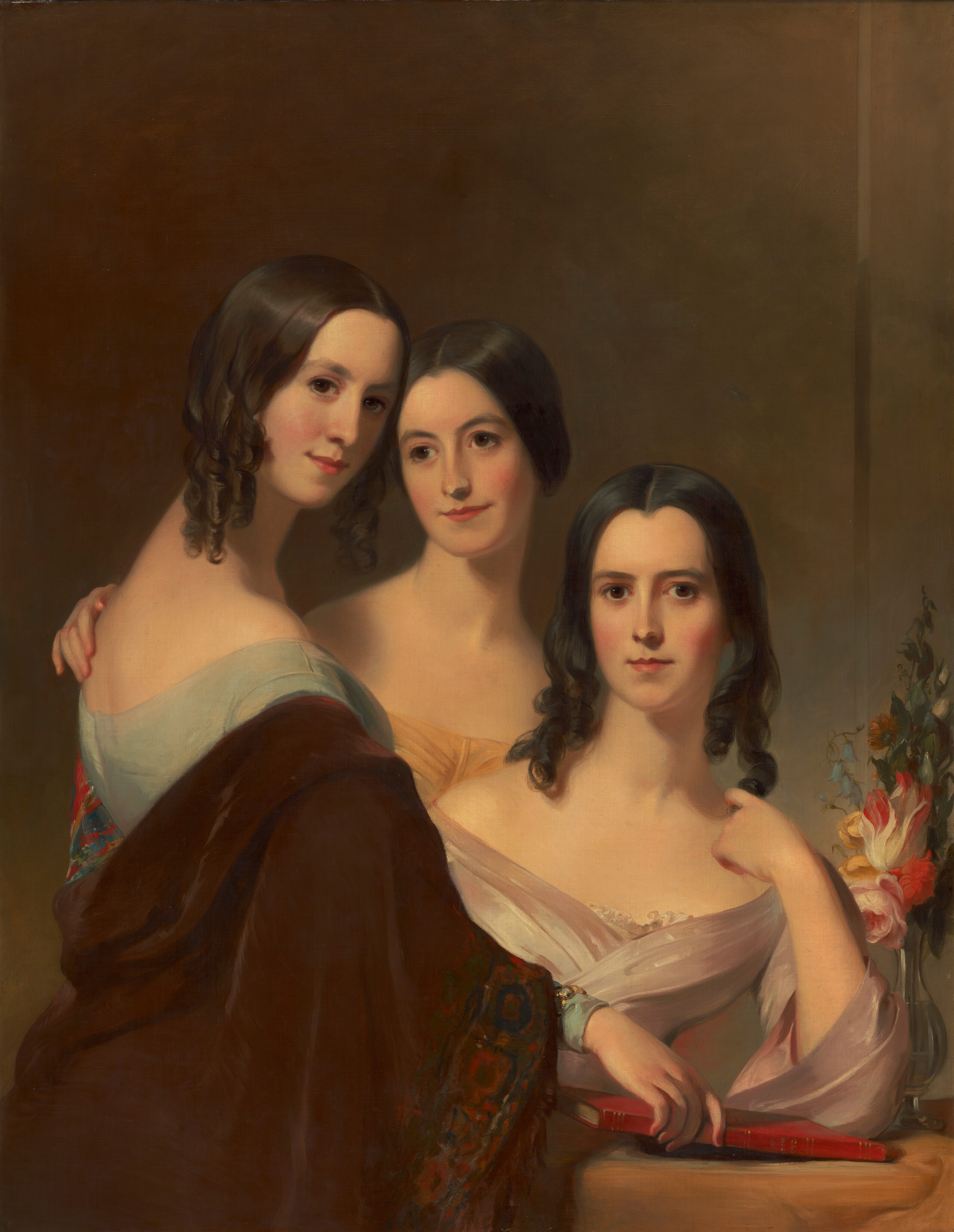
Three sisters with dark ringlets gather around a small table: one turns to look back at us as she rests her hand on a red book, another, in golden yellow, lays a hand on her shoulder, and the third, seated in pale pink, gazes straight out beside a vase of flowers. More about this work
About this work
Three sisters with dark ringlets gather around a small table: one turns to look back at us as she rests her hand on a red book, another, in golden yellow, lays a hand on her shoulder, and the third, seated in pale pink, gazes straight out beside a vase of flowers. Thomas Sully, the leading portrait painter of Philadelphia for half a century, painted the Coleman sisters in 1844. Their linked poses and soft, glowing colour express the affection between them, in the graceful, romantic manner that made Sully so popular.
Written by Ochre Editions.
What you’re looking at
In this painting, three women are depicted standing and sitting closely together. The women have fair complexions and dark hair in ringlets, and they are smiling slightly. The woman on the left appears to be standing, and her body is turned to the right while her head is turned over her shoulder to face us. She wears a light blue dress with a brown shawl, and she is holding the edge of a red book that rests on a small table in the bottom right corner. The woman in the middle also appears to be standing, and she is wearing a golden-yellow off-the-shoulder garment. One of her hands is on the shoulder of the woman on the left. The woman on the right is seated at the small table, and she wears a pale pink off-the-shoulder dress. She looks directly out at us. The small table is covered in a golden cloth, and on the right is a vase of colorful flowers. The wall behind the woman is a blend of brown, tan, and pale blue tones.
Description from the National Gallery of Art.
How it was made
- Oil paint
- Pigment ground in a drying oil, usually linseed. It dries slowly, so painters could blend on the canvas, build up thin translucent glazes, and rework a picture over weeks. Canvas replaced wooden panels in the 1500s because it is lighter and can be rolled.
Thomas Sully
American, 1783–1872 · Born in Horncastle, Lincolnshire; died in Philadelphia, Pennsylvania.
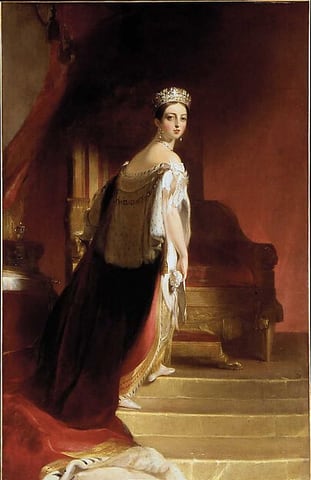
Sully was taken from England to America as a child by his actor parents and settled in Philadelphia in 1808. After brief study with Gilbert Stuart, he went to London, where he worked under Benjamin West and came under the influence of Thomas Lawrence. He became Philadelphia’s leading portraitist, known for graceful, flattering likenesses in a fluid manner. In 1838 he returned to London to paint the young Queen Victoria, the year after her accession.
Written by Ochre Editions.
Rights and the museum’s record
Public domain. The National Gallery of Art has dedicated this image to the public domain under CC0, so anyone may copy, adapt and use it, for any purpose, without asking. Our prints and files are reproductions made from the museum’s image; the museum doesn’t endorse them.
- Object number
- 1947.9.3
- Credit
- Courtesy National Gallery of Art, Washington
- Type
- Painting
- Licence
- CC0 1.0 Universal
- Museum record
- See it on the museum’s site