Charles Carnan Ridgely1820
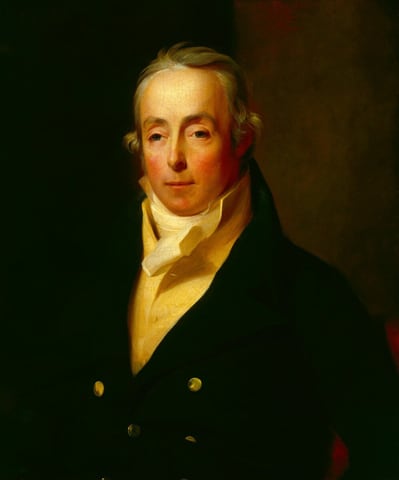
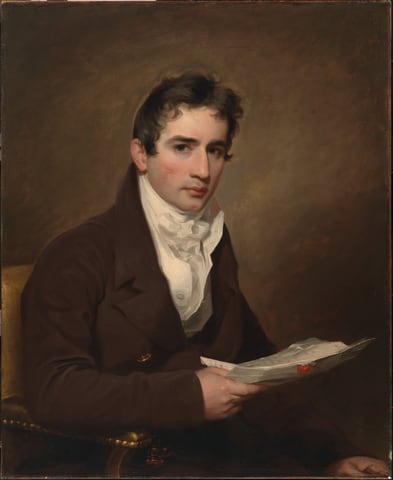
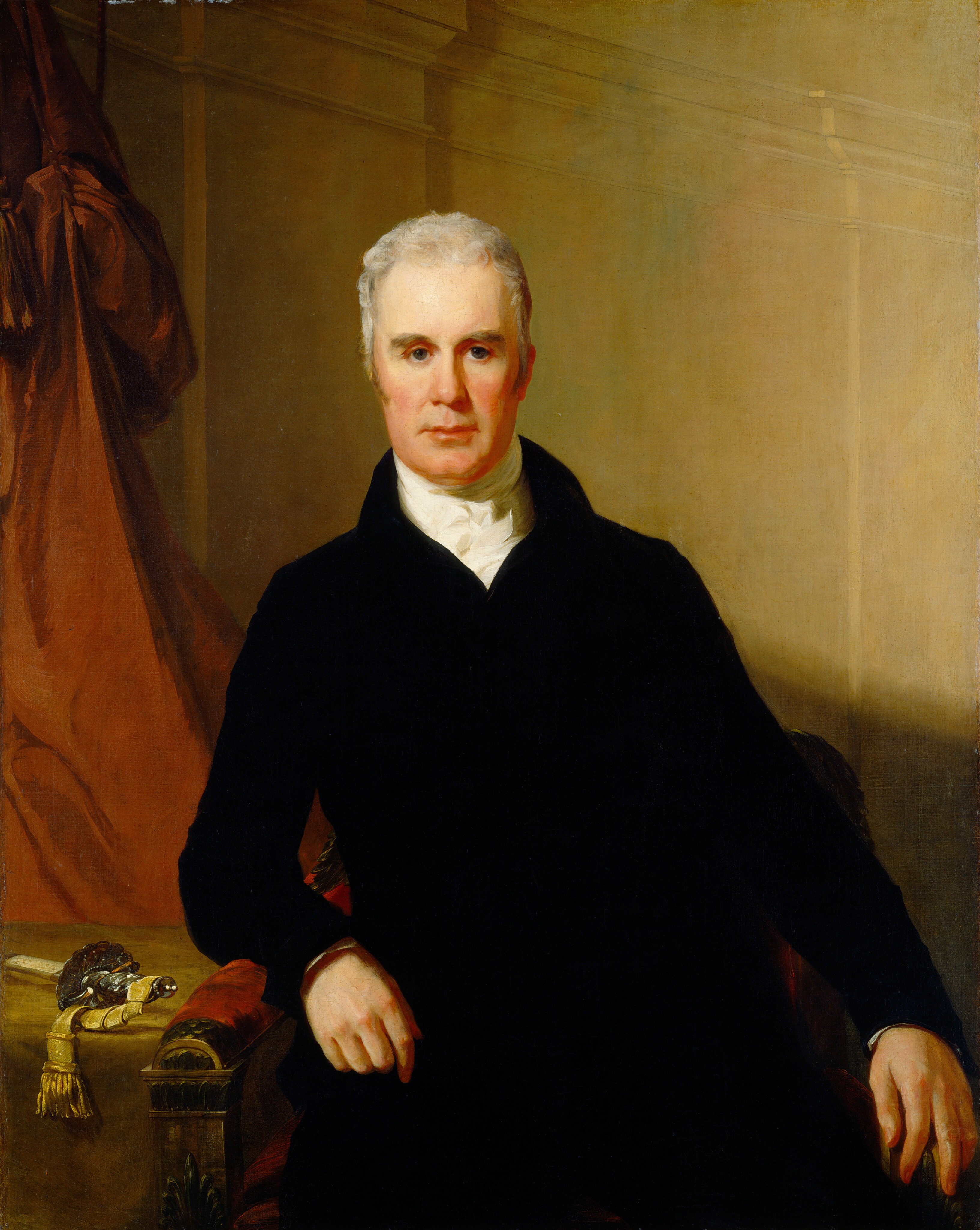
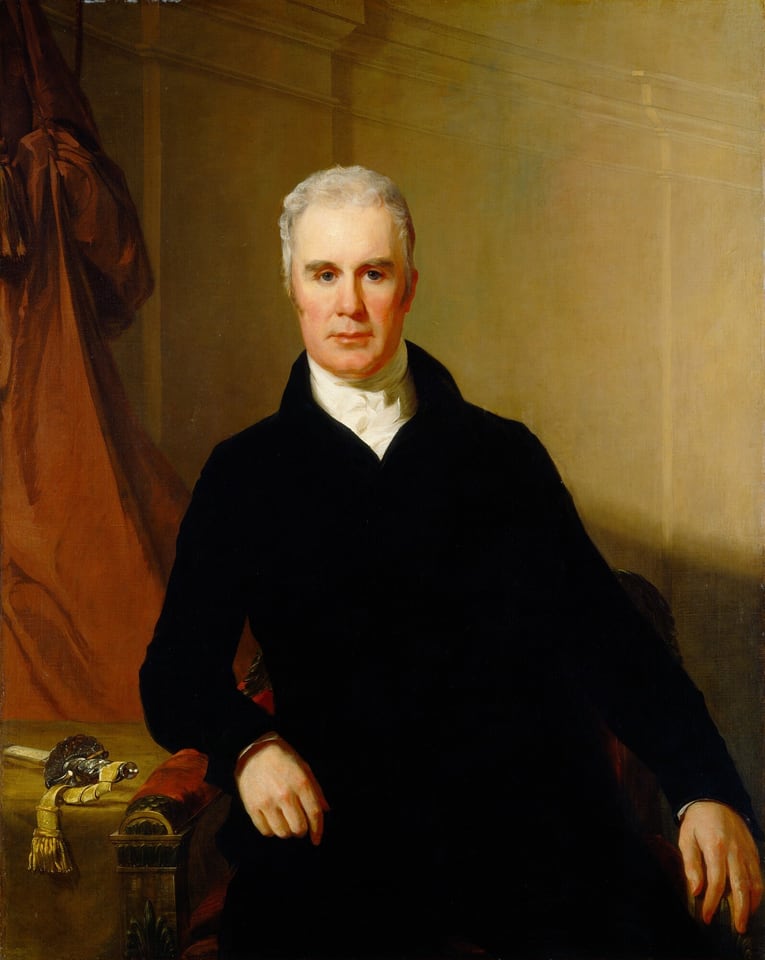
Charles Carnan Ridgely, governor of Maryland and master of Hampton, one of the grandest estates in the young United States, sits in a carved armchair draped with patterned fabric, a rich red curtain behind him. More about this work
About this work
Charles Carnan Ridgely, governor of Maryland and master of Hampton, one of the grandest estates in the young United States, sits in a carved armchair draped with patterned fabric, a rich red curtain behind him. Thomas Sully, the leading portraitist in Philadelphia, painted him in 1820 with the fluid brushwork and warmth he had absorbed from the English portraitist Thomas Lawrence. The composed, direct gaze and sober dress present the sitter as a dignified public man.
Written by Ochre Editions.
What you’re looking at
The image shows an upper-body portrait of a man seated in a formal position. The man is depicted with a slight turn of his head, directly facing the viewer with a composed expression. He has short gray hair that is neatly styled. His facial features include a high forehead and firm jawline. He is dressed in a dark formal jacket with a high-collared white shirt visible at the neckline. His left hand rests on the arm of the chair, which is ornately carved with a scroll design. A fabric with an intricate pattern is draped over the back of the chair. There is no visible jewelry. In the background, there is a muted backdrop with a warm hue. On the left side of the image, a flowing drapery in a rich reddish tone adds depth to the setting.
Description from the National Gallery of Art.
How it was made
- Oil paint
- Pigment ground in a drying oil, usually linseed. It dries slowly, so painters could blend on the canvas, build up thin translucent glazes, and rework a picture over weeks. Canvas replaced wooden panels in the 1500s because it is lighter and can be rolled.
Thomas Sully
American, 1783–1872 · Born in Horncastle, Lincolnshire; died in Philadelphia, Pennsylvania.
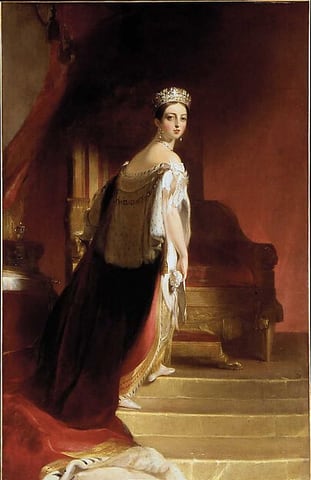
Sully was taken from England to America as a child by his actor parents and settled in Philadelphia in 1808. After brief study with Gilbert Stuart, he went to London, where he worked under Benjamin West and came under the influence of Thomas Lawrence. He became Philadelphia’s leading portraitist, known for graceful, flattering likenesses in a fluid manner. In 1838 he returned to London to paint the young Queen Victoria, the year after her accession.
Written by Ochre Editions.
Rights and the museum’s record
Public domain. The National Gallery of Art has dedicated this image to the public domain under CC0, so anyone may copy, adapt and use it, for any purpose, without asking. Our prints and files are reproductions made from the museum’s image; the museum doesn’t endorse them.
- Object number
- 1945.12.1
- Credit
- Courtesy National Gallery of Art, Washington
- Type
- Painting
- Licence
- CC0 1.0 Universal
- Museum record
- See it on the museum’s site