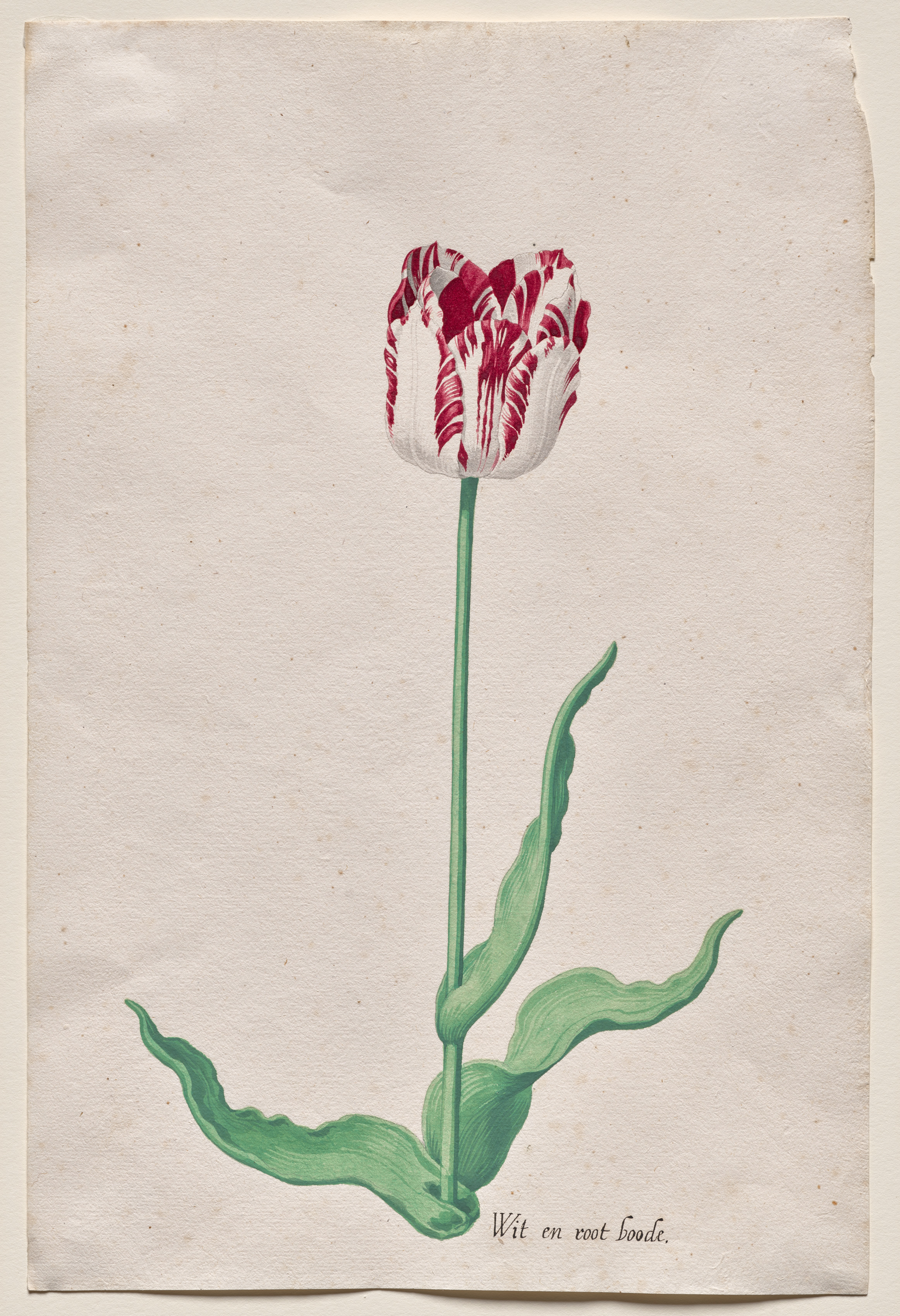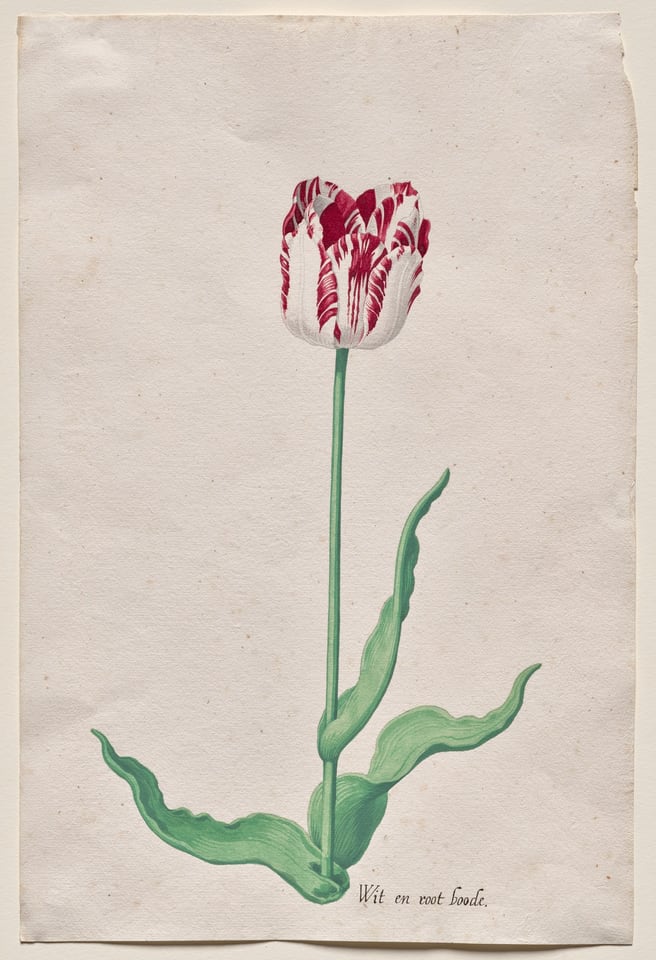
Study of a Tulip (Wit en root boode)c. 1645
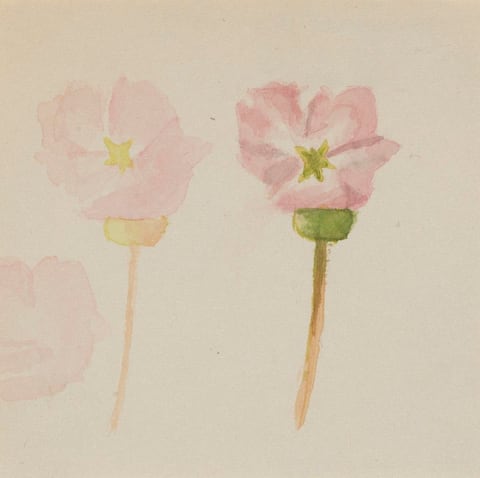
This image of a tulip was made as part of a tulip book used as a grower’s marketing tool during the so-called tulip mania, a speculative bubble in 17th-century Holland, when ten tulip bulbs could cost more than a stately Amsterdam canal house. More about this work
About this work
This image of a tulip was made as part of a tulip book used as a grower’s marketing tool during the so-called tulip mania, a speculative bubble in 17th-century Holland, when ten tulip bulbs could cost more than a stately Amsterdam canal house. The striations on the tulip, which were caused by a virus in the bulb, made it especially valuable. Pieter Holsteyn II was one of many artists in the Netherlands at the time who specialized in botanical illustration.This tulip's Dutch name, inscribed on the sheet, means "white and red messenger."
Text from the Cleveland Museum of Art.
How it was made
- Opaque watercolour
- Watercolour made opaque with white or chalk and laid in flat, even layers. Persian and Indian painters ground their colours from minerals, applied them with the finest brushes and burnished the finished page.
- Watercolour
- Pigment in gum arabic, thinned with water and laid in transparent washes. Nothing white is painted: the light is the paper showing through.
- Graphite
- Pencil. Graphite has been used for drawing since the 1500s; in 1795 Nicolas-Jacques Conté mixed it with clay, so its hardness could be graded.
Pieter Holsteyn II
Dutch, c.1612–1673
Dutch Golden Age
Seventeenth-century painting from the Dutch Republic: still lifes, interiors, portraits and flat, wide skies.
Rights and the museum’s record
Public domain. The Cleveland Museum of Art has dedicated this image to the public domain under CC0, so anyone may copy, adapt and use it, for any purpose, without asking. Our prints and files are reproductions made from the museum’s image; the museum doesn’t endorse them.
- Object number
- 2020.130
- Credit
- Courtesy of the Cleveland Museum of Art
- Type
- Drawing
- Department
- Drawings
- Licence
- CC0 1.0 Universal
- Museum record
- See it on the museum’s site