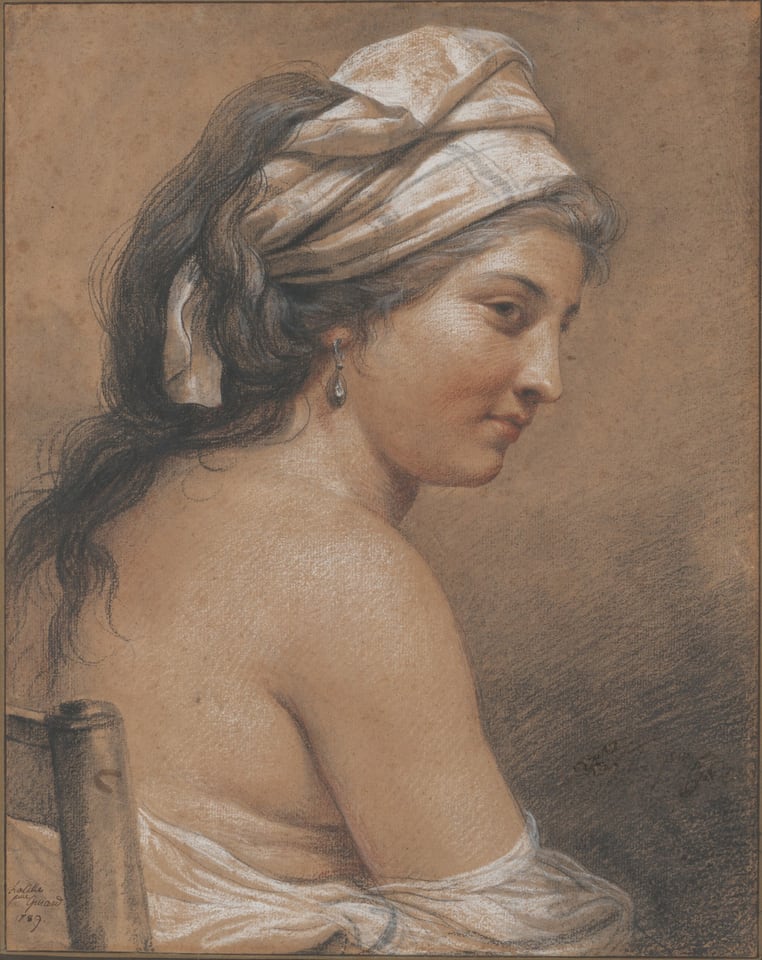
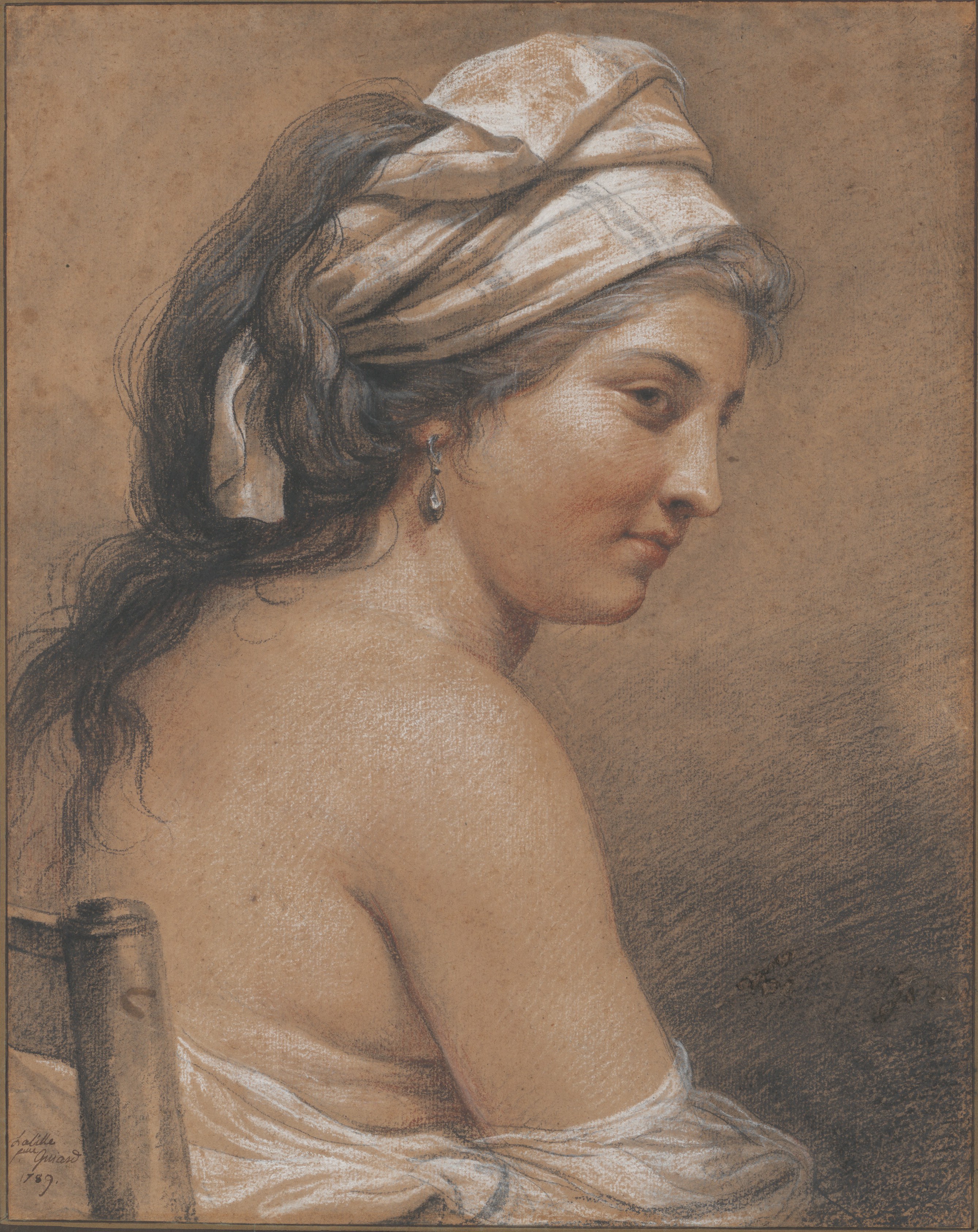
Study of a Seated Woman Seen from Behind (Marie-Gabrielle Capet)1789
Adélaïde Labille-Guiard drew this in 1789, aged 40. It is now at The Met in New York. More about this work
About this work
Adélaïde Labille-Guiard drew this in 1789, aged 40. It is now at The Met in New York.
How it was made
- Chalk
- Natural black, red and white chalks. Used together on toned paper they could give the warmth of flesh with very little effort, and they were favourites for studies from life.
- Laid paper
- Handmade on a mould of close-set wires, which leave fine parallel lines you can see when the sheet is held to the light.
Adélaïde Labille-Guiard
French, 1749–1803 · Born and died in Paris.
Rights and the museum’s record
Public domain. The Met has dedicated this image to the public domain under CC0, so anyone may copy, adapt and use it, for any purpose, without asking. Our prints and files are reproductions made from the museum’s image; the museum doesn’t endorse them.
- Object number
- 2008.538.1
- Credit
- Courtesy of The Metropolitan Museum of Art
- Type
- Drawings
- Department
- Drawings and Prints
- Licence
- CC0 1.0 Universal
- Museum record
- See it on the museum’s site
Report this work
More by Adélaïde Labille-Guiard
All their works
Close in colour