Samson1630–31
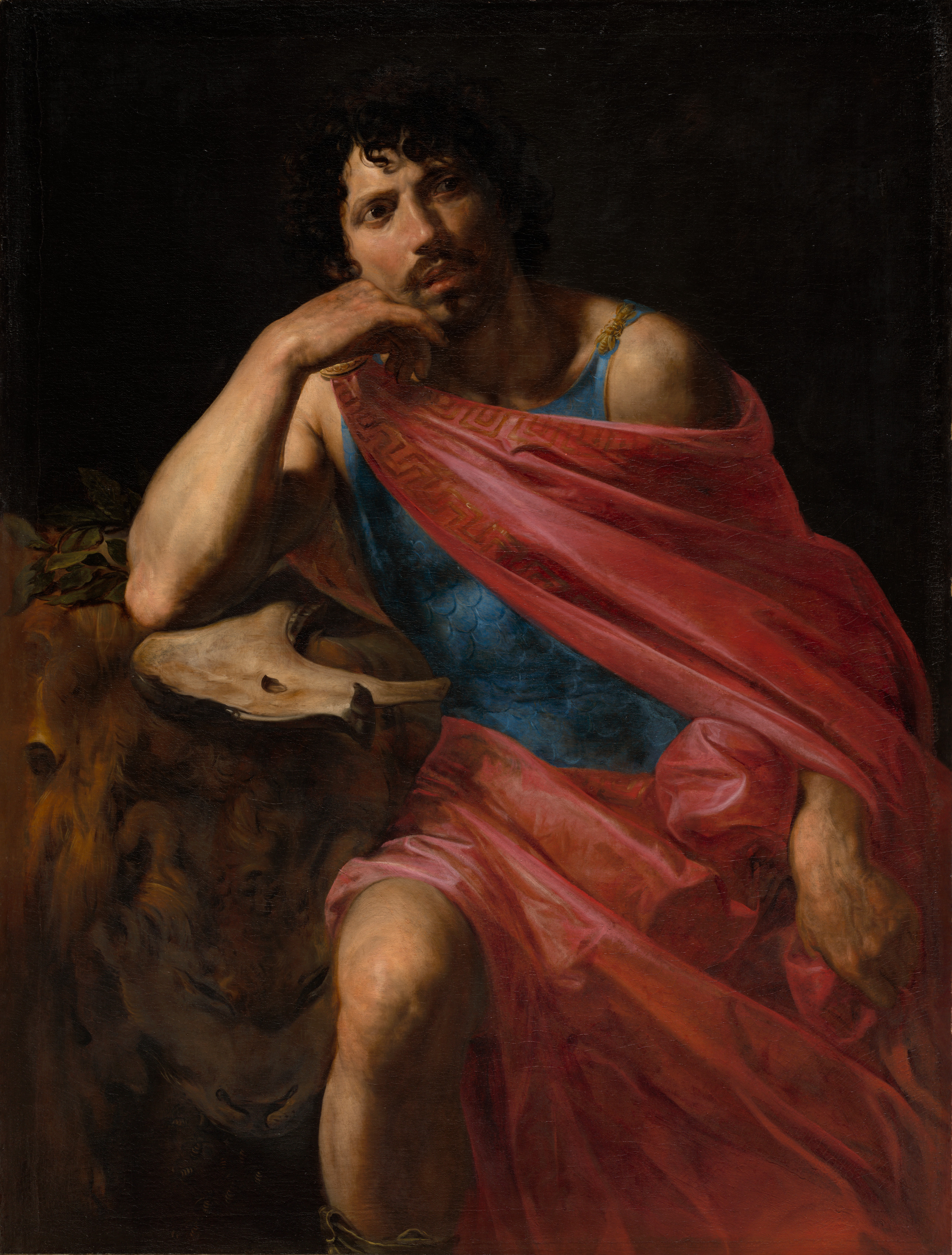
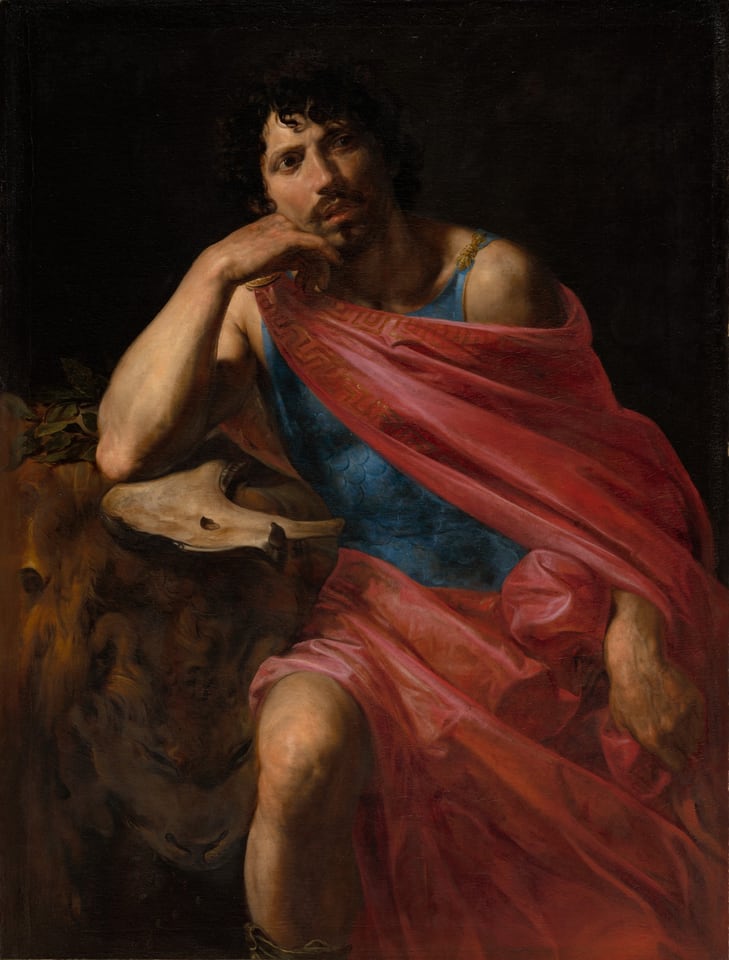
The Old Testament hero Samson rests his head on his hand in a pensive, even melancholic pose. More about this work
About this work
The Old Testament hero Samson rests his head on his hand in a pensive, even melancholic pose. Objects on the table recall two of his heroic deeds: he killed a lion with his bare hands, and liberated the Israelites by slaughtering a thousand Philistines with a donkey’s jawbone. Samson’s cuirass, or breastplate, is joined at the shoulder by a clasp in the form of two bees—the emblem of the Barberini family, who commissioned the painting around 1630. In 1627, the Barberini had engaged Valentin to paint another biblical hero, David victorious with the head of Goliath; the canvas depicting Samson was designed to be its pendant.
Text from the Cleveland Museum of Art.
How it was made
- Oil paint
- Pigment ground in a drying oil, usually linseed. It dries slowly, so painters could blend on the canvas, build up thin translucent glazes, and rework a picture over weeks. Canvas replaced wooden panels in the 1500s because it is lighter and can be rolled.
Valentin de Boulogne
French, 1591–1632 · Born in Coulommiers-en-Brie; died in Rome.
Rights and the museum’s record
Public domain. The Cleveland Museum of Art has dedicated this image to the public domain under CC0, so anyone may copy, adapt and use it, for any purpose, without asking. Our prints and files are reproductions made from the museum’s image; the museum doesn’t endorse them.
- Object number
- 1972.50
- Credit
- Courtesy of the Cleveland Museum of Art
- Type
- Painting
- Department
- European Painting and Sculpture
- Licence
- CC0 1.0 Universal
- Museum record
- See it on the museum’s site