Portrait of Cardinal Guillaume Dubois1723
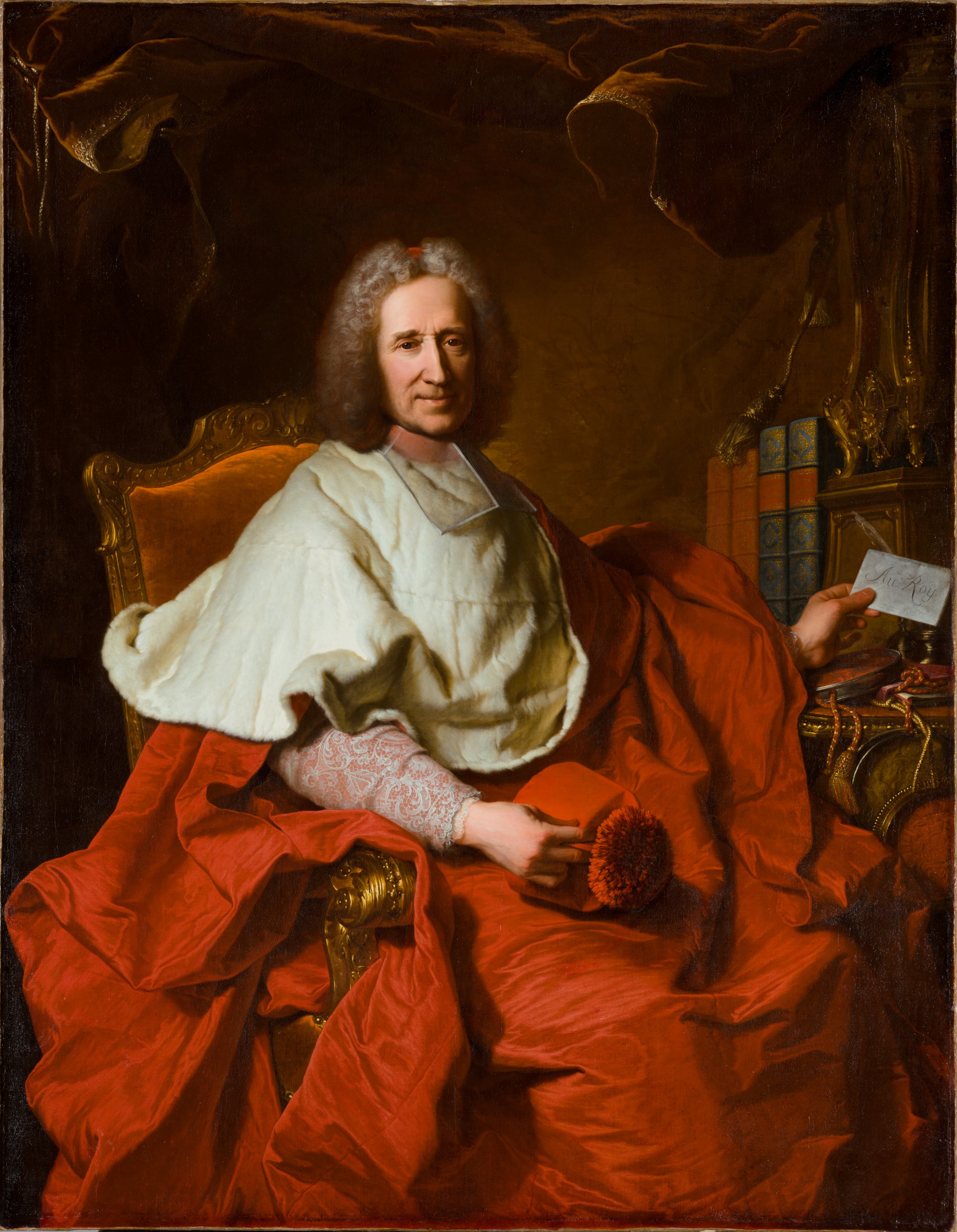
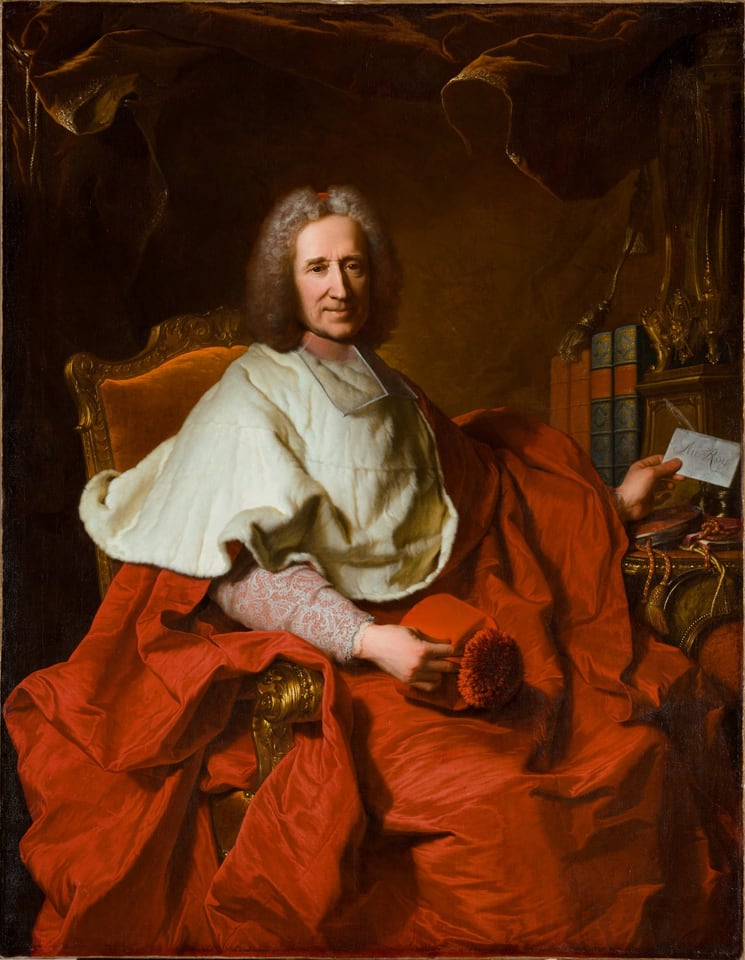
With his luxurious, flamboyant dress—a voluminous wrap of scarlet silk topped by a short fur cape—the subject of Hyacinthe Rigaud’s portrait was clearly a man of consequence. More about this work
About this work
With his luxurious, flamboyant dress—a voluminous wrap of scarlet silk topped by a short fur cape—the subject of Hyacinthe Rigaud’s portrait was clearly a man of consequence. Guillaume Dubois gained the favor of Louis XIV as tutor to his nephew, Philippe Charles, Duke of Orléans, and served as chief minister under Louis’s successors, the regent Duke of Orléans and Louis’s great-grandson, Louis XV. Dubois was appointed a Cardinal in the Catholic Church in 1721, a lofty aspiration at least partly motivated by political ambition: the title gave him the ability to remove political adversaries with impunity. Dubois holds a letter with the words Au Roy (to the king); this portrait was painted in the same year the young Louis XV ascended to the throne.
Text from the Cleveland Museum of Art.
How it was made
- Oil paint
- Pigment ground in a drying oil, usually linseed. It dries slowly, so painters could blend on the canvas, build up thin translucent glazes, and rework a picture over weeks. Canvas replaced wooden panels in the 1500s because it is lighter and can be rolled.
Hyacinthe Rigaud
French, 1659–1743
Rights and the museum’s record
Public domain. The Cleveland Museum of Art has dedicated this image to the public domain under CC0, so anyone may copy, adapt and use it, for any purpose, without asking. Our prints and files are reproductions made from the museum’s image; the museum doesn’t endorse them.
- Object number
- 1967.17
- Credit
- Courtesy of the Cleveland Museum of Art
- Type
- Painting
- Department
- European Painting and Sculpture
- Licence
- CC0 1.0 Universal
- Museum record
- See it on the museum’s site