Portrait of a Ladyca. 1895
Mollie Chatfield came to be known as a classic “Dewing girl,” a type described in a Boston paper as “intellectual enough to be worthy of Boston, aristocratic enough to be worthy of Philadelphia, well… More about this work
About this work
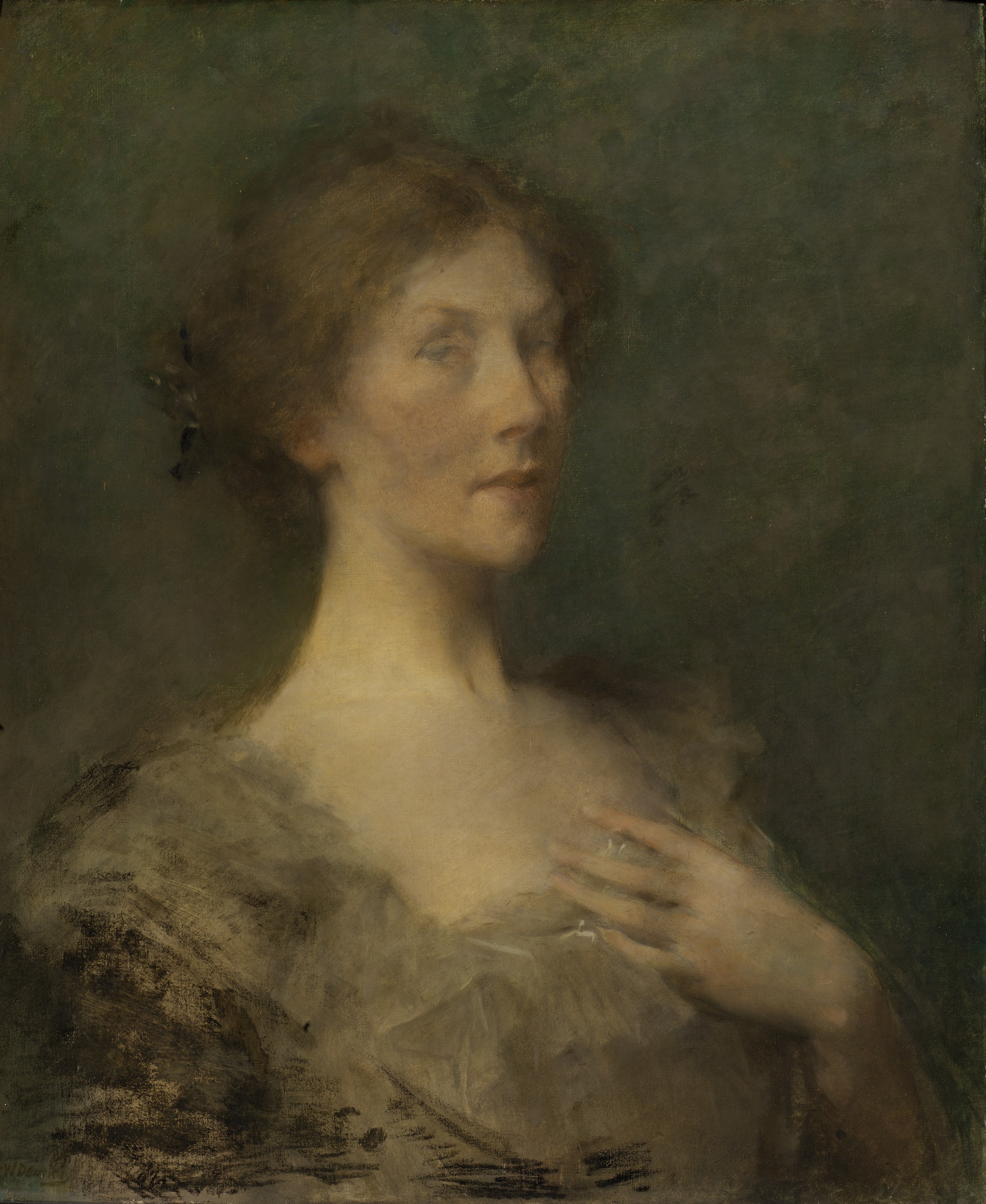
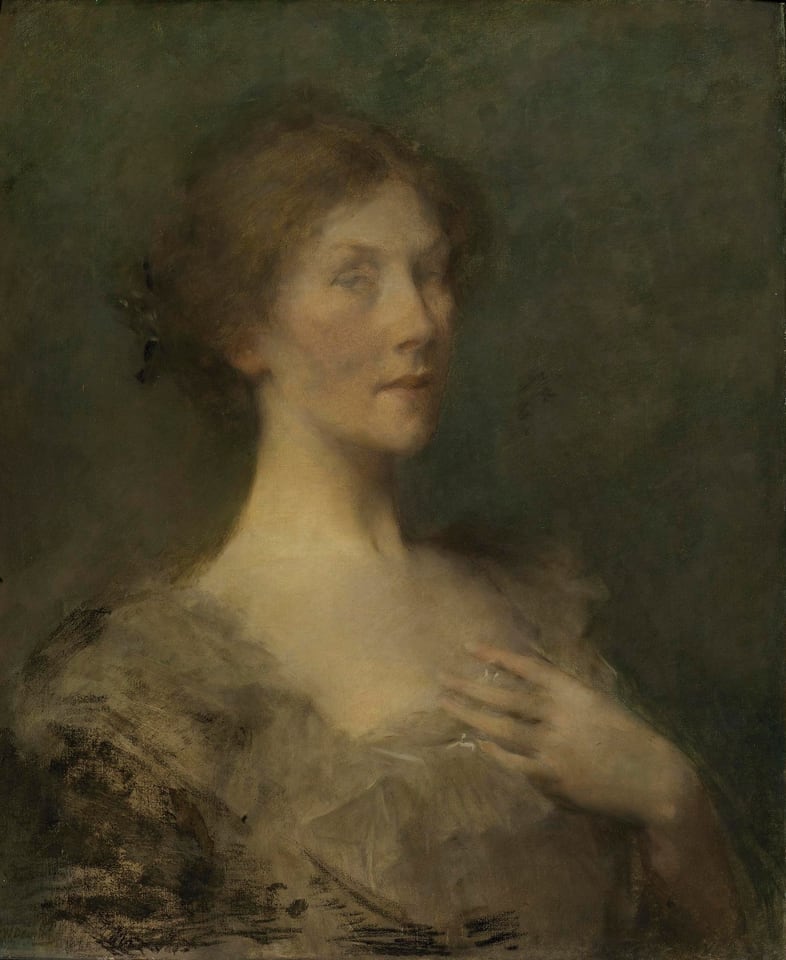
Mollie Chatfield came to be known as a classic “Dewing girl,” a type described in a Boston paper as “intellectual enough to be worthy of Boston, aristocratic enough to be worthy of Philadelphia, well dressed enough to be a New Yorker but seldom pretty enough to evoke the thought of Baltimore.” Thomas Wilmer Dewing showed her with a flirtatious sideward glance, lips slightly parted, and one hand resting self-consciously over her breast. This provocative pose hints at the romantic relationship between artist and model. Dewing’s patron Charles Lang Freer helped the artist keep his affair with Chatfield hidden from his wife, Maria Oakey Dewing. (Hobbs, Beauty Reconfigured: The Art of Thomas Wilmer Dewing, 1996)
Text from the Smithsonian American Art Museum.
How it was made
- Oil paint
- Pigment ground in a drying oil, usually linseed. It dries slowly, so painters could blend on the canvas, build up thin translucent glazes, and rework a picture over weeks. Canvas replaced wooden panels in the 1500s because it is lighter and can be rolled.
Thomas Wilmer Dewing
born Boston, MA 1851-died New York City 1938
Rights and the museum’s record
Public domain. The Smithsonian American Art Museum has dedicated this image to the public domain under CC0, so anyone may copy, adapt and use it, for any purpose, without asking. Our prints and files are reproductions made from the museum’s image; the museum doesn’t endorse them.
- Object number
- 1929.6.34
- Credit
- Courtesy of the Smithsonian American Art Museum
- Type
- Painting
- Department
- Painting and Sculpture
- Licence
- CC0 1.0 Universal
- Museum record
- See it on the museum’s site