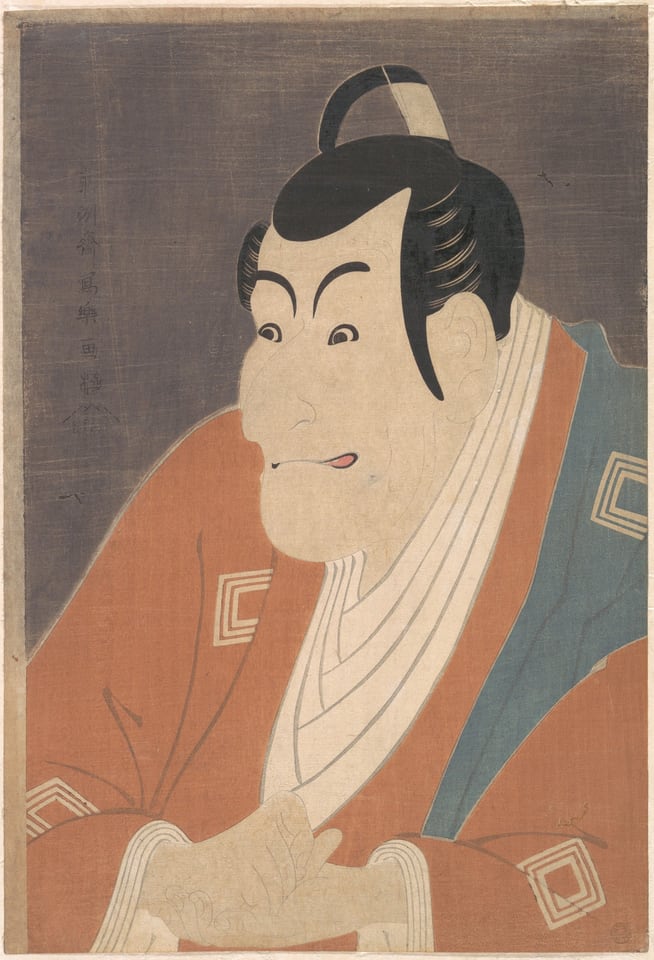
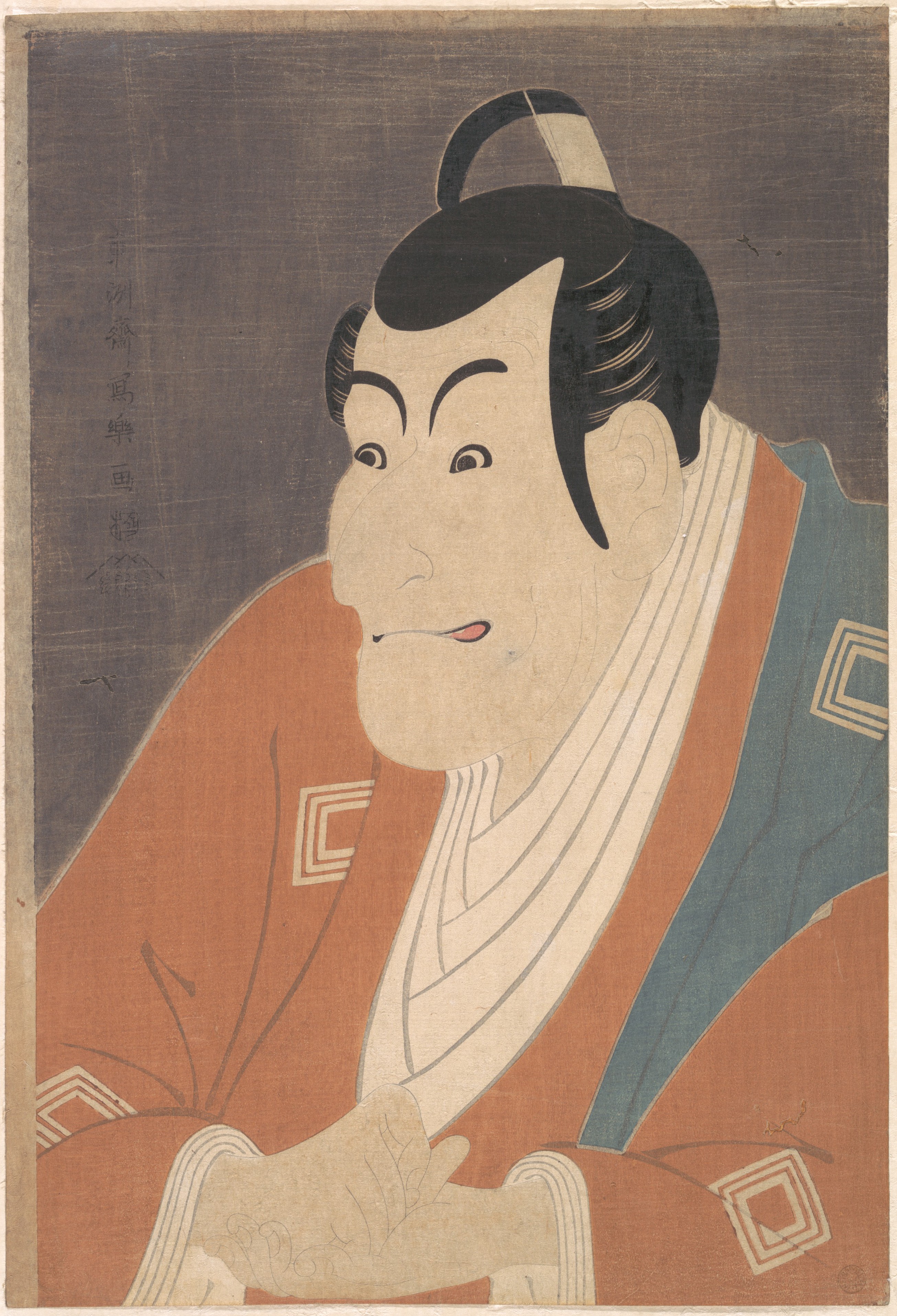
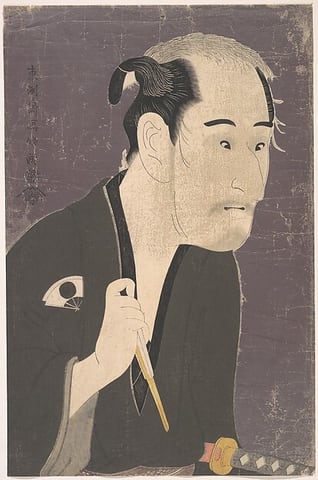
Ichikawa Ebizo IV in the role of Takemura SadanoshinProbably late 1880s or early 1890s
Tōshūsai Sharaku designed this (Probably late 1880s or early 1890s). It is now at The Met in New York. More about this work
About this work
Tōshūsai Sharaku designed this (Probably late 1880s or early 1890s). It is now at The Met in New York.
How it was made
- Colour woodblock print
- In Japan these were a team effort. The artist drew the design, a carver cut it into cherry-wood blocks, one block for each colour, and a printer brushed on the pigment and rubbed each sheet by hand. Full-colour prints of this kind were called nishiki-e, “brocade pictures”, from the 1760s on.
Tōshūsai Sharaku
Japanese
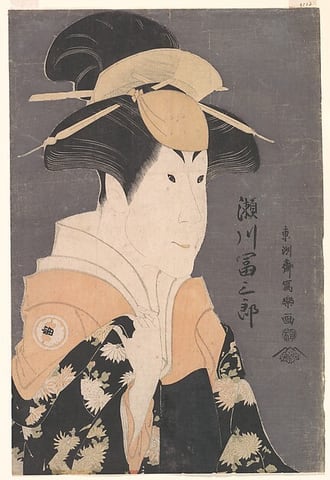
Sharaku remains one of the puzzles of Japanese art. Within about ten months in 1794–95 he designed some 140 portraits of kabuki actors for the publisher Tsutaya Jūzaburō, then disappeared from the record. His early bust portraits, set against dark mica grounds, exaggerate features and expressions with startling frankness. His identity is still debated, though many scholars favour a Noh actor named Saitō Jūrōbei.
Written by Ochre Editions.
Ukiyo-e
Japanese woodblock prints of the floating world: actors, courtesans, landscapes and the sea.
Rights and the museum’s record
Public domain. The Met has dedicated this image to the public domain under CC0, so anyone may copy, adapt and use it, for any purpose, without asking. Our prints and files are reproductions made from the museum’s image; the museum doesn’t endorse them.
- Object number
- JP733
- Credit
- Courtesy of The Metropolitan Museum of Art
- Type
- Prints
- Department
- Asian Art
- Licence
- CC0 1.0 Universal
- Museum record
- See it on the museum’s site
Report this work
More by Tōshūsai Sharaku
All their works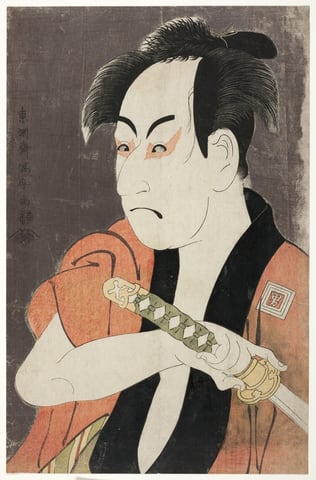

Close in colour