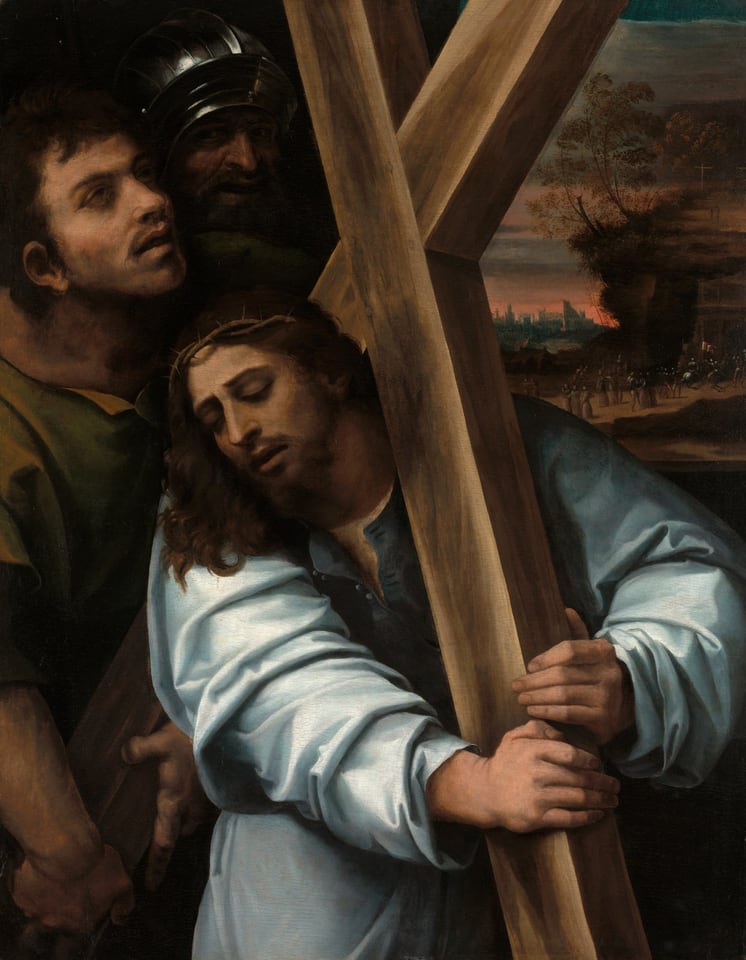
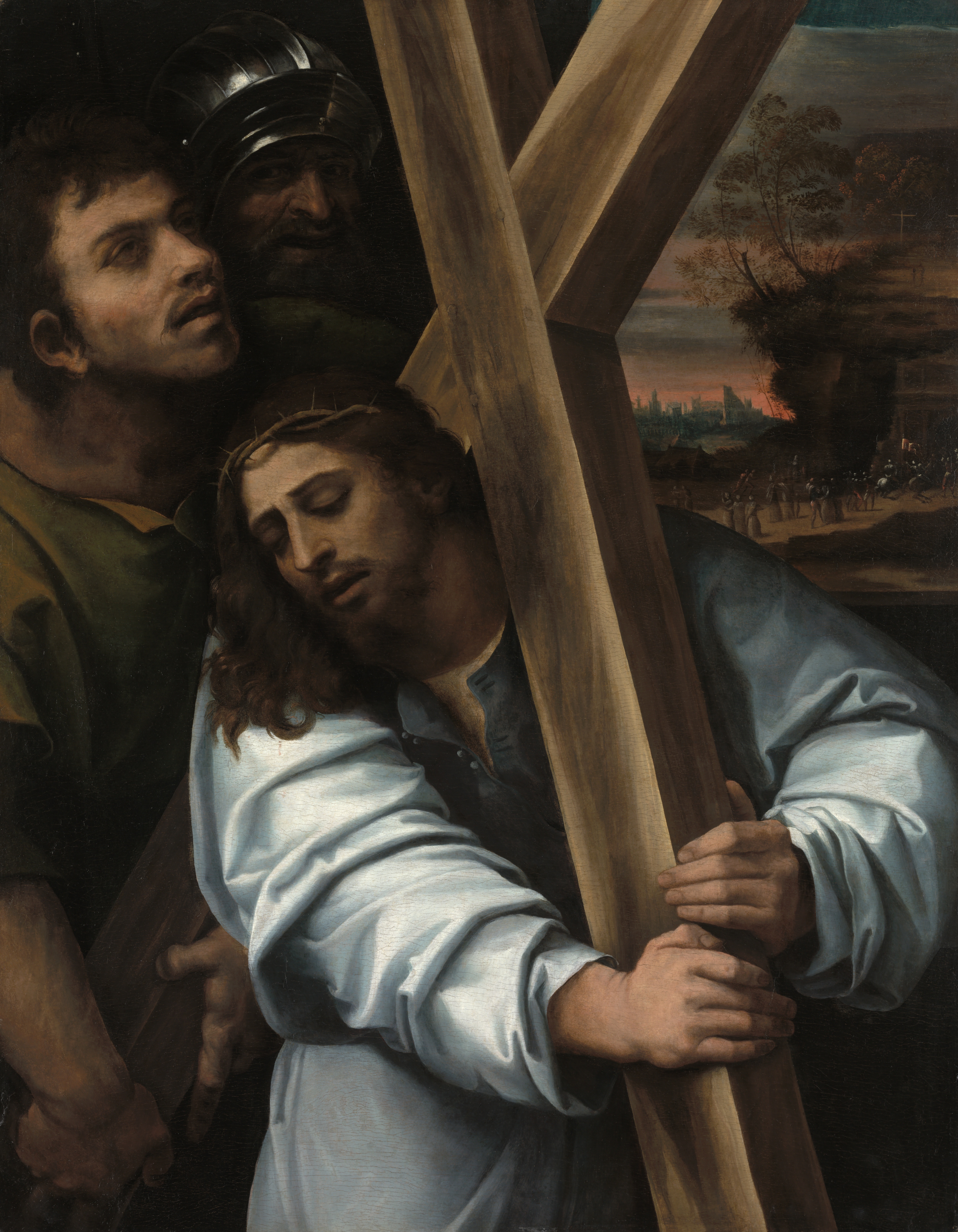
Christ Carrying the Crossc. 1515–17
In the 1510s, Sebastiano del Piombo traveled to Rome, where he was drawn into the lively competition between the period's two great luminaries, Michelangelo and Raphael. More about this work
About this work
In the 1510s, Sebastiano del Piombo traveled to Rome, where he was drawn into the lively competition between the period's two great luminaries, Michelangelo and Raphael. Michelangelo took Sebastiano under his wing, teaching him his monumental style and providing drawings for commissions. This painting represents a popular composition by Piombo, who became one of the most distinguished painters working during the High Renaissance.
Text from the Art Institute of Chicago.
What you’re looking at
A work made of oil on panel.
Description from the Art Institute of Chicago.
How it was made
- Oil on panel
- Oil paint on prepared wooden boards, usually oak in the north and poplar in Italy. The rigid, smooth surface suits fine detail and thin, glowing glazes.
- Oil paint
- Pigment ground in a drying oil, usually linseed. It dries slowly, so painters could blend on the canvas, build up thin translucent glazes, and rework a picture over weeks. Canvas replaced wooden panels in the 1500s because it is lighter and can be rolled.
Renaissance
European art from about 1400 to 1600, when painters rediscovered perspective and the classical past.
Rights and the museum’s record
Public domain. The Art Institute of Chicago has dedicated this image to the public domain under CC0, so anyone may copy, adapt and use it, for any purpose, without asking. Our prints and files are reproductions made from the museum’s image; the museum doesn’t endorse them.
- Object number
- 2016.15
- Credit
- Courtesy of the Art Institute of Chicago
- Type
- Painting
- Department
- Painting and Sculpture of Europe
- Licence
- CC0 1.0 Universal
- Museum record
- See it on the museum’s site
Report this work
More by Sebastiano del Piombo
All their works
Close in colour