Ukiyo-e
Japanese woodblock prints of the floating world: actors, courtesans, landscapes and the sea.
Section 1, north wall
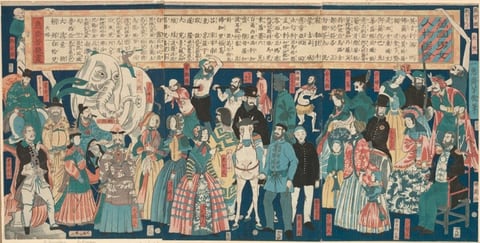
Picture of Men and Women from Many Countries (Bankoku danjo jinbutsu zue)Utagawa Yoshiiku, 1861Courtesy of the Art Institute of Chicago 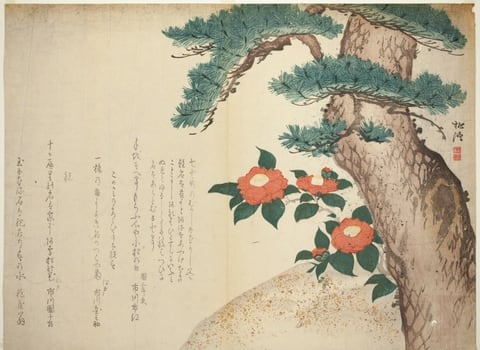
A Pine Tree and CamelliasNiwa Tokei, 1840Courtesy of the Art Institute of Chicago
Section 1, south wall
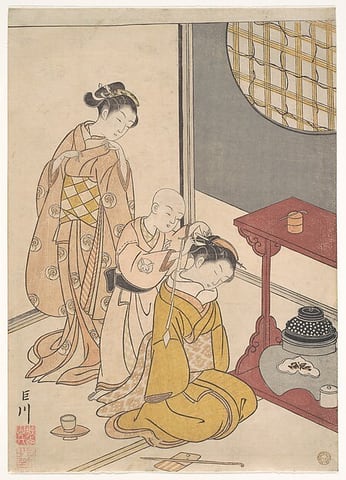
Night Rain at the Double-Shelf Stand, from the series Eight Parlor Views (Zashiki hakkei)Suzuki Harunobu, ca. 1766Courtesy of The Metropolitan Museum of Art 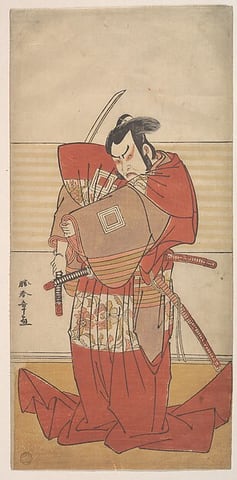
The Actor Ishikawa Danjuro V Performing a Shibaroku Act with a Drawn Sword in His HandKatsukawa Shunshō, ca. 1781Courtesy of The Metropolitan Museum of Art 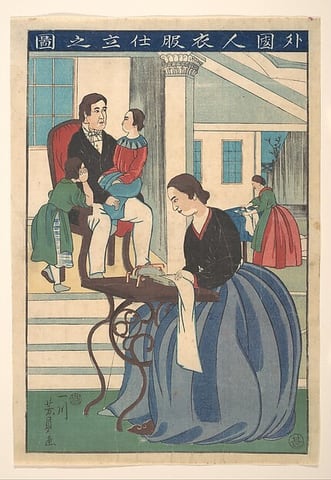
Foreign Family with Wife Making Clothes (Gaikokujin ifuku shitate no zu)Utagawa Yoshikazu, 1860Courtesy of The Metropolitan Museum of Art
Section 2, south wall
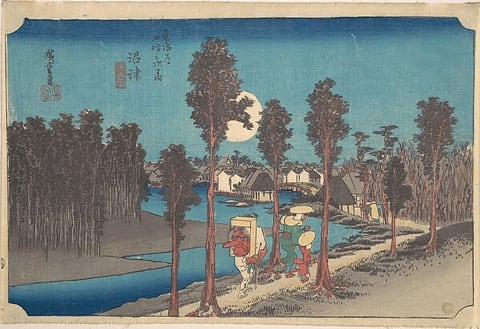
Numazu Ki KureUtagawa Hiroshige, ca. 1834Courtesy of The Metropolitan Museum of Art 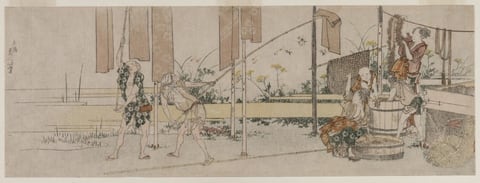
Dyers at WorkKatsushika Hokusai, c. 1800Courtesy of the Cleveland Museum of Art
Section 2, north wall
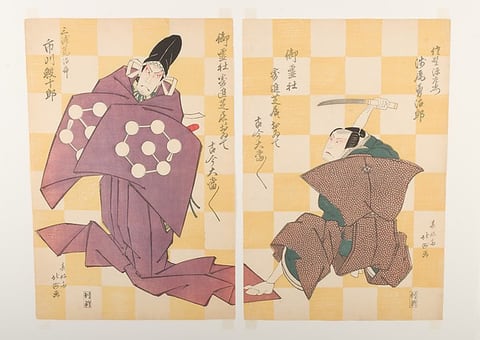
Kabuki Actors Asao Yūjirō as Sano Genzaemon and Ichikawa Ebijūrō I as Miura Arajirō, in the play Keisei Sano no FunabashiShunkōsai Hokushū, 1822Courtesy of The Metropolitan Museum of Art 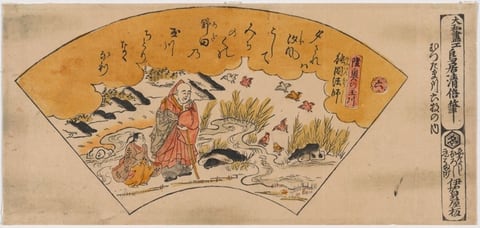
The Priest Kobo Daishi at the Tama River in Kii Province from the series The Six Tama RiversTorii Kiyomasu, c. 1725-1735Courtesy of the Art Institute of Chicago 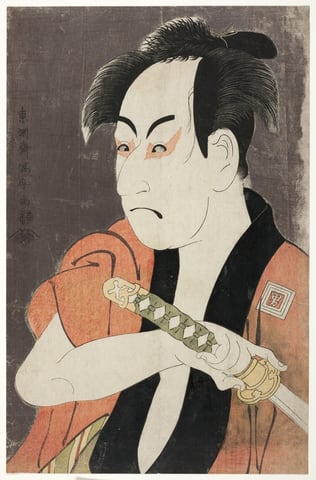
The actor Ichikawa Omezo as the manservant IppeiTōshūsai Sharaku, 1794Courtesy of the Art Institute of Chicago
Section 3, north wall

The Actor Segawa Tomisaburo II as the Otomos' Maid Wakakusa, Actually Prince KorehitoTōshūsai Sharaku, 1794–75Courtesy of The Metropolitan Museum of Art 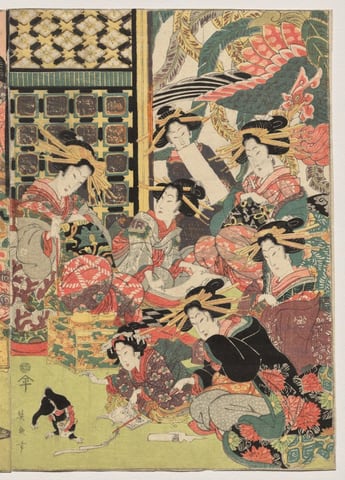
A Picture of the Viewing in the Pleasure QuartersKikukawa Eizan, 1810sCourtesy of the Cleveland Museum of Art 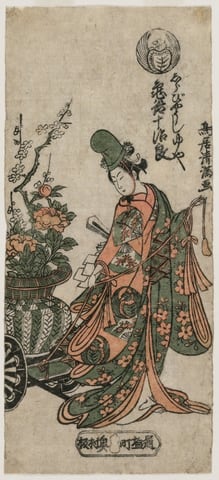
Kametani Jujiro as the Shirabyoshi Dancer YuyaTorii Kiyomitsu, c. early 1760sCourtesy of the Cleveland Museum of Art
Section 3, south wall
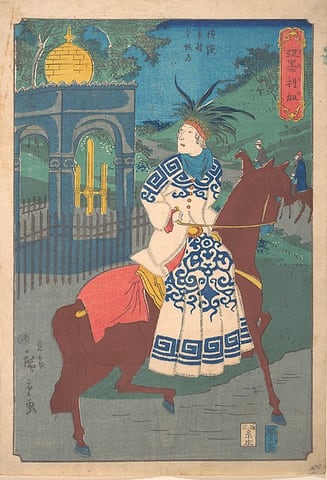
American Woman Riding Side-Saddle on the Road at Honmoku, Motomura, Yokohama (America Yokohama Motomura Honmoku michi)Utagawa Hiroshige II, 2nd month, 1861Courtesy of The Metropolitan Museum of Art 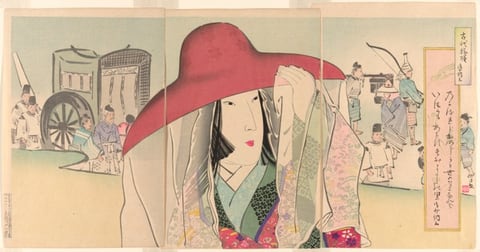
Sei Shonagon, from the series Ancient Patterns (Kodai moyo)Kobayashi Kiyochika, Meiji period (1896–1912), 1896Courtesy of the Art Institute of Chicago 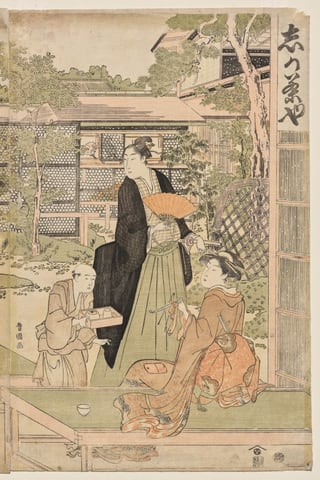
The Shika TeahouseUtagawa Toyokuni, early 1790sCourtesy of the Cleveland Museum of Art