Skip to content
Ochre Editions
ArtArtistsCollectionsGalleriesDrops
SearchSign inCart (0)
The galleries · Style galleries

American folk and design

The everyday art of early America, recorded in watercolour by the Index of American Design.

90 works · hang 5442 ·

Share American folk and design, in the galleries

The rooms are imagined; every work on their walls is real.

Walk this roomRehang this room

Section 1, north wall

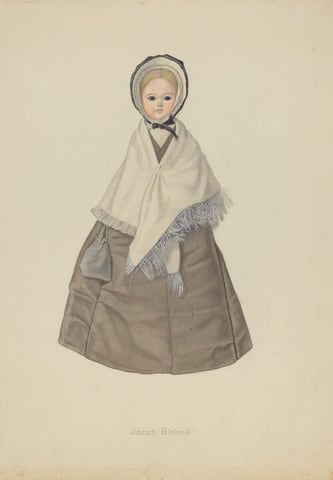
  1. The image depicts a young person standing upright with distinct facial features including rounded cheeks, a small mouth, and large eyes. They are wearing a brown dress with a cream-colored shawl, a bonnet with dark trim, and a pouch hanging from their left side. The background is plain and cream-colored.
    Quaker DollJacob Gielens, 1935/1942Courtesy National Gallery of Art, Washington
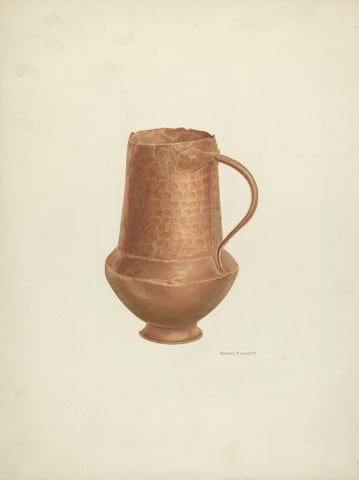
  2. The image shows a large, copper-colored pitcher with a hammered texture and a curving handle on the right side. The color palette consists of muted, warm tones of copper and brown against a pale beige background. The pitcher is centrally placed in the image, with its handle positioned on the right side.
    Copper CruetEdward Jewett, 1937Courtesy National Gallery of Art, Washington
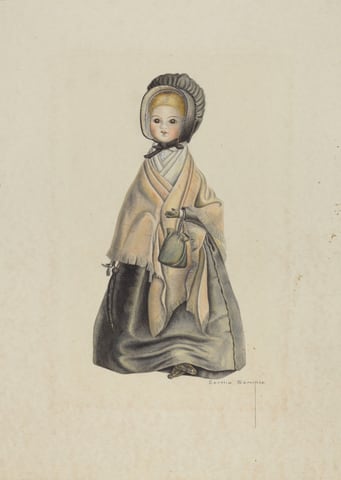
  3. The image displays a full-body illustration of a person standing upright. They have a delicate and round face with rosy cheeks and small, pink lips. Their eyes are large and expressive, and they have light-colored hair peeking out from under a bonnet. The person's attire consists of a long, dark skirt and a light-colored shawl draped over their shoulders. They wear a hooded cloak tied with a bow at the neck, and hold a small bag in their left hand. The background is plain with a light-colored texture. The artwork is a painted illustration with visible fine lines and shading to enhance details of the clothing and facial features.
    Quaker DollBertha Semple, 1935/1942Courtesy National Gallery of Art, Washington

Section 1, south wall
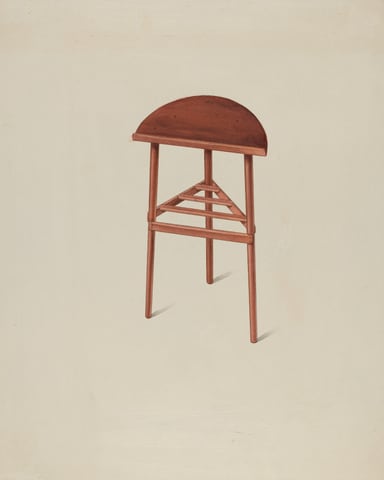
  1. The image shows a wooden stool with a semi-circular seat on a light beige background. The stool has four slim legs and a primarily brown color.
    Shaker Music RackAlfred H. Smith, c. 1936Courtesy National Gallery of Art, Washington
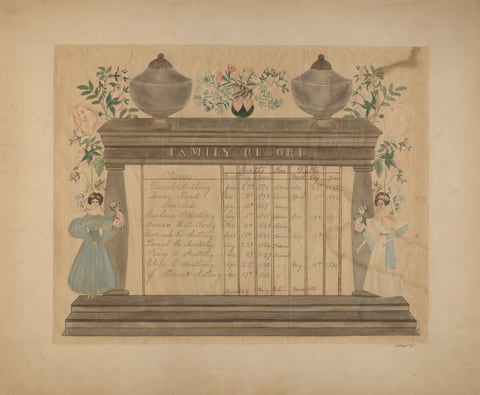
  2. This is a drawing of a decorative family record. The central feature is a structure resembling a classical monument or altar labeled "FAMILY RECORD" at the top. The structure has columns and a pediment with names and dates. Flanking the list are two figures holding flowers, dressed in long gowns of blue and white. Above the structure are two large urns and a floral arrangement with pink flowers and green foliage. The background is a soft, neutral color. Green leaves and small flowers further embellish the scene.
    Family Record of Susan B. AnthonyJohn Wilkes, c. 1937Courtesy National Gallery of Art, Washington

Section 2, south wall
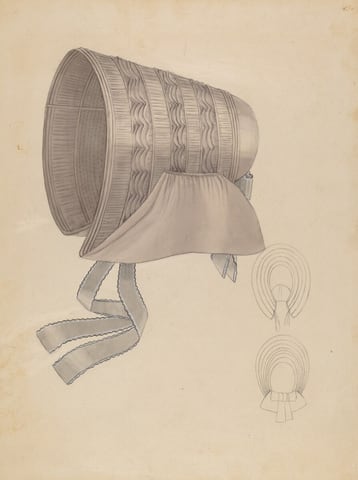
  1. This is an image of a bonnet and its details. The drawing showcases a bonnet with intricate design and texture. The bonnet is viewed from the side, revealing its woven structure with patterns representing fabric pleats or folds. It has a long ribbon hanging from the back, depicted with flowing lines. There are also two smaller sketches showing the bonnet from the back, emphasizing its shape and construction. The background is plain.
    BonnetBessie Forman, c. 1936Courtesy National Gallery of Art, Washington
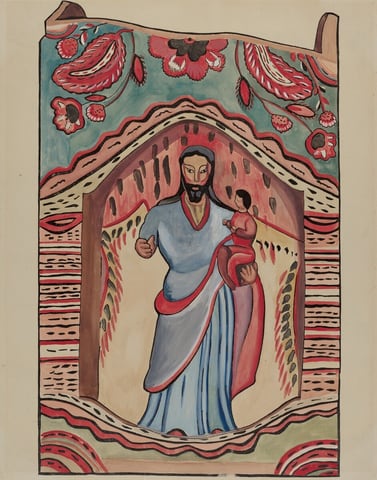
  2. This is a painting of stylized figures within an ornate frame. The artwork features two central figures that are reminiscent of a traditional religious iconography but rendered in a simplified and almost cartoonish form. The larger figure is draped in blue with red accents, while a smaller figure is held in one hand, enrobed in red. The background is decorated with a variety of patterns including an arch-like structure with wavy designs and lines, all outlining the central figures. The outer sections feature floral patterns with bold, contrasting colors of red, black, and teal. The use of thick outlines and vivid colors suggests a playful and decorative approach to the portrayal of the figures, drawing inspiration possibly from folk art traditions.
    St. JosephE. Boyd, 1936Courtesy National Gallery of Art, Washington
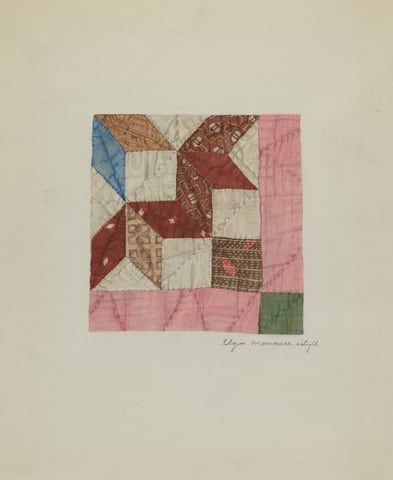
  3. This is a painting of a quilt design pattern. The image depicts a square quilt block featuring a variety of geometric shapes and patterns pieced together. The quilt features a mix of colors, including blues, reds, browns, and a pink border, with intricate patterns in the fabric segments. The textures and colors create an intricate optical composition resembling different geometric forms and depth. The piece is delicately framed within a larger white space, which emphasizes the detail of the quilt pattern. This is in the style of a traditional textile or quilting pattern illustrator.
    Cotton Bed QuiltElgin Moncure Styll, c. 1941Courtesy National Gallery of Art, Washington

Section 2, north wall
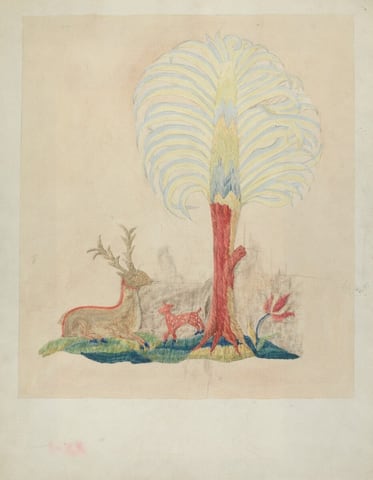
  1. This is a painting of two deer under a tree. The larger deer has antlers and is resting next to a smaller deer. They are depicted with red and brown strokes. The background shows a patch of earth and grass in green and blue. Beside the deer is a tree with colorful leaves or a feather-like structure and a red trunk. A pink flower is near the tree's base. The background is neutral. This painting is in the style of Henri Rousseau.
    Crewel EmbroideryHelen Dana, 1935/1942Courtesy National Gallery of Art, Washington
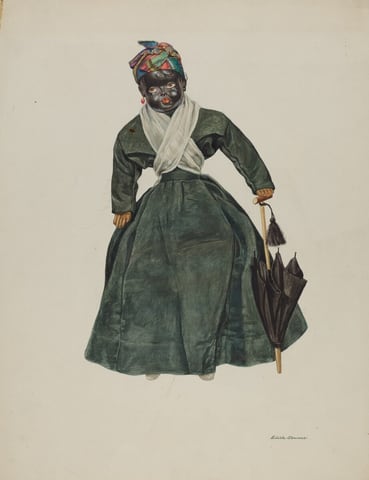
  2. The image depicts a person standing upright. They are wearing a dark green dress with long sleeves and a floor-length skirt. Over the dress, there is a white fabric wrapped around their shoulders. The person is holding a closed umbrella in their right hand. Their face is dark with distinguishable eyes and a nose, but specific facial features are not detailed. The person's hair is covered by a colorful headscarf with shades of blue, pink, and yellow. They are wearing large earrings, possibly pink or red. The background is plain and light with no additional objects present.
    Doll--"Hannah Hitch"Edith Towner, c. 1940Courtesy National Gallery of Art, Washington
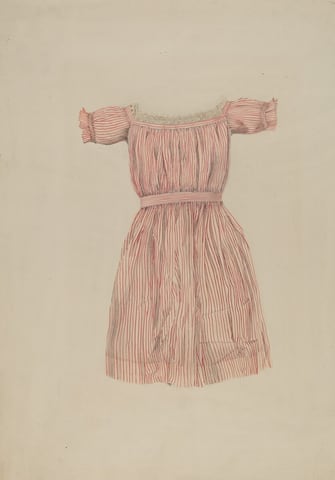
  3. The image shows a dress with a pink and white vertical striped pattern. The color palette is predominantly soft pinks and whites with subtle shading for light and shadow effects on the fabric. The dress is positioned at the center of the image, with sleeves extending slightly outward to the sides.
    Child's DressLucien Verbeke, c. 1937Courtesy National Gallery of Art, Washington

Section 3, north wall
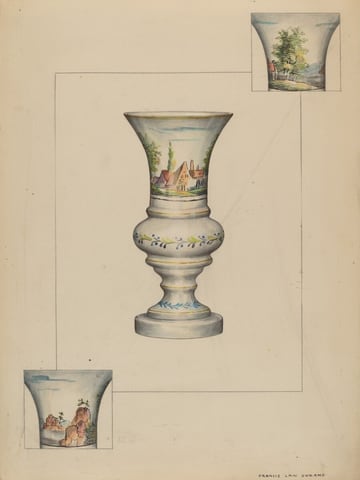
  1. The image shows a large, intricately designed vase with a bulbous base and flared top at the center. The vase is decorated with painted scenes of a town or village. The color scheme includes shades of blue, green, brown, and touches of yellow and red. Surrounding the vase are two smaller detailed sections showing close-ups of the painted scenes on it. The main vase image is enclosed within a boxed outline on the page.
    Fire Lighter VaseFrancis Law Durand, 1935/1942Courtesy National Gallery of Art, Washington
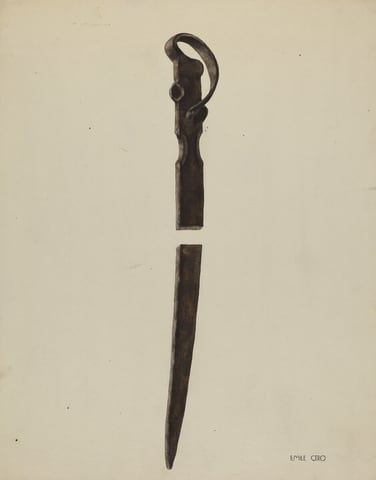
  2. The image shows a dark metal object with two parts: a handle and a blade. The color palette consists of shades of dark brown on a light beige background. The handle is located at the top center, and the blade portion is positioned below it, both aligned vertically in the center of the frame.
    SpitEmile Cero, c. 1938Courtesy National Gallery of Art, Washington
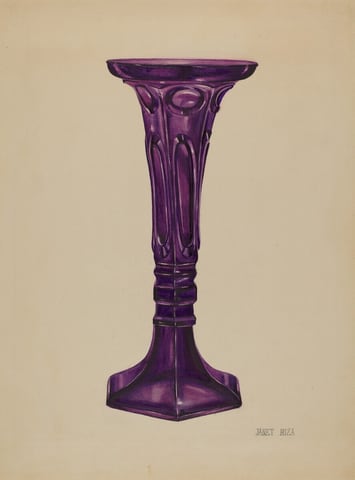
  3. The image shows a tall, intricately designed purple candlestick against a light beige background. The overall color palette is dominated by shades of purple. The candlestick is centrally positioned and stands upright with detailed patterns visible.
    VaseJanet Riza, c. 1937Courtesy National Gallery of Art, Washington

Section 3, south wall
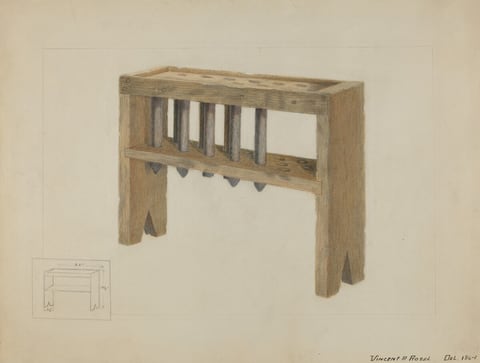
  1. The image shows a wooden frame with six vertical cylindrical pegs evenly spaced. The color palette consists of light and medium brown tones. The structure is angled to the right with four visible legs. In the bottom left corner, there is a smaller sketched diagram with measurements.
    Candle MoldVincent P. Rosel, c. 1936Courtesy National Gallery of Art, Washington
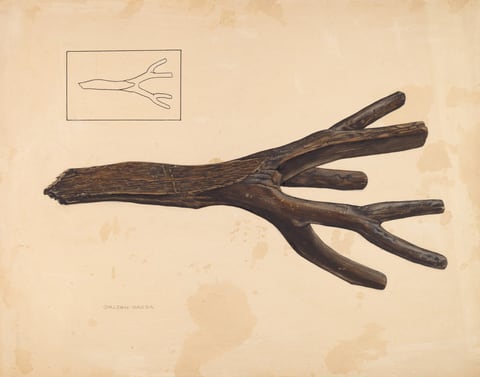
  2. A brown tree branch with several thick, bifurcated limbs is central in the image. The background is a muted beige with aged discoloration marks. The branch is oriented horizontally, with its thicker end on the left and split limbs extending to the right. In the top left corner, there is a rectangular inset with a simplified line drawing of the branch's shape.
    BootjackLloyd A. Davidson, c. 1942Courtesy National Gallery of Art, Washington

Walk on

  • American folk and design, room 2
  • Lloyd A. Davidson's contemporaries 8 works
  • 20th-century United States 124 works
Ochre Editions

The world's museums, on your wall. Every work here is a reproduction of a public-domain original, credited to the museum that holds it.

Shop

All artCollectionsLimited dropsPrints and framing

Help

Find an orderShippingReturnsVerify a certificate

About

About Ochre EditionsMuseum creditsFor agentsDevelopers

Legal

Terms of UseTerms of SaleLimited Editions and CertificatesPrivacy PolicyCookie PolicyAcceptable Use PolicyAgent & API TermsCopyright and DMCA PolicyPrinting Your Own PhotoVulnerability Disclosure PolicyAccessibility StatementOpen-Access Credits
© 2026 Ochre EditionsPrices in US dollars. Prints ship within the United States.