Floor plan

Style galleriesPost-Impressionism

Post-Impressionism

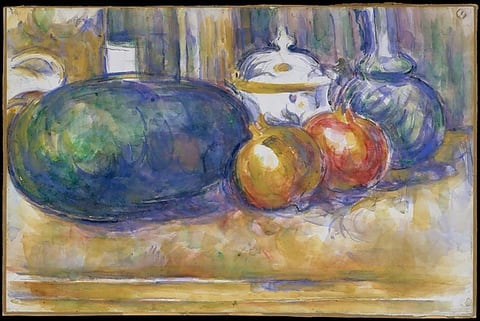
Still-Life with a Watermelon and Pomegranates, by Paul Cézanne, 1900–1906
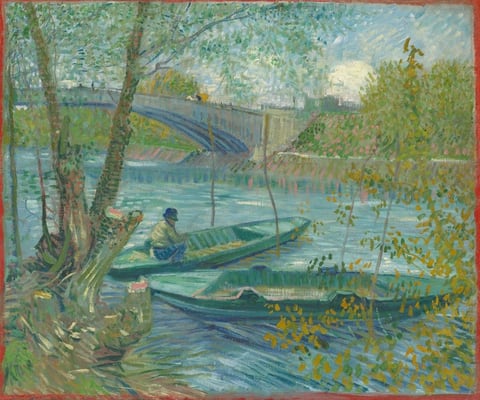
Painting in short strokes of pale blue, green, white, yellow, and pink, of a fisherman in one of two small boats on a river, a tree-lined bank and a bridge in the background.
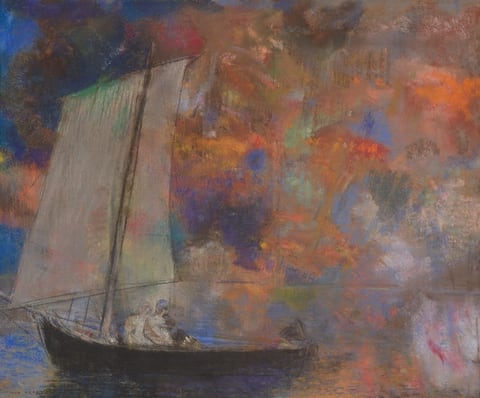
Pastel drawing of two figures in a sailboat, bright multi-colored clouds.
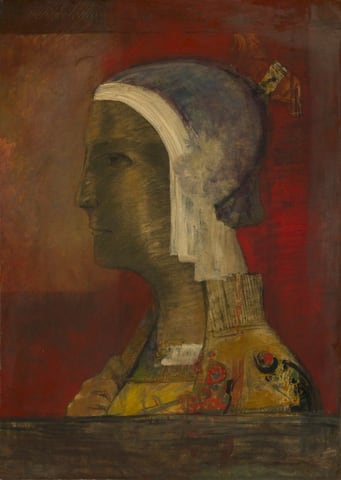
Symbolic Head, by Odilon Redon, c. 1890
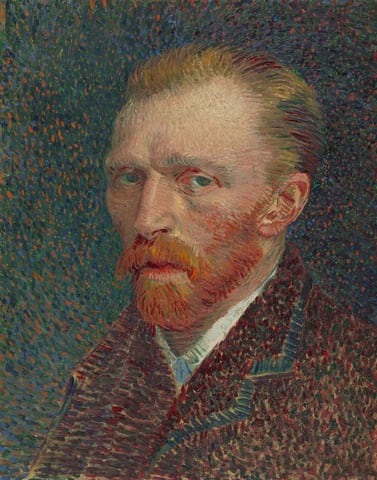
Painting of a red-haired, bearded man with light skin, painted in short brushstrokes and multicolored dots. The background is likewise a mass of small, closely spaced colored dots, these in green, blue, and red-orange.
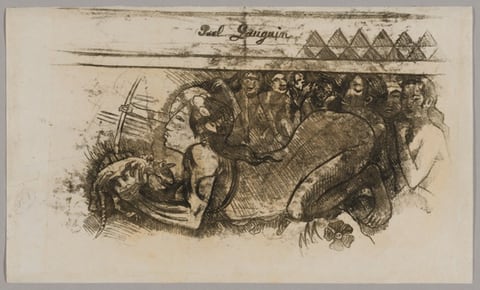
A work made of transfer drawing in brownish-black ink (recto); graphite and blue crayon pencil with brush and solvent washes in ocher on cream wove paper.
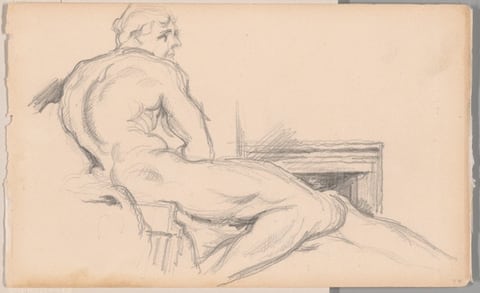
A work made of graphite on ivory wove paper.
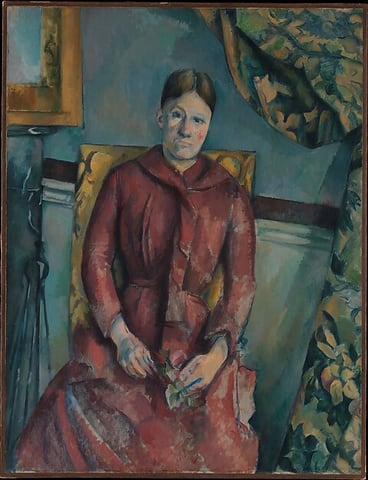
Madame Cézanne (Hortense Fiquet, 1850–1922) in a Red Dress, by Paul Cézanne, 1888–90

The works in this room are listed below.

Works in this room

Artists who kept Impressionism's colour but pushed towards structure, symbol and feeling.

First room, north wall

  1. Still-Life with a Watermelon and Pomegranates, by Paul Cézanne, 1900–1906
    Still-Life with a Watermelon and PomegranatesPaul Cézanne, 1900–1906Courtesy of The Metropolitan Museum of Art
  2. Painting in short strokes of pale blue, green, white, yellow, and pink, of a fisherman in one of two small boats on a river, a tree-lined bank and a bridge in the background.
    Fishing in Spring, the Pont de Clichy (Asnières)Vincent van Gogh, 1887Courtesy of the Art Institute of Chicago
  3. Pastel drawing of two figures in a sailboat, bright multi-colored clouds.
    Flower CloudsOdilon Redon, c. 1903Courtesy of the Art Institute of Chicago
  4. Symbolic Head, by Odilon Redon, c. 1890
    Symbolic HeadOdilon Redon, c. 1890Courtesy of the Cleveland Museum of Art

First room, south wall

  1. Painting of a red-haired, bearded man with light skin, painted in short brushstrokes and multicolored dots. The background is likewise a mass of small, closely spaced colored dots, these in green, blue, and red-orange.
    Self-PortraitVincent van Gogh, 1887Courtesy of the Art Institute of Chicago
  2. A work made of transfer drawing in brownish-black ink (recto); graphite and blue crayon pencil with brush and solvent washes in ocher on cream wove paper.
    Woman with a CatPaul Gauguin, c. 1900Courtesy of the Art Institute of Chicago
  3. A work made of graphite on ivory wove paper.
    Hercules RestingPaul Cézanne, 1897Courtesy of the Art Institute of Chicago
  4. Madame Cézanne (Hortense Fiquet, 1850–1922) in a Red Dress, by Paul Cézanne, 1888–90
    Madame Cézanne (Hortense Fiquet, 1850–1922) in a Red DressPaul Cézanne, 1888–90Courtesy of The Metropolitan Museum of Art

Second room, south wall
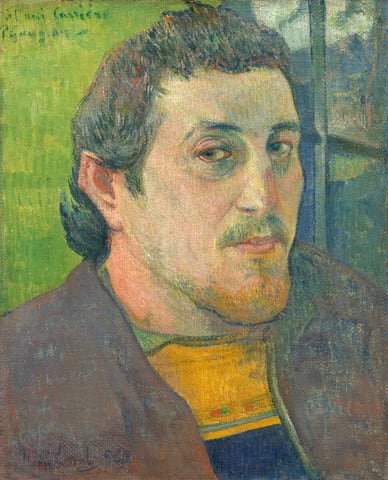
  1. Painted in muted lime green, plum purple, buttercup yellow, slate and royal blue, the head and shoulders of a man with peach-colored skin sitting in front of a window looks at us in this stylized, vertical portrait. His body and face are angled to our right but he looks at us from the corners of his eyes, which are grass-green with touches of yellow. One cobalt-blue eyebrow is cocked, and shading in denim blue, butter yellow, and fern green create hollows under both eyes. His flat nose has a broad bridge, and his pale pink lips are closed, the far corner pulled slightly up. His mustache is painted with visible strokes of forest green and his ginger-orange beard is trimmed along his prominent, jutting chin. His short, dark hair is brushed back from his temples and is painted with strokes of pine green, navy blue, and coral orange. His shirt has a wide, golden yellow stripe along the collar above indigo blue, under a grayish-violet purple jacket. The wall over his shoulder, in the upper left corner, is painted vivid lime green with long, vertical brushstrokes. The view through the window beyond his other shoulder is of vegetation and mountains. The portrait is painted with visible brushstrokes throughout, and is especially loose in the background, hair, and jacket. An inscription in dark green script in the upper left reads, “a l'ami Carriere PGauguin.” A second inscription in the lower left is written with dark brown paint: “l'ami Laval PGo.”
    Self-Portrait Dedicated to CarrièrePaul Gauguin, 1888 or 1889Courtesy National Gallery of Art, Washington
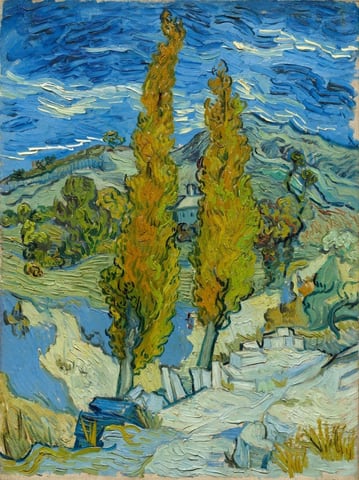
  2. Two Poplars in the Alpilles near Saint-Rémy, by Vincent van Gogh, 1889
    Two Poplars in the Alpilles near Saint-RémyVincent van Gogh, 1889Courtesy of the Cleveland Museum of Art
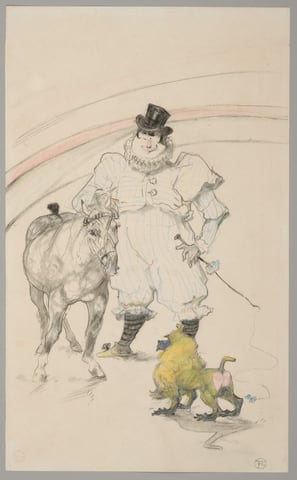
  3. A work made of pastel and graphite on cream wove paper.
    At the Circus: Trained Pony and BaboonHenri de Toulouse-Lautrec, 1899Courtesy of the Art Institute of Chicago
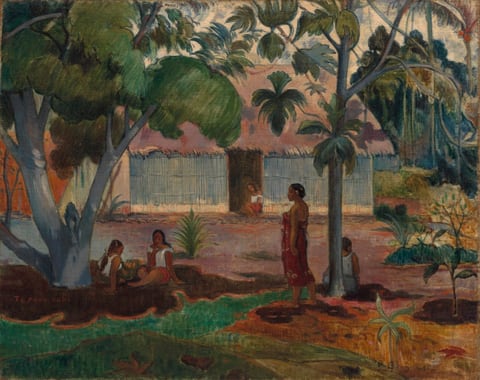
  4. The Large Tree, by Paul Gauguin, 1891
    The Large TreePaul Gauguin, 1891Courtesy of the Cleveland Museum of Art

Second room, north wall
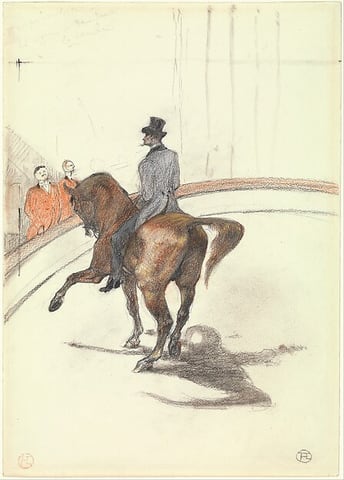
  1. At the Circus: The Spanish Walk (Au Cirque: Le Pas espagnol), by Henri de Toulouse-Lautrec, 1899
    At the Circus: The Spanish Walk (Au Cirque: Le Pas espagnol)Henri de Toulouse-Lautrec, 1899Courtesy of The Metropolitan Museum of Art
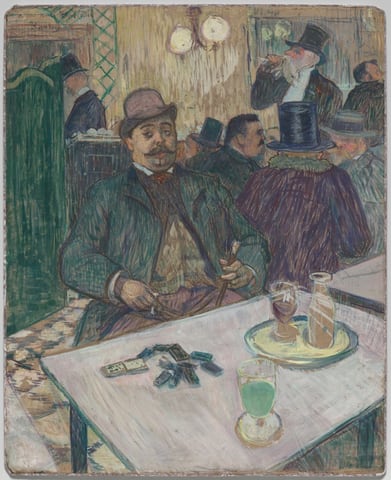
  2. Monsieur Boileau at the Café, by Henri de Toulouse-Lautrec, 1893
    Monsieur Boileau at the CaféHenri de Toulouse-Lautrec, 1893Courtesy of the Cleveland Museum of Art

Third room, north wall
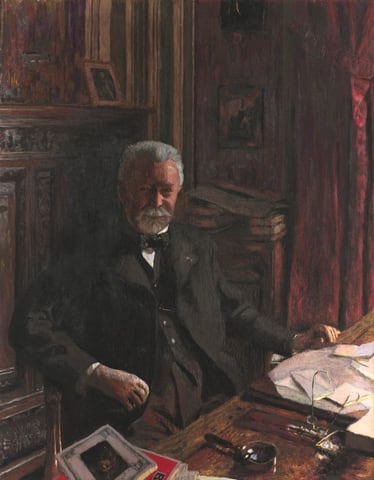
  1. André Bénac, by Édouard Vuillard, 1936
    André BénacÉdouard Vuillard, 1936Courtesy of the Cleveland Museum of Art
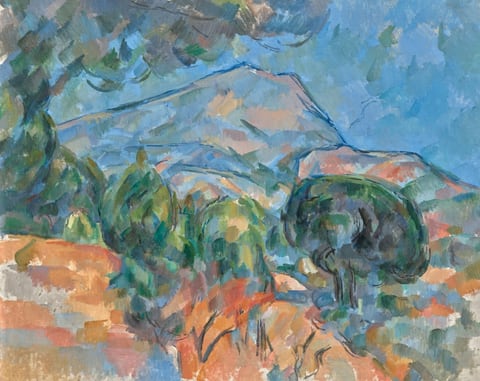
  2. Mount Sainte-Victoire, by Paul Cézanne, c. 1904
    Mount Sainte-VictoirePaul Cézanne, c. 1904Courtesy of the Cleveland Museum of Art