Floor plan

Style galleriesPost-Impressionism

Post-Impressionism

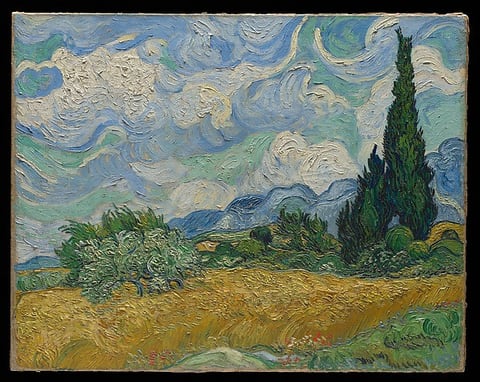
Wheat Field with Cypresses, by Vincent van Gogh, 1889
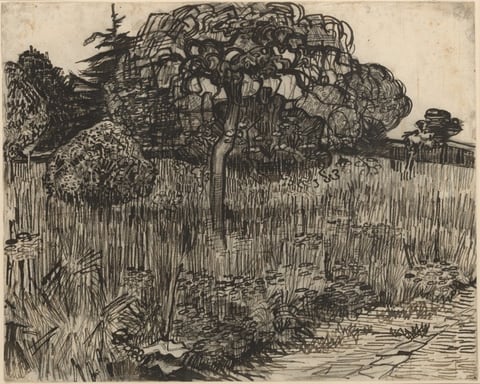
A work made of reed pen and black-brown ink, with black chalk on off-white wove paper.
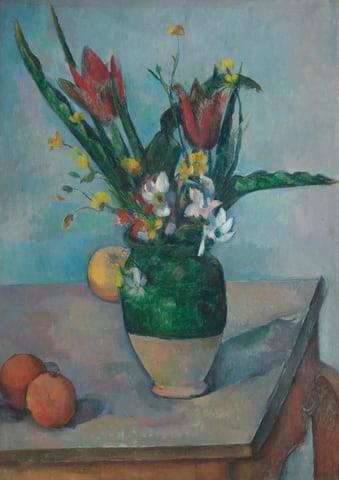
A work made of oil on canvas.
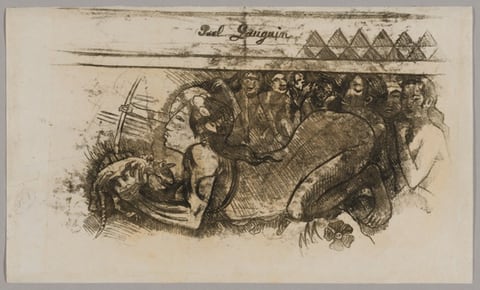
A work made of transfer drawing in brownish-black ink (recto); graphite and blue crayon pencil with brush and solvent washes in ocher on cream wove paper.
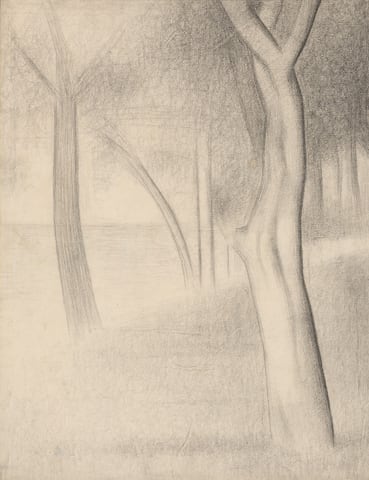
A work made of black conté crayon, on white laid paper, laid down on cream board.
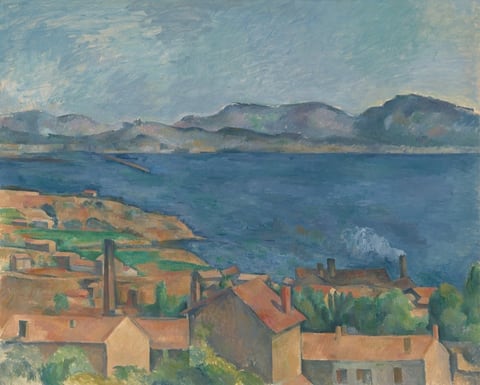
Impressionist sea landscape, tan houses, blue ocean, distant mountains.

The works in this room are listed below.

Works in this room

Artists who kept Impressionism's colour but pushed towards structure, symbol and feeling.

First room, north wall

  1. Wheat Field with Cypresses, by Vincent van Gogh, 1889
    Wheat Field with CypressesVincent van Gogh, 1889Courtesy of The Metropolitan Museum of Art
  2. A work made of reed pen and black-brown ink, with black chalk on off-white wove paper.
    Weeping TreeVincent van Gogh, 1889Courtesy of the Art Institute of Chicago
  3. A work made of oil on canvas.
    The Vase of TulipsPaul Cézanne, c. 1890Courtesy of the Art Institute of Chicago

First room, south wall

  1. A work made of transfer drawing in brownish-black ink (recto); graphite and blue crayon pencil with brush and solvent washes in ocher on cream wove paper.
    Woman with a CatPaul Gauguin, c. 1900Courtesy of the Art Institute of Chicago
  2. A work made of black conté crayon, on white laid paper, laid down on cream board.
    Trees (study for La Grande Jatte)Georges Seurat, 1884Courtesy of the Art Institute of Chicago
  3. Impressionist sea landscape, tan houses, blue ocean, distant mountains.
    The Bay of Marseille, Seen from L'EstaquePaul Cézanne, c. 1885Courtesy of the Art Institute of Chicago

Second room, south wall
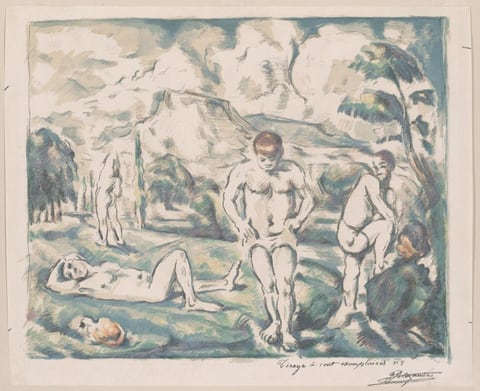
  1. A work made of color lithograph on ivory laid paper.
    BathersPaul Cézanne, 1890–1900Courtesy of the Art Institute of Chicago
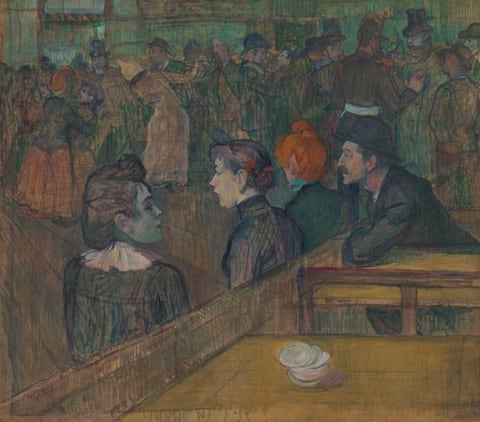
  2. A scene in brown and green tones of people dancing indoors. In the foreground, three women stand near boothed tables while a man sits.
    Moulin de la GaletteHenri de Toulouse-Lautrec, 1889Courtesy of the Art Institute of Chicago
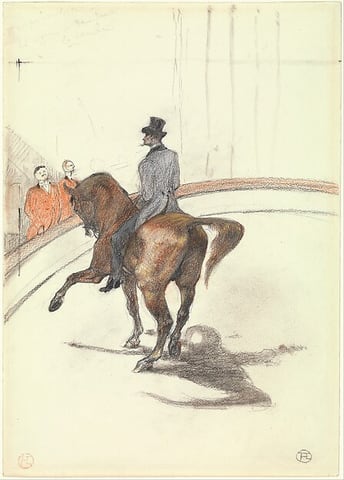
  3. At the Circus: The Spanish Walk (Au Cirque: Le Pas espagnol), by Henri de Toulouse-Lautrec, 1899
    At the Circus: The Spanish Walk (Au Cirque: Le Pas espagnol)Henri de Toulouse-Lautrec, 1899Courtesy of The Metropolitan Museum of Art

Second room, north wall
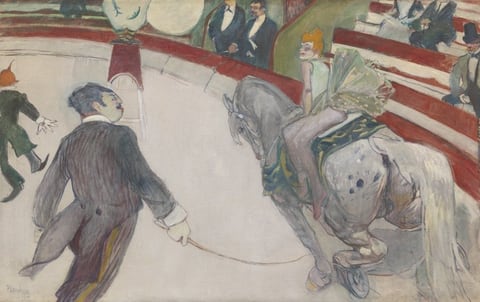
  1. Painting of a performance inside a circus ring. A man wearing a suit holds a whip in his hand and looks towards a woman with red hair riding a gray horse and wearing a green dress. Audience members wearing suits and top hats watch from red and white benches on the side.
    Equestrienne (At the Cirque Fernando)Henri de Toulouse-Lautrec, 1887–88Courtesy of the Art Institute of Chicago
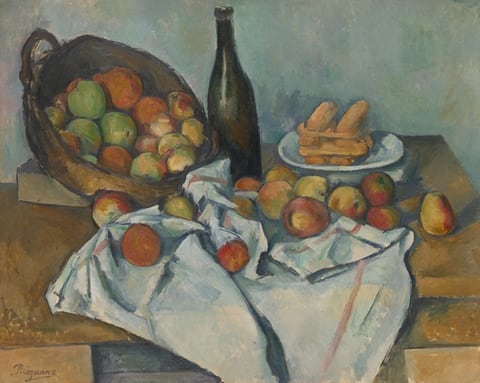
  2. Painting of a basket of green and red-yellow apples spilling over into a white cloth placed on a wooden table, with a dark green bottle and a plate of pale biscuits behind.
    The Basket of ApplesPaul Cézanne, c. 1893Courtesy of the Art Institute of Chicago
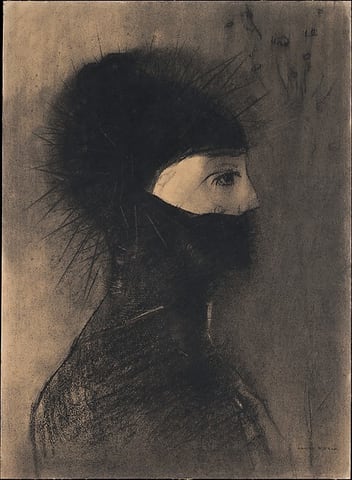
  3. Armor, by Odilon Redon, 1891
    ArmorOdilon Redon, 1891Courtesy of The Metropolitan Museum of Art

Third room, north wall
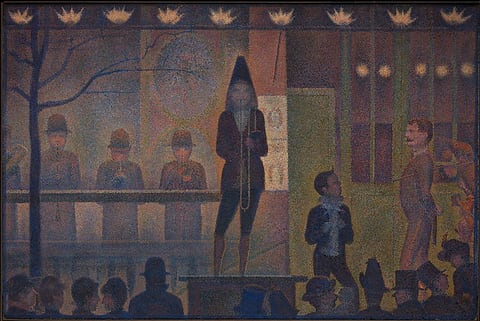
  1. Circus Sideshow (Parade de cirque), by Georges Seurat, 1887–88
    Circus Sideshow (Parade de cirque)Georges Seurat, 1887–88Courtesy of The Metropolitan Museum of Art
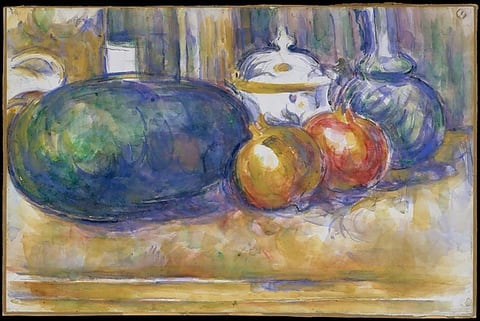
  2. Still-Life with a Watermelon and Pomegranates, by Paul Cézanne, 1900–1906
    Still-Life with a Watermelon and PomegranatesPaul Cézanne, 1900–1906Courtesy of The Metropolitan Museum of Art

Third room, south wall
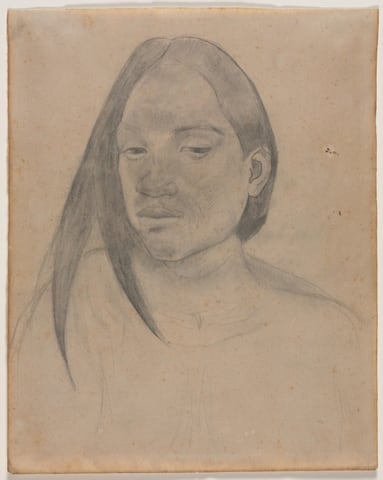
  1. Head of a Tahitian Woman, by Paul Gauguin, 1891
    Head of a Tahitian WomanPaul Gauguin, 1891Courtesy of the Cleveland Museum of Art
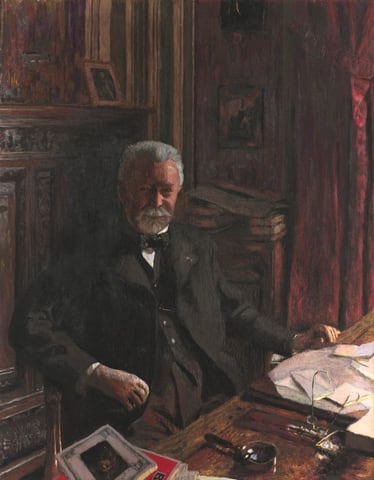
  2. André Bénac, by Édouard Vuillard, 1936
    André BénacÉdouard Vuillard, 1936Courtesy of the Cleveland Museum of Art