Floor plan

Time and place19th-century France

19th-century France

The image shows two individuals seated outdoors near a body of water with their feet submerged. Both individuals are seen from head to toe. The person on the left is seated with a slightly hunched posture, reading a document or a book. They have a balding head, wear glasses, a dark suit with the coat draped over their knees, and a top hat placed on the ground. The individual on the right is sitting upright with a scarf over their hair. They wear a long dress with a shawl, and their hands rest on their lap. The background features a bare tree and a rough, sketched environment. The sky and landscape are depicted in shades of light and dark.
A work made of oil on canvas.
A work made of oil on panel.
In a dance studio, two ballerinas wearing knee-length tutus and ballet slippers sit on a bench and stretch to our right while four more pose at the back of the space, to our left, in this long, horizontal painting. The scene and dancers are loosely painted so many features are indistinct. All the women have light skin and dark brown hair. Each pale, robins’ egg-blue costume has a low-cut, tightly fitting, sleeveless bodice and a full skirt. Dabs of off white, teal, and blue suggest flowers lining the deep U of the neckline at the front and down the back of each bodice. Closest to us and nearly brushing the edges of the lower right corner of the canvas, one dancer sits on the end of a wooden bench and leans down between her legs, her feet widely planted. She rests her torso on an elbow folded onto one knee as she reaches for her left foot, farther from us, with her other hand. Her hair is pulled up and her face, looking downward, is deep in shadow. Sitting behind her on the bench, to our left, a second dancer lifts her right leg, toe pointing, as she pulls on her pale pink tights. Her other leg stretches straight, pointed toe brushing the floor, in front of her. This woman’s hair hangs loose around her shoulders. The pair is brightly lit from a source to our right, and an arched area of electric blue and mustard yellow behind them is difficult to interpret. The floor, which takes up about two-thirds of the composition, is painted with dabs of teal blue, pale fuchsia pink, and caramel brown. It leads us back to the upper left corner of the painting where four more four ballerinas stand in a line. The pair to our left stands with their backs to us, facing the wall with their right legs raised to shoulder height, toes pointed. The pair to our right faces us. They also stand with their right legs raised, creating a wide angle with their standing legs. All four ballerinas bend their arms gently at the elbow, and some tip their heads toward the raised legs. The rightmost dancer is illuminated by a pair of French doors at the back corner, at the top center of the painting. The wall behind the bench is streaked with mint green over honey brown, and the wall at the back of the room is leather brown. The visible, soft brushstrokes give the image a blurred, ethereal appearance in the dimmed studio. The artist signed the painting in the lower left corner, “Degas.”
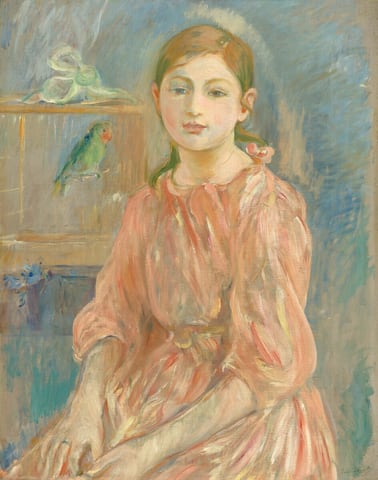
Shown from the knees up, a young girl with pale skin, wearing a coral-peach dress, sits facing and looking at us in this loosely painted, vertical portrait. Her knees are angled slightly to our left, and her hands rest in her lap. She has a round face and smooth, lightly flushed cheeks. She has brown eyes under arched brows, a delicate, snub nose, and her rose-pink lips are closed. Her hair, which is painted with broad strokes of caramel brown and moss green, is parted on one side and pulled smoothly back, presumably tied behind her head. Tendrils fall over her shoulders. Her dress is gathered around her neck and tied with a bow at the back. The loose sleeves fall to just below her elbows, and the dress is belted around the waist. A curving swipe of canary-yellow paint could be a buckle at the front. The fabric of the dress is painted with long, visible strokes of shell and rose pink, butter yellow, and ivory white, and a few touches of sage green and periwinkle blue for shadows. She wears a ring on the middle finger of her right hand. The space around her is loosely painted with strokes of electric and cobalt blue, with unpainted canvas visible at some of the edges. To our left, over the girl's shoulder, a wooden bird cage holds an emerald-green parakeet. The bird is streaked with royal blue along its back, and the area around its hooked beak is apple red. The cage has a mint-green bow and ribbon along the top. The artist signed the painting in green on the lower right corner: “Berthe Morisot.”
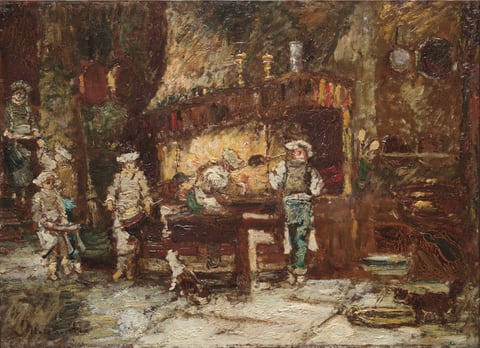
The Kitchen of the Rôtisserie des Deux Paons, by Adolphe Monticelli, c. 1875–1881
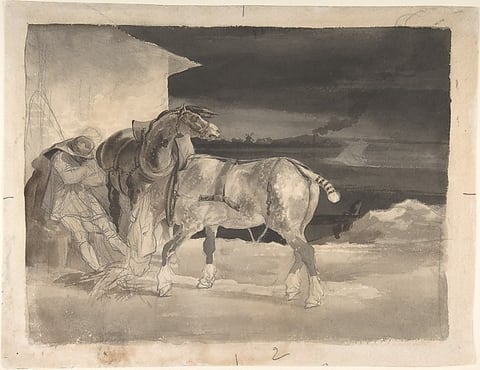
Two Draft Horses with a Sleeping Driver, by Jean Louis André Théodore Géricault, 1820–22
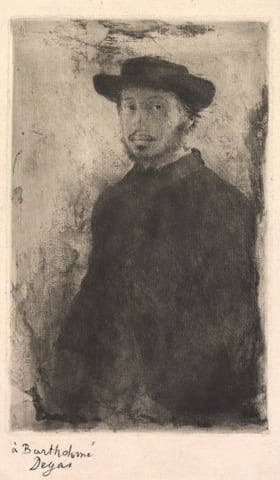
Self-Portrait, by Edgar Degas, 1857

The works in this room are listed below.

Works in this room

Works made in France in the 19th century.

First room, north wall

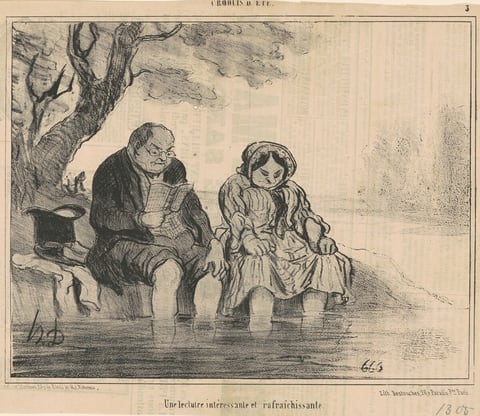
  1. The image shows two individuals seated outdoors near a body of water with their feet submerged. Both individuals are seen from head to toe. The person on the left is seated with a slightly hunched posture, reading a document or a book. They have a balding head, wear glasses, a dark suit with the coat draped over their knees, and a top hat placed on the ground. The individual on the right is sitting upright with a scarf over their hair. They wear a long dress with a shawl, and their hands rest on their lap. The background features a bare tree and a rough, sketched environment. The sky and landscape are depicted in shades of light and dark.
    Une lecture intéressante et rafraichissanteHonoré Daumier, 1854Courtesy National Gallery of Art, Washington
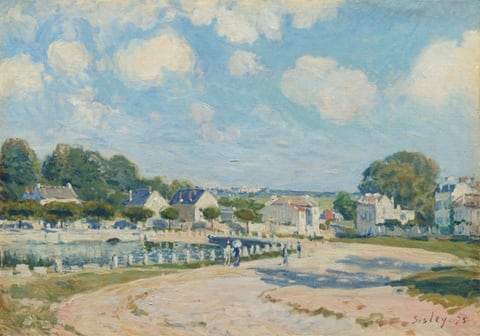
  2. A work made of oil on canvas.
    Watering Place at MarlyAlfred Sisley, 1875Courtesy of the Art Institute of Chicago
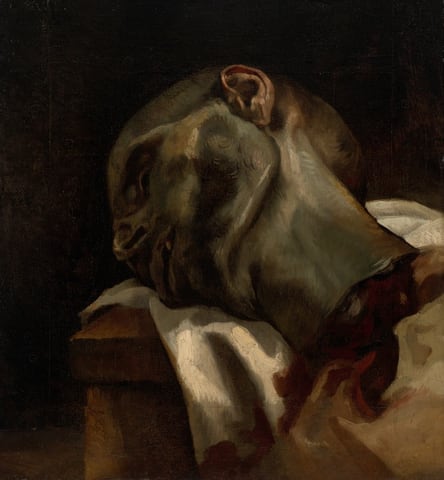
  3. A work made of oil on panel.
    Head of a Guillotined ManJean Louis André Théodore Géricault, 1818–19Courtesy of the Art Institute of Chicago
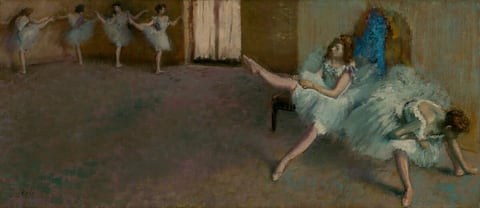
  4. In a dance studio, two ballerinas wearing knee-length tutus and ballet slippers sit on a bench and stretch to our right while four more pose at the back of the space, to our left, in this long, horizontal painting. The scene and dancers are loosely painted so many features are indistinct. All the women have light skin and dark brown hair. Each pale, robins’ egg-blue costume has a low-cut, tightly fitting, sleeveless bodice and a full skirt. Dabs of off white, teal, and blue suggest flowers lining the deep U of the neckline at the front and down the back of each bodice. Closest to us and nearly brushing the edges of the lower right corner of the canvas, one dancer sits on the end of a wooden bench and leans down between her legs, her feet widely planted. She rests her torso on an elbow folded onto one knee as she reaches for her left foot, farther from us, with her other hand. Her hair is pulled up and her face, looking downward, is deep in shadow. Sitting behind her on the bench, to our left, a second dancer lifts her right leg, toe pointing, as she pulls on her pale pink tights. Her other leg stretches straight, pointed toe brushing the floor, in front of her. This woman’s hair hangs loose around her shoulders. The pair is brightly lit from a source to our right, and an arched area of electric blue and mustard yellow behind them is difficult to interpret. The floor, which takes up about two-thirds of the composition, is painted with dabs of teal blue, pale fuchsia pink, and caramel brown. It leads us back to the upper left corner of the painting where four more four ballerinas stand in a line. The pair to our left stands with their backs to us, facing the wall with their right legs raised to shoulder height, toes pointed. The pair to our right faces us. They also stand with their right legs raised, creating a wide angle with their standing legs. All four ballerinas bend their arms gently at the elbow, and some tip their heads toward the raised legs. The rightmost dancer is illuminated by a pair of French doors at the back corner, at the top center of the painting. The wall behind the bench is streaked with mint green over honey brown, and the wall at the back of the room is leather brown. The visible, soft brushstrokes give the image a blurred, ethereal appearance in the dimmed studio. The artist signed the painting in the lower left corner, “Degas.”
    Before the BalletEdgar Degas, 1890/1892Courtesy National Gallery of Art, Washington

First room, south wall

  1. Shown from the knees up, a young girl with pale skin, wearing a coral-peach dress, sits facing and looking at us in this loosely painted, vertical portrait. Her knees are angled slightly to our left, and her hands rest in her lap. She has a round face and smooth, lightly flushed cheeks. She has brown eyes under arched brows, a delicate, snub nose, and her rose-pink lips are closed. Her hair, which is painted with broad strokes of caramel brown and moss green, is parted on one side and pulled smoothly back, presumably tied behind her head. Tendrils fall over her shoulders. Her dress is gathered around her neck and tied with a bow at the back. The loose sleeves fall to just below her elbows, and the dress is belted around the waist. A curving swipe of canary-yellow paint could be a buckle at the front. The fabric of the dress is painted with long, visible strokes of shell and rose pink, butter yellow, and ivory white, and a few touches of sage green and periwinkle blue for shadows. She wears a ring on the middle finger of her right hand. The space around her is loosely painted with strokes of electric and cobalt blue, with unpainted canvas visible at some of the edges. To our left, over the girl's shoulder, a wooden bird cage holds an emerald-green parakeet. The bird is streaked with royal blue along its back, and the area around its hooked beak is apple red. The cage has a mint-green bow and ribbon along the top. The artist signed the painting in green on the lower right corner: “Berthe Morisot.”
    The Artist's Daughter with a ParakeetBerthe Morisot, 1890Courtesy National Gallery of Art, Washington
  2. The Kitchen of the Rôtisserie des Deux Paons, by Adolphe Monticelli, c. 1875–1881
    The Kitchen of the Rôtisserie des Deux PaonsAdolphe Monticelli, c. 1875–1881Courtesy of the Cleveland Museum of Art
  3. Two Draft Horses with a Sleeping Driver, by Jean Louis André Théodore Géricault, 1820–22
    Two Draft Horses with a Sleeping DriverJean Louis André Théodore Géricault, 1820–22Courtesy of The Metropolitan Museum of Art
  4. Self-Portrait, by Edgar Degas, 1857
    Self-PortraitEdgar Degas, 1857Courtesy of the Cleveland Museum of Art

Second room, south wall
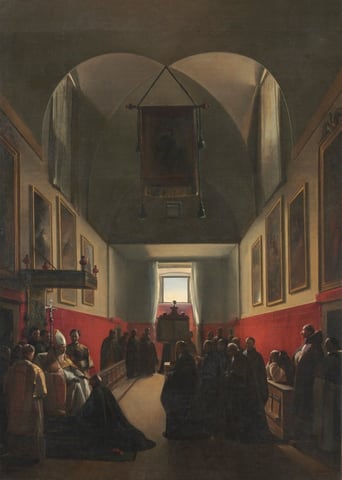
  1. Homage to a Bishop, by François Marius Granet, 1839
    Homage to a BishopFrançois Marius Granet, 1839Courtesy of the Cleveland Museum of Art
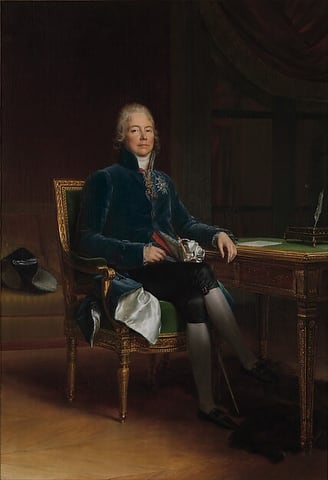
  2. Charles Maurice de Talleyrand Périgord (1754–1838), Prince de Bénévent, by baron François Gérard, 1808
    Charles Maurice de Talleyrand Périgord (1754–1838), Prince de Bénéventbaron François Gérard, 1808Courtesy of The Metropolitan Museum of Art

Second room, north wall
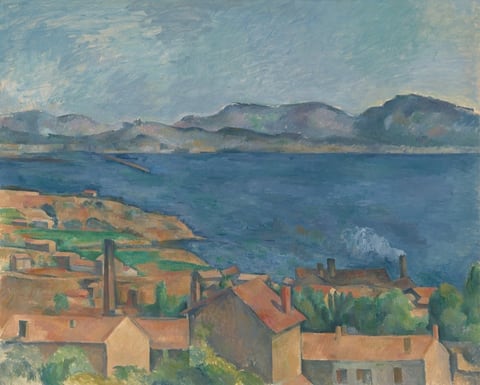
  1. Impressionist sea landscape, tan houses, blue ocean, distant mountains.
    The Bay of Marseille, Seen from L'EstaquePaul Cézanne, c. 1885Courtesy of the Art Institute of Chicago
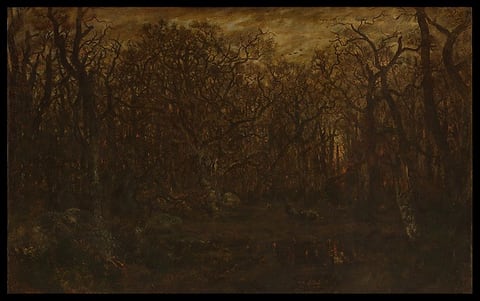
  2. The Forest in Winter at Sunset, by Théodore Rousseau, ca. 1846–67
    The Forest in Winter at SunsetThéodore Rousseau, ca. 1846–67Courtesy of The Metropolitan Museum of Art

Third room, north wall
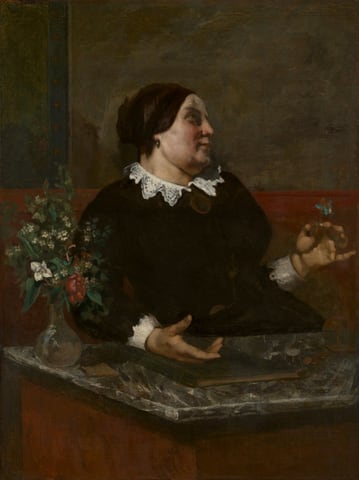
  1. Dark portrait of older woman in black dress with lace collar, flowers.
    Mère GrégoireGustave Courbet, 1855, reworked 1857–59Courtesy of the Art Institute of Chicago
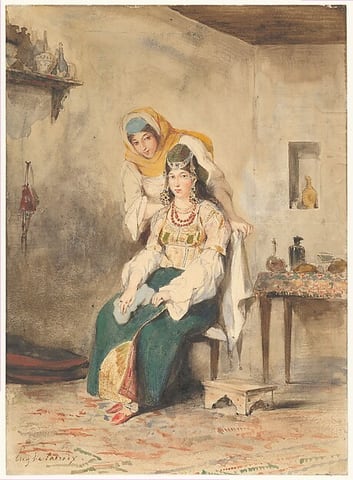
  2. Saada, the Wife of Abraham Ben-Chimol, and Préciada, One of Their Daughters, by Eugène Delacroix, 1832
    Saada, the Wife of Abraham Ben-Chimol, and Préciada, One of Their DaughtersEugène Delacroix, 1832Courtesy of The Metropolitan Museum of Art
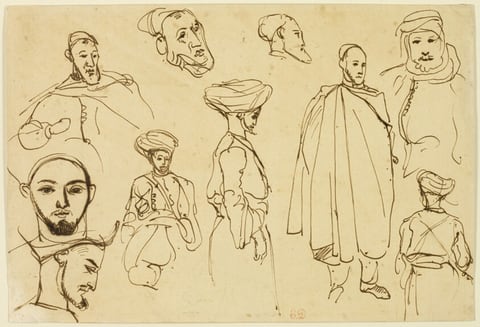
  3. A work made of pen and brown ink, with traces of graphite, on tan wove paper, laid down on cream wove paper.
    Sketches of Algerian MenEugène Delacroix, c. 1832Courtesy of the Art Institute of Chicago
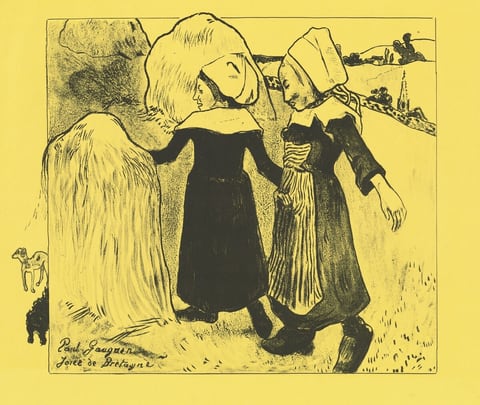
  4. The image shows two women walking arm in arm, both in traditional attire. One woman is facing away with a slight profile, while the other is seen from the side. Their faces are stylized and simplistic with covered hair. They wear long dresses with aprons and collars, and one has a striped apron. Haystacks and greenery surround them. Faint figures are in the background, as well as a spire-like structure. A dog is seen near the haystack, with simple lines suggesting a landscape.
    Pleasures of Brittany (Joies de Bretagne)Paul Gauguin, 1889Courtesy National Gallery of Art, Washington