Floor plan

Style galleriesDrawings of the 19th century
Drawings of the 19th century
A VILLAGE SQUARE
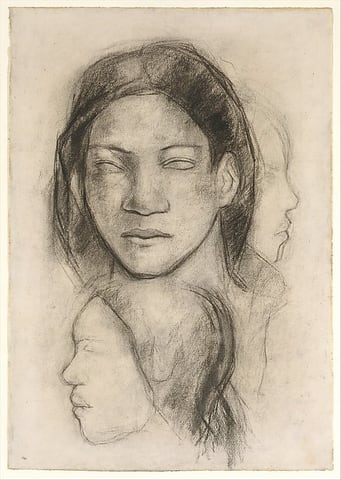
Tahitian Faces (Frontal View and Profiles), by Paul Gauguin, ca. 1899
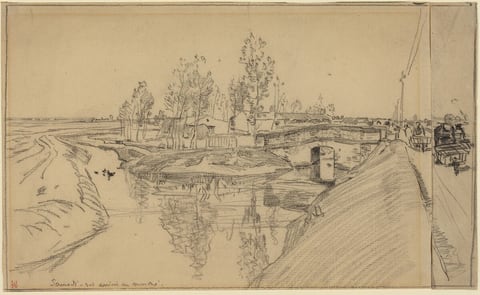
The image depicts a landscape with a road alongside a canal. The view is elevated, showing the road, canal, trees, and structures on the horizon. The style of the sketch is characterized by soft lines and shading, creating depth. The color palette is monochromatic with shades of gray. Closest to us, a canal borders the road with some ducks in the water. Figures and carts are seen on the road leading into the distance.
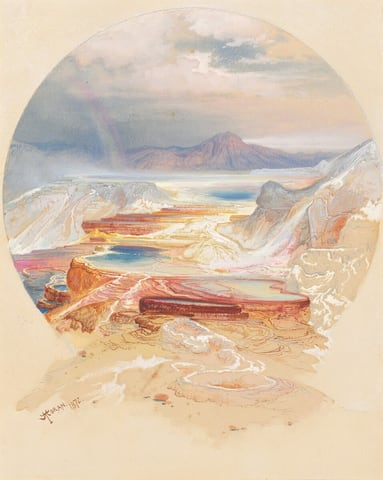
This painting shows a view looking out over a vast landscape. Most of the painting is circular, with a small part of the bottom bleeding out of the circle towards us. The top third of the circle shows a mountain range with a large purple peak in the distance. In front of the mountain is a faint rainbow. A body of water flows from in front of the mountain to the bottom of the painting, weaving in between shorter white peaks. Towards the bottom, the water appears to flow into small, layered pools of various bright colors including yellow, orange, red, pink, blue, and teal. The sky is a light blue-gray color. The background of the painting outside of the circle is plain paper.
STUDY OF LANDSCAPE, DELAWARE RIVER
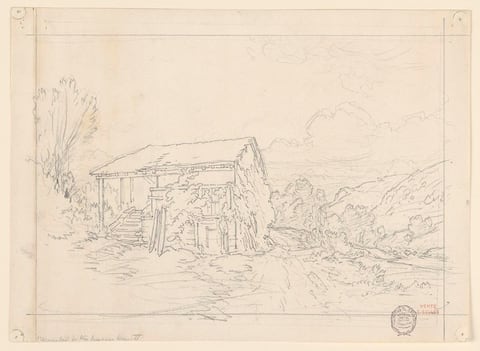
A PEASANT'S HOUSE IN A VALLEY

The works in this room are listed below.

Works in this room

Drawings made in the 19th century, from every museum.

Section 1, north wall

  1. A VILLAGE SQUARE
    A Village SquareWalter Shirlaw, 1875–80Courtesy of Cooper Hewitt, Smithsonian Design Museum
  2. Tahitian Faces (Frontal View and Profiles), by Paul Gauguin, ca. 1899
    Tahitian Faces (Frontal View and Profiles)Paul Gauguin, ca. 1899Courtesy of The Metropolitan Museum of Art
  3. The image depicts a landscape with a road alongside a canal. The view is elevated, showing the road, canal, trees, and structures on the horizon. The style of the sketch is characterized by soft lines and shading, creating depth. The color palette is monochromatic with shades of gray. Closest to us, a canal borders the road with some ducks in the water. Figures and carts are seen on the road leading into the distance.
    Arrivee au MarcheAuguste LepèreCourtesy National Gallery of Art, Washington

Section 1, south wall

  1. This painting shows a view looking out over a vast landscape. Most of the painting is circular, with a small part of the bottom bleeding out of the circle towards us. The top third of the circle shows a mountain range with a large purple peak in the distance. In front of the mountain is a faint rainbow. A body of water flows from in front of the mountain to the bottom of the painting, weaving in between shorter white peaks. Towards the bottom, the water appears to flow into small, layered pools of various bright colors including yellow, orange, red, pink, blue, and teal. The sky is a light blue-gray color. The background of the painting outside of the circle is plain paper.
    Minerva Terrace, YellowstoneThomas Moran, 1872Courtesy National Gallery of Art, Washington
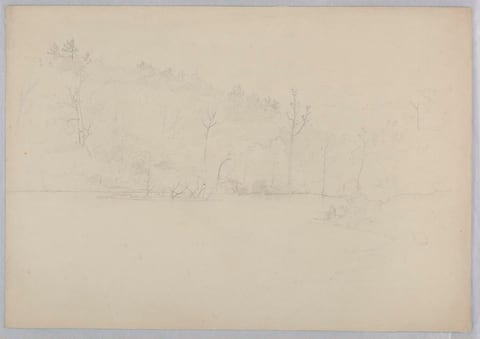
  2. STUDY OF LANDSCAPE, DELAWARE RIVER
    Study of landscape, Delaware RiverWilliam Stanley Haseltine, ca. 1855Courtesy of Cooper Hewitt, Smithsonian Design Museum
  3. A PEASANT'S HOUSE IN A VALLEY
    A Peasant's House in a ValleyEugène Edouard Soulès, ca. 1840Courtesy of Cooper Hewitt, Smithsonian Design Museum

Section 2, south wall
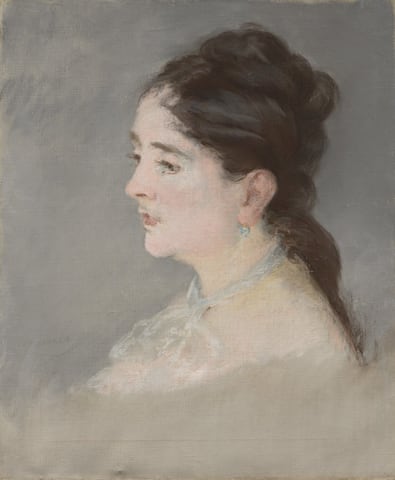
  1. Claire Campbell, by Édouard Manet, 1876
    Claire CampbellÉdouard Manet, 1876Courtesy of the Cleveland Museum of Art
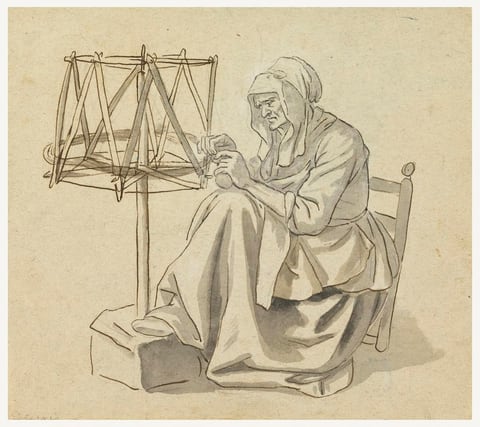
  2. AN OLD WOMAN SPINNING
    An Old Woman SpinningClaude-Louis Desrais, 1810–30Courtesy of Cooper Hewitt, Smithsonian Design Museum
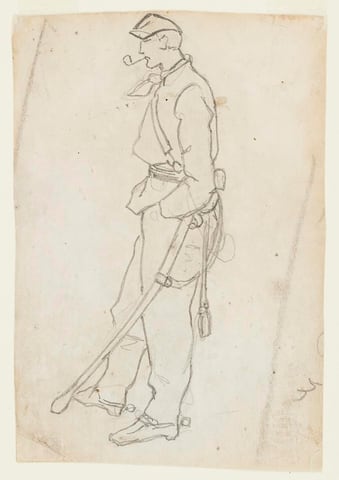
  3. SOLDIER WITH SWORD AND PIPE
    Soldier with Sword and PipeWinslow Homer, 1862Courtesy of Cooper Hewitt, Smithsonian Design Museum

Section 2, north wall
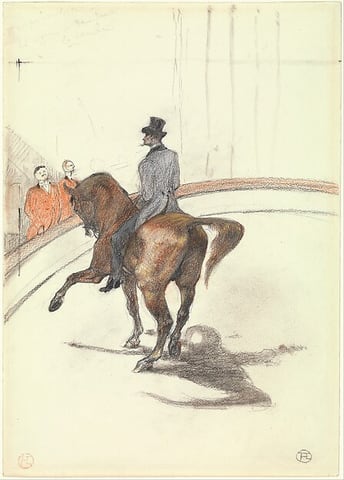
  1. At the Circus: The Spanish Walk (Au Cirque: Le Pas espagnol), by Henri de Toulouse-Lautrec, 1899
    At the Circus: The Spanish Walk (Au Cirque: Le Pas espagnol)Henri de Toulouse-Lautrec, 1899Courtesy of The Metropolitan Museum of Art
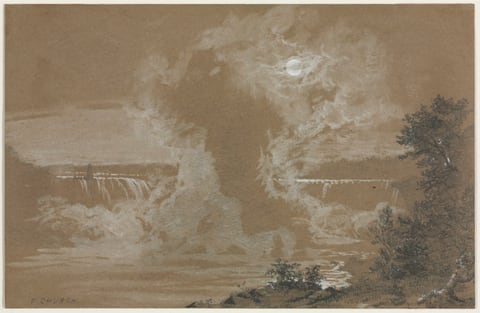
  2. Niagara Falls by Moonlight, by Frederic Edwin Church, probably 1856
    Niagara Falls by MoonlightFrederic Edwin Church, probably 1856Courtesy of the Cleveland Museum of Art
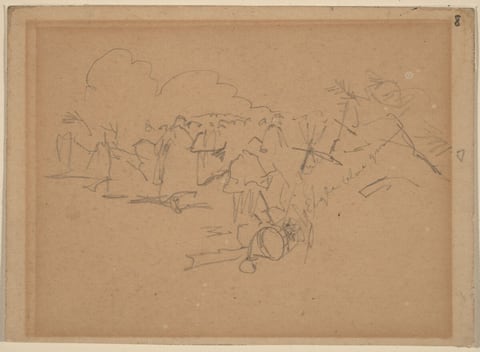
  3. The image displays curved and angular lines creating an abstract composition hinting at humanoid shapes and possible vegetation or trees. The lines suggest motion and activity, with shapes resembling drums and sticks scattered around. The overall impression is of a gathering or event, with figures depicted standing or moving, along with lines indicating movement or sound waves from musical instruments.
    End of the March [recto]Winslow Homer, 1862Courtesy National Gallery of Art, Washington

Section 3, north wall
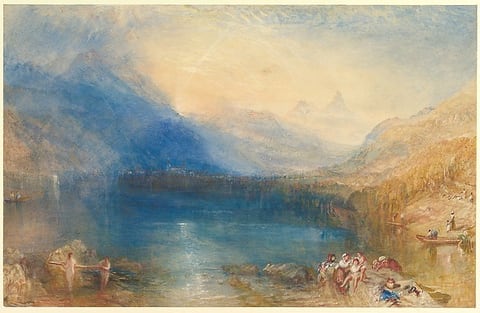
  1. The Lake of Zug, by Joseph Mallord William Turner, 1843
    The Lake of ZugJoseph Mallord William Turner, 1843Courtesy of The Metropolitan Museum of Art
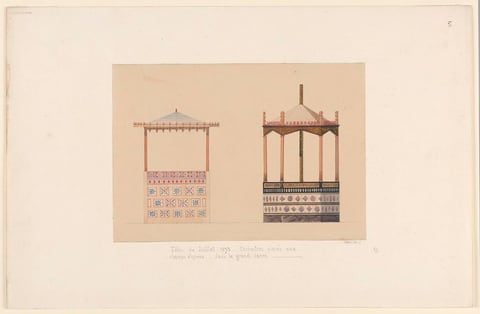
  2. "ORCHSTRES PLACES AUX CHAMPS ELYSEES, DANS LE GRAN CARRES"
    "Orchstres places aux Champs elysees, dans le gran carres"Félix Duban, 1833Courtesy of Cooper Hewitt, Smithsonian Design Museum

Section 3, south wall
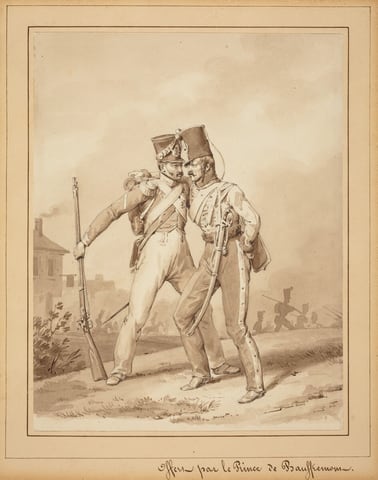
  1. The image features two men in military uniform engaging closely with each other. Both are shown from head to toe. The man on the left stands with his left leg forward, holding a rifle, and has his right arm around the shoulder of the other man. The man on the right has his right leg slightly bent, supporting his weight, and is holding a sword in his left hand. Each man has distinctive facial features. Both wear tall, elaborate military hats and detailed uniforms. The man on the left displays a strap over his shoulder, while the man on the right has intricate decorations on his jacket and trousers. In the background, there are a few more soldiers and part of a building to the left. The setting is monochromatic.
    Two GrenadiersVictor AdamCourtesy National Gallery of Art, Washington
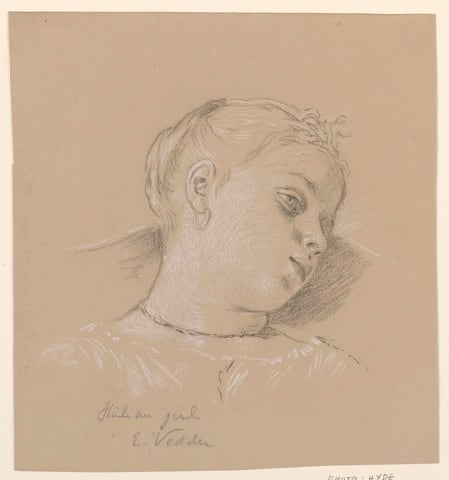
  2. ITALIAN GIRL
    Italian girlElihu Vedder, ca. 1885Courtesy of Cooper Hewitt, Smithsonian Design Museum