Floor plan

Style galleriesDrawings of the 19th century
Drawings of the 19th century
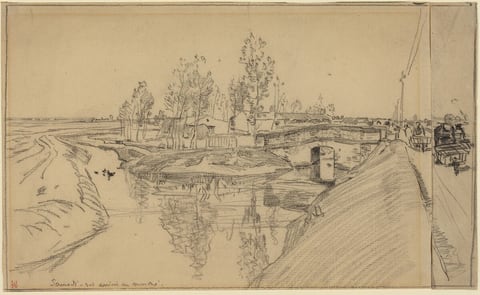
The image depicts a landscape with a road alongside a canal. The view is elevated, showing the road, canal, trees, and structures on the horizon. The style of the sketch is characterized by soft lines and shading, creating depth. The color palette is monochromatic with shades of gray. Closest to us, a canal borders the road with some ducks in the water. Figures and carts are seen on the road leading into the distance.
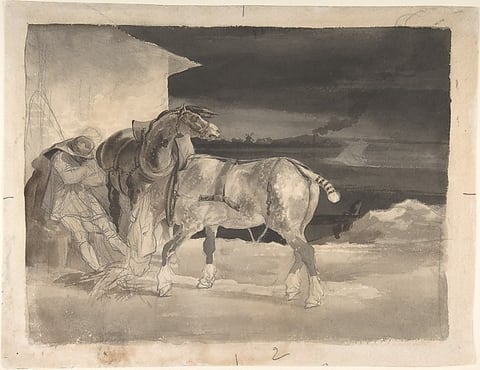
Two Draft Horses with a Sleeping Driver, by Jean Louis André Théodore Géricault, 1820–22
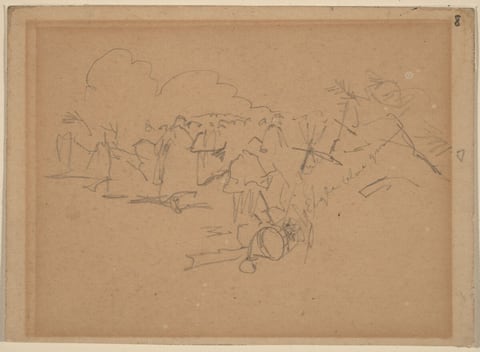
The image displays curved and angular lines creating an abstract composition hinting at humanoid shapes and possible vegetation or trees. The lines suggest motion and activity, with shapes resembling drums and sticks scattered around. The overall impression is of a gathering or event, with figures depicted standing or moving, along with lines indicating movement or sound waves from musical instruments.
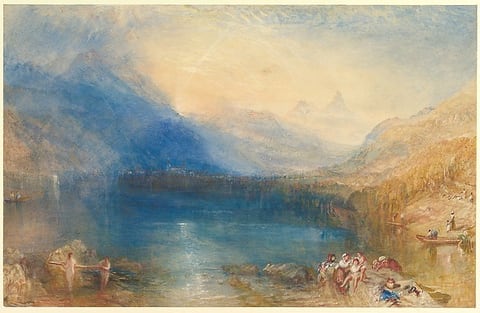
The Lake of Zug, by Joseph Mallord William Turner, 1843
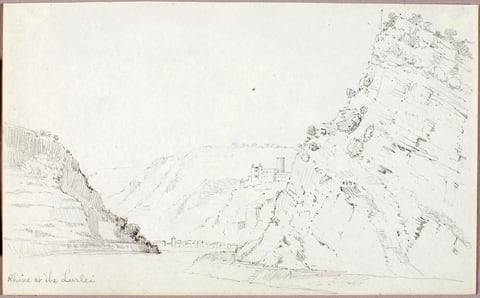
Rhine at the Lurlei, by George Elbert Burr, 1900

The works in this room are listed below.

Works in this room

Drawings made in the 19th century, from every museum.

Section 1, north wall

  1. The image depicts a landscape with a road alongside a canal. The view is elevated, showing the road, canal, trees, and structures on the horizon. The style of the sketch is characterized by soft lines and shading, creating depth. The color palette is monochromatic with shades of gray. Closest to us, a canal borders the road with some ducks in the water. Figures and carts are seen on the road leading into the distance.
    Arrivee au MarcheAuguste LepèreCourtesy National Gallery of Art, Washington
  2. Two Draft Horses with a Sleeping Driver, by Jean Louis André Théodore Géricault, 1820–22
    Two Draft Horses with a Sleeping DriverJean Louis André Théodore Géricault, 1820–22Courtesy of The Metropolitan Museum of Art
  3. The image displays curved and angular lines creating an abstract composition hinting at humanoid shapes and possible vegetation or trees. The lines suggest motion and activity, with shapes resembling drums and sticks scattered around. The overall impression is of a gathering or event, with figures depicted standing or moving, along with lines indicating movement or sound waves from musical instruments.
    End of the March [recto]Winslow Homer, 1862Courtesy National Gallery of Art, Washington

Section 1, south wall

  1. The Lake of Zug, by Joseph Mallord William Turner, 1843
    The Lake of ZugJoseph Mallord William Turner, 1843Courtesy of The Metropolitan Museum of Art
  2. Rhine at the Lurlei, by George Elbert Burr, 1900
    Rhine at the LurleiGeorge Elbert Burr, 1900Courtesy of the Smithsonian American Art Museum

Section 2, south wall
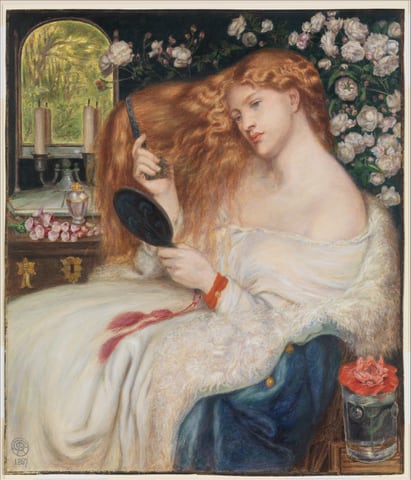
  1. Lady Lilith, by Dante Gabriel Rossetti, 1867
    Lady LilithDante Gabriel Rossetti, 1867Courtesy of The Metropolitan Museum of Art
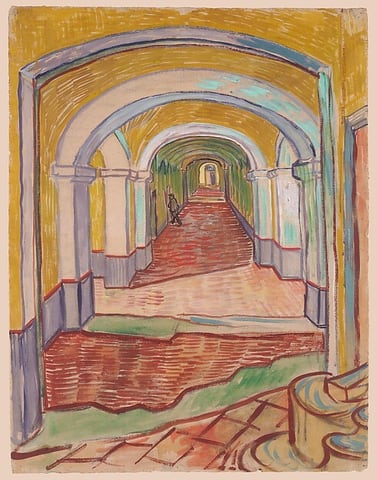
  2. Corridor in the Asylum, by Vincent van Gogh, September 1889
    Corridor in the AsylumVincent van Gogh, September 1889Courtesy of The Metropolitan Museum of Art

Section 2, north wall
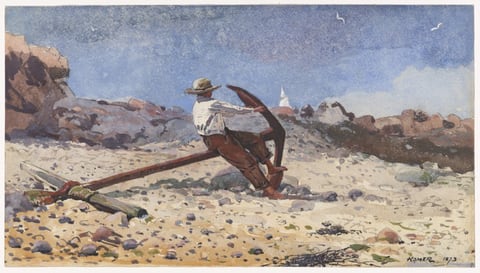
  1. Boy with Anchor, by Winslow Homer, 1873
    Boy with AnchorWinslow Homer, 1873Courtesy of the Cleveland Museum of Art
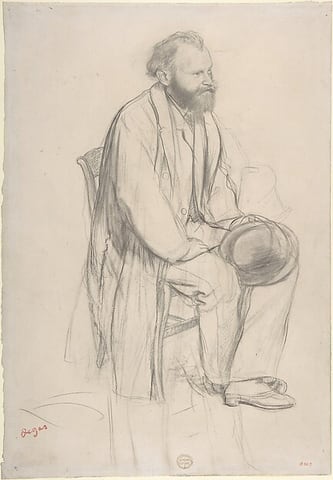
  2. Édouard Manet, Seated, Holding His Hat, by Edgar Degas, ca. 1868
    Édouard Manet, Seated, Holding His HatEdgar Degas, ca. 1868Courtesy of The Metropolitan Museum of Art
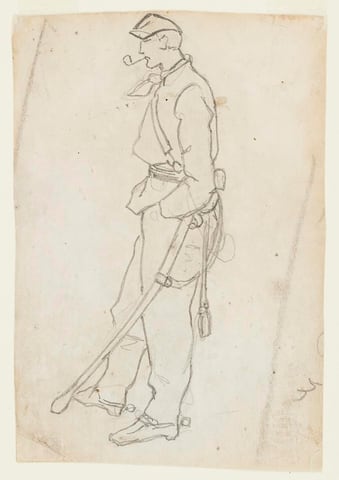
  3. SOLDIER WITH SWORD AND PIPE
    Soldier with Sword and PipeWinslow Homer, 1862Courtesy of Cooper Hewitt, Smithsonian Design Museum

Section 3, north wall
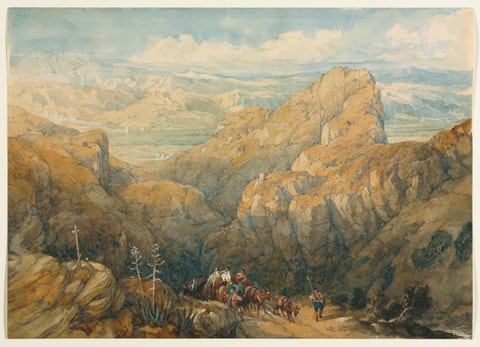
  1. Descent into the Plain of Granada, by David Roberts, 1834
    Descent into the Plain of GranadaDavid Roberts, 1834Courtesy of the Cleveland Museum of Art
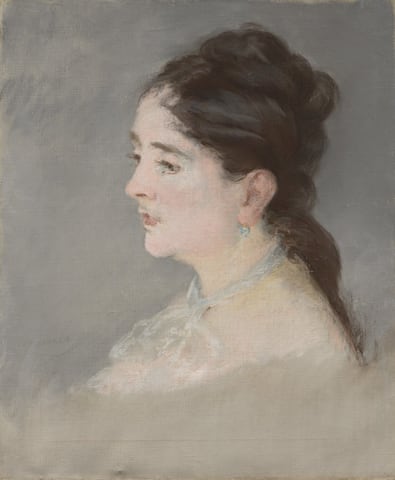
  2. Claire Campbell, by Édouard Manet, 1876
    Claire CampbellÉdouard Manet, 1876Courtesy of the Cleveland Museum of Art
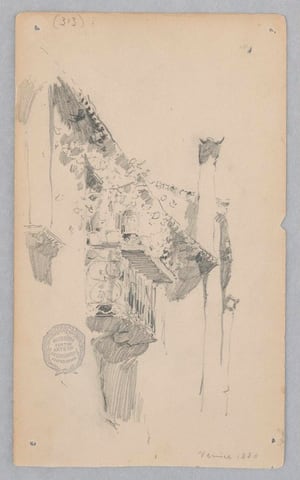
  3. BALCONY
    BalconyRobert Frederick Blum, 1880Courtesy of Cooper Hewitt, Smithsonian Design Museum

Section 3, south wall
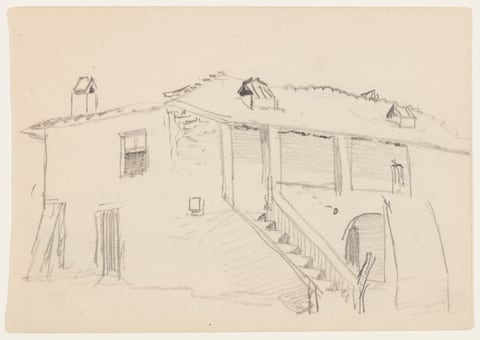
  1. ITALIAN FARMHOUSE
    Italian FarmhouseFrederic Edwin Church, September 1868 - April 1869Courtesy of Cooper Hewitt, Smithsonian Design Museum
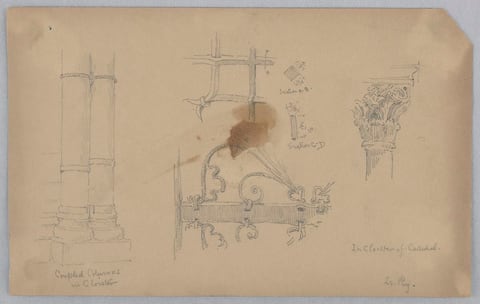
  2. IN CLOISTER OF CATHEDREAL, LE PUY
    In Cloister of Cathedreal, Le PuyArnold William Brunner, 1883Courtesy of Cooper Hewitt, Smithsonian Design Museum
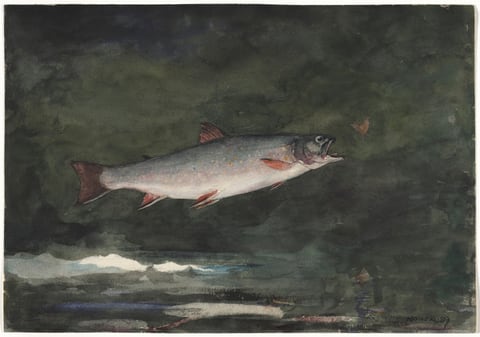
  3. Leaping Trout, by Winslow Homer, 1889
    Leaping TroutWinslow Homer, 1889Courtesy of the Cleveland Museum of Art